
If you wish to look at all the books I read in 2020, check out this booklist.
If you wish to see all the books I acquired in that year, check out this one.
And now for the top five.


5) Dangerous Liaisons by Choderlos de Laclos
I wrote about the Dr Johnson Book Group meeting which talked about Les Liaisons Dangereuses but didn’t really say all that much about my own opinion. This was a book that grabbed me hard and fast and didn’t let me go.
The ironic tone of the book is immediately and masterfully established from the first page of the book, which purports to be a publisher’s note. The ‘publisher’ of the book has the suspicions that the text may not be actually a genuine collection of letters but, horror of horrors, a novel. He notes that if they are a collection of letters, they can’t be modern French ones, as the current French aristocracy are so virtuous that the characters and events of the book could not possibly happen there - a point made even more ironic by the fact that the book came out four years before the Revolution.
I’d been aware of the book for a while without having seen any version of it but I had been led to believe that the main plot is about Valmont and Merteuil manipulating and perverting the virtue of a young girl newly out of a convent. While this is a plot of the book, I’d say it’s probably the least of the three main plots. More important, are the games that Valmont and Merteuil play against each other and the plot of Valmont trying to seduce Présidente de Tourvel, a woman of almost-ironclad virtue.
Merteuil is by far the most interesting character in the book. Unlike Valmont, who can live a rakish life and be a figure in society because he’s male, Merteuil must always preserve a clean reputation whilst also having her lovers and intrigues. She manages to be everyone’s friend on the face of it, whilst being an enemy to everyone behind their back and manages to keep those two opposites in taut balance. The stand-out letter of the book is the 81st in which she talks about how she grew to become the person she is, someone who no-one can second guess, especially the audience.
Valmont is also interesting, though weaker than Merteuil. He has a reputation for seduction, though it’s revealed throughout the book that while he knows his techniques back to front, he has a rather limited playbook. Although he is involved in the convent girl seduction plot, his main drive throughout the book is seducing Tourvel, which he does so he doesn’t ‘suffer the ridicule of being in love with her’, which he does, even as he won’t admit it. She is a tragic character, who fights as hard as Pamela to maintain her virtue but succumbs and her letters, though the least interesting, are never too long to overstay their welcome.
The very best stuff is the play between Merteuil and Valmont. She’s the driving force behind Cecile’s seduction and feels Valmont’s seduction of Tourvel makes him ridiculous and a spent force. Early on, she accuse Tourvel of being badly dressed, an insult Valmont bats back by agreeing that any clothes are a disservice to Tourvel’s body. As the seduction becomes even more drawn out, Merteuil becomes increasingly dismissive of Valmont. When he finally seduces Tourvel, Merteuil’s congratulation is the wonderfully sarcastic, ‘you are well endowed, I am sure, with a good opinion of yourself’. I very much enjoyed how the players played each other, to the downfall of both.
This is in no way a book which makes the reader feel good at the end but it is thoroughly gripping throughout. It was fascinating to read a book which uses the word ‘love’ so many times but is filled with so much hate, Les Liaisons Dangereuses still has some danger in it.
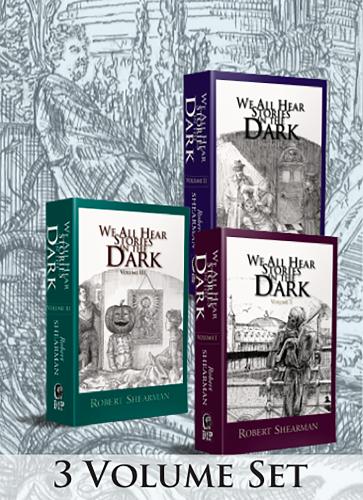
4) We all Hear Stories in the Dark by Robert Shearman
This book kicked me out… I wanted to read further but it didn’t let me.
I know books don’t usually do that but We All Hear Stories in the Dark is not an ordinary book. It’s a near two-thousand page short story collection where at the end of one story there are hints for several others, the reader then moves on to the next story following the hints. These leads to a totally unique reading experience, dipping in and out of three volumes as the stories lead you. There’s a huge sense of excitement when you finish one story and receive suggestions for the next which strengthens the engagement with the next.
One of the strangest elements of the book is that you never know exactly how far in the book you are. In a normal book this is easy, you merely look at the pages you’ve read and see how many are left but jumping around as you do, there’s no way of knowing. Unfortunately, this means that the book can also buck and knock you off before you are ready, which it did to me.
Of course, I could have ignored the rules, gone back to before I was lead to the end or simply turn to another story but part of the charm of the book, it’s own peculiar magic, is following where it takes you - even if that is to a premature end. My first temptation to break its rules was when I was at work with one volume and lead to another that was at home, I could have picked another story, one in the volume I had with me, but that would have seemed dishonest in some way.
As for the stories themselves, they were a fantastic mixture yet all hung together. I don’t wish to spoil the surprises in store for any future reader, but each one lived up to the promise in the (secret) essay towards the middle, they each packed a punch and disturbed in some sense. Some of the stories were instantly unnerving, some grew unnerving and some became unnerving at the end. There were ideas and images in this book which will stay with me for a long time. Although I preferred some stories than others, I can promise that none that I read bored me and many gripped me tight. It’s not just that the book is structured in such a unique way, it’s that it’s a book of really good stories structured such. I usually get tired of short stories and have never read thirty-four of them in a row and that stands testament to the quality of the stories.
I haven’t finished with this book, I will return and I shall conquer it. I’ve even sussed out where the secret map to the quickest way through the stories is, but that would be cheating, wouldn’t it?

3) Essays by Michel de Montaigne
I talked at length about this book here. If I’d stopped reading at the end of the first or second sections, I probably wouldn’t have put it as high as I did but the more personal third section brought my much closer to Montaigne and the last essay ‘On Experience’ is one of the most inspiring things I have ever read, celebrating the sheer glory that is the ordinary life.

2) Gilgamesh Retold by Jenny Lewis
I’m a fan of national myths and Gilgamesh is a particular favourite of mine, not only because it is one of the oldest of its kind, nor because I had a bit of a Sumerian ‘thing’ when I was fifteen but because it seems so refreshingly honest compared to later myths.
Gilgamesh is full of masculine energy and he’s an utter pain to his citizens who pray for something to distract him and the Gods create Enkidu. Gilgamesh and Enkidu start out as rivals but after fighting each other become best buds and go kill monsters together. Having done that, Enkidu dies, not in battle but of illness and it sends Gilgamesh on a huge downward spiral in which he realises he is mortal. He seeks immortality, almost gets it but doesn’t and returns home a much better king for having realised his mortality. I love how he is broken and remade in the text.
This is such a wonderfully engaging and easy to read retelling of the ancient myth. It woulx make a wonderful dramatic reading. Jenny Lewis varies style and meter in different chapters of the story, making the mood and meter fit tremendously but also giving something of the different oral voices telling the same story.
Of particular quality was the fight with Humbaba, the ogre who guards the cedar forests. It’s written in a polyphonic style, with lines being said over other lines, building a tension and a ferocity which is then broken when Humbaba is killed and the page is full of white space. It makes the act more than a monster killing by a pair of heroes, it makes it a vicious act, one of desecration and destruction and a reflection on how mankind destroys to build itself up. This notion of sacrilege is also carried into the part when Gilgamesh and Enkidu kill the Bull of Heaven, as the stars and planets of which it is comprised begin to dim.
Enkidu’s death is another polyphonic piece, as death calls and as Enkidu rages against it and the people in his life that brought him there. Gilgamesh’s wandering in grief had an Anglo-Saxon meter and had a similar tone to The Wanderer. All the poetry flowed well and the different types broke it up and refocussed the mind every few pages (thus relieving that weird meter hypnotism you can come across in less varied works).
I read the whole piece in one go and look forward to reading it again soon. It’s great.
and finally, my favourite book of 2020…
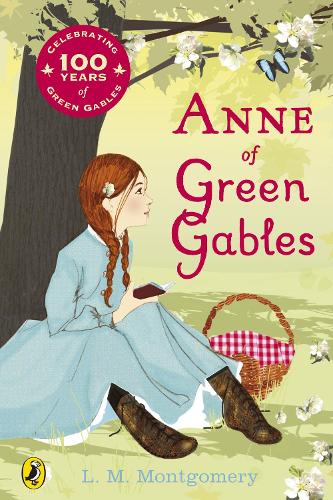
1) Anne of Green Gables by LM Montgomery
As soon as I picked this book up, I felt that I was in good hands, that the author knew what they were doing and I could relax in their company. The first hint that this book would be a little special is the initial description of Anne, where Montgomery mentions that the ordinary observer may note a number of things about her but the extra-ordinary observer would note much more - especially when it then goes on to add that Matthew noticed none of it.
I think the book had two huge holes it could have fallen down. The first that Anne could have grown to be extremely irritating, she does talk an awful lot and her emotional, full-colour way of expressing herself could prove extremely aggravating. Luckily, it becomes very clear that Anne’s ebullient personality has a darker, lonelier stem and the fifth chapter ‘Anne’s History’ does a lot of the work in grounding her personality, showing how her excessive imagining is a thin paint over true fear and worry. It’s also helped that she is contrasted to the quiet Matthew and controlled Marilla.
The second danger is that the book could have become cloying and sentimental. In a lesser book, the seventh chapter ‘Anne says her prayers’, Anne would have meekly submitted herself to Marilla’s teaching of stock prayers but that isn’t what happens. Anne stubbornly forges her own prayer with whatever she has lying about in her head and Marilla realises that to teach lisping, wispy prayers to her wouldn’t work. The characters aren’t perfect and they have just enough grit in them to stop them grating.
As much as I was enjoying the episodic events, in which Anne gets into a scrape or another, the book was starting to become a little too repetitive - and then rather abruptly changed. There was a large time-shift, Anne was growing up and the page-long, breathless monologues started to get shorter. Much like Marilla, I also began to miss the younger Anne as a more mature version took her place. I was also aware that a chapter called ‘The reaper whose name is Death’ was coming and I was not looking forward to lose a character.
The only element of the book that I would say didn’t work for me was the end. There were two endings that this story could have reached, a tragic one where hopes were dashed and a positive one where all ambitions achieved. The book tried to have its cake and eat it, landing awkwardly as not quite one ending or the other.
Despite the wobble at landing, I needed a book as charming, well-told and heartwarming as this and I am very thankful I picked it up from a garden wall on my way to the park.
Here's hoping for a smoother year but with as many good books.


