Showing posts with label Countdown. Show all posts

Wednesday, 4 January 2023

Top Ten Books of 2022 (5-1)

 Last week I counted down my  books of the year 10-6. 

If you want to see if you’ve read what I’ve read, here’s the list.


I’ve also been naughty and bought too many books and here’s that list.


In at Number 5


The Pantomime Life of Joseph Grimaldi - Andrew McConnell Stott (also What Blest Genius?)


I’m starting with a cheat. I read two Andrew McConnell Stott books and they were both great fun. He has a real skill at telling a fun story, emphasising the most fun parts and finding supplementary fun stories that don’t feel like filler.


I wrote about What Blest Genius here and The Pantomime Life of Joseph Grimaldi here. I think Joseph Grimaldi edges it slightly. While the central story of Jubilee plays far more into my interests, the sheer range and lunacy of the side stories in Grimaldi were too fun to ignore. A book that includes a craze for a ten-year-old playing Hamlet, a clown sailing a ship through a storm and a trained dog called Moustache, is one that has to be in a top ten somewhere. 


Number 4


Moonfleet - J. Meade Falkner


I wrote about Moonfleet here. It’s hard to say any more about it, this book is exciting, well constructed with clear and interesting characters going on exciting journeys. The set pieces are put together extremely well and the whole book wraps up movingly and satisfyingly.


Number 3


The Color Purple - Alice Walker


This is very unfair, because I’d always assumed The Color Purple by Alice Walker was boring because it was made into a prestige film that won Oscars (a film I’ve never seen). However, when I saw it at a local book-swap I gave it a look because I recognised the name. The copy I picked up had the name anglicised into ‘colour’ and had been published by The Coventry Evening Telegraph as the third in a series of ‘Great Family Reads’. I read the first page and was utterly shocked, while it seemed like a great read, it is certainly not a good choice for a family bed time.


The first page features a paedophilic-incest-rape, performed and described terribly matter-of-factly. Shortly afterwards the baby conceived by that act is taken away. Not only were the events terribly shocking but the tone of normality made them more so. Celie lives in a society where, as a poor, Black woman, she is utterly disregarded, mounted by men as they please and passed off to another family because she can keep a household fed and clean. Her world is so narrow and her place in it so low that she barely registers or questions it at first.


I was amazed at how expressive the telegrammatic style could be. When she says, ‘Not much funny to me.’ She sums up how little in her life has been something she could laugh at - there were many other incidences of this throughout.


What made the book truly wonderful was how, despite being ‘nothing at all’, she does grow. First she asserts, ‘I am here,’ and from there she even finds family, purpose, talents and hope. The first key to this is Shug, a blues singer with a tarnished reputation. It’s her admiration and love of Shug that starts her progression. Shug even shows her how to love her body. But Shug isn’t the only one. She accumulates all sorts of broken, wonky people into her found family, even finding space for the husband foisted on her who abused her so. That’s what I loved about the book, every person in it developed and changed and they did it because of the impact of the other characters around them. That we reach a happy ending at all is because of the resilience of the community that Celie builds around her.


Which is to say nothing of the sub-plot about Celie’s sister, finding her own family. The discussions of God that both women have, their refashioning of God into an ‘it’ that can be found anywhere rather than another male with a fragile ego. There’s some very interesting discussions on white people, how the characters in the book almost see them like dogs, they may seem friendly and wag their tails but you should always be wary of their bite. There’s interesting talk about sexuality, about how many of the male characters try to project strength by beating down before discovering joy in something more community.


It’s a short book but it says a lot.


Number 2


The Monk - Matthew Lewis


I wrote about The Monk here. Did I use the phrase ‘ne plus ultra’? If not, I should have, It’s the that of Gothic books. Everything Gothic books has been working towards at that point is accomplished by The Monk in fine, entertaining and grandstanding style. The book even manages to award the stiffness that afflicts later Gothic works. It’s bonkers, it’s genuinely disturbing at times and it’s very memorable.


Number 1


The Woman in White - Wilkie Collins


The Woman in White by Wilkie Collins is a genuine classic, a masterful blend of tight plotting, varied and interesting narrative voices and characters that burst out of the page.


It starts with a sly joke about how the book has been created because the legal system needs too much ‘lubricating by the oil of gold’ to be the proper place to lay out the story and set the record straight. It then warns the reader that the book will be told in a number of different voices, much like witnesses in a trial. These voices are one of the main triumphs of the book. The first is Walter Hartright, he essentially takes the part of prosecutor and his is the most neutral. There’s also the diaries of Marian Halcombe, packed with her forthrightness, bravery and intelligence. There are the voices of various accountants, lawyers and functionaries that show their understanding of their positions. Then there’s Fairlie’s account, a whiny, petulant piece full of complaint and blame. Finally, there’s the narrative of Count Fosco, as amoral, grandiloquent and strangely appealing as the character himself. Victoria novels, especially these serialised ones, sometimes get a bad reputation for eking out a story in long, needless prose but the switching of voices in this book not only adds a range of flavours to the book but show Collins’s skill at ventriloquism. Although I love his friend and mentor, Charles Dickens, the Inimitable could not have put himself in so many roles.


As for the plot, it starts proper with Walter Hartright walking down the Finchley Road at one in the morning and meeting a woman who seems a little ‘off’ though not dangerous, so he helps her out. As someone who lives a little away from that road, I have often met such people whilst coming home late at night, though none have embroiled me in a labyrinthine plot of abduction, identity theft and false imprisonment. The reader is given the pieces of the main plot fairly early on but because the villains themselves are concocting the plot as the book goes on, the reader can’t predict ahead too far as the villains haven’t got there yet. It walks that beautiful tightrope of being feasible whilst being outlandish and has a particular spiciness because one of the villains is fiendish but stupid and the other is too clever to cause harm where it’s not necessary.


There are some huge coincidences in the book and it’s a weak and slightly peculiar conceit of getting Hartright to go on a barely explored Patagonian adventure with disease, cannibals and shipwrecks - but the big things land right and comeuppances are as sad as they are satisfying. A big, driving element of the plot is the keeping of Sir Percival Glyde’s Secret. While The Secret doesn’t seem worth all the energy and heartache it took to keep, it ties in with the theme of how flimsy such things as identity, position, wealth and sanity really are. 


If the book soars above many others, it’s because of the characters. Walter Hartright is a decent-enough hero character and his love interest, and the centre of shenanigans, Lucy isn’t an awful example of that Victorian ideal child-woman. The fact that some of her experiences actually reduce her as a person and make her more pathetic than before is actually quite moving and show her relative agency before.


Marian Halcombe, her half-sister is a different prospect. She’s initially described as a butterface with a moustache but such ‘deficiencies’ allow the writer to treat her as a proper agent in the story. She’s smart, sneaky when needed, strong and loyal. She speaks her mind and reads a room. She makes plans and acts them out. She’s great. Unfortunately, she does get relegated to her sister’s keeper but her strength in the first half, and the respect she gets from Fosco keeps her flame alive in the second.


Fosco is a brilliant character. He’s undeniably evil, utterly amoral and goal orientated but he does have a sense of kindness (if principally to small, cute animals) and his intelligence dictates that he doesn’t cause suffering he doesn’t deem absolutely necessary. Marian says she is won over by him despite herself, and I, as a reader, found myself won over by him too. The biggest suggestion of his darkest side, the utter devotion of his wife, he attributes simply to that, devotion. I’m not convinced there isn’t a far nastier backstory there somewhere. 


I also loved Anne, the woman in white, an utterly unreliable witness but deeply intriguing. I also has a huge soft spot for the wimp, Fairlie, he’s so deliciously, selfishly pathetic. 


It may be no surprise, seeing as I have gushed over this book, but I thought it wonderful and would easily recommend it. 


Wednesday, 28 December 2022

Top Ten Books of 2022 (Numbers 10-6)

 It’s that time of year again, time to count the top ten books of the year. I’ve read around 100 books this year and I enjoyed most of them but the best books shone brightly, making it an easy choice.


If you want to see if you’ve read what I’ve read, here’s the list.


I’ve also been naughty and bought too many books and here’s that list.


In at 10


The Belly of Paris - Emile Zola


I wrote about The Belly of Paris here. I’ve read quite a few French books over the year, many of them were depressing and money-obsessed, though very engrossing reads. (As an aside, my big take away from Les Miserables is that it’s not about misery but about hope. It’s also let down by sheer size, the great parts get swallowed up by all the other parts, good or not).


The Belly of Paris contained some elements of joy, a sheer ebullience of detail, a frothing cornucopia of food that ferments as the book continues. The first chapter, in Les Halles Market, with the dew soaked fruit and vegetables piled up in the early morning gloom is beautifully evocative and the last line is a wonderfully sardonic joke.


At number 9


Hermsprong - Robert Bage


I shall shortly review this book. As a spoiler, it’s far more entertaining than it suggested itself to be, a sitcom more than a satire. The character of Hermsprong himself might be a bit dull but his impact on those around him is very funny.


Number 8


I’m The King of the Castle - Susan Hill


I’ve read two Susan Hill books before, The Woman in Black and The Small Hand, both of them ghost stories. I’m the King of the Castle is far more haunting.


The Hoopers, father and son, live in a gloomy house in the country. Mr Hooper invites the widow, Mrs Kingshaw to be his housekeeper, though he’s hoping a relationship might come from it. She brings her son, the same age as Mr Hooper’s and they two single parents expect their sons will hit it off and become friends. That’s not exactly what happens.


Immediately, the strange and petulant Hooper send Kingshaw a note to inform him that he’s not welcome. He’s boastful and bullying, insisting on his mastery of the house over Kingshaw. When he discovers some of Kingshaw’s fears, he makes use of them, locking him in the room of dead insects and putting a stuffed crow in his bed. What’s impressive is that although Kingshaw is scared, and he grows to be very scared of Hooper, he fights back occasionally but, more impressively, doesn’t.


Kingshaw decides to run away and goes into the deep wood, Hooper follows him. In the wood, the roles are reversed, Kingshaw finds himself far more competent than Hooper, he also finds himself braver. When a thunderstorm hits the wood, Hooper wets himself in fear, but soon after, he’s trying to assert himself again. It’s a brilliant depiction of a bully, Hooper is scared of many things but at the times he isn’t filled with fear, he is on the attack. Kingshaw shows that he is a better person, helping Hooper when he bashes his head when trying to fish. There was a point when I thought the rest of the book would take place in the wood and it would have been an interesting book if it had. However, I think it was a better book to save them from the wood and show how quick the status quo resumes.


There’s a chapter later in the book which actually takes place in the ruins of the castle. Again, it showed Kingshaw’s decency and the fear that drives Hooper’s actions. 


The boy’s war of attrition is contrasted with the growing romance of the single parents. Their actions also show how little they actually observe their children and their decision to become a family is the final push into tragedy. A tragedy that Hooper responds with ‘a spurt of triumph’.


This book is a chilling look at the a bully/bullied relationship, the weakness that drives the bully and the helplessness of being bullied. Forget ghosts, the real chills come from the people.


Number 7


Memoirs of the Formosan Fraud - George Psalmanazar


I’ve written about this book not only one part, not only two but three.


I found George Psalmanazar fascinating and I was so excited to hear him in his own words. I got more than I expected. Not only did I get to find out the strange and thrilling story of a man from France who pretends to be Taiwanese and, for a time, succeeds; I also got a wonderful account of what it was like being a hardworking denizen of Grub Street. It’s possibly the fullest account of that hack life that I’ve read and it was a great bonus.


Number 6


The Chase - Louisa May Alcott


Little Women was my favourite book the year I read it but it was interesting to find out that Louisa May Alcott thought it boring. She was more into her racier novels and when asked to write one for serialisation she wrote A Long, Fatal Love Chase, which was deemed ‘too sensational’ for publication. My copy, published in 1995 is more simply (and less spoilery) titled The Chase.


Eighteen-Year-Old Rosamund Vivien declares that she’s sell her soul to Satan for a year of fun and then essentially does just that, becoming the bride of Phillip Tempest, a sexy man in his mid-thirties who arrives at her island home on a boat and in a storm. She’s swept away by him and they have a glorious year together before she starts seeing cracks in his facade (other than the fact he’s always boasting about how evil he is). Realising her marriage is a fake and her not-husband is a murderer she runs away and he chases her, ending in a grand climax which proves fatal - the spoiler was in the title, or indeed in the vision he tells her in the second chapter.


The fun in this book comes from the whole ‘dun-dun-dunnnnn!!’ level of goofy the book frequently provides. Our first overtly evil action of Phillip is in the one chapter which we spend away from Rosamund, where he murders a man with a heart condition by making his take extreme exercise and then making him go in a stuffy church. The pattern of the book is that Rosamund does something fairly Loony Tunes (like crossdress or hide in a basket) to escape Phillip and he does something equally Loony Tunes (like crossdress or bribe a priest) to find her again. When he suddenly turns up, it’s handled as a cliffhanger of a cheap soap, a moment of shock but also a moment of lust. It’s not directly in the text but there’s a dual ‘oh-no’ and ‘hubba-hubba’ element to his reappearances - at least for the first few. After a while the reaction becomes a little more ‘oh, you again’ but the book ups the ante shortly after and ends with the cheesiest statement of possessive love I’ve ever read. This would make a wonderfully cheesy mini-series.


I principally enjoyed the book for the inventive escapes and captures and to laugh during the over-the-top moments, but I’m sure I was laughing with this book rather than at it. The heightened nature of it all invites a playful approach to the text and it certainly provided me with a lot of entertainment which is the core purpose of commercial, serialised fiction. 


Next week I shall count down 5-1


Wednesday, 6 January 2021

Countdown of the best books I read in 2020 (5-1)

If you wish to look at all the books I read in 2020, check out this booklist.

If you wish to see all the books I acquired in that year, check out this one.

And now for the top five.


5) Dangerous Liaisons by Choderlos de Laclos


I wrote about the Dr Johnson Book Group meeting which talked about Les Liaisons Dangereuses but didn’t really say all that much about my own opinion. This was a book that grabbed me hard and fast and didn’t let me go.


The ironic tone of the book is immediately and masterfully established from the first page of the book, which purports to be a publisher’s note. The ‘publisher’ of the book has the suspicions that the text may not be actually a genuine collection of letters but, horror of horrors, a novel. He notes that if they are a collection of letters, they can’t be modern French ones, as the current French aristocracy are so virtuous that the characters and events of the book could not possibly happen there - a point made even more ironic by the fact that the book came out four years before the Revolution.


I’d been aware of the book for a while without having seen any version of it but I had been led to believe that the main plot is about Valmont and Merteuil manipulating and perverting the virtue of a young girl newly out of a convent. While this is a plot of the book, I’d say it’s probably the least of the three main plots. More important, are the games that Valmont and Merteuil play against each other and the plot of Valmont trying to seduce Présidente de Tourvel, a woman of almost-ironclad virtue.


Merteuil is by far the most interesting character in the book. Unlike Valmont, who can live a rakish life and be a figure in society because he’s male, Merteuil must always preserve a clean reputation whilst also having her lovers and intrigues. She manages to be everyone’s friend on the face of it, whilst being an enemy to everyone behind their back and manages to keep those two opposites in taut balance. The stand-out letter of the book is the 81st in which she talks about how she grew to become the person she is, someone who no-one can second guess, especially the audience.


Valmont is also interesting, though weaker than Merteuil. He has a reputation for seduction, though it’s revealed throughout the book that while he knows his techniques back to front, he has a rather limited playbook. Although he is involved in the convent girl seduction plot, his main drive throughout the book is seducing Tourvel, which he does so he doesn’t ‘suffer the ridicule of being in love with her’, which he does, even as he won’t admit it. She is a tragic character, who fights as hard as Pamela to maintain her virtue but succumbs and her letters, though the least interesting, are never too long to overstay their welcome.


The very best stuff is the play between Merteuil and Valmont. She’s the driving force behind Cecile’s seduction and feels Valmont’s seduction of Tourvel makes him ridiculous and a spent force. Early on, she accuse Tourvel of being badly dressed, an insult Valmont bats back by agreeing that any clothes are a disservice to Tourvel’s body. As the seduction becomes even more drawn out, Merteuil becomes increasingly dismissive of Valmont. When he finally seduces Tourvel, Merteuil’s congratulation is the wonderfully sarcastic, ‘you are well endowed, I am sure, with a good opinion of yourself’. I very much enjoyed how the players played each other, to the downfall of both.


This is in no way a book which makes the reader feel good at the end but it is thoroughly gripping throughout. It was fascinating to read a book which uses the word ‘love’ so many times but is filled with so much hate, Les Liaisons Dangereuses still has some danger in it.


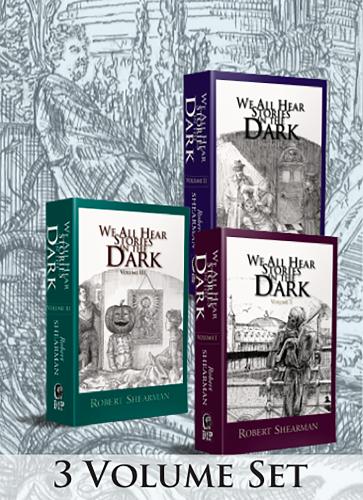
4) We all Hear Stories in the Dark by Robert Shearman


This book kicked me out… I wanted to read further but it didn’t let me.


I know books don’t usually do that but We All Hear Stories in the Dark is not an ordinary book. It’s a near two-thousand page short story collection where at the end of one story there are hints for several others, the reader then moves on to the next story following the hints. These leads to a totally unique reading experience, dipping in and out of three volumes as the stories lead you. There’s a huge sense of excitement when you finish one story and receive suggestions for the next which strengthens the engagement with the next. 


One of the strangest elements of the book is that you never know exactly how far in the book you are. In a normal book this is easy, you merely look at the pages you’ve read and see how many are left but jumping around as you do, there’s no way of knowing. Unfortunately, this means that the book can also buck and knock you off before you are ready, which it did to me.


Of course, I could have ignored the rules, gone back to before I was lead to the end or simply turn to another story but part of the charm of the book, it’s own peculiar magic, is following where it takes you - even if that is to a premature end. My first temptation to break its rules was when I was at work with one volume and lead to another that was at home, I could have picked another story, one in the volume I had with me, but that would have seemed dishonest in some way.


As for the stories themselves, they were a fantastic mixture yet all hung together. I don’t wish to spoil the surprises in store for any future reader, but each one lived up to the promise in the (secret) essay towards the middle, they each packed a punch and disturbed in some sense. Some of the stories were instantly unnerving, some grew unnerving and some became unnerving at the end. There were ideas and images in this book which will stay with me for a long time. Although I preferred some stories than others, I can promise that none that I read bored me and many gripped me tight. It’s not just that the book is structured in such a unique way, it’s that it’s a book of really good stories structured such. I usually get tired of short stories and have never read thirty-four of them in a row and that stands testament to the quality of the stories.


 I haven’t finished with this book, I will return and I shall conquer it. I’ve even sussed out where the secret map to the quickest way through the stories is, but that would be cheating, wouldn’t it?


3) Essays by Michel de Montaigne


I talked at length about this book here. If I’d stopped reading at the end of the first or second sections, I probably wouldn’t have put it as high as I did but the more personal third section brought my much closer to Montaigne and the last essay ‘On Experience’ is one of the most inspiring things I have ever read, celebrating the sheer glory that is the ordinary life.


2) Gilgamesh Retold by Jenny Lewis


I’m a fan of national myths and Gilgamesh is a particular favourite of mine, not only because it is one of the oldest of its kind, nor because I had a bit of a Sumerian ‘thing’ when I was fifteen but because it seems so refreshingly honest compared to later myths.


Gilgamesh is full of masculine energy and he’s an utter pain to his citizens who pray for something to distract him and the Gods create Enkidu. Gilgamesh and Enkidu start out as rivals but after fighting each other become best buds and go kill monsters together. Having done that, Enkidu dies, not in battle but of illness and it sends Gilgamesh on a huge downward spiral in which he realises he is mortal. He seeks immortality, almost gets it but doesn’t and returns home a much better king for having realised his mortality. I love how he is broken and remade in the text.


This is such a wonderfully engaging and easy to read retelling of the ancient myth. It woulx make a wonderful dramatic reading. Jenny Lewis varies style and meter in different chapters of the story, making the mood and meter fit tremendously but also giving something of the different oral voices telling the same story.


Of particular quality was the fight with Humbaba, the ogre who guards the cedar forests. It’s written in a polyphonic style, with lines being said over other lines, building a tension and a ferocity which is then broken when Humbaba is killed and the page is full of white space. It makes the act more than a monster killing by a pair of heroes, it makes it a vicious act, one of desecration and destruction and a reflection on how mankind destroys to build itself up. This notion of sacrilege is also carried into the part when Gilgamesh and Enkidu kill the Bull of Heaven, as the stars and planets of which it is comprised begin to dim.


Enkidu’s death is another polyphonic piece, as death calls and as Enkidu rages against it and the people in his life that brought him there. Gilgamesh’s wandering in grief had an Anglo-Saxon meter and had a similar tone to The Wanderer. All the poetry flowed well and the different types broke it up and refocussed the mind every few pages (thus relieving that weird meter hypnotism you can come across in less varied works).


I read the whole piece in one go and look forward to reading it again soon. It’s great.


and finally, my favourite book of 2020…


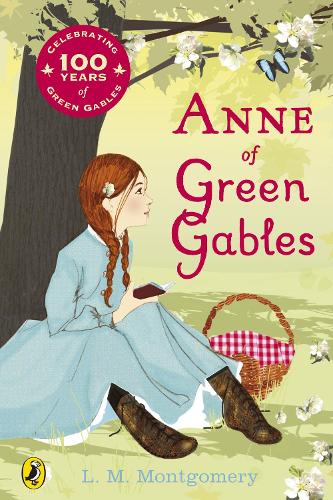
1) Anne of Green Gables by LM Montgomery


As soon as I picked this book up, I felt that I was in good hands, that the author knew what they were doing and I could relax in their company. The first hint that this book would be a little special is the initial description of Anne, where Montgomery mentions that the ordinary observer may note a number of things about her but the extra-ordinary observer would note much more - especially when it then goes on to add that Matthew noticed none of it.


I think the book had two huge holes it could have fallen down. The first that Anne could have grown to be extremely irritating, she does talk an awful lot and her emotional, full-colour way of expressing herself could prove extremely aggravating. Luckily, it becomes very clear that Anne’s ebullient personality has a darker, lonelier stem and the fifth chapter ‘Anne’s History’ does a lot of the work in grounding her personality, showing how her excessive imagining is a thin paint over true fear and worry. It’s also helped that she is contrasted to the quiet Matthew and controlled Marilla. 


The second danger is that the book could have become cloying and sentimental. In a lesser book, the seventh chapter ‘Anne says her prayers’, Anne would have meekly submitted herself to Marilla’s teaching of stock prayers but that isn’t what happens. Anne stubbornly forges her own prayer with whatever she has lying about in her head and Marilla realises that to teach lisping, wispy prayers to her wouldn’t work. The characters aren’t perfect and they have just enough grit in them to stop them grating.


As much as I was enjoying the episodic events, in which Anne gets into a scrape or another, the book was starting to become a little too repetitive - and then rather abruptly changed. There was a large time-shift, Anne was growing up and the page-long, breathless monologues started to get shorter. Much like Marilla, I also began to miss the younger Anne as a more mature version took her place. I was also aware that a chapter called ‘The reaper whose name is Death’ was coming and I was not looking forward to lose a character.


The only element of the book that I would say didn’t work for me was the end. There were two endings that this story could have reached, a tragic one where hopes were dashed and a positive one where all ambitions achieved. The book tried to have its cake and eat it, landing awkwardly as not quite one ending or the other.


Despite the wobble at landing, I needed a book as charming, well-told and heartwarming as this and I am very thankful I picked it up from a garden wall on my way to the park.


Here's hoping for a smoother year but with as many good books.


Wednesday, 30 December 2020

Countdown of 2020s top ten books (10-6)

 It’s been a tough year, yadda yadda, we all know and are frankly fed up with being told. One of the benefits of lockdown and general limiting of entertainment is that there was lots of time to read. On the down side, I found it harder to concentrate than usual.

Despite that, I got through a great many books this year, most of them were very good and some moved me a great deal. If you want to check if you’ve read any of the things I did, click here.

Also, books were something of a comfort buy - I have a list of shame of books I acquired this year also, to see what I shouldn’t have got, click here.


Special mention should go to Savage Girls and Wild Boys by Michael Newton and Genie: A Scientific Tragedy by Russ Rymer which were both wonderful books but too sad to be a favourite exactly. Another special mention to The Tennant of Wildfell Hall by Anne Brontë, which would have been much higher up this list hadn’t all the Christmas tiers not been announced when I was halfway through, taking my attention away.


Finally, before I go on to the books that placed 10-6, to The Elegance of the Hedgehog by Muriel Barbery, the worst book of this year and one of the worst books I’ve ever read.


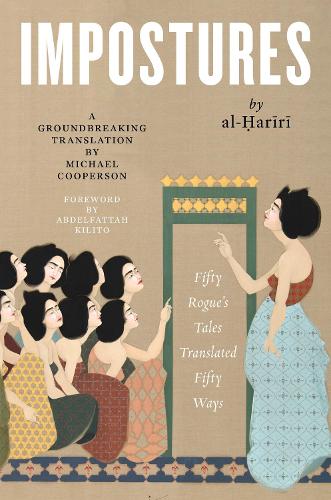
10) Impostures by Al Hariri and Michael Cooperson


In a year full of peculiar and ingenious books, this is one the most peculiar and ingenious. I was so intrigued I pre-ordered it, sight un-seen and I was not disappointed. 


I wrote in full about it here, but in short, this is a collection of 10th century Arabic stories, which all follow a similar pattern. The narrator sees someone using an impressive display of language to manipulate other people, he recognises that person from previous encounters, the two go their separate directions. The aim of the book is to showcase the flexibility and joy of language, an aim which has proved an almost impossible one to translate.


The solution Cooperson chooses is a very clever one. He decides the aspect of English to celebrate is its range and so each one of these fifty stories are told in a different style, whether geographical, historical or class. There’s a lot of effort put into making each style as accurate as possible, using only words found in one author’s body of work or hiring native speakers of different dialects to double-check authenticity.


What raises this book even higher, are the little essays at the end of each story where the translator provides details about the story he’s translating, the style he’s translating it into and the decisions he’s made. This transparency about the translation process, and this way of involving the reader in the decisions he made along the way, really engage the reader in the process as a whole as well as this book in particular.


9) Inanna: Queen of Heaven and Earth by Diane Wolkstein and Samuel Noah Kramer


Wolkstein brings the skills of storyteller and poet, Kramer his lifelong research on the Sumerian period and culture and together, the two produce a book unlike any other I have ever read. The basic texts are religious in nature, there are parts of the Bible (especially Psalms and Song of Songs) that have their influence in these texts. However, the Bible never sounded quite like this.


The first section has Enki, the God of Wisdom battling the forces of the Underworld and Ereshkigal while a young woman called Inanna finds the Huluppu tree, brings it to her sacred garden in Uruk and longs to make a great throne and bed. She’s hampered by evil creatures colonising the tree but is later helped by Gilgamesh who uses his big chopper to cut the tree down and make the throne and bed. - It’s an odd beginning, our Goddess is at one of her weakest positions but she knows what she wants, power and sex.


The second is my favourite. Now established in Uruk, Inanna takes her miraculous boat of heaven to Enki, the God of Wisdom’s abode of Enlil. There she gets him drunk on beer (both bread and beer being considered feminine in Sumerian culture) and tricks him into offering her 79 Mes, and it’s this concept I love. A Me is an important cultural lesson, represented by an object and having the Me is essentially to become the God of the skill. The ones Inanna steals include priesthood, kingship and beer, but also coloured cloth and black cloth. When Enki sobers up, he realises what he does and sets monsters on Inanna, but her servant Ninshibur beats them up as she steers them safe into port. The notion of Me are fascinating but there’s something I find extremely enticing about a Goddess that simply takes the building blocks of civilisation, like a brazen female Prometheus.


The next section deals with Inanna thinking of her wondrous vulva. Initially she thinks the farmer will satisfy her but realises that actually it is Dumuzi the Shepherd King who can ‘plow my vulva’, ‘fill my lap with cream’ and ‘be my honey man’. Following the initial sensuality, he is made King through his relationship with Inanna (the same relationship Gilgamesh rejects in the Epic of Gilgamesh) and has sort of moved beyond Inanna in some way.


Inanna, being a little superfluous, decides to have a trip to her sister, Ereshkigal’s abode in the Underworld. She dresses in her nine finest and most symbolic bits of bling which she strips to get in. Once there she is killed and hung on hooks like a dead animal. Luckily, she has a backup, comes back to life and rises from the underworld. She can’t be stopped - she’s Inanna, bitch - but neither can she stop the demons from following her. She decides to set them on Dumuzi, because he’s been undervaluing her recently.  The next section is Dumuzi trying to avoid the demons and failing and the next is Inanna actually feeling pretty bad about her actions and making a deal that he’ll spend half the year in the Underworld and those shall be the infertile months, essentially he becomes the Sumerian Persephone.


The next section is a bunch of hymns saying how great Inanna is and the pack half puts it all into context and discusses what we’ve read. 


The poetry in this book isn’t always as exciting as it could be, the repetition begins to grate, there aren’t big spaces of blank page to emphasise loss or loneliness, but this was all redeemed by the way the stories build on Inanna’s character, make her terrifying and endearing, a figure of power but also a trickster on the human’s side.


Forget all these Wispy Wiccans, we need some Inanna worshippers in full, lusty, fresh-limbed wonder.


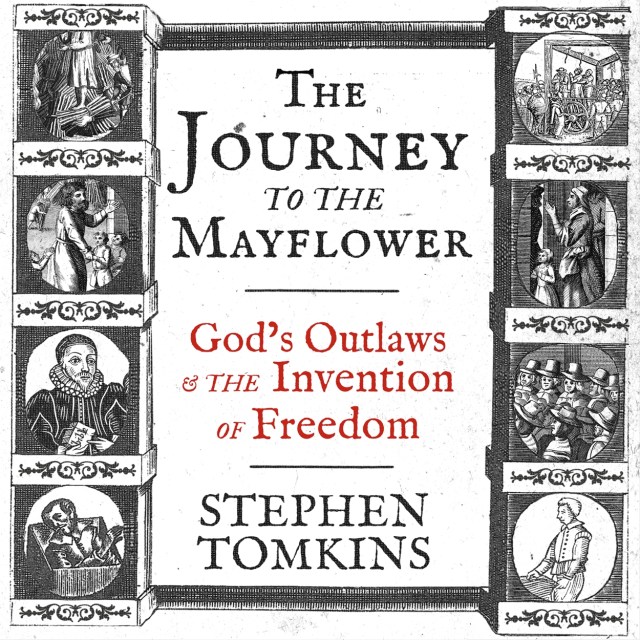
8) The Journey to the Mayflower by Stephen Tomkins


I borrowed this book from my Dad because I thought the topic of non-conformist churches and the lead up to the Mayflower voyage sounded fairly interesting, I read it because I wanted to clear my desk of borrowed books, I did not expect it to be a well told, action-packed rollercoaster. A book on church history thrilled me.


The tone is set by the first paragraph which introduces a Bishop being called to pay a fine “but everyone knew the truth: the Queen wanted him burned alive.” There then follows a description of Bishop Hooper’s imprisonment, torture and the an absolutely graphic extract from Foxe’s Book of Martyrs depicting his botched execution. (On a side-note, why isn’t there a proper edition of that book available?)


We move on to an explanation behind the Marian burnings of protestants as more than mad zeal. That religion, to a Tudor mind, was more than just a part of society, it was society itself and that it had to include everyone whether they wanted or not. It also shocked me by reminding me that Britain had been Catholic for over a thousand years and that protestantism was the foreign invader from Germany - a notion so obvious but so obliterated by growing up in a nominally protestant UK, that I was surprised.


The first few chapters of this book could be as easily in the action genre as the history, there are people escaping down the Thames and using their shoes as paddles. There was a man called John Bolton who was locked in prison with ‘a marvellous evil smell’ and where his captors sometimes threw in fireworks.There was also dreams and visions, one man called Symson who dreamt of a glowing man saying ‘ha’ at him ‘which he apparently found a great comfort’.


Come the reign of Elizabeth I and things should have improved for the protestants. However, they had been radicalised and greatly engaged by the experience of persecution and expected more reform from her than they got. The Act of Uniformity, which instituted a very mild form of protestantism, was expected to be a temporary measure. This is either because Elizabeth was expected to marry and power go to her husband, or because she wasn’t expected to rule without being deposed for very long. As it was, she ruled for over forty years and what was expected to be a placeholder reform, became the basis of the Church of England as it is now.


Those who had suffered under Mary’s persecution wanted a far more rigorous form of protestantism, and they wanted it to be enforced on the country. “As much as they accepted being tolerated for now, tolerance is not what they wanted.” The first fight was about vestments. These ‘Popish’ robes needed to go as they were un-Biblical, there were struggles between clergy who didn’t wear them and the authorities who required them.


Eventually, some of those who thought the CoE didn’t go far enough set up their own private congregations. I have to say I felt very sorry for Grindal, the Bishop of London, whose sympathies were with those who thought the church needed more vigour but was forced by his position to oppress those who refused to agree with the state church. 


We are introduced to Cartwright, a Cambridge professor so engaging, they took the glass out of the windows when he was lecturing so more people outside could hear. He argued that people shouldn’t separate from the Church of England but that it needed reforming, especially the functions of Bishops, which aren’t mentioned in the Bible. setting up a presbytery instead. 


We are also introduced to Browne, who argued that people couldn’t automatically belong to a church, but voluntarily signed up to a covenant and have the congregation rule itself as a body of believers, separate from the state. Many later separatists were known as Browneists. We also get the interesting titbit that Browne was from Rutland and his grandfather had been given a special dispensation to wear a hat in the presence of Henry VIII, though wasn’t told why. Browne later also tried to convince people to set up Stamford as a rival to Oxford, which never happened.. poor Stamford, always the bridesmaid. Browne as a whole seems impossible to work with, seeing himself as too holy to compromise with anyone else, this will prove an issue with subsequent churches.


It’s at this point the book becomes filled with so many different independent church leaders and congregations that the book is hard to summarise. Needless to say, it is all very well explained and coherent in the book.


Particular favourites included William Hackett, a man who bit off and ate up a schoolmaster’s nose in a fight, claimed he’d wrestled lions and won, said a Catholic set a witch on him, planned to overthrow everyone and become the King of Europe, and believed he was Christ - only to be arrested in Billingsgate, hanged, drawn and quartered. 


I also enjoyed Martin Marprelate who jokingly wrote to ‘his Canterburiness’ and summarised a particularly turgid tome as light enough to transport ‘if you have a strong horse’. Martin Marprelated was of course refuted by Mar-Martin, who was in turn refuted by Mar-Mar-Martin.


There was also a man called Barrow who managed to write an enormous body of work illegally whilst in prison, including a who full-length book written in the margins of, and responding to, another book.


Oh.. and references to the Church of England’s torturers, now known as a praise band.


To escape increasing persecution, some separatists moved to Holland. The trouble is, separatists got to separate and from one church (which called itself the Ancient Church because it was twenty years old) there became five or six. On church became the Baptists, who split into four, one of which consisted of one member and another of which tried to join a group of Dutch anabaptists but weren’t let in. 


In the end, it was the most welcoming of the churches, led by a man called Robinson, who decided to sailed on the Mayflower (thought Robinson didn’t go as he was too old to make the voyage). Unlike the myth I’ve heard from US media, it wasn’t that they were escaping persecution, as they weren’t being persecuted in Holland, indeed the Robinson congregation was growing in respect in Leyden. It was more the Biblical pull to create a promised land - and they royally screwed it up most steps along the way.


There was much wrangling to be allowed to go in the first place, almost destroyed by a man called William Brewster, who published anti-monarchist books in his small Dutch press. (Incidentally, he boarded the Mayflower with his wife and two of his sons called Love and Wrestling, I love Puritan names). Then they spent loads of money for two ships, the Mayflower and the Speedwell. The Speedwell was in such bad condition it almost sank, they had to return to London to fix it, then it almost sank again so they ditched it. The book ends with a group of people with no knowledge on how to run a colony getting lost and finding themselves on Plymouth Rock… the rest is history.


I really enjoyed The Journey to the Mayflower, it was exciting, funny, surprising and delighted me far more than a book about a bunch of argumentative God-botherers ought to.


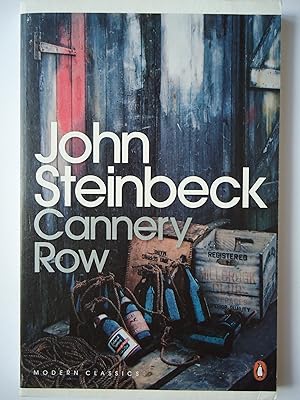
7) Cannery Row by John Steinbeck


Cannery Row has a wonderfully bucolic, nostalgic tone, which is odd because it reaches its second suicide by page eighteen, and that one with an icepick. Early on, the reader gets to see a metaphor of the book while looking into a rock pool. It’s a lush description of the creatures living their lives ‘tranquil and lovely and murderous’. 


It’s the solid shard of ice imbedded in the story, found in the suicides, the floating body, the casual references to spousal abuse and rape, that ensure that the book doesn’t become just a nostalgic look at character-filled poverty. Without that, it’d be like a chocolate box cover with picturesque poor people and their quirky lives. The book has the power to shock as much as it has the power to charm.


It is, however, a very charming book and, oddly, reminds me of nothing more than Cranford. Like that book, it appears to be a collection of short stories about a colourful cast of characters in a small location which becomes a celebration of the quiet heroic qualities of human niceness. In Cranford it’s Miss Matty but in Cannery Row, it’s Doc. 


Doc runs a marine biology lab, where he preserves sea creatures he has captured and sends them to university, school and industry laboratories. He invites young women over and plays them records of Benedictine monk chanting, he nightly visits Lee Chong’s shop to buy beer and he’s the a source of kindness and wisdom to everyone on the street. A group of very casual workers, live in an old warehouse just the road led by a man called Mack. The broad plot of the book is about Mack and the boy’s attempts to throw a successful party for Doc.


There are some wonderful sequences; the guys catching frogs, the woman who invites cats for a tea party, the couple living in a boiler who rent out pipes to people, the tour to catch octopuses where Doc eats brie with pineapple pies and a beer milkshake. There are also some wonderful sentences; like the one about the man going to a reform school where he was supposed to be taught violence but didn’t listen or the kid who couldn’t measure crayfish because ‘size relations just didn’t get through to him’. As someone with issues with size relations myself, I knew how the kid felt. 


I really loved this book and really enjoyed spending time with the characters, yet I felt the book was telling me something, by dappling the violence in with the charm, about the texture of life.


6) Charlotte by Katherine Shevelow 


Another book I’ve talked about before. I really regret not having read this sooner because Charlotte Charke’s life was a fascinating one, full of elements I really enjoy. Any story that involves cross-dressing, theatrical shenanigans and a resourceful, cheerful and independent main character, is likely to draw me in.


Written with the verve of a novel but all the notes and bibliography to make it trustworthy, I thoroughly recommend it.


Next week we'll count down to one.