Showing posts with label Fiction. Show all posts

Wednesday, 4 March 2026

Sam tells a story.

     I’m getting back into the novel I’m writing after some time away with my play and work kerfuffles and other things. To get back into it, I re-read what I had written and, at the same time, I’ve been reading a book about a Hertfordshire dragon-slaying legend and watching ‘Knight of the Seven Kingdoms’ - so knights and such have been on my mind a little and I thought I’d share this little section.

    Previously, Sam and Nat have had an argument about Nat wearing his London frock to church. It’s Easter, a man called Mr Stevenson did the lecture and stones from the ceiling fell in, prompting a mass panic (this really did happen). That night, Nat wakes up and goes into Sam’s room for a chat. That’s this section. Sam tells a story, inspired by his own love of chivalric stories, it’s also his way of apologising to Nat for the argument earlier.

It seemed important to have a little scene where the brothers bond, especially as I am going to test their relationship later on. It’s pretty much a first draft but any comments would be welcome. 


Natty lay in bed and stared into the darkness. He started to jiggle his leg, rolled over a few times, slipped the blankets and coverpane aside, slid lightly onto the floor and pulled out the jordan from underneath his bed. He made water with strained eyes and utmost concentration in the dim light, scared of the shame from any loose drops, before he pushed the pot back under. 

Now he was standing, he looked towards the door. He lifted one leg to climb back into bed but instead of getting back to bed he took a big step forward, carefully feeling out the way ahead with his toes before letting his heels connect with the floorboards. He crept with exaggerated care, as if someone could see him towards the door. He opened it slowly, wincing as the creak grew louder and more musical. Lifting one leg up, he waited for the shout or the nifty clip round the ear and not hearing it, snuck across the corridor and stood in front of the door there. It was not closed properly and Natty put her ear against it to listen for the rhythmic breathing that signified sleep. Hearing nothing, he pushed his lips into the gap and whispered loudly.

“Sam, are you awake?” He paused and listened for an answer and looked back along the corridor to see if anyone else had heard him before puckering up against the semi-open door.

 “Sam!”

“What?”

“Are you awake?”

A pause.

“Yes.”

Another pause.

“I’m coming in anyway.”

Natty only opened the door enough to let him squeeze in and closed it completely afterwards. He crept to Sam’s bed even more carefully, the floor being strewn with items, in particular, piles of books from the shop that could fall with a crash at the slightest touch. Having navigated the scylla and charybdi of Samuel’s room, Natty reached his goal and clambered onto Sam’s bed, who moved up to make space and held the blankets up to allow Natty to crawl in.  

They lay next to each other for a while, looking through the darkness and listening to each other’s breathing.

“Do you want to hear a story?” Sam asked casually, as if uninterested in the answer.

“I do, I do!” Whispered Nat enthusiastically, bouncing on the bed.

“Settle down then.”

“Is this a book story, a Bible story or a Sam story?”

“It’s a Sam story, but I have naturally been inspired by stories I’ve read.”

“Are there dragons?” 

“You shall never know if you don’t let me tell it.”

“I hope it does. I love the ones with dragons.”

“Lay still and listen. Attend, oh ye little children who thirst for tales of adventure and exploits of bravery. Be ye ever so small or humble in station, ye may achieve great feats and accomplish great deeds. There was once a noble knight of diminutive stature, Nathaniel of Lichfield was his name.”

“Nathaniel, really?”

“Yes and he was a complete minnow, a squab, a very ant-like knight. His helmet was an acorn’s cup, his greaves were made from the bones of a cat and his shield was a shiny farthing.  It’s a surprise his feet even touched the floor, his legs were so short. He’d climb a ladder to mount the mastiff that was his steed.”

“I’m not that small.”

“You’re not, but Nathaniel of Lichfield was. You’d have been a giant to him. The only figure he’d have been a giant to was the famous Tom Thumb. However, as small as he was in body, he was great in courage, impudence and fame.”

“So, I’m brave?”

“Nathaniel of Lichfield was brave,” smiled Sam, digging Natty in the ribs with his thumb. “Nathaniel of Lichfield was so brave that when the villagers of Elford reported the existence of a terrible wyrm.”

“A terrible worm, was he really that short?”

“Not worm, wyrm.”

“Wirrum?”

“Wyrm.”

“You promised me a dragon.”

“I promised nothing. Besides, a wyrm is a dragon, only one with no legs.”

“A dragon with no legs? That’s silly.”

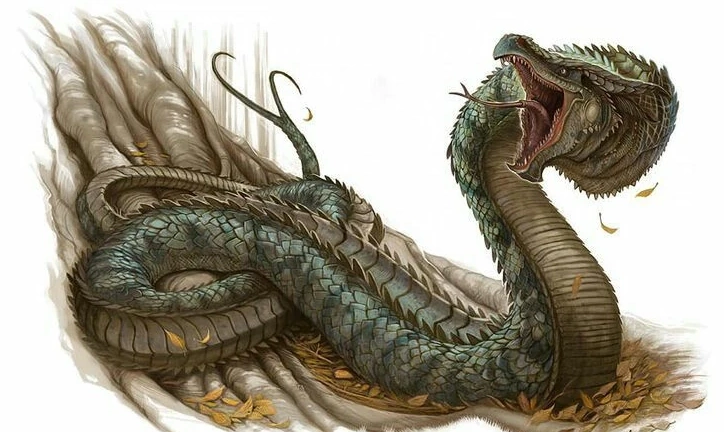
“On the contrary, it’s all the more terrifying. A wyrm slithers along like the hated serpent, his skin oozes foulness and poison which kill plants and gives the cattle murrain.”

“What’s murrain?”

“Oh it’s terrible. It means a sheep can’t bleat and turns a cow inside, out. From the wyrm’s lair springs a rot which seeps into land, water and air. The rot enters people’s homes and creeps up their walls, slides into their very souls where it sits, a cocoon of madness and evil.”

“And Elford had one of those?” Nat shivered.

“Yes, but this was long ago, in the reigns of good King Richard and bad King John. Robin Hood even tried to defeat the terrible wyrm, he used to practise his archery in the words nearby but his mighty arrows only bounced off the creature’s terrible scales. It was then they called Nathaniel of Lichfield.”

“Did I go?”

“I don’t know if you went, but Nathaniel of Lichfield immediately donned his armour and climbed upon his noble steed, a mastiff called Hermsprong. As he rode, the great dog ululated a song of glee and freedom until they reached Elford. When he got there, what do you think he saw?”

“The worm?”

“Yes, the wyrm, wrapped around the tower of St Peter’s Church, the mass of its great, stinking body resting on the roof. When the wyrm saw Nathaniel of Lichfield, he began to laugh. As he laughed his scales tensed up and great stones flew from the tower and roof, embedding themselves in the blessed ground surrounding it.”

“Was it like..?”

“Exactly so. The great beast mocked our hero, claiming that he would swallow him in one gulp, leaving him at the mercy of the monster’s bile and digestive juices.”

“That’s horrid! What did I do?”

“Nathaniel of Lichfield was not afraid, not he but he was also no fool, so he rode away and across the river.”

“How do you ride across a river?”

“He was on a dog and the humble canis is a natural swimmer. Nathaniel did this because he knew that wyrms can’t cross running water. He watched the wyrm uncoil itself from the church and slither down the lane to its lair. That’s when Nathaniel of Lichfield acted. He rode Hermsprong back across the river, dismounted and led him to a clump of shrubbery. Then he directed the dog to dig a hole large enough for him to crawl into. He then ushered the dog away and waited. He waited till his legs were saw and his feet were numb. He waited as long as Mr Stevenson speaks. Then he heard it, shlurp, schlurp… schlurp, schlurp.”

Natty looked at Sam confused.

“That’s how the worm moved,” Sam explained, wiggling and making the schlurp sound. Natty joined in and the two boys wiggled and schlurped for a short while.

“So the worm came schlurping onward and Nathaniel called out to it from his hole. The worm went closer to investigate. You know what wyrms like more than anything else?”

“Eating people?”

“They do love that, but more than eating, they enjoy gold and treasure, especially fairy treasure. That’s important to Nathaniel’s ruse. So Nathaniel called to the wyrm in a little fairy voice and the great beast responded, asking who was calling him. ‘I’m Lichwort,’ he said in his fairy voice, ‘a poor fairy lost from his fairy band. Could you help me carry all this fairy gold back to my fairy circle?’ The wyrm couldn’t resist temptation such as that, and being a creature full of greed, he agreed to help, even though he planned to do no such thing. The wyrm came closer to the hole.”

“Schlurp, schlurp, schlurp.”

“And as the creature’s huge head hovered over the hole, Nathaniel steeled himself and gripped his lance tightly. When he saw the huge, yellow eye hanging above him, Nathaniel thrust his lance deep into it. He kept pushing through the eye and into the brain. Brain effluvia poured down the spear and onto Nathaniel’s hands.

“What’s effluvia?”

“It’s like muck.”

“Ewww,” Nat giggled and pretended to wipe his hands.

“And with that, the Wyrm was dead and Sir Nathaniel of Lichfield was the hero to all. The citizens of Elford lifted him on their shoulders and the faithful hound, Hermsprong was given a nice, juicy bone.”

The two boys lay back on the pillow and shared the night’s silence.

“Did you see Mr Wakefield?” Sam asked.

“When he squeezed through the window?”

“I think he lost a shoe.”

They smiled into the dark at the memory. Then Sam started laughing, it was lower than his speaking voice, slow and loud like a baby hippopotamus. Nat started to laugh also, a trill over Sam’s base. When Sam stopped laughing, he took a deep breath.

“He was ‘of good courage, wasn’t he?” he said, starting to laugh again. The bed began to shake. “St Mary’s was a great house of defence.” Sam started to laugh again, Nat couldn’t help joining in, even as he was puzzled at the joke. 

There was a knock at the floor and both boys sat up, the laughter strangled in their throats. Nat slid out of the bed, hopping lightly on the chill floorboards and scampered silently to the door.

“I forgot one detail about the wyrm,” Sam said, “his name.”

“What was his name?”

“Samuel.” 

Nat slipped out the door, padded across the landing in his bare feet and back into to his cold bed. 


Wednesday, 25 September 2024

Review: The Fraud by Zadie Smith


I've previously talked on this blog about the writings of William Harrison Ainsworth and some writings about him. He features prominently in Zadie Smith's newest novel,
The Fraud. 

 I love Zadie Smith in concept, she often sets her books in places I know intimately. The school I used to work at was mentioned in her novel NW, and I met her and she was lovely. But I’ve never got on with her work, I reckon it’s because one of her biggest influences is Henry James and I’ve never got on with him either. Yet The Fraud is almost designed to appeal to me, and I enjoyed it a lot.

The Fraud is partially about the Tichbourne claimant, a man who said he was the lost heir to a large inheritance, despite being obviously (and I mean ludicrously obviously) not. This was a story that took the Victorian era by storm and it’s one of those little stories I’ve long been interested in, I love a bold con-artist and have read and written about Psalmanazar, Princess Caraboo and Martin Guerre. The claimant, Arthur Orton, was buried in St Pancras Cemetery, one of my lockdown haunts.


The story of the Tichbourne claimant is told through its impact on the Ainsworth family. This consists of fading writer, William Harrison Ainsworth, his two grown daughters, his new wife (previously his maid) their daughter and housekeeper Mrs Touchet, who is the point-of-view character. I’m a big fan of William Harrison Ainsworth and have enjoyed all of his books I have read. I also find him an interesting person and loved Shark Alley, a novel written by his modern biographer, Stephen Carver. (Who is mentioned in the acknowledgements).


Through the experience of Mr Bogle, a key witness in the Tichbourne case, the reader is taken to Jamaica in the era of slavery, a section of the book that is striking in its offhand brutality. People are mutilated, boiled alive and subject to a terrifying disease called yaws but these horrors are everyday events and more powerful for the lack of drama attributed to them. It’s also interesting how confused Bogle is when the English complain about being ‘made slaves’ when arguing over the finer details of representation.


While the title of The Fraud seems to put the Tichbourne claimant story at the centre of the book, it’s easily the weakest element. Mrs Touchet, our viewpoint character, is dragged along to the trial by William Harrison Ainsworth’s second wife but becomes deeply engaged and invested in the witness, Andrew Bogle. The absolute strangeness of the case is touched upon, the fact that Arthur Orton is nothing like the missing claimant in body or education. That he speaks no French, when the person he’s claiming to be grew up with it as a first language, that he’s missing a tattoo, that he’s of a completely different build. The book also goes into the delusional nature of his supporters, people like Ainsworth’s second wife Sarah, believe in Orton as a bizarre statement of class consciousness. She’d probably be an anti-vaxxer these days.


If anyone in the book is designated the fraud (though most of the characters are conning themselves or others about something) it’s probably William Harrison Ainsworth. He’s depicted as a man who had initial success as an author because he was so liked and likeable, with a gift for joy, but not one for writing. Touchet often talks about how she pretends to read his books, groans at the historical details in them and finds his books terribly dull. She says that he’s easy to like, his books are not. I happen to disagree. I find him to be an author who is very good at creating vivid images and set-pieces, but not so good at dialogue. He’d have been a killer silent film director. There is a sense that he and Arthur Orton have both managed to fail up, where any failure would be disastrous for Bogle or Touchet.


Mrs Touchet is a really interesting figure. Seemingly puritanical and frosty, she is also the lesbian lover of Ainsworth’s first wife, Frances and a BDSM mistress to Ainsworth himself. She’s tetchy, irritable and I loved her line about living in the countryside, “the lamb didst bore her.” She’s an abolitionist because she’s drawn into it to impress Frances but is then horrified at the real stories she hears from Bogle. In some ways she is the real fraud of the book, as the real Mrs Touchet died before most of the events in the book even happened. The character is integral to the novel but in reality was not even there.


The most mysterious character, fraud-wise, is Andrew Bogle. The courtroom and the book initially place him in the position of loyal servant, but how much of what he does is driven by survival or even hatred? He seems the most clear and transparent of the characters even as he is the least.


The three elements of this book don’t dovetail into each other but rather reflect and rub each other in strange ways. The William Harrison Ainsworth frame story seems to be particularly disconnected from the Tichbourne case and Bogle’s narrative and really only makes sense as a narrative choice in allusive or eliding ways, only really seeming to fit when thought about. In some moods this strikes me as more satisfying than if there had been clear links, and in other moods it strikes me as less. It does mean I’m happy to give some of Zadie Smith’s other novels a second go. 


Wednesday, 21 August 2024

600th Post: SPECIAL ANNOUNCEMENT


I’m very happy to announce that my novel Death of a Dream-Pedlar is now available from Amazon as a paperback or an ebook.


My launch price for the paperback is £10 and the ebook is 99p. Naturally I recommend the paperback.


In many ways, this book has been some time coming. I started a short story with many of these ideas in 2005, a chunk of the book formed my Masters dissertation in 2009 and I first finished it and tried to get it crowd funded in 2014. 


Ten years later, heavily re-written and here it is, actually coming out. Part of that has been laziness, part of it life, part of it the insistence that only standard agent-publisher publishing is the only legit kind. I’ve rather come around to self-publishing as the only really Grub Street approach to new publishing - but I’ll write another piece about that.


It’s funny all the comments I’ve got from agents. So many pieces of praise, so many agents describing the book (and me) as wonderful or great but always the ‘but’, they thought many people would really enjoy the book but they didn’t know how to place it in the right market who’d try it in large numbers.


So here it is.. I’ve tried to solve those problems myself. “A mystery, a lark, a look at the nature of dreams and a celebration of the triumph over suicidal ideation - Death of a Dream-Pedlar is a lively exploration into a curious world with an unforgettable heroine.”


And to make it easier to try… the ebook is only 99p., Be brave, give it a go.


Oh, and I just made a hardback also.


Wednesday, 6 January 2021

Countdown of the best books I read in 2020 (5-1)

If you wish to look at all the books I read in 2020, check out this booklist.

If you wish to see all the books I acquired in that year, check out this one.

And now for the top five.


5) Dangerous Liaisons by Choderlos de Laclos


I wrote about the Dr Johnson Book Group meeting which talked about Les Liaisons Dangereuses but didn’t really say all that much about my own opinion. This was a book that grabbed me hard and fast and didn’t let me go.


The ironic tone of the book is immediately and masterfully established from the first page of the book, which purports to be a publisher’s note. The ‘publisher’ of the book has the suspicions that the text may not be actually a genuine collection of letters but, horror of horrors, a novel. He notes that if they are a collection of letters, they can’t be modern French ones, as the current French aristocracy are so virtuous that the characters and events of the book could not possibly happen there - a point made even more ironic by the fact that the book came out four years before the Revolution.


I’d been aware of the book for a while without having seen any version of it but I had been led to believe that the main plot is about Valmont and Merteuil manipulating and perverting the virtue of a young girl newly out of a convent. While this is a plot of the book, I’d say it’s probably the least of the three main plots. More important, are the games that Valmont and Merteuil play against each other and the plot of Valmont trying to seduce Présidente de Tourvel, a woman of almost-ironclad virtue.


Merteuil is by far the most interesting character in the book. Unlike Valmont, who can live a rakish life and be a figure in society because he’s male, Merteuil must always preserve a clean reputation whilst also having her lovers and intrigues. She manages to be everyone’s friend on the face of it, whilst being an enemy to everyone behind their back and manages to keep those two opposites in taut balance. The stand-out letter of the book is the 81st in which she talks about how she grew to become the person she is, someone who no-one can second guess, especially the audience.


Valmont is also interesting, though weaker than Merteuil. He has a reputation for seduction, though it’s revealed throughout the book that while he knows his techniques back to front, he has a rather limited playbook. Although he is involved in the convent girl seduction plot, his main drive throughout the book is seducing Tourvel, which he does so he doesn’t ‘suffer the ridicule of being in love with her’, which he does, even as he won’t admit it. She is a tragic character, who fights as hard as Pamela to maintain her virtue but succumbs and her letters, though the least interesting, are never too long to overstay their welcome.


The very best stuff is the play between Merteuil and Valmont. She’s the driving force behind Cecile’s seduction and feels Valmont’s seduction of Tourvel makes him ridiculous and a spent force. Early on, she accuse Tourvel of being badly dressed, an insult Valmont bats back by agreeing that any clothes are a disservice to Tourvel’s body. As the seduction becomes even more drawn out, Merteuil becomes increasingly dismissive of Valmont. When he finally seduces Tourvel, Merteuil’s congratulation is the wonderfully sarcastic, ‘you are well endowed, I am sure, with a good opinion of yourself’. I very much enjoyed how the players played each other, to the downfall of both.


This is in no way a book which makes the reader feel good at the end but it is thoroughly gripping throughout. It was fascinating to read a book which uses the word ‘love’ so many times but is filled with so much hate, Les Liaisons Dangereuses still has some danger in it.


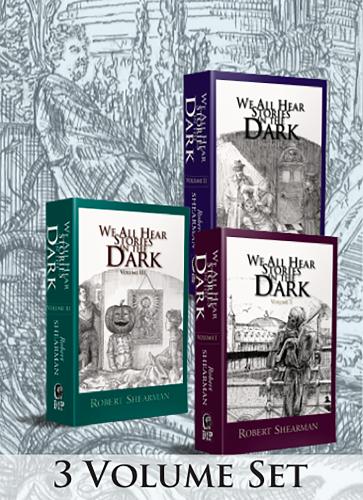
4) We all Hear Stories in the Dark by Robert Shearman


This book kicked me out… I wanted to read further but it didn’t let me.


I know books don’t usually do that but We All Hear Stories in the Dark is not an ordinary book. It’s a near two-thousand page short story collection where at the end of one story there are hints for several others, the reader then moves on to the next story following the hints. These leads to a totally unique reading experience, dipping in and out of three volumes as the stories lead you. There’s a huge sense of excitement when you finish one story and receive suggestions for the next which strengthens the engagement with the next. 


One of the strangest elements of the book is that you never know exactly how far in the book you are. In a normal book this is easy, you merely look at the pages you’ve read and see how many are left but jumping around as you do, there’s no way of knowing. Unfortunately, this means that the book can also buck and knock you off before you are ready, which it did to me.


Of course, I could have ignored the rules, gone back to before I was lead to the end or simply turn to another story but part of the charm of the book, it’s own peculiar magic, is following where it takes you - even if that is to a premature end. My first temptation to break its rules was when I was at work with one volume and lead to another that was at home, I could have picked another story, one in the volume I had with me, but that would have seemed dishonest in some way.


As for the stories themselves, they were a fantastic mixture yet all hung together. I don’t wish to spoil the surprises in store for any future reader, but each one lived up to the promise in the (secret) essay towards the middle, they each packed a punch and disturbed in some sense. Some of the stories were instantly unnerving, some grew unnerving and some became unnerving at the end. There were ideas and images in this book which will stay with me for a long time. Although I preferred some stories than others, I can promise that none that I read bored me and many gripped me tight. It’s not just that the book is structured in such a unique way, it’s that it’s a book of really good stories structured such. I usually get tired of short stories and have never read thirty-four of them in a row and that stands testament to the quality of the stories.


 I haven’t finished with this book, I will return and I shall conquer it. I’ve even sussed out where the secret map to the quickest way through the stories is, but that would be cheating, wouldn’t it?


3) Essays by Michel de Montaigne


I talked at length about this book here. If I’d stopped reading at the end of the first or second sections, I probably wouldn’t have put it as high as I did but the more personal third section brought my much closer to Montaigne and the last essay ‘On Experience’ is one of the most inspiring things I have ever read, celebrating the sheer glory that is the ordinary life.


2) Gilgamesh Retold by Jenny Lewis


I’m a fan of national myths and Gilgamesh is a particular favourite of mine, not only because it is one of the oldest of its kind, nor because I had a bit of a Sumerian ‘thing’ when I was fifteen but because it seems so refreshingly honest compared to later myths.


Gilgamesh is full of masculine energy and he’s an utter pain to his citizens who pray for something to distract him and the Gods create Enkidu. Gilgamesh and Enkidu start out as rivals but after fighting each other become best buds and go kill monsters together. Having done that, Enkidu dies, not in battle but of illness and it sends Gilgamesh on a huge downward spiral in which he realises he is mortal. He seeks immortality, almost gets it but doesn’t and returns home a much better king for having realised his mortality. I love how he is broken and remade in the text.


This is such a wonderfully engaging and easy to read retelling of the ancient myth. It woulx make a wonderful dramatic reading. Jenny Lewis varies style and meter in different chapters of the story, making the mood and meter fit tremendously but also giving something of the different oral voices telling the same story.


Of particular quality was the fight with Humbaba, the ogre who guards the cedar forests. It’s written in a polyphonic style, with lines being said over other lines, building a tension and a ferocity which is then broken when Humbaba is killed and the page is full of white space. It makes the act more than a monster killing by a pair of heroes, it makes it a vicious act, one of desecration and destruction and a reflection on how mankind destroys to build itself up. This notion of sacrilege is also carried into the part when Gilgamesh and Enkidu kill the Bull of Heaven, as the stars and planets of which it is comprised begin to dim.


Enkidu’s death is another polyphonic piece, as death calls and as Enkidu rages against it and the people in his life that brought him there. Gilgamesh’s wandering in grief had an Anglo-Saxon meter and had a similar tone to The Wanderer. All the poetry flowed well and the different types broke it up and refocussed the mind every few pages (thus relieving that weird meter hypnotism you can come across in less varied works).


I read the whole piece in one go and look forward to reading it again soon. It’s great.


and finally, my favourite book of 2020…


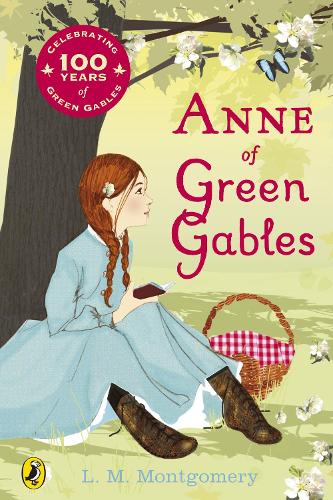
1) Anne of Green Gables by LM Montgomery


As soon as I picked this book up, I felt that I was in good hands, that the author knew what they were doing and I could relax in their company. The first hint that this book would be a little special is the initial description of Anne, where Montgomery mentions that the ordinary observer may note a number of things about her but the extra-ordinary observer would note much more - especially when it then goes on to add that Matthew noticed none of it.


I think the book had two huge holes it could have fallen down. The first that Anne could have grown to be extremely irritating, she does talk an awful lot and her emotional, full-colour way of expressing herself could prove extremely aggravating. Luckily, it becomes very clear that Anne’s ebullient personality has a darker, lonelier stem and the fifth chapter ‘Anne’s History’ does a lot of the work in grounding her personality, showing how her excessive imagining is a thin paint over true fear and worry. It’s also helped that she is contrasted to the quiet Matthew and controlled Marilla. 


The second danger is that the book could have become cloying and sentimental. In a lesser book, the seventh chapter ‘Anne says her prayers’, Anne would have meekly submitted herself to Marilla’s teaching of stock prayers but that isn’t what happens. Anne stubbornly forges her own prayer with whatever she has lying about in her head and Marilla realises that to teach lisping, wispy prayers to her wouldn’t work. The characters aren’t perfect and they have just enough grit in them to stop them grating.


As much as I was enjoying the episodic events, in which Anne gets into a scrape or another, the book was starting to become a little too repetitive - and then rather abruptly changed. There was a large time-shift, Anne was growing up and the page-long, breathless monologues started to get shorter. Much like Marilla, I also began to miss the younger Anne as a more mature version took her place. I was also aware that a chapter called ‘The reaper whose name is Death’ was coming and I was not looking forward to lose a character.


The only element of the book that I would say didn’t work for me was the end. There were two endings that this story could have reached, a tragic one where hopes were dashed and a positive one where all ambitions achieved. The book tried to have its cake and eat it, landing awkwardly as not quite one ending or the other.


Despite the wobble at landing, I needed a book as charming, well-told and heartwarming as this and I am very thankful I picked it up from a garden wall on my way to the park.


Here's hoping for a smoother year but with as many good books.