Wednesday, 30 June 2021

The Belle's Stratagem at the Dr Johnson Reading Circle


 Play reading at Dr Johnson’s Reading Circle is always a slightly unknown quality. O’Keefe’s Wild Oats had been a surprising delight, whereas Fielding’s A Modern Marriage had been far more cynical than we were prepared for. Thanks to Angela, who gave us a brief introduction to the playwright Hannah Cowley, we were not flying completely blind when it came to her comedy The Belle’s Stratagem 


Born in Tiverton, Hannah was the wife of an occasional reviewer who got a job with the East India Company which promptly killed him. At first supported by Garrick, Hannah wrote a range of scripts including an oriental musical comedy. Although Sheridan, the next owner of Drury Lane was not as supportive, she still built up her career and became part of the Whig set with the Duchess of Devonshire. The Belle’s Stratagem was her most successful play, dedicated to Queen Charlotte and with the part of Letitia becoming one of the favourite roles played by Dora Jordan, subject of our last book. The play has been performed a couple of times this century, most intriguingly in 2011 to a soundtrack that included the Spice Girls. 


In our first session we read halfway into the second act and, unlike some of the other plays we’ve read, the plot can be easily described. It primarily features two couples, one who need to intensify their relationship and one who need to cool things down a little. 


The first couple are Doricourt and Letitia. He’s recently returned from a Grand Tour and is filled with continental fancies. He’s dressed in all the finest new fashions, has the swankiest new coach and has hired only foreign servants. He claims this not because he’s foppish at all but that English men are too independent to make great servants, especially when there are those naturally servile Frenchmen all about. To illustrate this, we meet once of his servants who speaks in an outrageous accent in fluent Franglais. The trouble is, he has also formed some opinions about English women. While they may be naturally beautiful, intelligent and kind, compared to the mysteries of the French and Italians, they simply aren’t all that exciting. 


This is a problem for Letitia, the woman Doricourt has returned to England to marry. While the marriage was settled years ago and is still going ahead, she’s fallen head over heels for him and is none-too-pleased that he seems merely content to settle for her. 

‘He should have looked as if a ray had suddenly pierced him,’ she complains and so comes up with a scheme to spice up their relationship. She plans to be so odious that Doricourt learns to hate her. Having read a fair few romantic comedies, she feels that a passionate hate will be easiest to transform into passionate love. Surprisingly her aunt and father support this risky plan.


The other couple are Sir George and Lady Frances. George has surprised all his friends, forsaking all the fine ladies of Paris to marry Frances in a whirlwind marriage. He is besotted with her, rumoured to be so in love that he let her little bullfinch go because he was jealous of the love she gave it (though there are also rumours that he killed it, or that she let it go… primarily because our head rumour-monger, Flutter, is a little sloppy when it comes to detail). He wants to spend time with his new wife and is cross that the whole of London keeps coming round to visit her. When Doricourt comes to meet her, he tries as many pathetic excuses as he can, but it gets him nowhere. 


Lady Frances herself has led a sheltered upbringing and is content to live a quiet life with George. He has old fashioned views, longing for a time in the past when people lived quietly and everyone filled their station properly: young women were young and old women were old, dowdy and judgmental. Frances is tempted when Miss Ogle and Mrs Racket come round offering her a day of pleasure and a night on the town. George is dismayed, worried they mean to turn his new wife into one of these ‘fine ladies’, a licentious, materialistic, money-grubbing drain who is never at home. Mrs Racket makes a spirited response, describing the ‘fine lady’ as benefit on society, polite to all she meets and bringing joy and pleasure wherever she goes. Frances is won over, especially when she finds out George did free her Bullfinch. She decides to go and sample some pleasure.


The real joy of this play is the dialogue, there are no flat characters and everyone has their own little bit of business or point of view. Particularly fun were some of the more incidental characters, such as Crowquill, the grubby hack, ready to pay money to servants for gossip, or Courtall, trying to hide from his inconvenient bevvy of country cousins. There’s also the character of Flutter, a gossip who loves a good story so much that he finds it impossible to keep them straight in his mind. From him comes a story (later proved false) about the man who bought a distressingly life-like depiction of people dying of the plague for his nursery wall, his reason being it was the same size as the Dick Whittington picture already there and so they match.


In performing it, the liveliness of the writing really came to the fore, with the conversation galloping along nicely, not snarled up in an overcomplicated plot. It was also pleasant to be among nice characters who will deserve their matchings and pairings despite the bumps they may experience on the way.


In out next reading, we’ll hopefully see Letitia’s stratagem begin to play out and see her try and make Doricourt hate her, we’ll also see if Frances enjoys her day of pleasure and what reaction George will have to it. Will Courtall keep escaping his cousins? Will Crowquill get a scoop? Will Flutter finally get a story straight? We’ll see.




Wednesday, 23 June 2021

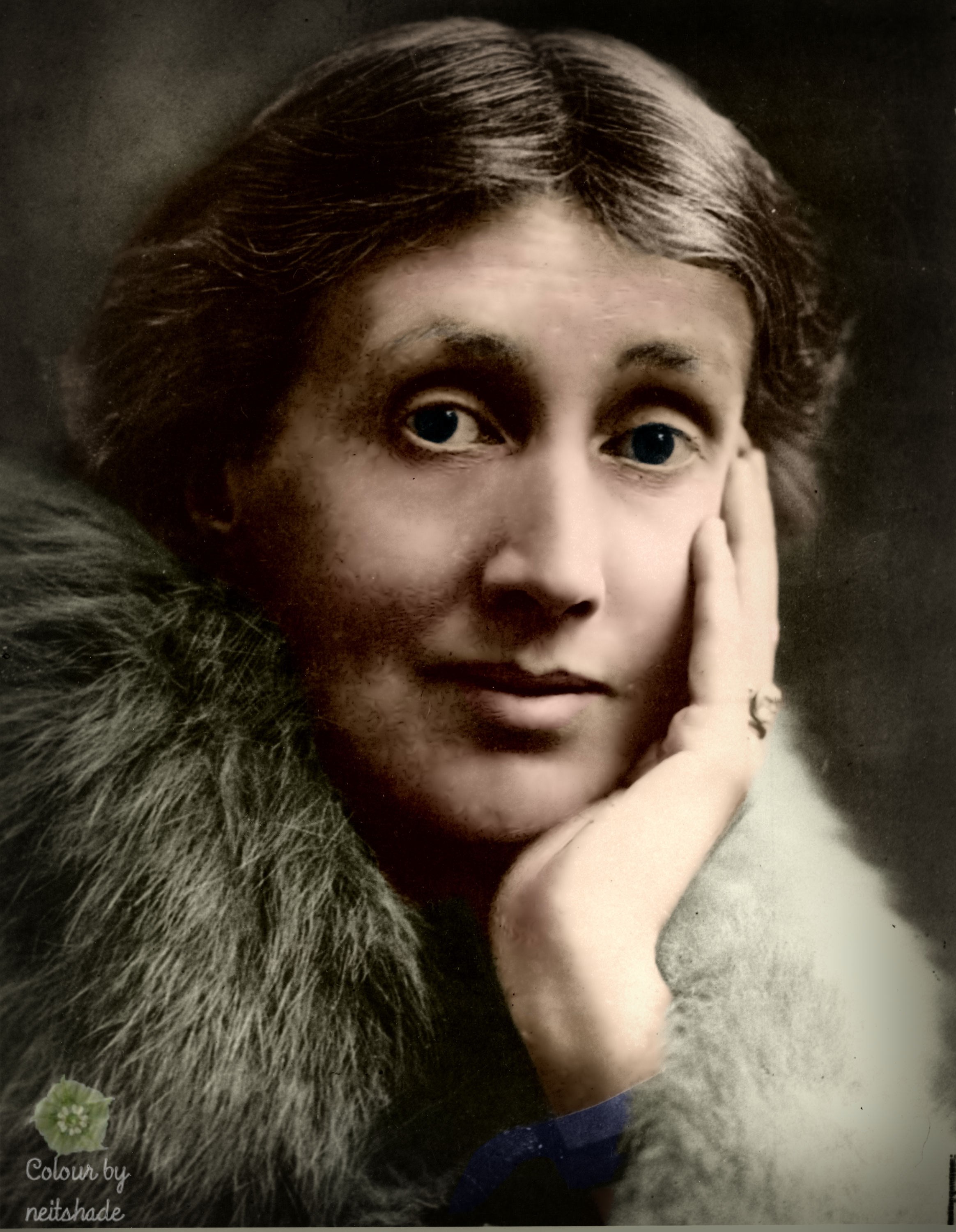
How I Learned to Stop Worrying and Embrace Virginia Woolf


I must admit, I was afraid of Virginia Woolf. I’m a little wary of modernism in general, partly from lack of exposure but mainly because the exposure I’ve had was off-putting. While there is a lot of experimenting in modernist texts, it feels to me that it comes from either deep ideological reasons I don’t feel or a sense of showing off. I’m happy with a confusing, experimental text like Tristram Shandy because it seems to come from a joy of playing. I never got much sense of joy from modernist stuff.


Then I read Ulysses. True, I didn’t follow all of it and I really disliked any time hanging with Stephen Dedalus but I love Leopold Bloom and began to see a very traditional novel buried in all the argy-bargy. When I read Middlemarch shortly afterwards, it seemed the more experimental novel in the way it positively encouraged the reader not to engage with the characters.


Having tackled that big beast, I was still nervous of Virginia Woolf’s shorter works. The little I knew of her life, with multiple suicide attempts that culminated in a successful one implied that they were going to be truly joyless pieces. What’s more, I’d heard she was significantly more intellectual and controlled than Joyce, denser and harder to follow. I had these images of impenetrable blocks of miserable text, cold and aloof. I found I was very wrong.


I took the plunge with To the Lighthouse and found myself enjoying it so much I quickly read The Waves and Mrs Dalloway with only a book in between them. As it stands, I’ve read all the Woolf in my own collection and may have to seek out more. Rather than cold and impersonal, I found these books to be rich in character, in specific, telling detail and full of humanity. I even found a few good jokes.


At first, I found reading To the Lighthouse a little like swimming through it, things can be a little murky and it does feel that we are too close to the characters and things around them, there isn’t the clear ‘top-down’ approach of other novels and it takes a little getting used to. That said, I didn’t get lost in the book. What I had anticipated as vague musings were actually very concrete feelings and thoughts that were directly relevant to the characters and the things they held dear or feared. This meant that those musings built up character but also that it was very easy to tell which character you were lingering in at that moment. The same was true of The Waves, which was very careful to orientate you in which character you were spending time with, and the characters were so clearly drawn that it would have been possible without this care. Mrs Dalloway was a breeze.


While I feel her technique is not a very accurate rendering of a momentary stream-of-consciousness, her way of reporting the characters shifting thoughts seemed to accurately convey how we think about thinking. The experience of life as Virginia Woolf paints it, is that we flick between all these different selves and it’s only to other people that we have consistent selves. There’s a lot about how people fail to connect, how little of those around them they actually see, even those they love. Yet, these works show moments of connection and communication - they are are imperfect but possible and worth so much for that. Though I do find her characters tend to worry about the lack of connection far more than most people do, they also think far too much about death (and a number of characters long for it.. and find it).


My biggest surprise was how much I loved her characters. Whether it was Bernard in The Waves, who feels his best self is when he’s mixed with others, a true extrovert; or whether it was Mrs Ramsay in To the Lighthouse, keeping her world together through almost imperceptible moments of empathy and connection. I felt for Mrs Dalloway, analysing her past and the possible missed opportunities or poor Rezia, watching her lover disappear in front of her. Where I was expecting novels of ideas, and to a degree found them, I was not expecting novels filled with realistic people.


As for jokes, I’m sure To the Lighthouse starts with one, The first two sentences are short ones where Mrs Ramsay declares that the next day’s trip to the lighthouse shall go ahead. We then have a page long sentence of her son James delighting in that news, how his happiness colours all the objects around him and how strong his emotions flow in him. The next is a very short sentence of his Mr Ramsay saying the weather won’t be good enough to go. It’s a short puncture to the long sentence and a comic reverse. There’s also the part in Mrs Dalloway where all the characters watch a royal car moving its way up The Mall, filled with patriotic sentiment before being distracted by a skywriter advertising toffee - it’s not a knee-slapper, but I thought a good comic moment.  


I found a depth and richness to these books that I haven’t found many other places, a real summation of life, a real evocation of those private moments in private mythology. They really capture a sense of being, a sense of friendship and the eternal struggle to make life count. I’m surprised to say it, but I found Virginia Woolf a life-affirming experience.


Wednesday, 16 June 2021

Video: Princess Caraboo - the biography, the biopic and the novel.

 I took my Caraboo reading to their natural conclusion, a look at the film and a comparison with them to the book versions. I also give a little outline of how I'd tell the story.


Wednesday, 9 June 2021

Review: The Curious Tale of the Lady Caraboo by Catherine Johnson


The Curious Tale of the Lady Caraboo is a young-adult novel by Catherine Johnson that takes as its base the historical story of Princess Caraboo, and in a note at the back pays particular notice of John Wells’s biography Princess Caraboo. Having just read the biography itself, I was intrigued to see how an author could work a novel from it.


The inventions start immediately and brutally, with a harrowing depiction of a roadside rape, as two farmers force themselves on the poor Mary Wilcox. As she endures the experience her memory goes back to an also invented dead baby and the horrors of losing him. When it’s all over, she picks herself up and declares that she is no longer Mary Wilcox but Princess Caraboo and she will no longer have to live with the pain and indignities she has suffered.


It’s certainly a striking beginning and provides an interesting impetus for the creation of Caraboo, as a way of coping with trauma and shielding herself from her pain. Throughout the book, when we view the world from her perspective, it’s clear that being Caraboo helps her reclaim her agency and power. It’s an interesting take on the fascinating story of Caraboo, of why a cobbler’s daughter from Devon would decide to convince people that she’s the princess of a far-eastern spice isle. It also means that the book declares her fraud from the beginning, the story isn’t going to tease an ‘is-she, isn’t-she?’ but explore the fraud itself and her motivations behind it. 


The book then goes to another point-of-view, the invented daughter of Mrs Worrell, Cassandra. Again, I was a little unsure of why invent a daughter for Mrs Worrell when her lack (and desire) for a daughter, after her own had died, seemed to be a big reason for her falling for Caraboo so quickly. Anyway, in this book there is a daughter and she wants more from life. Particularly, she wants the pleasure of being the wife of Edmund Gresham, her brother’s rich friend. Her role in the book is to serve as a friend of Caraboo and to have a sub-plot about her choosing the hot-hunky but poor son of the inn, or the cold-dashing and rich Gresham. I suppose all YA must have a love-triangle. It’s through hunky that she meets Caraboo and takes her back to Knole House.


The (real) Worrell son is currently in London being absolutely foul to a prostitute who’s been led to believe he loves her, as he leaves she shouts that he can’t even understand real love as he’s only ever paid for it. Will the selfish son learn love? Will it be with the strange and mysterious Caraboo? Will there be a peculiarly a-historical and not particularly realistic in-universe happy ending?


While at Knole House, Caraboo is tested on by a quack intellectual who is not Wilkinson. He even uses electro-shock on her, burning her in the process. I can’t really understand why that scene existed, except to add another bit of drama and nastiness. There is also Captain Palmer, who claims he has been to Caraboo’s fictional island of Javasu and can speak the language. He was a real figure, a very minor figure in the biography but he becomes the villain in this, blackmailing her into possibly going off with him round fairs and threatening her with rape.


And here’s my problem with the book - while it’s an engaging novel in itself, the ways the author deviates from the historical truth hint at something ugly. She’s aged down to 17, she now has mixed race parentage and skin (so other characters can comment on it) she is at constant threat of rape as well as being found out. The book started with an invented rape and a fictional dead baby.


 If anything, it didn’t feel that the true events were being shaped to fit a narrative better, but that the elements added were done so to manipulate the reader. I don’t like to read a rape scene, nor did I need a scene of her hair burning because of a faulty electro-shock machine, nor did I need memories of dead babies.. like the the invention of Cassandra and her love-triangle, or the happy ending, these all seemed like they existed to pull at my emotions and force me to remain engaged with a story that I feel could stand on its own.


Wednesday, 2 June 2021

Review: Princess Caraboo by John Wells


Princess Caraboo is an unusual book. Rather than the film being made of the book, this book stems from the same body of research that created the film, rather like The Return of Martin Guerre by Natalie Zemon. The book is structured in three parts, the first being a telling of the Lady Caraboo legend, the next being an in-depth look at the person behind it and the third being a fascinating, if somewhat meandering look at the process of assembling the research and writing the film.


The book chooses to begin in a village just outside Bristol, where a strange woman is found wandering. She wears a simple black dress, a black turban and appears to speak no English. She is, technically, in breach of the law and could find herself imprisoned, or at the very least forced back to her home parish - yet which parish is her home one? Is she even English? After some to-ing and fro-ing, she finds herself being looked after by Mrs Worrell, an intelligent American married to a local bigwig. She convinces him that the woman is something special, from a great distance and possibly even royalty. She even finds a name, Princess Caraboo.


The house becomes a beacon for any local intellectuals, all wishing to discover more about the elusive woman, they discover she comes from Javasu, that she is the daughter of Jesse Mandu and that she is mixed race of Chinese and Malay origins, which explains the unusual fact that she looks like a dark-haired European. The woman has a number of strange accomplishments and habits; whether it is washing her cup after each drink, only eating meat she’s captured herself or praying to the God Alla-talla from the roof. What’s more she’s skilled in climbing trees, shooting self-made arrows, or swimming naked in the pond.


While here Javasu script was declared ‘humbug’ by Oxford scholars, a local renaissance-man, Dr Wilkinson declares her genuine and publicises her around the country. This is Caraboo’s downfall, a previous employer recognises the description and confirms that she’s actually Mary Baker/Wilcox, a cobbler’s daughter from Devon. To avoid embarrassment, she’s shipped off to America.


In some ways, her story was much like George Psamanazar, a man from the beginning of the eighteenth century claiming to be from Thailand. The impostures worked in similar ways, both kept their invented languages consistent, both were also consistent in their habits and backstory. Caraboo’s deception also worked because of her prettiness, her dignity in bearing and her skill in listening to people who think she can’t understand them and enacting their prejudices and expectations.


If anything, the second part of the book is more interesting, detailing Mary’s life before she was Caraboo. Much of the part is taken from a journalist called John Gutch, a keen collector of hoaxes, he bought what he thought were the papers of famous fake Chatterton. Amusingly the papers he had were false ones. One of the fascinating tensions in this part of the book is that although Mary is not playing Caraboo, she still has an instinct for drama and story that makes her testimony suspicious - more amazingly, much of what she claimed about her early life can be backed up by documentary evidence.


The daughter of a cobbler, she worked in Exeter for a while before running to London. Prone to fevers, she collapsed at Hyde Park and was taken to St Giles poorhouse where she was cupped on the back of the head to cure her. She worked for families in London, before deciding to join the Magdalen Hospital, a charity for reformed prostitutes. She said she did it because she liked the uniforms and her entry papers detail her story, which reads like an eighteenth century amorous tale. While she may have been paid for sex at some point, it’s not even clear she ever was a prostitute. When she got tired of the place and left, she worked for a few more London families, went back to Devon and then back to London. By this time she had a new surname and a child. The exact nature of her marriage, or the father of her child was never confirmed, Mary having any number of stories depending on who asked her. The baby was left at the Foundling Hospital where he was raised and given a new name. This completes Mary’s tour of some of the most prestigious London charities of the early nineteenth century.


She claims she hiked back to Devon dressed as a man, where she was accosted by highwaymen and nearly forced to join them on a job.. probably not true, but with Mary it’s hard to say. She started begging, first as a French woman, then an Italian and then as the mysterious Caraboo - bringing us back to the beginning of the book.


The third section of the book details how John Wells was commissioned to write a script about Caraboo as a ‘ridicule against pseudo-intellectuals’ and how he worked it up, adding in a love story with Gutch and adding a bit more pizzazz, the real hoax only lasting a few months. He also talks of how he tracked down the details of her earlier life and of his meeting with Mary’s descendants, discovering that she ended her life in England as a rather successful leech-merchant. Although this section was a little unfocussed, I’d like more biographies to have a little part detailing the process of putting it together, as the relationship between a biographer and subject is on that really interests me.


John Wells’s own relationship with Caraboo/Mary has a slightly unseemly focus on her prettiness. He feels that people’s attraction to Mary, whether sexual or not, aided her greatly in winning people onto her side and while his may have been the truth but for the writer of her biography to linger over her ‘sensual lips’ and ‘firm breasts’ seems more than a little distasteful. It’s also a little strange how he ‘sees’ the face of Mary in her descendants, despite him never having seen her face in any more than portraits. I was also notable how John Wells peppered the biography with loosely connected oddities like the election of a Mr Bastard, or of a publican putting frogs in his beer to flavour it.


Despite that, this is a really peculiar and interesting biography, as interesting for its relationship to a rather fluffy film as it is for the story of Mary herself and the effort put into finding evidence of her real backstory really pays off.


Wednesday, 26 May 2021

Mrs Jordan's Profession at the Dr Johnson Reading Circle


Have you ever heard the one about the actress and the king-to-be? 


On Tuesday 18th May, Dr Johnson Reading Circle meet to talk about Mrs Jordan’s Profession, Claire Tomalin’s biography of the actress Dora Jordan who managed to juggle a hugely successful career as an actress with being the twenty-year partner of the future King William IV. 


She took to the stage a young age after her father left their fledgling family and she became the main source of income. It’s impressive how quickly she developed a coherent stage persona, not a glamorous figure, but a ‘girl-next-door’ with an appearance of naturalness that she maintained her whole career. She specialised in ‘pert’ roles: confident, tomboyish women with an active role to play in the story.


We reflected how hard it is to describe a live performance. Even with today’s ability to film an event, good stage acting is such an ephemeral and delicate thing, depending on the atmosphere in the auditorium and tiny details in body and face. Those writing about Dora throughout her career were remarkably consistent: she made it seem like learnt lines were occurring to her at the moment, she moved energetically around the stage seemingly on impulse and she had an incredibly natural and infectious stage laugh. While she certainly seems to have been born for the stage, it’s clear that one of her talents was being able to hide the hard work that went into making her performance seem effortless. 


After appearances in Ireland, she moved to the northern circuit with a babe in arms and conspicuously, no husband. While this threatened to derail her career, her likability on stage, her dependability as a performer and her quiet life outside the theatre allowed her to weather any scandal and make a name for herself. In our reading around the eighteenth century, it’s very easy to assume that everything cultural happened in London but the existence of Tate Williamson and his northern circuit reminded us of the energy and activity all around the country, in thriving cities like Hull and Grimsby, up-and-comers like Leeds and Manchester, providing knowledgeable audiences with strong opinions of what they wanted in a performer.


Dora was spotted by the London theatres and ensured that her debut performance was in The Country Girl, a role she had been preparing for herself during her time in the northern theatres.  She became a fixture in Drury Lane and it was there that she was seen by William, the third son of George III and his wife Charlotte. He’d had a restricted upbringing in a famously dull court and had been sent off as a child to be a midshipman in the navy where he’d had middling success. He began to show attention to Dora and gossip started to flow, not helped by the fact that as well as a daughter by an unscrupulous Irish producer, she now had two children with her partner Ford. With the pragmatism she had used in her career thus-far, she used the prince’s attentions to force Ford to make his mind up about marrying her. When he failed to do so, she set up house with William.


They moved to Bushy and set about making it a cosy home for the next twenty years. Naturally the press were spiteful, writing lampoons upon them and using them as the subject of many satirical portraits - many of them using the ‘jordan’ or chamberpot to represent Dora. What marks this early period is William’s desires to protect his partner and her own decisive and effective handling of the press. Able to take as many aspersions on her private life as were thrown at her, she would not take any on her professionalism as an actress, writing a letter in a journal and speaking from the Drury Lane stage. 


William and Dora proved to be a very successful couple, having ten surviving children, even whilst Dora maintained her acting and touring schedule. This is where Tomalin introduces Dora’s letters, domestic epistles from various dressing rooms where she discusses the little things that happen to her (like her dress catching fire during a performance) and little details of the children. It’s hard to escape the impression that they were a close, comfortable couple, dedicated to family - and far from the scandal that could be expected from such an arrangement.


This was not to last though, and the death of the heir, Princess Charlotte seemed to put a panic in the royal family which spread to William. He deserted Dora, leaving the details to his ministers and lawyers who put barriers between them, and started to chase more eligible women before marrying a German Princess. To make matters worse, Dora gave her son-in-laws access to her finances, which they proceeded to ruin. She ran to France to escape her creditors and stripped of the two main pillars of her life, family and work, she quickly declined and died.


Claire Tomalin steps slightly outside of her position of neutral biographer at this point, revealing her own sense of tragedy at a family ripped apart and her disgust at the way Dora, who had kept her family together, was left alone to die. Yet, she’s not unsympathetic to William. While she clearly lambasts him for his actions to Dora, he remains a sympathetic figure. In this book he comes across as a lost man, happiest playing with his children and altering his house but pulled by the feeling that he ought to do and be more.


There are times when a book causes disagreement within the Reading Circle, whether it’s that some love it and others don’t, or we have different views on the character and motivations of the people in it - but Mrs Jordan’s Profession was not one of those books. As a result of its skill, its clarity of telling and mustering of detail, we all found ourselves agreeing. It’s impossible to read this book and come away without being impressed by Dora’s strength, her dedication as an actress and mother and to feel a mixture of anger and sorrow about what happened to her. It’s a fascinating story and very well told.


Wednesday, 19 May 2021

Review: The Female Tatler by 'Mrs Crackenthorpe' and others

The Female Tatler was released to the world two-hundred and seventy-six years before I was born (minus one day). It was published a few weeks after the first Tatler as a feminine response and ran for just under a year. 


It purported to be written by a Mrs Crackenthorpe, ‘the woman who knows all’, for the first 51 editions before being transferred to ‘a society of ladies’ who took it over for the following 58. Interestingly, the original Mrs Crackenthorpe seemed to have had an argument with B Bragg, the original publisher and moved to A Baldwin. Bragg tried to run their own rival Female Tatler which ran for a short while. The copy I had, published by Everyman and edited by Fidelis Morgan has all of these variations of the magazine and a selection of the kinds of adverts the magazines ran.


The magazine came out thrice-weekly, on the days The Tatler didn’t, and purposely established itself as a supplement to the other magazine. In general it features a longer piece that reminded me of a stand-up’s eight minute set, and a couple of one-liner, little jokes after. Often these longer pieces had references to known people under jokey names like ‘Arabella Ticklepulse’ or ‘Mrs Manlove’ with enough contextual details for someone with a little social information to determine the subject of the piece. London may have been one of the larger cities in the world but it was a small place compared to today. 


There’s a little characterisation of Mrs Crackenthorpe, of her friends and relations and particularly her footman Francis. He’s set up as a pampered, feminine figure who is doted on by her employer. I’d have liked more Francis, he was fun. The paper doesn’t build up a society or range of characters the way The Spectator does but Mrs Crackenthorpe does have some character for as long as she presides over the magazine.


Fun gags included a laughing master, hired to instruct women in how to make their laughter more musical; dances masters for dogs, a woman advertising for a dashing highwayman to rob her and a book on the ‘Art of Lisping Agreeably’. There was a very odd little part about the prevalence of the surname Smith and some pokes at Colley Cibber’s less successful plays. Possibly my favourite of the Crackenthorpe entries was about the public dissection of a hanged man which focussed primarily on the reactions of the assorted curious Londoners who went to see it, particularly butchers, who scoffed that they could slit open many more carcasses in the time it took the surgeon to cut open one. I also liked the conclusions of the surgeon who said that the hanged man had probably died of suffocation and may have been in a state of fear when he did it.


Aside from this, the general subject of humour was the fluidity of class, particularly between the gentry and the richer London citizens where the cits tried to ape the gentry and the gentry tried to impress the moneyed cits. Interspersed with this were call-outs which were obviously hints at genuine scandals. As the months went on, these call-outs became more stridently vicious and the longer, general pieces more haranguing until it began to get quite tiresome.


At this point The Female Tatler changes to being run by a ‘society of ladies’ who take a day each. At first, I was glad that the oppressive attitude of the Crackenthorpe articles but it became clear that the society’s papers were duller and more generic. Rather than the pointed names and specific details, the characters have generic ‘georgic’ names and the articles read more like typical romantic stories. A few of the articles stand-out, tI particularly liked one about why women have been written out of history but in general, I began to miss Mrs Crackenthorpe.


Included in my copy were the 25 editions of The Female Tatler written for the original publisher when Mrs Crackenthorpe moved to another publisher. Although they were the cheap knock-off, I have to say I preferred the ‘false’ Tatlers. They developed the character of Mrs Crackenthorpe and Francis more fully than the originals, they had more fun trying to pick fights with the original Crackenthorpe and claimed she was an impostor. I also found the articles to be clearer with more action, more insults and more direct speech in general. There is also a mention of a cucumber, which is something I look out for.


The last part of the book contains examples of adverts that were included and it’s a bit like US TV, they’re all for quack medical stuff. 


In general, I found The Female Tatler to be a difficult book to read, three-hundred year old chatty-gossipy writing is harder to read then literary language of a similar age but it was worth it to see what people did gossip about and the language they used to do it. What was the joke about the colour cherry red though?