Wednesday, 16 September 2020

Review: The Life of Robert Coates’ by John and Hunter Robinson (and a little about Banvard's Folly by Paul Collins)


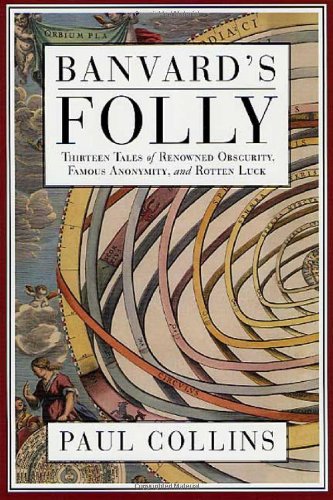
One of my favourite non-fiction books that has had a lot of influence on me was Barnvard’s Folly by Paul Collins. Each chapter is the biography of one of history’s failures, it was through this book that I first discovered Psalmanazar, the pretend Formosan; Martin Tucker who was one of the bestselling poets of the Victorian era but is forgotten now - and of Robert ‘Romeo’ Coates.

in Barnvard’s Folly, he is introduced as a privately wealthy heir, who used his money to bully his way onto the stage where he failed utterly. He rewrote Romeo and Juliet to improve it, giving himself a far longer death scene which included Robert Coates, in a diamond spangled silk concoction of his own design, dusting the stage with a little brush before dying neatly. He strutted, whispered, grimaced and groaned. When he was in his terrible throes of love-acting, wags in the audience called for him to ‘die already’. Once, his trousers were too tight and split on stage, ending the performance early. At another point, the game began to be throwing things onto the stage - the funniest moment being when Mercutio was hit in the nose with an orange. In response, future Coates performances included a significant reward for information leading to the conviction of anyone caught throwing things. Coates also fought back against rough audiences by stopping his performances and shouting at them, and by following performances with sarcastic monologues.

Coates was not only ridiculed for his acting though, he was also laughed at for his elaborate clothing, which he designed himself. He also designed his carriage, it was shaped like a shell, covered in golden cockerels and the slogan, ‘while I live, I’ll crow’. For this reason, he was often greeted (and heckled with cockerel crows).

The ‘Further Reading’ part of Barnvard’s Folly described only one biography of Robert ‘Romeo’ Coates, describing it as essential but impossible to find outside of a library, so I was extremely glad when I discovered a copy of  ‘The Life of Robert Coates’ by John and Hunter Robinson for sale.


From the start, this biography is a far kinder to Robert Coates than any other treatment of him. His silliness is excused and the book tries hard to redeem Coates’s acting. This should suck a lot of the fun out of the book but it doesn’t as many of the side characters are extremely entertaining themselves. 

There’s Baron de Geramb, a man with an ‘enormous hirsute appendage’ in the form of a moustache, saved a man from drowning, influenced the British Hussar uniform, was forcibly removed from the UK (threatening to blow his house up in the process) and later  become a Trappist monk in Italy. 

Another character is Miss Tyley Long, a rich, beautiful and funny heiress who Robert Coates tried to woo, and was featured in a caricature with a great many other people. Unfortunately for her, she married a man who spent the fortune and then died, leaving her in heavily reduced circumstances.

Another character mentioned is William Kitchiner, a thrower of eccentric dinner parties, whose own son may have poisoned him with mushroom ketchup. Kitchener is also the subject of Dr William Kitchiner, Regency Eccentric, Author of ‘The Cook’s Oracle a book I’ve described in my notes as ‘almost illiterate’.

There’s even a Johnson link, (when isn’t there?) as Euphemia Boswell, James’s daughter turns up to ask Coates for charity. She had a reputation for being a little mad, and Coates’s refusal to lend aid started a very tiny paper war between them.

As for Coates’s own eccentricities, they are acknowledged but rather explained away. He had lots of money and wasn’t encouraged into a trade and so found acting. That he loved it, and also enjoyed designing elaborate, kitschy (camp?) costumes for himself, as well as his scallop-shaped carriage, are all examples of his fun-loving, exuberant personality.

What the authors stress, time and time again, is that the promise of Robert Coates on a playbill put bums on seats, and many of them were not just there to laugh. He consistently packed theatres beyond any of his professional peers, packing out Drury Lane as nobody has before Garrick. Being a gentleman, he didn’t request a wage for his performances and did it purely for love of the craft, filling auditoriums on benefit nights and helping many actors through times of hardship. Yes, things got rowdy - audiences would chat “why won’t you die’, Mercutio had an orange in his nose and walked off,  he put rewards out to arrest anyone who threw items during a performance and  he heckled the audience back - but he was never boring, he always performed to aid someone else financially, and he always had a full house.


There’s even a suggestion, that when he forswore the stage and gave only private performances, he could be quite good. Some men getting him to do a monologue some years after his heyday, couldn’t understand why he had been heckled so.

Coates’s downfall was as the result of something good - namely, the abolition of the slave trade. Not only did he have plantations back in the West Indies that relied on slaves, he also had other financial stakes in the Caribbean which became uncertain. As a result, he had to scale back his operations, married and moved to France for a while. He wasn’t so poor that he couldn’t live in the fanciest suite of rooms in Boulogne-sur-Mer though, and gave a heart welcome to Louis Philippe, the last King of France.

With his finances settled, he moved back to London where he was greeted outside Whites’ Club, with his nickname of ‘Romeo’ Coates. He politely said that he’d retired that nickname and was to be known as Robert. He’d entertain in private but his days of ‘the Celebrated Amateur of the Stage’ was over. It was on his way back from the theatre that he was struck by a horse-drawn Hansom Cab, dying a few days later from his wounds.

Robert Coates is often linked to other people self-deluded about there own talent, like William McGonagall or Amanda McKitterick-Ros but this biography argues that instead, he should be celebrated as a man who did what he loved and brought joy to many. I do wish the book had enjoyed itself more with his reputation as a ham but he emerged as a kind man with a childlike excitability and I’ve grown a rather soft spot for him.

In October (covid-willing.. NB, it wasn't willing.), I've booked a ticket to see Robert 'Romeo' Coates Presents Romeo & Juliet, performed by a company called the Heretical Historians. I don’t think they’ll be so kind….


Wednesday, 9 September 2020

Under the Glass: All the Montaignes


I collected so many fun quotes whilst reading the Essays of Michel de Montaigne. I have a weird relationship with quotes as I feel that wrenched out of the text they change their meaning - even more so when listed as they are here. All I can say is that the quotes I choose almost certainly reflect more about me than about Montaigne or the book itself. I may even go back and write a little more about what some of them mean to me at a later date.

“I was me and he was he.”

“Life is but a school of enquiry.”

“What do I know?”

“I will prevent my death from saying anything not first said by my life.”

“I am better at friendship than at anything else.”

“It is only our words that bind us together and make us human.”

“One of my tailors is a good enough fellow, but I’ve never heard his speak the truth, even if it would help him.”

“The mad curiosity of our nature which wastes time trying to seize hold of the future as though it were not enough to have to deal with the present.”

“Men are tormented, not by things themselves but by what they think about them.” - Epictetus via Montaigne

Pleasure is “fleeting, fluid and perishable.”

“I am the sworn enemy of binding obligations, continuous toil and perseverance.”

“He ought to have brought back a fuller soul, he brings back a swollen one.”

“Teachers are forever bawling into our ears, as though pouring knowledge down a funnel.”

(About quotes) “Spewing up food exactly as you would have swallowed it is evidence of a failure to digest and assimilate it.”

“We are all cramped and confined inside ourselves.”

(About his laziness) “The risk was not that I should do wrong but do nothing. Nobody forecast that I would turn out bad, only useless.”

“I do not think there is as much wretchedness in us as vanity; we are not so wicked as daft; we are not so much full of evil as inanity.”

“Am I playing with my cat, or my cat with me?”

“The natural distemper of man is presumption.”

“Man, totally and thoroughly, is but patches and many-coloured oddments.”

“What does it matter if our arms flail about if our thoughts do not?”

“There is nothing useless in nature, not even uselessness.”

“We wrongly adduce the honour and beauty of actions from their usefulness.”

“I would rather let down my negotiations than let down myself”

(On his frank, honest nature) “That is what makes me stride forward, head erect, open-faced and open-hearted.”

(When being asked for a favour) “Frankly state your boundaries.”

“I am not teaching, I am relating.”

“Life is a rough, irregular progress with a multitude of forms.”

“If anybody says the Muses are mere playthings and pastimes is to debase them, then he does not know as I do the value of plaything or pastime. I could say that any other end is laughable.” 

“Books have plenty of pleasant qualities for those who know how to select them.”

“What enriches a language is its being handled and exploited by beautiful minds.”

“Those who want to fight usage with grammar are silly.”

“There are folk on whom fine clothes sit down and cry.”

“I have a soul so lazy that I do not measure my fortune by its height but by its plesantness.”

“The kind of friendship rejoices in sharp, vigorous exchanges. Just as love rejoiced in bites and scratched which draw blood.” (Montaigne as masochist?)

“There is, in truth, no greater silliness than to be provoked and enraged by the silliness of this world.”

“Every abridgement of a good book is a daft one.”

“I anger when so many behave wickedly, it is praiseworthy to be merely useless.”

“Loving affection has arms long enough to stretch from one end of the world to the other.”

“The names of my chapters do not all encompass the subject matter.”

“I have not seen anywhere in the world a prodigy more miraculous as I am.”

“Life is its own objective.”

“Scratching is one of the most delightful of nature’s bounties.” (He has particularly itchy ears.)

“I who boast that I so sedulously and so individually welcome the pleasures of this life find virtually nothing but wind in them when I examine them in detail. But then we too are nothing but wind. And the wind (more wise than we are) delights in its rustling and blowing, and it is content with its own role without yearning for qualities which are nothing to do with it such as immovability  or density.”

“When I dance, I dance. When I sleep, I sleep; and when I am strolling alone through a beautiful orchard, although part of the time my thoughts are occupied by other things, for part of the time too I bring them back to the walk, to the orchard, to the delight in being alone there, and to me.”

“What great fools we are! ‘He has spent his life in idleness,’ we say. ‘I haven’t done much today.’ - ‘Why! Have you not lived? That is not only the basic of your employments, it is the most glorious.’"

“Upon the highest throne on the earth we are still seated on our arse.”


Wednesday, 2 September 2020

Review: The Complete Essays of Michel de Montaigne


Every year, I try and tackle at least one big beast. Last year was Ulysses, before that was Don Quixote and this year I went for The Complete Essays of Michel de Montaigne

I started reading in late February, reading a few essays interspersed with the short novels in Popular Fiction by Women 1660 - 1730 but as coronavirus took over the world and lockdown was enforced, I (like many others) found it harder to concentrate. Reading both the essays and the old novels together was too dense and difficult to read, so I took up children’s books and shorter fiction. 

However, by August, things were returning to something like normality and I took myself off to my parents’ house out of London, I got back down to Montaigne and read the rest. I probably would not normally have mentioned this factor in my reading of Montaigne were the conditions not exceptional and if it wasn’t something Montaigne would probably have mentioned himself if he were in a similar position. 

Montaigne said that to read his essays was very much like meeting him, that there was very little difference in personality between the two and if he was accurate about this, I would very much like to have met him. The essays are drawn from two major areas, his life experiences and his reading, though he probably would have said that his reading was a life experience. There’s also a progression through the essays, with early ones being shorter and more based on his reading, whereas later ones were longer and drew more from his life. 

Typically an essay starts with a reference to something Montaigne has recently read and then follows the thought process that he takes from that. He pulls in all sorts of other texts, life experience and increasingly peculiar little anecdotes. We learn about a man who killed himself by deep-throating a sponge on a stick to wipe arses with, about the man who had his arm grilled as a torture but who looked on calmly, of the children who convinced their whole village that a ghost was haunting it.

In some ways the book reminded of one of my first challenge reads, The Anatomy of Melancholy by Robert Burton. There is the same fondness for peculiar stories, the same overstuffing of detail, the same tendency to take a detour or rant. Samuel Johnson (in a quote I kind find right now) said that Burton was best when he lets his own voice take over, and so is Montaigne. 

We find out a lot about Montaigne in The Essays, that he was raised to speak Latin and still regards it as his first language. That he was a flashy dresser and a bit of a lady’s man in his youth, that he once slept with a lame prostitute because he was told they were the best kind- though he’s unsure if that lies in his imagination, his (poor) memory or because it is actually true. He even uses this folk belief to show how rational argument can lead a good user anywhere, making several plausible(ish) arguments for why this might be the case.

We learn a great deal about his body parts and his health. Previously, when I had just dipped into The Essays, I was struck by how often he mentioned his penis so on this read through I kept a tally. If my tally is correct, he mentioned it 56 times throughout the course of the book. He also mentions the scabs on his arse, the pain of kidney stones, the time he was knocked out in a riding accident and how the pain of his ingrowing toenails made him see the world less positively than when he didn’t have them.

We learn about him socially; that he’s not very good with small talk, that he refuses to lie, even the truth may hurt someone else’s feelings - even a time when telling the truth risked his life. There are numerous mentions of his friend Étienne de La Boétie, the relationship he valued most in his life and the cause of the most wonderful sentences about friendship;
   “If someone were to ask me why I loved him, I feel that it could not be expressed, except by answering ‘Because it was him; because it was me.’”

Another important figure in Montaigne’s life was his father, whom he obviously respected and admired a great deal. I get the sense that Montaigne was someone who laboured under great expectations to which he didn’t live up. He regards himself as essentially lazy and not particularly clever,  “Nobody forecast that I would turn out bad, only useless.”

The turning point in the book, between the shorter, more literary based essays and the longer, personal ones seems to be The Apology for Raymond Sebond, an essay that is, in itself, over 150 pages long. In defending a book about man being able to learn about God by looking at nature, it severely questions man’s ability to learn at all. Turning to Pyrrhonic scepticism, the call is constantly, “What do I know?” I’m glad I’d read book about ancient scepticism before (Ancient Scepticism by Harald Thorsrud), as it helped me unpack what is a very dense essay.  I was not surprised to find it influenced the writing of Descartes, though he uses scepticism as a tool more than a point itself. (Very rare my philosophy degree ever comes in handy).


Montaigne constantly wrote and rewrote the essays until shortly before his death. As such, the book as I have it, seems almost patchwork at times, with frequent interpolations of texts A, B and C, not including modern footnotes. The translation by MA Screech balances a sense of the age of the text (started 1572) and a sense of a frank and colloquial language which allows the text to be readable without seeming too modern or hip.

I would encourage any reader to give themselves the experience of reading the whole text through if possible. As Montaigne said, “Every abridgement of a good book is a daft one.” Not only that, it’s only by reading it through that the ebb and flow of the book can be properly appreciated. Montaigne is not the same man at the end of it as he is at the beginning and even though he rewrote earlier sections, there is something fascinating about watching a man change as the pages turn. 

While An Apology for Raymond Sebond is the essay that Penguin choose for their mini black spine classics and although On Conversation is the essay most included in compilations, if you are to read only one essay, I recommend the last, On Experience

For a start, On Experience sums up what it’s like to read the essays as a whole. It includes all his main ideas; the fallibility of human knowledge, his wonder and warmth for humanity he finds through examining himself, his fondness for quote and anecdote and his shifting focus from philosophy as a means of learning how to die well to his acceptance on what a wonderful thing it can be to live well. The essay ends with a triumphant fanfare to, not only a life well lived but a life lived at all. “Life is it’s own objective.”

“What great fools we are! ‘He has spent his life in idleness,’ we say. ‘I haven’t done much today.’ - ‘Why! Have you not lived? That is not only the basic of your employments, it is the most glorious.’”

And on that glorious note the essay, the book, Montaigne’s life work ends (except for a little arse joke of course.)


Wednesday, 26 August 2020

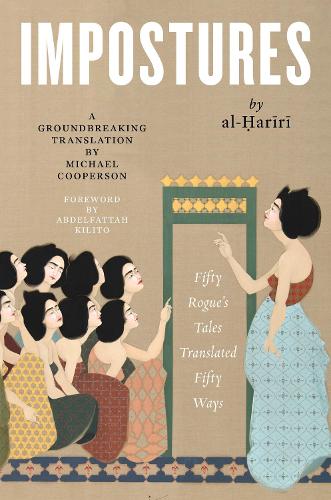
Review: Impostures by Al-Harīrī translated by Michael Cooperson


I feel I stick to the theme pretty well on this blog, but sometimes I like to write about a book just because it particularly caught my attention.There are not many 12th Century Arabic texts that are translated into English with references to Jeremy Beadle and lines where a character promises to shank another character’s nan but this is not an ordinary translation. 

Al-Harīrī wrote a sequence of stories called Maqāmāt in the twelfth century, in some part as a response to another series of stories by a man called al-Hamadhānī. The original stories were about a beggar who uses his eloquence to get out of trouble and win money but Al-Harīrī went further with the word games and verbal tricks. Despite being a respected and enjoyed work for almost a thousand years, it’s long been regarded as untranslatable and for good reason, the text is so tied to Arabic as a language that there are hard decisions when translating into a language as different as English.

The person making these decisions is Michael Cooperson and he decides that Maqāmāt, which he names Impostures, is primarily a celebration of Arabic as a language, revelling in its oddities, quirks and special tricks. For this reason, his translation into English aims to celebrate what makes that language special. This informs most of his choices. Maqāmāt is largely written in rhymed prose, something that English has trouble with, so the choice is made that each of the fifty stories are written in a different form of English. Each of the different impostures are told in different ways, there are jargons like business slang, criminal slang or the language of psychoanalysis; some are told in the style of authors including Chaucer, Joyce and Lewis Carroll - and others are told in world Englishes like Singlish or Naijá.

This means that reading Impostures is like reading four books at once, the original Maqāmāt, the English version, the type of English that Cooperson has chosen to imitate and then an essay about each story at the end of it. The essays are a very important part of this text, tying the other three parts together and mediating between the reader and the original Arabic text. I’d love more translated works to have a proper essay at the end where the translator discusses how they went about their work - it’s a fascinating thing to think about.

What’s really impressive about this, is that the aim of Cooperson was to do as correct a translation as possible, only frequently not into standard English. If the translator’s essay is correct, the translation follows the original quite closely, even translating specific turns of phrase - it’s not a loose rendering like Coleman Barks’s Rumi, for a start Cooperson can read Arabic. The text is also littered with references from the Qur’an, which are all explained. 

Johnson happens to be only the writer imitated twice, it seems like I shall never get away from they guy (not that I particularly try). Other eighteenth century writers imitated include; Henry Fielding, Lord Chesterfield, Daniel Defoe and of course, flash slang. Being pretty comfortable with the original texts of these authors, I feel I can judge Cooperson’s approximations, and to be honest, they aren’t very good. The essays afterwards show that a lot of work went into each one, there’s a lot of reading involved and they are scrupulously checked that the language of each one comes from texts by the given author, to the extent that the odd word that isn’t, is explained later. 

Despite the work put into ensuring accuracy, they don’t have the same sort of rhythms, they don’t feel like what they’re supposed to be. The Johnson texts use groups of threes, latinate vocabulary, lots of Johnson features but they don’t feel like Johnson. However, I don’t feel that this is a weakness of the translation as much as the text being pulled in too many directions. As well as feeling like Johnson, the text has to be an accurate translation of 12th century Arabic - it’s an impossible task and to succeed as much as it does is an impressive feat. (Not to say anything of the sermon that could be read forwards as backwards, the paragraphs with no ‘e’, the ones that only had ‘e’, the puns riddles and homophone games - which were all pulled off wonderfully).

The tales told in other kinds of English were more successful to me. Although they were too crammed with slang, they were fun to read. I’m pretty good with Cockney Rhyming Slang (which gave the Jeremy Beadle reference) and Multicultural London English (which talked about shanking a nan) to be able to read without the glossaries. The joy of these sections was the element of subversion, a nine-hundred year old text ‘should’ not be translated in this way - but why not? What is more correct about translating into Standard English than other forms?

As for the tales themselves, they are fun stories about someone using language to overcome people of greater power and status. Abū Zayd is likeable for all of his untrustworthiness, mainly because he is playful and fun-loving, it’s always a joy to read about a trickster. For original readers, there was an added subversion to the tricks he plays, as these tricks are all with Arabic, the language that (for Muslims) is the only human one God ever deigned dictate a book in. That this holy language has inconsistencies that can allow someone a life of trickery, is a fun concept. 

All in all, this is a book that really got me thinking about language and translation, entertained me with some clever wordplay and impressed me with its ambition and scope. I whole-heartedly recommend it.


Wednesday, 19 August 2020

The Dr Johnson Reading Circle read The Modern Husband (Part Three)


Previously, when meeting up for the last act of the play, there was a tension, a question in the air; ’how are the characters we like going to get out of this one?’ The problem with The Modern Husband was that none of the characters are ‘good’ people and the ones we liked most were among the nastiest.

Speaking of Lady Charlotte, she’s off to visit Emilia Bellamant, who is less than thrilled at the visit. Charlotte has gone to gather the gossip, following her parent’s embarrassment at the party the night before. It’s clear that Fielding enjoyed writing her, as much as our actor enjoyed portraying her. As she enters the room with Emilia, she’s boasting about what an ‘early creature’ she is and telling her how ‘heartily concerned’ she is, whilst also fishing for compliments by complaining about how her own dress is ‘hideous and ‘odious’. 

Emilia’s brother, Captain Bellamant enters and it is clear that he and Lady Charlotte have chemistry, even if that chemistry exists in a teasing, argumentative form, like a cut-price Benedict and Beatrice. 
   “Sure, never two people were so like one another as you and I are,” says Captain Bellamant. “We think alike, we act alike and some people think we are very much alike in the face.” A compliment that Lady Charlotte pretends is the worst compliment ever, declaring that she never look in the looking glass again. Captain Bellamant saves face by saying that she never did, she’d be the saddest person in England for never having the pleasure of seeing her face. As Lady Charlotte heads off to her next visit, Emilia pretty much forgotten, Captain Bellamant follows. Emilia barely has a moment to herself when Gaywit enters for an altogether tenderer scene but one that reflects the one before. Both couples, whether through fashion or shyness, are unable to forthrightly declare their fondness. One couple dance around it by pretending to hate each other while the other couple pretend they are merely good friends.

Meanwhile, Bellamant Sr visits Lord Richly to hand him back the bank note which the Lord with which the Lord had tried to seduce his wife. Whereas Lord Richly attempts to be polite, shrugging of his attempted seduction as another day in the office, Bellamant is furious, calling him base and villainous before storming out. Gaywit then turns up to this location (time and places are a little confused in The Modern Husband) where he tries to win Lord Richly to Emilia Bellamant as his wife - Lord Richly carries on his record of slimiest person in the play by advising Gaywit to take advantage of Bellamant’s financial distresses and make her his mistress but Gaywit has more honour than that and he storms off. Then enters Mr Modern, the slimiest character in the play, who slimes a bit till the end of the scene.

The next is probably the most purely comic scene of the play and more relevant to the plot than first appears. Lady Charlotte and Captain Bellamant are flirting up a storm in their own peculiar manner, talking about their ideal marriage. Lady Charlotte claims her friend Betty Shuttlecock and her created a system where she is, “sure to have my own humour in everything.” She will see her own friends, go to her own amusements, have her own bedroom, drawing-room, coach and everything. Captain Bellamant has a brainwave, claiming that he had been discussing the system with Betty and was so charmed by it that he asked her to marry him and was going to get married later that day. She bursts into tears, revealing that she feels rather more for him then she lets on - even though she tries to cover up her tears as a gag. Captain Bellamant leaves to ‘marry’ Betty, with Lady Charlotte in close pursuit.

The next scene is the last and there’s a lot going on in those five pages. Mrs Modern reveals to Bellamant how her husband had forced her to be with Lord Richly and how he’d set up to catch them together so he could sue Bellamant for Criminal Conversation. Lord Richly and Mr Modern enter, where it is revealed that Mr Modern originally planned to catch Lord Richly with his wife rather than Bellamant and he is led off, swearing a very unlikely revenge. 

Lord Richly’s plan to destroy Bellamant is ruined when Captain Bellamant and Lady Charlotte turn up, having just been married. Lady Charlotte being his daughter, he can’t destroy Bellamant without ruining his daughter and with Lady Charlotte married, Gaywit is free to marry Emilia. Lord Richly’s amorous plans are foiled but it’s no huge worry to him, plenty of other weak-willed people out there. He leaves declaring that the couples“will be so many mutual plagues on one another”. If the younger generation’s experience is anything like their parent’s, then his prediction shall probably be correct. 

The Modern Husband is not the easiest play to love, it has a sarcastic, bitter tone and for a comedy, is rather light on laughs but the characters have a greater depth to them, some of them are delightfully bitchy and some of them even game out as somewhat likeable.

It’s not till the epilogue that Mrs Modern’s fate is confirmed, she’s stuck in the country playing the skilled game of all-fours, rather than the much discussed quadrille. I was going to write a guide to playing the game but I’m not much of a cardsharp myself and couldn’t understand it. So here included is a guide to quadrille 


The Modern Husband

Wednesday, 12 August 2020

The Dr Johnson Reading Circle read The Modern Husband (Part Two)


We returned to Fielding’s The Modern Husband more prepared for the cynical tone, which was good as we begin Act Three with the line,
   “Can you be so cruel?” and proceeds to show Lord Richly gleefully making plans to seduce Mrs Bellamant and bribing Mrs Modern into helping him. As a former flame of Lord Richly, Mrs Modern most looks forward to seeing him drop Mrs Bellamant as she has been dropped He admits this is likely to be true but he is so rich and she so desperate, that he could easily have her back. Mrs Modern is amazed that Lord Richly has chosen Mrs Bellamant, she’s as close to her husband as Lady Coquette and her smelly lapdog. It’s Mrs Bellamant’s perceived loyalty that has Lord Richly courting Mrs Modern, he plans to use one woman to soften up the other. 

Mrs Bellamant is busy entertaining Gaywit, Amelia, Lady Charlotte and her stepson, Captain Bellamant. Charlotte gets most of the best lines, whether she’s being ‘charmed with those delightful creatures’, the inmates of Bedlam, or castigating Gaywit for crying in a tragedy - could be worse though, he could be laughing in a comedy. Indeed, Lady Charlotte can’t remember when she last saw the first act of a play, she doesn’t go to the theatre for all that acting nonsense.

As this play is set in a tight community of gossips, we are often given names of characters who we never see. As most of the names in the piece are essentially descriptions of their characters, we have a parade of vices and follies whenever these off-stage characters are named. Particular favourites in this section were Beau Smirk and the Duchess of Simpleton. One never-met character who is described a little more is Lady Grim, the subject of vicious mockery by Lady Modern and her maid, Lately. If their descriptions are correct, Lady Grim has little eyes, short nose, a head wedged between her shoulders and one leg shorter than the other - yet she believes herself beautiful. Lately endears herself to her mistress, describing Lady Grim as;
  “an ugly, ungenteel, squinting, flirting, impudent, odious, dirty puss,” Such slander serves her best.

Whereas Mrs Modern is trying to do her best to flirt her way out of money troubles, obsequious Mr Modern has a plan of his own. If he catches Mrs Modern with someone else, he’ll be able to take them to court and win damages. She’s dismayed by this idea, not wanting to lose her reputation but Mr Modern compares reputation to clogs, something only poor people need. Ultimately it doesn’t matter is Mrs Modern is on-board with the idea, if he can pay a servant to ‘catch’ her with another man, the plan doesn’t need her consent.

Meanwhile, Lord Richly’s plans are coming on well. He’s won a note for one hundred pounds off of Mrs Modern (which she had borrowed from Mr Bellamant) and has given it to Mrs Bellamant in payment for a six pound gambling debt. He sees these hundred pounds like little Greek soldiers behind Troy’s walls, ready to obey his commands and open the gates for him. However, he is an old hand at seducing other men’s wives, having made twenty men cuckolds for the promise of a place, and he’s keeping Mrs Modern in reserve.

Lord Richly’s plan goes awry though, and the hundred pounds betrays him. Mrs Bellamant gives it to her husband, who recognises it as the one he gave to Mrs Modern. At the same time Mr Modern ‘catches’ Mr Bellamant with his wife, which he decries in as exaggerated manner as he can. All looks wrong for the Bellamants..for about a minute.. before his giving back all the kisses he ever gave her wakens her passion and forgiveness. After all, as Mr Bellamant declares, he’s not injured her with ‘any other woman’ but Mrs Modern

While we await the outcome of these events next week, it is a good time to bring up the time that life imitated art. Theophilus Cibber, son of Colley, played Captain Bellamant in the first production of The Modern Husband. The part of Lady Charlotte was played by his first wife, Jane, who died the same year. It was thought that her busy schedule of acting and pregnancy was the cause of her death. Two years later, Theophilus married up-and-comer, Susannah Arne. Only three years into the marriage and following some bad business decisions and gambling debts, he took to selling off Susannah’s clothes, furniture and jewellery as well as taking her earnings. 

The couple set up house with a rich squire called John Sloper, where they lived in a kind of ménage a trois. Sloper paid all the bills but even this wasn’t enough and Theophilus had to flee to France to escape his creditors. While he was there, Susannah wrote a letter to Theophilus, telling him she was going to leave him for Sloper. His response was to come back to England, hire armed thugs to kidnap his wife and to imprison her in a London house. This plan was foiled when Susannah’s brother Thomas, the composer of ‘God Save the King’, led an armed assault on the house and rescued her. 

Theophilus’s next plan was to take John Sloper to court and sue him for criminal conversation - the exact same plan Mr Modern has in the play. The sum Theophilus sueded for was the immense one of £5,000. The court were not convinced that John Sloper was with Susannah without the connivence of Theophilus, deciding that he had happily turned a blind eye to the relationship when it was paying for his lifestyle and only caused a problem when it no longer was. He was awarded a paltry £10. Humiliated, he took Sloper to court again, this time he wanted £10,000 for detaining his wife and was awarded £500. No longer a favourite of the London public, he toured provinces and frequently performed in Ireland.

Theophilus Cibber claimed his tempestuous nature was caused by his being born in the great storm of 1703, he was to die in a storm in the Irish Storm on the way back from a performance in Dublin.


Surprisingly, the story of Theophilus, Susannah and John is the subject of a romance novel by Karen Hooper. The book itself is well researched and told but the title is Midnight Mirage and the front cover features a topless man in khaki trousers ravishing a women in blue lingerie. I found a copy at a bus-stop, I only hope you will be as lucky.


The Modern Husband


Wednesday, 5 August 2020

The Dr Johnson Reading Circle read The Modern Husband (Part one)


(A print featuring some of the cast of The Modern Husband)

The Modern Husband came out in 1732, fairly early in Henry Fielding’s highly successful nine years as a playwright and was performed by the company of Drury Lane Theatre. It ran for a 13 nights, a good run for the time. The cast were the best the company had to offer, with Colley Cibber playing Lord Richly although he was later to be castigated as poet laureate and remembered as King of the Dunces by Alexander Pope, he was a hugely popular performer. Joined by fellow manager, Robert Wilks, the cast was also something of a family affair featuring his son, Theophilus, daughter-in-law, Susannah and one of the first appearances of his daughter Charlotte, who would later play male part - eventually living for a while in male dress. Theophilus and Susannah were going to find life imitate art, but that’ll be in the next instalment.

The play didn’t find itself part of the common repertoire, partly because Wilks died later that year and the Drury Lane company found themselves in years of turmoil which resulted in Theophilus Cibber leading an actor’s revolution against his own father. I think it’s also probable the play hasn’t been revived because it’s not a particularly ‘fun’ piece.

The Modern Husband finds Fielding in full, bitter satire mode, closer in tone his novels Jonathan Wilde and Amelia, then the more celebrated Tom Jones. If it’s not particularly funny, it’s because it’s not supposed to be, it’s satire as scourge not light amusement. The target is modernity, particularly its mercantilism, silly fashions and esteem of reputation and appearance over substance, a topic that appeared in the much gentler The Clandestine Marriage as a division between town and country. It’s not a new topic in any way and in the culture war that took place between old and new ways, Fielding identified with the old, his initial writing published under the name Scriblerus Secondus, linking himself to the Scribleran society of Pope, Swift and Gay.

The play is about how Mr and Mrs Modern can’t maintain their spendthrift lifestyle so Mr Modern decides to pimp his wife out to Lord Richly. Meanwhile, all their fashionable friends are undergoing similar crises of love, money and conscience. 

For a play with such on-the-nose naming as Mr Modern, Lord Richly, Mrs Banespouse and Lady Pawnjewels, the characters are not as simplistic as they first appear. For example, while Mr Gaywit originally seems to live up to his name, dispensing cynical comments from a position of indifference but he’s actually deeply in. Unfortunately, when he tells Emilia that his emotions for her can be called;
        “A just admiration of the highest worth. Call it the tenderest friendship of you please, though I fear it merits the swiftest, softest name that can be given” she assumes he’s speaking ironically. 
His declarations of love have a simplicity and sincerity that read as more genuine than the decelerations of love found in the other plays we’ve read. 
Similarly, Mr Bellamant seems built up to be the scoundrel for the week, a character warns another about his skill at cheating on his wife without anyone knowing. What’s more, we meet the wife he cheats on, who seems (at this stage of the play) to be one of the few uncomplicated ‘good’ characters in the play. However, in the subsequent scene with his faddish, spendthrift, son, he is resolutely on the ‘right’ side of the play’s debate, laughing at his son dressing as a woman and blowing to every fashionable breeze that comes along. The son feels his father is unfair in this, declaring that, “If a man will keep good company, he must comply with the fashion” but fashion is definitely the main villain in this play.

Wholly unsympathetic are Mr Modern and Lady Charlotte. He’s a snivelling suck-up who reminds me a little of Rigsby from Rising Damp and she’s someone who confuses cruel with funny. She’s even proud of the fact, boasting,
   “Oh! I would not say a good−natured thing for the World.” Unfortunately for Gaywit, he has to marry her if he wants to inherit Lord Richly’s fortune despite his heart being with Emilia. He knows he is not fond of Lady Charlotte but can’t tell whether she likes him as, “it is as difficult to be certain of her dislike, as her affection,” she being equally nasty to everyone. In the end, the problem is the desire to be respected and the notion that money is the only route to that - a problem in which nearly all the characters in the play are currently struggling with in some way or another, especially when battling with love.

All this does mean that, while the play did not produce the laughs of Wild Oats, there was a lot bubbling away under the surface and many of the jabs find their mark. One part that did raise a laugh was a conversation Lord Richly and Gaywit have about a new opera called ‘The Humours of Bedlam”. It maybe the most perfect opera ever made as, being written by an Englishman and set in Bedlam, it has “neither sense nor music”. I think it might have played Edinburgh last year.

However, whether dabbling in light comedy or bitter farce, it’s nice to know that it’s possible to come together, even if it’s over video-conference and explore something new and interesting.


The Modern Husband