Wednesday, 16 August 2023

Norman Inkpen, 'Shit Jokes' and his autobiography, 'Life is Shit'.


I’ve mentioned the name, Norman Inkpen many times of this site, going back as far as my Gulliver’s Travels review in January of 2013. In fact, reading his book,  Shit Jokes - A Study of Scatological Humour, was one of the things that first turned me on to the eighteenth century. Although the book is a comprehensive look at multiple generations of excremental comedy, it was in those early-modern chapters that he managed to really polish those turds and make the shit shine. Alas, he’s mostly out of print now, and his Rabelaisian opus will never be completed but the Inkpen legacy lives on, in the posthumous publication of his autobiography, Life is Shit


It’s been said that it takes a village to raise a child, and it seems to be the case for Inkpen. Growing up in Sheepy Parva in the 50s, he seemed to live like a cat; romping around the fields and visiting each house to be given fresh apples or even black-market treats. I’m not sure if he ever slept in his own house, or if he even had a certain idea which of the residences he was supposed to belong in. At the age of eight, he showed an affinity for odure when he created a bucket of ‘snowballs’, which he used to menace children from a rival school. 


Leaving school, he followed this interest into a job at the treatment works at Wanlip. He recalls many happy hours sifting through the ‘rag’, the mounds of paper and other solid objects that have been flushed down the toilet, finding money and even jewellery. During the long hours watching the sludge plant whirr the water into a fine chocolate milkshake, Inkpen grew philosophical. He pondered about the inevitability of waste, how it could be seen as a sign of life and a consequence of civilisation. He started to see turds as potent symbols of growth and their management as a true window into a society. He began to dabble in poetry, much of it sewage related.


When he was thirty-five, Inkpen’s mother died. He had been a late baby and his father had died young with lung cancer. As a result, it had just been he and his mother, with him still living in his childhood bedroom. In a desire to escape his grief, searingly described in the autobiography, he sold that house and took a trip of the world. Something of a monomaniac at this point, his journey took in different ways that human waste is managed across the world. The subsequent photos and writeup became his first book, The World in Faeces. While not an initial success, it gained a little notoriety for being in the running for the Diagram prize for odd book titles. 


Caught by the travelling bug, Inkpen went on another round the world trip, this time focussing on plumbing in ancient cities. He describes breaking into Pompeii, spelunking under medieval cities and cleaving through dense jungles to explore the sewage of the Inca. What resulted is Faeces BC, part history, part town planning and part Indiana Jones. At one point, the BBC approached Inkpen about making a series, recreating the travels from his books but he found himself too diffident in-front of the camera during tests and wouldn’t allow his material to be used without him.


At this point, Inkpen was running low on money and had taken to living in a caravan on a small patch of land on the Welsh border. Naturally he had his own system he created to sort his waste, recycle some into water for the garden and burn the rest. That fuel wasn’t exactly extensive and powered a little automata of a lumberjack he had outside the caravan. Penniless and alone, he joined his local library. Having never been interested in general literature, Inkpen found himself coming at what he read in a different manner. Even as the voraciousness of his reading increased, so did his shock and dismay at how little classic literature dealt with the issues that most tugged at his heartstrings. What’s more, he was filled with joy when he found texts that did deal with shit, especially when they dealt with it in it’s full, uncensored, smelly glory. No surprise, he was fond of the early-modern period and less for the nineteenth and twentieth centuries.


The resulting work, Shit Jokes, is a comprehensive look at English shiterature, blending Inkpen’s encyclopaedic knowledge of the brown stuff and how it is managed with a nuanced understanding of multiple genres and contexts. It reaffirms his belief that turds are a sign of life and establishes how they can enliven a text, giving groundedness, representing both disgust and the stuff of life. 


Inkpen’s own life was running out. The book created waves in some academic towers but the royalties weren’t enough to sustain him. Left in his caravan through several winters, he worked on his autobiography. In the end, his self-created sewer didn’t work as he’d intended and he died from E-Coli poisoning. It was five weeks until he was discovered, when a sheep farmer moved his flock into the area. His papers, including the autobiography came close to destruction until a council worker saved them, working through the loose sheets, ordering them like a puzzle into the current autobiographical form. His life is sort of tragic, with very little connection to other people, except through what they’d left behind. He did leave a body of work fascinating in its very quiddity and oddity, and now the story of his life as well.


Wednesday, 9 August 2023

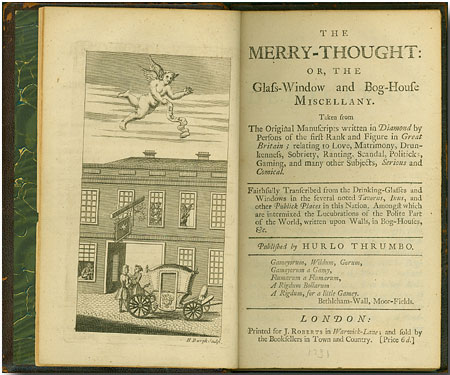
Review: The Merry-Thought, or the Glass, Window and Bog-House Miscellany by Hurlothrumbo

 The Merry-Thought, or the Glass, Window and Bog-House Miscellany is a collection of writing found scratched into windows, into glasses and on toilet walls. It was published between 1731-2. The author/editor of the collection styled themselves as Hurlothrumbo, the name of a play written ten years earlier by a dance instructor/professional fool called Samuel Johnson, but best known as Maggoty. 

The introduction to the version I read (the ex-classics ebook) by Maximilian Novak suggests that there’s a good likelihood Maggoty himself was involved in this book, as it shares a bookseller with the play’s printed copies and also shares a similar sensibility - with the sublime and the ridiculous rubbing up against each other. I’m not wholly convinced by the idea. I think it’s far more likely that a bookseller known for publishing the (bestselling) script for the play Hurlothrumbo would see sense in attributing a fun and eccentric work to Hurlothrumbo. There’s a sense of brand-name recognition and such a name would set the right tone for the work. I also can’t imagine Maggoty Johnson being as invisible as the editor of this collection, only coming in for a preface or two but not really commenting on the action. From the evidence of Hurlothrumbo, where he gave himself a character who plays no role in the story and mainly serves to upstage everyone, Maggoty rather liked being the centre of attention and I can’t imagine him being so anonymous within the text.


It claims to be a selection of graffiti collected over the years from a number of different locations and I think that’s probably true. The subject matters are the same ones people have felt the need to graffiti since at least Pompeii and most of the entries are attributed to a particular place. The Star Inn in Coventry must have been full of graffiti, judging by the amount of entries it has.


The book actually came out in four volumes, with the end of each volume asking for submissions to go in the next. It boasts how many responses the request received, but the editions stopped after four, so I suppose the submissions run out. It’s a very Edmund Curll-ish thing to do, he’d put a notice in the paper for anecdotes about a recently deceased person to ‘bump up’ the research that had already been done, and then publish a biography consisting wholly of those contributions.


As for the contents themselves, The Merry-Thought is more interesting in what it is, rather than what it contains. To have such ephemeral pieces as graffiti is very special, but most of the entries in this book are the worst kinds of doggerel, full of forced rhymes and no metre. At first it’s fun to read;

“While the old friar was kissing her arse

She lifted her skirts and shit on his face.”


Sometimes a piece can be a neat little rhyme, like this piece from the Temple bog-house; 

“No hero looks so fierce in a fight

As does the man who strains to shite”


And sometimes it can be so rude, it catches the eye, like this acrostic from Uxbridge;

“Commodious for a haven made

Under a rising bank

Nature has fixed a place of trade

To men of any rank”


Sometimes there are tricks and wordplays like;

“I C U B

YY 4 me” (I see you be too wise for me). 


Oxford and Cambridge are particularly good hot-spots for wordplay, as to be expected from the University towns. One source of speculation and graffiti, is the age of Alderman’s daughter, Molly. A number of the wall-scrawlers are wondering how Molly is fifteen, when she was the same age fifteen years ago. There is debate among them about as to whether she still looks it. This discussion may be played out in doggerel but at least it’s in English, much of the University graffiti is in Latin. One piece of Latin graffiti, found in Dean’s Yard, is the Sator Square, the mysterious Latin palindrome that can be read back, forth, up and down - with the word ‘Tenet’ in the middle.


Wordplay is also found on the words etched into glasses. Many clubs and societies had the tradition of engraving the names of pretty, single women onto their glasses and declaring them the toast of the society. Individuals also had their own toasts and would etch the name of her on their glass. One practise, recorded in the book is making rebuses of the loved one’s name;

“To spoil the Cornish ore

names the nymph that I adore”

This one is for a Miss Martin and it’s as corny as most of them are.


One of the most interesting elements to read in the book is when there’s a chain of messages written on a wall. To a modern reader, it’s like a twitter thread, with various different strangers chipping in their opinions and comments. The message chains have a whole range of purposes. There’ll be messages of support, like the person who wrote, ‘well said my boy’. There’ll be admonishments, like the person who told a woman that she’d sold her maidenhead ‘at a bad fair’. Quite often, there are warnings, especially against women with venereal disease. 


An example from the Red Lion, Southwall in 1728 reads;

“Clarinda lay here

with a young cavalier

with her heart full of fear

for her husband was near”

A group of people, signing themselves as SM, JM & RH, have this to add;

”Tis very true for we saw rem in re through the keyhole”

‘Rem in re’ is Latin for ‘the thing in itself’… which is a fairly creepy/funny thing to say. I also find it interesting how doggerel versions of pastoral poetry, complete with poetic names like ‘Clarinda’ are so ingrained into the culture that they become a default position when writing on a wall. I suppose the way people communicate through popular culture today.


Another element found in the graffiti that is found today is misogyny. A lot of the posts, especially the ones found in pub walls/scratched into their windows rely on a narrative as women as sexually voracious creatures who prey on men’s weakness for their own physical pleasures or material gain. Most of these harpies enjoy leaving their lovers with throbbing members, especially if they’ve been paid well. Many of these tired comments sound like the things a certain sphere online say are particular to twenty-first century women.


One, more eighteenth century problem that is often addressed in the bog-house writing specifically, is the instance of shit on the walls. It would seem that many toilets did not include anything to wipe a bum on, or bumfodder, so people had to bring their own. It would also seem that a common, but not very acceptable solution was to wipe your bum with your hand and then wipe the excess on the wall. Lots of writing was directed at these excremental miscreants, also a surprising amount written against the act of writing in the bog-house.

“Damn your writing

Mind your shiteing”

I'm surprised Norman Inkpen didn't mention this in his book Shit Jokes.


The Merry-Thought is a strange book, containing ephemeral trash that is also a unique document of its era. Whether Magotty was the one who gave it to the world, it’s a good thing that it’s here. It is also a book whose mission statement could be summed up by its epigraph, found written on the wall outside Bedlam.


Gameyorum, Wildum Gorum

Gameyorum a Gamy

Flumarum a Flumarum

A Rigdum Bollarum

A Rigdum for a little Gamey

(They’re nonsense words from a song)


Wednesday, 2 August 2023

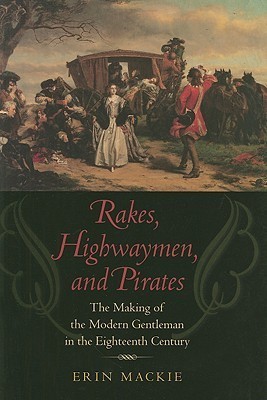
Review: Rakes, Highwaymen and Pirates by Erin Mackie

 When I bought Erin Mackie’s Rakes, Highwaymen and Pirates: The making of the modern gentleman in the eighteenth century, I was aware I was buying an academic work and not a fun collection of criminal anecdotes.

Given that expectation, nothing quite prepared me for the convoluted, dry, academic style this book was written in. Mackie is fond of paragraph length sentences packed with long, technical vocabulary which seem to hint at a point just as it veils it. I picked a bit at random;


“My use of the term “culturally mythic type” means to register, first of all the special intensity of meaning these types exercise in both sociocultural and subjective worlds. Emphatically, this term bares no relation to psychological, psychoanalytic or structuralist elaboration of the notion of the myth.”


I get an impression of an idea from this. I think it means that she’ll be looking at these “culturally mythic type(s)” of rake, highwayman and pirate through a sociological lens, looking at their place in society and the mythical place they gained in it but not looking through other academic lenses. I also presume that she will look at them in a subjective manner, as in, the myths of these people from her own point of view. It took me a while to parse this from the text though - I kept getting a clash between something being subjective but not psychological.. And I’m not convinced I’ve parsed it correctly. Pretty much every sentence in the book is like this, so I am very aware my reading of it is hazy and misty and that I’m trying to follow arguments viewed dimly, like in a fog. 


The first chapter, ‘historicising masculinity’ is, as far as I can conceive, a helpful(?) summary of the position of masculinity in England at the beginning of the 18th century and how things changed. Following the English Civil War, Interregnum and Restoration, a new form of masculinity was being developed, distinct from the cavalier/royalist masculinity of previous eras. 


That former masculinity was linked to wealth and privilege. Closeness to the King and wielding of authority and power were its main signifiers. So much so, those restoration rakes were all flagrantly bi-sexual, the importance was that a rake sexually dominates someone of a lower class, be that woman or young boy. It was also not important that a ‘proper man’ follows the laws, as he is above them, so it’s possible to be both criminal and display healthy masculinity.


However, by the 18th century, things were changing. In Defoe’s Colonel Jack, Jack isn’t a proper man because he is criminal. This is because of the rise in a new idea, the gentleman. Heralded by publications such as The Tatler and The Spectator, this new man was middle-class, moderate in all things and a firm upholder of laws and institutions. With the rise of this form of masculinity, those still enamoured with the older forms find them in the rake, highwayman and pirate - and to a certain extent, still do. (She then goes on for ten pages about how she won’t talk about Jonathan Wilde and Jack Shepherd because they don’t really fit, Shepherd being more working class hero than male fantasy, and Wilde being hated by everyone).


The next chapter, ‘always making excuses’ deals with the rake. I’ve been reading Clarissa throughout this year, so I am quite full of rakes, or at least of Lovelace. The rake takes a lot of the sexual elements of the former masculinity. The gentleman was in a tough spot when it comes to sex, as sex still confirms his masculinity but gentleman-ness calls for a respect for, at the very least, respectable women. This would later blossom into full-on Victorian hypocrisy and the labelling of murdered women (such as Jack the Ripper’s five) as prostitutes - not a point Mackie makes, but I feel it fits.


The rake doesn’t have this doublebind and is celebrated for his conquests. Unlike the regency variation though, the rake has to be heterosexual, even if he is homosocial. He also needs to balance the egotistical nature of the casual lovemaker so it doesn’t become self-love, which would turn him into the rake’s nemesis… the fop.


The rake succeeds in not being criminalised, partly due to an aristocratic position, but also through his ‘superior stylistic mastery’ - in essence, he’s too cool doing what he does that people accept it, a bit like James Bond. Lovelace, in his heightened speech, the complexity of his schemes, his ‘sheer staginess’ creates an ‘art’ of seduction that excuses his actions and builds a myth. A myth that can be quickly dispelled when you realise that in the course of a 2 million word novel, taking place over the course of a year, he only has sex once, and that with someone he has drugged insensible first. Some myth!


Mackie also says that an element of the rake that was excused in their time and forgotten in ours is the hooliganism, the theatre riots, the rampant destruction as exemplified in gangs of young toffs who called themselves Mohocks. These young bucks hounded nightwatchman and beat people up for fun. Their behaviour was excused by “apologetic formulas” which “retain their currency right up to the present.” Namely, boys will be boys. 


Were she British, I think Mackie would bring up the Bullingdon Club at this point. A group of Oxford toffs (including at least two former PMs), who go into restaurants and trash them to pieces while yelling “bully, bully, bully.” Given that former PM, Boris Johnson was a member, has cheated on all his partners and possibly stuck one of (many) secret children into the House of Lords - he’d seem to be a firm contender as a modern rake. At least Lovelace was handsome.


The next chapter, ‘romancing the highwayman’ explains itself. The first highwaymen were out-of-work cavaliers who justified their robbery by robbing only republicans. As such, the first highwayman had a link back to the old masculinity, and, while they maintained the theft as a political act, could spin it as loyal and heroic. Interestingly, come the reformation, there were still highwaymen. Claude Duval and and James MacLaine did not rob for a cause, but to maintain lifestyles they couldn’t afford. They borrowed a trick from the rakes and made it look stylish.


With Gay’s creation of Macheath, the Highwayman was mixed with the rake and deserved to be let off at the end of the play. People like Boswell even imagined he was Macheath before going out on the pull, singing one of his songs. The highwayman was further removed from reality by one of my favourite authors, William Harrison Ainsworth. His Dick Turpin is a highwayman figure born from the author’s daydreams as a boy. He performs no acts of cruelty or villainy in the book and simply stands as a force of mastery and freedom, accidentally creating the Dick Turpin of legend - as far removed from the torturing housebreaker as possible. Mackie also makes the interesting point that Turpin is removed from the gothic plot, a plot that is caused by the rakish behaviours of the Rookwood ancestors.


The third chapter, ‘welcome the outlaw’ is about pirates but takes a sharp veer off into another direction. First she claims that pirates, as a legend are assexual, ‘there’s no pirate sex’. I’d disagree, I think gay pirates are definitely a thing, but that’s not her main point in this chapter.


Makie’s main point has nothing to do with gentleman, or masculinity, or anything the book has previously been about. Instead she wants to draw a link between pirates and the modern gangs of Jamaica. More particularly, she wants to say that the maroons, the free slaves who formed their own towns within Jamaica (like Nanny) are similar to Rastafarians. She sees them both as being pro-Africa, even if that conception of Africa is more of a generic promised land. She also made some connection between maroons being hired to re-capture escaped slaves with a complicity of the Rastas with Babylon. Pirates she equates with the Yardie Rudeboys, both anti-authoritarian but chasing the same things that the system chases. “Pirates expose, even as they mimic, the aggressive self assertion, and ruthless greed of early-modern capitalism” She links this with rudeboys performing the role of private security to political parties. 


Aside from being an utter tangent to the rest of the book, I thought these some bold and broad claims and questioned her authority to make them. Certainly, she is not Jamaican and doesn’t appear to be of Jamaican heritage. What’s more her previous published works are all about The Spectator and The Tatler, nothing much there about Jamaica. 


The last chapter, ‘privacy and ideology’ is a bit of a whimper. It looks at Lord Orville as the perfect new gentleman and compares him to other characters in Evelina who show themselves up to be more rakishly inclined. It also looks at Caleb Williams, but I sped over that a bit because I haven’t read it yet and was fed up with this book.


What the whimper of a last chapter emphasises is how little the book has no real overarching point or argument. It’s less a book about something, as a book about lots of little somethings. And it’s painfully written.  


Wednesday, 26 July 2023

Film Review: The Duchess

 Hi all,

This may be the first time I have posted late in a few years. As an excuse, I did forget today was Wednesday. I've been pecking at a review of a book about rakes, highwaymen and pirates all day, it was a tough book to dry and wrestle down - and then I accidentally deleted it all.

The other thing I did today was make a little video about the adaptation of Georgiana, Duchess of Devonshire into the film, The Duchess. So I'll post that here now (which makes sense, as the last post was about the book anyway). 

Now I'll start again on the rakes & co book.


It's summer holiday now! Enjoy the rain.


 - Weirdly, this video has kicked off for me, giving me new subscribers and being watched 500 times in two days, it even got 13 likes... this never happens to my videos. It's weird, because I made it pretty hurriedly without the levels of thought, research and editing I usually use for these film/book comparisons. I wonder what's worked about it?


Wednesday, 19 July 2023

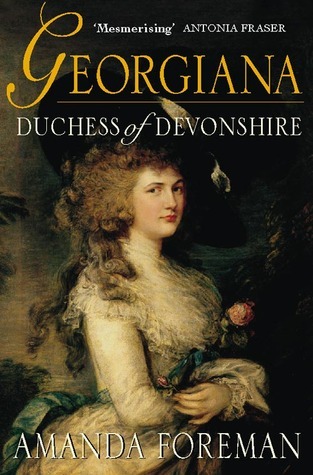
Review: Georgiana: Duchess of Devonshire by Amanda Foreman


Amanda Foreman’s Georgiana: Duchess of Devonshire, is the biography of an extraordinary woman, both constrained and liberated by her social position as the leader of London fashion who navigated treacherous political waters and forged a life for herself. It could almost be read as a dark inverse of Cinderella, a woman who snares her Prince Charming, finds a place in high society and finds that beginning of her woes.

It’s a long book and Foreman goes into the psychologies of those involved. I know some people don’t like psychology in their historical biographies, how can a modern person know how someone long dead thought just by their letters and reports of them? I like it myself, because it provides a viewpoint to the book and enlivens it. There have been books where I didn’t agree with the psychology presented, but that disagreement enlivens the book also, and is far better than flat reportage.


As Foreman describes it, Georgiana was brought up to be anxious to please. Her education full of niceties and surfaces, and her inherent wish to be well-liked used to enforce ‘good’ behaviour. Foreman also suggests that most of her problems would stem from this same need; her depressions from an inability of finding internal success, and her desire to please making her easy to manipulate and weak against peer pressure - or should that be Peer pressure?


She married William Cavendish, the Duke of Devonshire, a quiet man who was most expressive with his dogs. He later received the nickname Canis, and is referred in letters as ‘Can’ or ‘C’. Oddly Georgiana received the nickname Rat. William was very aware of his role as Duke, especially the expectation to carry on the family name. He also held up his duty of support for the Whig party, even though politics bored him.


Georgiana started well, steering her way through the astonishingly bitchy world of the ton. She became a leader in fashion, favouring extravagant headpieces, towering ostrich feathers and hair piled high on her head. Devonshire House became a headquarters for Whig politicians and a must-go destination for everyone of fashion. She even gave birth to children but, as the newspapers reported, “The happiness of this occasion is impinged by the sex of the infant”.


It was not a great time for the Whigs politically and they desperately a victory for Charles James Fox (nicknamed by Georgiana ‘The Eyebrow’) in Westminster. Women had long supported their husbands in politics, but Georgiana rustled up a posse of titled ladies to walk the streets of Westminster campaigning. They wore fox-tales on their clothes and would go up to punters on the street and argue politics. Of course, the anti-Whig newspapers were very shabby about the whole thing, making lewd comments about Georgiana caressing her ‘favourite member’ or ‘grasping the Fox’s tail’. I don’t think they’d be any less shabby now.


At home, things got complicated. She’d always had close female friends, getting on very well with Marie Antoinette in France. She met Lady Elizabeth Foster in Bath and had taken to her, inviting her to stay. She generally became Georgiana’s companion and then the lover of Georgiana’s husband. While a terrible shock at first, what emerged was a very strange relationship. Bess and Georgiana’s friendship only got stronger, and they found themselves a bargaining team against William when needed. What’s more, Georgiana and William were freer to relate to each other as people once Bess had entered the role of his lover. While I’m sure it was not an easy relationship, as Foreman portrays it, it really does work well most of the time, with each of the three drawing strength off each other. It certainly seems a healthier thrupple than the one in the previous book read for the Dr Johnson Reading Circle, about William Hamilton/Emma Hamilton and Nelson.


The real thorn in Georgiana’s side seems to be her debts. She run up huge gambling debts early on in her ‘career’ as Duchess and never really got them under control. Being a winning and likeable person she merely found more and more people to borrow from, taking from one to pay another. She also never really comprehended quite how much she owed to how many people, and she kept them a secret from everybody, tangling herself up in the process. The real crisis of Georgiana and William’s relationship was when her debts forced her to go into exile. She hugely missed her children but did gain an interest in geology.


Later in life, Georgiana’s complicated relationships grew more complicated, with a web of legitimate children and bastards between the three. Her money worries also never simplified and she also had an illness in her eye which she had to have extremely painful surgery. While not as public as before, she carried on her politics, forging alliances and becoming more powerful behind then scenes than she had before. She sounds like an 18th Century Malcolm Tucker, creating the media spin and shepherding the unruly politicians.


Halfway through reading the book, I watched the film adaptation The Duchess. Watching that made me realise what a remarkable book this is. The film is dour, bleak and mostly humourless, whereas Georgiana’s life in the book seems a thrilling succession of lows and highs. Yes, she was unfairly hampered by her sex, forced to accept situations that demeaned her, unable to claim all her children - but she also seemed to weave and dodge, making the most of what she could. She could be melancholy, even self-hating, but she was also loving, had a strong relationship with the children she could be near (and tried very hard with the ones she couldn’t). She was open to life and it’s experiences, flexing her creative, intellectual and social muscles and making impacts on the world she lived in. She just seems a bit mopey and pouty in the film.


Amanda Foreman presents a complex woman in a complicated situation, but presents her in the fall range of emotions. It’s very good (though a tad long).


Wednesday, 12 July 2023

Visit: Style & Society: Dressing the Georgians at The Queen's Gallery

 Saturday, the day after my birthday and my initial plan to spend it all in the park reading children’s books has hit a couple of snags. The first is some confusion about my shift at Dr Johnson’s House, which meant that I found myself going in (no bother, there were lots of people to natter about Johnson to). The second is that there are frequent and very heavy rain showers. So I make alternative arrangements.

I hop on the tube and wiggle my way to Green Park, across the front of Buckingham Palace and past all the tourists, to The Queen’s Gallery. I went a few years back for a retrospective of the Georgian era and it was very good. This one, Style & Society: Dressing the Georgians, is all about clothes. Though I’m no clothes horse myself, I am interested in what people wore because clothes are literally part of the texture of life. 


The exhibition opens with a painting that featured in The First Georgians, a picture of people milling around St James’s Park. There’s Frederick, Prince of Wales, there are soldiers and fashionable women, there’s even a milk bar. It’s a reminder of how much different classes rubbed up against each other in London and, in the the context of the exhibition, how clothes distinguished people. 


There are a few items which popped up in both exhibitions; the picture of Garrick and his Wife, Reynolds, some Hogarths and, of course, portraits of royals. Catherine, wife of George III was most represented by picture. Probably because her portraits show the changes in fashion, especially the heightening of hair - but I’m sure the latest Bridgerton take on her life has increased name recognition.


It was interesting seeing these pictures in a different context though. The focus on the Garrick picture was not the twinkly-eyed man himself but Eva-Maria Veigel’ and her outfit. The yellow (as well as being a nice contrast with his blue) was a particularly fashionable shade, possibly inspired by Chinoiserie and the yellows of mandarins. The lace on her cuffs would have taken a skilled lace-worker a years worth of 15 hour days for one. Clothes were expensive, even when they weren’t threading actual silver into the material and represented a higher drain on income than rent or food.


Even the royals made do and mended, with one of Catherine’s lace gowns repurposed into covering for books and an example of the earliest royal wedding dress which was altered for other occasions. The exhibition included examples of royal underwear - one of George III’s plain, white undershirts, which would be gathered under instead of pants or boxers. There was a pair of stays, structured with baleen, not bone and apparently as comfortable as a bra. 


The exhibition was in different sections. One showed the development of trousers and included a cartoon of a fat man struggling to get into some new-fangled elasticated breeches - the skinny jean of their day. There was a (presumably small) selection of George IV’s bills, including one for a bar of striped lilac pantaloons. Though he wasn’t outright mocked, my impression of Prinny as a bit of a tit was not lessened. As well as his stocked dressing-up box including a skeleton outfit, there was a book of regimental uniforms he pored over, a hussar uniform he used to swan about in and a huge portrait of him in a completely made up uniform. He often invented uniforms for himself.


To be expected from a royal exhibition, the darker/less majestic sides of the family were played down. It wasn’t mentioned that George III’s shirt was one worn by him as he swanned around bearded and blind in Windsor Castle. In the section on children’s clothes, there was a painting of Prince Octavius in a ‘skeleton suit’, a sort of proto-romper. It was not mentioned that Prince Octavius died and his father, George III took to treating a pillow like his son.


For £18, the trip was certainly on the pricey side, a couple more than a British Library exhibition, but the tickets can be converted to yearly passes just as they can at the Royal Pavilion. This means I can go again if I fancy and, if I’ve timed it right, maybe see the next exhibition there. The audio guide was free and had some really informative extra information about selected items. My only gripe would be that the exhibition didn’t seem to tell a full story. There wasn’t a thesis put forward about how the clothes reflected new changes in modes of life, or reflected separation between court and town or mingling of the classes. It was more like a Dorling Kindersley picture book on Georgian fashion brought to life, and that was interesting enough for me. Especially in a country which rather neglects its eighteenth century history, it was nice to go to something specifically about the era that most fascinates me. I read a children’s book later.


Wednesday, 5 July 2023

Review: The Secret Books of Paradys by Tanith Lee

 I was given The Secret Books of Paradys as a present. An eight-year-old girl gave it to me as an end of year present. I unwrapped it and saw a book boasting of ‘a high quality mixing of eroticism, horror and aestheticism’ and ‘top notch demonology…an exquisite and appalling mix of lust and horror, sexual pleasure and loathing, yearning and revulsion’. It seemed a strange choice. I asked the girl what had made her choose this book for me, her reply;

“It was the biggest one in the shop.”


I’ve read a lot of gothic novels on this blog, tracing them from The Castle of Otranto, through the Radcliffe years and to Dracula. All the books seem to be in response to Walpole’s original challenge, to mix the interiority and groundedness of a novel with the imagination and flair of older stories. I still think the genre peaked early with Matthew Lewis’s The Monk, but later gothic novels still had interesting results, such as The Manuscript Found in Saragossa. One of the interesting things about The Secret Books of Paradys is its relationship with the gothic, because these books are less gothic and more goth-ish, or even, simply goth. It’s a book that owes more to The Cure and late The Damned then it does Anne Radcliffe. It’s eyeliner and leather trench coat gothic, Byron via pantomime.


Interestingly, all the chapters are headed by quotes from poems, with Shelley, Blake and Coleridge being used. The most used poet though is Swinburne, signalling a greater fondness for the Decadent school. Aubrey Beardsley would have had a lot of fun illustrating these stories. The decadence is also fitting with the setting, Paradys, an alternate reality Paris with the decadence turned up to eleven, which we meet in various points of its history. 


The Secret Books of Paradys are actually made of four books, the first being The Book of the Damned. This is a collection of four novellas, featuring characters being pulled inexorably into some horror of other. 
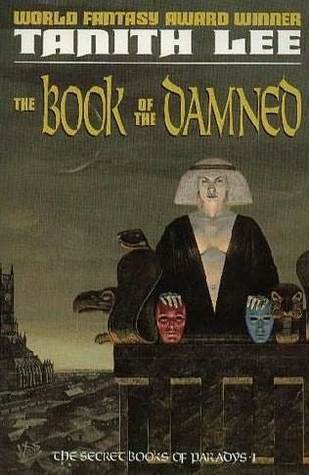


The first, Stained with Crimson is essentially a vampire story. A man is given a broach and wishes to give it back to a noble lady. She is not interested in him but his friend, and his friend quickly succumbs to an obvious case of being sucked to death by vampire. However, when the protagonist sleeps and shares blood with her, she is quickly reported dead. A duel follows with her brother in which the protagonist is killed, and then wakes up as a woman. Realising that the brother vampire is his love having changed sex, he hunts him down and they have sex again, changing the vampire back into a woman. When vampire woman kills our protagonist, she wakes up again as a man - the implication is that they will now spend eternity hunting each other, having sex, swapping sex and killing each other.


What drove me crazy, was the mechanic that meant his friend died after the vampirism but he forced the vampire to change sex and later did himself. There seemed to be no reason for this to happen and I racked my brains over it without result. The aim to create a heightened, poetic discourse also made the book easy to parody. When we are told that a woman has a ‘cowl of hair and coals of eyes’, or that ‘timelessly, time advanced’, the lush-o-meter entered into the silly territory.


The second novella in the first book, Malice in Saffron, is more straightforward but nastier. A young woman is raped by her father and escapes into town to get help from her brother. When he doesn’t, she finds herself in a convent by day as a well-behaved nun, but sneaks out at night as the sadistic male leader of a gang of thieves. There first job is to rape and beat up her brother and she uses her position to get revenge as well as score good prizes. Her male side develops into an independent figure, embodying all the evil she sees in men.


Weirdly, the convent may be worshipping Lucifer as a beautiful angel - it’s never made clear if this is happening, and if it is, whether the nuns know it or not. There’s also a suggestion that the window they worship to was put in by her brother’s boss, who is sneaking all sorts of satanic iconography into churches. 


When a plague hits, she becomes a selfless nurse as her female self, leaving the male self behind. She even finds her poor injured brother and nurses him to health by chopping off her arm and feeding it to him when he is weak. Then she goes and prays to the window is taken.. somewhere, presumably by Lucifer.


It’s funny, because the religious elements in this story raise questions about how different Paradys is to our world. There are far more murders and rapes (I hope) and a thinner line between a world of beasties and eldritch horror than ours, but they have Christianity (albeit in churches with names that sound strange to us). Later on, it’s revealed they also have a similar history, including Egyptians and Romans - though Haiti has a different name. I think in the similarity of Paradys and our world, especially religiously, there’s the influence of the gothic. Those works (such as The Monk) are so reliant on Catholicism and older forms of Christianity, that they can’t be completely laid aside in this world.


The last novella in the first book is Empires of Azure. It styles itself as a 1920s noir mystery and is all about a possibly haunted house and its strange occupant. This occupant is a drag show performer who is remarkable for being more than just an imitation of womanhood but to embody it when on stage. This performer is most likely gender-fluid and that fluidity has made them the perfect vessel for the ghost of a hermaphrodite Egyptian priest/ess. It was the most directly written and probably my favourite of the three.


What makes the three novellas notable, is the way each story features an element of sex or/and gender switching. From the sex-swap vampires, to the shadow male persona to the gender-fluid performer, the character’s sexual permeability either draw an eldritch beast to them, or are a result of contact with an eldritch beast. The other three books are concerned with sex and gender but those interests aren’t as explicit in them. They raise questions about how much we fear finding out that gender is more porous and less contained than we realise - in a world where the demon world is also less sealed off than it is here.


The second book, The Book of a Beast is more like a novel, though it’s probably better described as two nesting novellas. 


The first is about a student from the countryside who stays in a dilapidated manor in the city. There’s no one there but two aged servants and a possible ghost. One day he goes to a brothel and mentions to the prostitute where he’s staying, her response is to kill herself with an acidic douche - something is up. He pursues the ghost, who is actually alive, a young woman married into the family years before. She tells him about how her husband turned into a harpy-beast when they had sex (something he was trying to avoid, but she drugged him). She then drugs the student and, as they having sex, she ages and putrefies. He now has the harpy-beast in him and must avoid sex.


The middle is all about a member of the Roman garrison of Paradys when it was first founded. He makes a deal and unleashes the harpy-curse into his bloodline. Then we return to the student and his attempts at exorcism.


This novel had the first hint of humour in this world. The beginning, when the student explores the obviously haunted house, Lee is having a lot of fun with the tropes of haunted houses. It then veers away from that gothic beginning, settling more into the Decadent elements to be expected in Paradys. It also has a lengthy Roman section, which weirdly reminded me a little of Naomi Mitchison’s Behold the Man, a story about Jesus’s crucifixion. There was a similar attitude from the soldiers about following different Gods for practical purposes, as a result of the Roman’s Pax Deorum. 
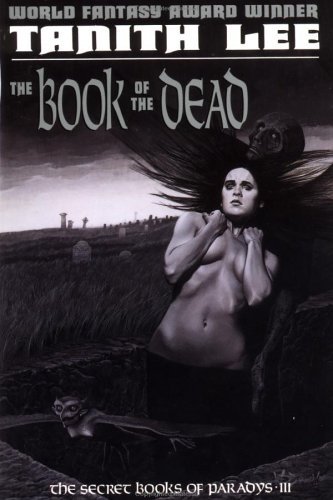


The third book, The Book of the Dead is a collection of short stories. It again has a more playful tone than the previous books, taking the form of a tour through a graveyard. It’s a little like one of those anthology horror films and the crypt keeper is less formal than previous narrative voices. It’s also a nice conceit that each story happens at a later date than the last, taking us through the City’s history. 


Being short, the stories often have a little twist or punch at the end, often ending on an irony. This book has vagina dentata, a cursed room and a woman with a little homunculus that kills people. There was a voodoo story told in a fictional Haiti called Ha1issa - which raised more questions about what places were the same and which were not.


A particular favourite story was Lost in the World, a pastiche of Arthur Conan-Doyle’s tale, in which a Professor Challenger figure is laughed out of academia for believing in a lost world ruled by a giant. He sets off alone and finds it, but sees no giant. As he is picked up by a huge flying beast to be murdered and fed to chicks, he realises the marble buildings in the distance were the bones of a massive, dead giant. He smiles as he goes to meet his doom.


Though the stories seem slight compared to the previous books, I connected much better to this book as Lee is having more fun with her creation. The best gothic works are those that acknowledge and enjoy the silliness as much as they revel in the drama - it’s that which makes The Monk so good. I had felt that the straight goth-face was too plastered on to crack a smile and it was great to see it.


While I’d enjoyed the previous books of Paradys well enough, it was the fourth one, The Book of the Mad I really enjoyed. 


It takes place in the Paradys the reader has got to know and two alternative versions, Paradise and Paradis. Both these versions seem to be in the future of Paradys, which is portrayed in the late nineteenth century. Paradise is a hell-hole, drinking the river gets you drunk and society seems to have absolutely collapsed. Paradise seems a much nice place, with clean air, helpful technology and a functional society. The book takes a chapter in each place in turn, telling a story that comes together in a very strange way.


In Paradys, a fifteen-year-old girl has been cosseted her whole life, being saved for the marriage market. She is called a baby, still plays with dollies and is constantly reminded how she looks nine or ten. On a visit to the theatre she falls in lust with an actor and when she goes to visit him, he thinks she’s a prostitute and rapes her (biggest problem with all these books, the constant rape). He is himself later sodomised to death with a beer bottle.


The trauma of this event drives the girl mad and she is put in an asylum. It’s the very worst kind of asylum as can be imagined in any gothic or sensation novel, with sadistic keepers and beastly conditions. One of the ‘treatments’ is actually something they used in Bedlam. The recipient was put in a large swing and spun until sick - the idea was that the vomit would settle the humours of the patient, and patients were often a lot more compliant after it.


The patients find a bottle of Penguin Gin, which the keepers are always swilling. They create a mythical land called Penguinia, where everyone is happy and the snow is warm. Then one day, the asylum floods with a tidal wave of gin, which kills all the keepers, and a giant kaiju penguin ushers them into this magical world where they are healed and happy.


This unlikely event is created by the action in the other two worlds. In Paradis, the nice future, the reader meets Leocadia. She’s a pampered, rich artist who feels superior to those around her. She’s the opposite of the main character in Paradys, she’s independent and powerful, and not very nice really.


Her cousin is after her inheritance and trying to stir up stories about how mad she is. One day, after being rude and snotty in a restaurant, Leocadia comes home to find her lover murdered. Then she does snap and is taken to a mental hospital. This hospital is next to the old asylum, where a tide mark still shows a mysterious flood which destroyed the place. The mental hospital is comfortable and she’s given all the comforts from home, even her chilled vodka breakfast. As the reader sees it through her eyes, everything about the place seems menacing and the doctors inscrutable and dangerous. 


One day, her canvases have been taken away so she decides to paint a huge mural based on the bottle of gin she found whilst exploring the ruined asylum. It’s her painting that creates a magic spell that unleashes the giant penguin that saves the people in the old asylum. It also helps her recovery and within six months she is ready to go home and live a happy life.


In Paradise, the hell-hole world, a brother and sister are distinguished by the fact they are not in an incestuous relationship. For some reason, never really established, they have to kill someone every few days. Their uncle has left them his house, which includes a giant ice maze that gives them access to Paradis. They are the ones who hid Leocadia’s paintings and killed her lover, thus putting her into the position to paint a giant penguin and unleash one in the past. They are then crushed by a giant penguin ice sculpture.


The penguin itself is one of the many eldritch beings in the worlds of these stories and is concerned with healing. All the events in the worlds have happened to heal the mental patients in the most peculiar and elaborate plan ever.


I really liked this book, it fulfilled everything the Paradys books had potential to be. It used the hints of actual gothic literature, the Lovecraftian beasties - even the intentional shock elements found in the other stories and made something fun and even quite moving. I’m not much inclined to visit the goth/fantasy genre very often, and I wouldn’t read the first three books of Paradys again but I’d happily re-read this one. I wondered a few times whilst reading these books if the effort was really worth it but I was very happy to find myself at a giant mind-healing penguin.


Not Tanith Lee, it's that one from Shakespeare's Sister, but it's how I picture Tanith Lee.