Showing posts with label Biography. Show all posts

Wednesday, 16 August 2023

Norman Inkpen, 'Shit Jokes' and his autobiography, 'Life is Shit'.


I’ve mentioned the name, Norman Inkpen many times of this site, going back as far as my Gulliver’s Travels review in January of 2013. In fact, reading his book,  Shit Jokes - A Study of Scatological Humour, was one of the things that first turned me on to the eighteenth century. Although the book is a comprehensive look at multiple generations of excremental comedy, it was in those early-modern chapters that he managed to really polish those turds and make the shit shine. Alas, he’s mostly out of print now, and his Rabelaisian opus will never be completed but the Inkpen legacy lives on, in the posthumous publication of his autobiography, Life is Shit. 


It’s been said that it takes a village to raise a child, and it seems to be the case for Inkpen. Growing up in Sheepy Parva in the 50s, he seemed to live like a cat; romping around the fields and visiting each house to be given fresh apples or even black-market treats. I’m not sure if he ever slept in his own house, or if he even had a certain idea which of the residences he was supposed to belong in. At the age of eight, he showed an affinity for odure when he created a bucket of ‘snowballs’, which he used to menace children from a rival school. 


Leaving school, he followed this interest into a job at the treatment works at Wanlip. He recalls many happy hours sifting through the ‘rag’, the mounds of paper and other solid objects that have been flushed down the toilet, finding money and even jewellery. During the long hours watching the sludge plant whirr the water into a fine chocolate milkshake, Inkpen grew philosophical. He pondered about the inevitability of waste, how it could be seen as a sign of life and a consequence of civilisation. He started to see turds as potent symbols of growth and their management as a true window into a society. He began to dabble in poetry, much of it sewage related.


When he was thirty-five, Inkpen’s mother died. He had been a late baby and his father had died young with lung cancer. As a result, it had just been he and his mother, with him still living in his childhood bedroom. In a desire to escape his grief, searingly described in the autobiography, he sold that house and took a trip of the world. Something of a monomaniac at this point, his journey took in different ways that human waste is managed across the world. The subsequent photos and writeup became his first book, The World in Faeces. While not an initial success, it gained a little notoriety for being in the running for the Diagram prize for odd book titles. 


Caught by the travelling bug, Inkpen went on another round the world trip, this time focussing on plumbing in ancient cities. He describes breaking into Pompeii, spelunking under medieval cities and cleaving through dense jungles to explore the sewage of the Inca. What resulted is Faeces BC, part history, part town planning and part Indiana Jones. At one point, the BBC approached Inkpen about making a series, recreating the travels from his books but he found himself too diffident in-front of the camera during tests and wouldn’t allow his material to be used without him.


At this point, Inkpen was running low on money and had taken to living in a caravan on a small patch of land on the Welsh border. Naturally he had his own system he created to sort his waste, recycle some into water for the garden and burn the rest. That fuel wasn’t exactly extensive and powered a little automata of a lumberjack he had outside the caravan. Penniless and alone, he joined his local library. Having never been interested in general literature, Inkpen found himself coming at what he read in a different manner. Even as the voraciousness of his reading increased, so did his shock and dismay at how little classic literature dealt with the issues that most tugged at his heartstrings. What’s more, he was filled with joy when he found texts that did deal with shit, especially when they dealt with it in it’s full, uncensored, smelly glory. No surprise, he was fond of the early-modern period and less for the nineteenth and twentieth centuries.


The resulting work, Shit Jokes, is a comprehensive look at English shiterature, blending Inkpen’s encyclopaedic knowledge of the brown stuff and how it is managed with a nuanced understanding of multiple genres and contexts. It reaffirms his belief that turds are a sign of life and establishes how they can enliven a text, giving groundedness, representing both disgust and the stuff of life. 


Inkpen’s own life was running out. The book created waves in some academic towers but the royalties weren’t enough to sustain him. Left in his caravan through several winters, he worked on his autobiography. In the end, his self-created sewer didn’t work as he’d intended and he died from E-Coli poisoning. It was five weeks until he was discovered, when a sheep farmer moved his flock into the area. His papers, including the autobiography came close to destruction until a council worker saved them, working through the loose sheets, ordering them like a puzzle into the current autobiographical form. His life is sort of tragic, with very little connection to other people, except through what they’d left behind. He did leave a body of work fascinating in its very quiddity and oddity, and now the story of his life as well.


Wednesday, 19 July 2023

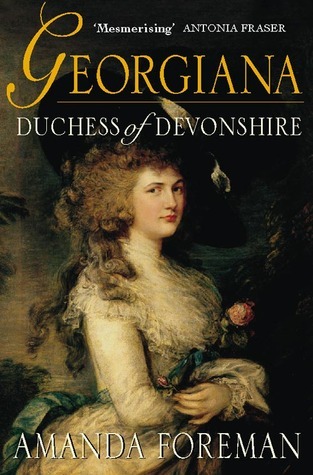
Review: Georgiana: Duchess of Devonshire by Amanda Foreman


Amanda Foreman’s Georgiana: Duchess of Devonshire, is the biography of an extraordinary woman, both constrained and liberated by her social position as the leader of London fashion who navigated treacherous political waters and forged a life for herself. It could almost be read as a dark inverse of Cinderella, a woman who snares her Prince Charming, finds a place in high society and finds that beginning of her woes.

It’s a long book and Foreman goes into the psychologies of those involved. I know some people don’t like psychology in their historical biographies, how can a modern person know how someone long dead thought just by their letters and reports of them? I like it myself, because it provides a viewpoint to the book and enlivens it. There have been books where I didn’t agree with the psychology presented, but that disagreement enlivens the book also, and is far better than flat reportage.


As Foreman describes it, Georgiana was brought up to be anxious to please. Her education full of niceties and surfaces, and her inherent wish to be well-liked used to enforce ‘good’ behaviour. Foreman also suggests that most of her problems would stem from this same need; her depressions from an inability of finding internal success, and her desire to please making her easy to manipulate and weak against peer pressure - or should that be Peer pressure?


She married William Cavendish, the Duke of Devonshire, a quiet man who was most expressive with his dogs. He later received the nickname Canis, and is referred in letters as ‘Can’ or ‘C’. Oddly Georgiana received the nickname Rat. William was very aware of his role as Duke, especially the expectation to carry on the family name. He also held up his duty of support for the Whig party, even though politics bored him.


Georgiana started well, steering her way through the astonishingly bitchy world of the ton. She became a leader in fashion, favouring extravagant headpieces, towering ostrich feathers and hair piled high on her head. Devonshire House became a headquarters for Whig politicians and a must-go destination for everyone of fashion. She even gave birth to children but, as the newspapers reported, “The happiness of this occasion is impinged by the sex of the infant”.


It was not a great time for the Whigs politically and they desperately a victory for Charles James Fox (nicknamed by Georgiana ‘The Eyebrow’) in Westminster. Women had long supported their husbands in politics, but Georgiana rustled up a posse of titled ladies to walk the streets of Westminster campaigning. They wore fox-tales on their clothes and would go up to punters on the street and argue politics. Of course, the anti-Whig newspapers were very shabby about the whole thing, making lewd comments about Georgiana caressing her ‘favourite member’ or ‘grasping the Fox’s tail’. I don’t think they’d be any less shabby now.


At home, things got complicated. She’d always had close female friends, getting on very well with Marie Antoinette in France. She met Lady Elizabeth Foster in Bath and had taken to her, inviting her to stay. She generally became Georgiana’s companion and then the lover of Georgiana’s husband. While a terrible shock at first, what emerged was a very strange relationship. Bess and Georgiana’s friendship only got stronger, and they found themselves a bargaining team against William when needed. What’s more, Georgiana and William were freer to relate to each other as people once Bess had entered the role of his lover. While I’m sure it was not an easy relationship, as Foreman portrays it, it really does work well most of the time, with each of the three drawing strength off each other. It certainly seems a healthier thrupple than the one in the previous book read for the Dr Johnson Reading Circle, about William Hamilton/Emma Hamilton and Nelson.


The real thorn in Georgiana’s side seems to be her debts. She run up huge gambling debts early on in her ‘career’ as Duchess and never really got them under control. Being a winning and likeable person she merely found more and more people to borrow from, taking from one to pay another. She also never really comprehended quite how much she owed to how many people, and she kept them a secret from everybody, tangling herself up in the process. The real crisis of Georgiana and William’s relationship was when her debts forced her to go into exile. She hugely missed her children but did gain an interest in geology.


Later in life, Georgiana’s complicated relationships grew more complicated, with a web of legitimate children and bastards between the three. Her money worries also never simplified and she also had an illness in her eye which she had to have extremely painful surgery. While not as public as before, she carried on her politics, forging alliances and becoming more powerful behind then scenes than she had before. She sounds like an 18th Century Malcolm Tucker, creating the media spin and shepherding the unruly politicians.


Halfway through reading the book, I watched the film adaptation The Duchess. Watching that made me realise what a remarkable book this is. The film is dour, bleak and mostly humourless, whereas Georgiana’s life in the book seems a thrilling succession of lows and highs. Yes, she was unfairly hampered by her sex, forced to accept situations that demeaned her, unable to claim all her children - but she also seemed to weave and dodge, making the most of what she could. She could be melancholy, even self-hating, but she was also loving, had a strong relationship with the children she could be near (and tried very hard with the ones she couldn’t). She was open to life and it’s experiences, flexing her creative, intellectual and social muscles and making impacts on the world she lived in. She just seems a bit mopey and pouty in the film.


Amanda Foreman presents a complex woman in a complicated situation, but presents her in the fall range of emotions. It’s very good (though a tad long).


Wednesday, 24 May 2023

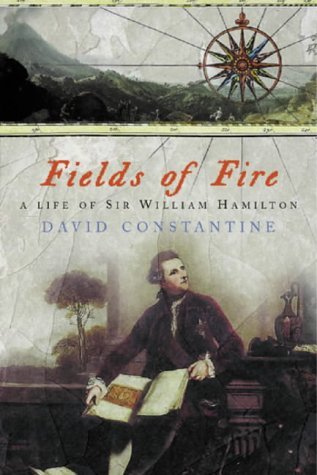
Fields of Fire by David Constantine at the Dr Johnson Reading Circle

 The Dr Johnson Book Circle met to discuss David Constantine’s book, Fields of Fire, an autobiography of William Hamilton. 

William Hamilton was the youngest son of a noble family who had to make his own way in the world and went into the army. There he didn’t show any particular flair or commitment. Then he became an MP, where he showed absolutely no commitment before become an Emissary to the Court of Naples. It was a small job in an unimportant little kingdom but Hamilton discovered the two great passions of his life; volcanoes and vases.

Presumably like most readers, the members of the Reading Circle largely know Hamilton for being the redundant leg of the relationship featuring Nelson and Emma, so Constantine took a lot of time to flesh Hamilton out before he got to that part. Some members thought this caused pacing issues, as there was a lot to read before the famous relationship entanglements. 

Most of us were surprised that Hamilton had a first wife. If the later Emma was a volcano, Catherine was a vase, or at least, she was at first viewing. Suffering throughout her life from a respiratory illness that was also linked to problems with her nerves, including periods or depression, she seems to be a fragile person. It seems clear she thought of herself like that. However, after leaving England near death’s door, she lived for another twenty years and made several arduous trips between Naples and England. 

During this time, Hamilton turned his collecting instincts to the ‘Etruscan’ vases pouring out of tombs being unearthed around Herculaneum, Pompeii and beyond. Not only did he collect them, he had them recorded, engravings made and lush books created. He helped establish the fact they were Greek vases, not Etruscan, and purposely sent the pictures (and samples) to people like Wedgewood to inspire British craftsmen to adopt the same clean lines. Meanwhile, he was also spent many hours clambering up Vesuvius and making observations which he sent to the Royal Society in London (unlike one associate, he did this fully dressed). In this way he established himself as an authority in both his two passions. Constantine spends a little too long trying to establish this, invested as he is in portraying Hamilton as more than a famous cuckold. 

Despite being a relatively unimportant outpost, Hamilton was successful in integrating in Neapolitan life, becoming firm friends with King Ferdinand and a confidante of his Queen. The town, which Nelson would later describe as ‘a country of fiddlers and poets, thieves and whores’ was certainly a louche place and indifferently run. Ferdinand had been raised to take no interest in politics his principal interest was hunting, which consisted of killing thousands of creatures at a time – he also was fond of a practical joke, like putting marmalade on people’s hats.

Naples only became important when it was on Napoleon’s shopping list. In response, the British Navy sent a fleet headed up by Nelson. By this time Catherine had died and Hamilton had married his second wife, his nephew’s former mistress, Emma. Of astonishing beauty, Hamilton seemed to have appreciated her in the same way as his vases, principally by looking. The two developed her ‘attitudes’ a performance where Emma adopted the poses and emotions depicted in ancient art and theatre and artists flocked to paint her. Eventually, the two had settled into a routine, developing a relationship that was physical but, above all, domestic. Until Nelson.

Both were smitten with the hero of the Nile, or what was left of him. As Emma and Nelson’s relationship grew physical (and obvious, Emma was pregnant), Hamilton became a figure of laughter or pity. Hamilton was recalled to England and the three, rejoicing in the motto of the Order of the Bath ‘tri juncta in uno’ went home the long way, Emma and Nelson revelling in the fame. There’s a town in Germany that still celebrates the visit with the model of an erupting volcano.

Hamilton seemed perfectly fine in his unusual relationship, praising Emma and admiring Nelson to his end. In many ways it encapsulates the difficulties in writing a biography about him, he was a man who was private and rather detached. He observed rather than participated and collected rather than created. He seems to have been very happy letting life wash over him and taking in the things that interested him. It’s probably a nice way to live but it makes for an elusive subject. While the death of Catherine did affect him greatly for a while, it wasn’t long till he was negotiating to have Emma round. When a ship called The Colossus sunk off the British coast with a large portion of his vase collection, he was upset but seems to have shrugged it off easily enough. Perhaps Hamilton was a true stoic, after reading and discussing Fields of Fire, we still weren’t sure.

Fonthill seems to set itself quite a challenge – to get the reader to like and root for a character who inherits obscene wealth, owns hundreds of slaves and a has a more than academic interest in pederasty. William Beckford, author of Vathek and creator of the impossible Fonthill Abbey was also driven out the country for his reported intrigue with titled schoolboy, William Courtenay. 


Wednesday, 30 December 2020

Countdown of 2020s top ten books (10-6)

 It’s been a tough year, yadda yadda, we all know and are frankly fed up with being told. One of the benefits of lockdown and general limiting of entertainment is that there was lots of time to read. On the down side, I found it harder to concentrate than usual.

Despite that, I got through a great many books this year, most of them were very good and some moved me a great deal. If you want to check if you’ve read any of the things I did, click here.

Also, books were something of a comfort buy - I have a list of shame of books I acquired this year also, to see what I shouldn’t have got, click here.


Special mention should go to Savage Girls and Wild Boys by Michael Newton and Genie: A Scientific Tragedy by Russ Rymer which were both wonderful books but too sad to be a favourite exactly. Another special mention to The Tennant of Wildfell Hall by Anne Brontë, which would have been much higher up this list hadn’t all the Christmas tiers not been announced when I was halfway through, taking my attention away.


Finally, before I go on to the books that placed 10-6, to The Elegance of the Hedgehog by Muriel Barbery, the worst book of this year and one of the worst books I’ve ever read.


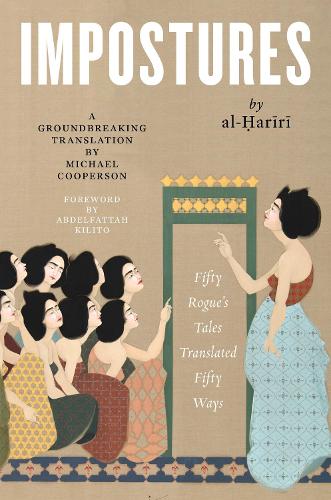
10) Impostures by Al Hariri and Michael Cooperson


In a year full of peculiar and ingenious books, this is one the most peculiar and ingenious. I was so intrigued I pre-ordered it, sight un-seen and I was not disappointed. 


I wrote in full about it here, but in short, this is a collection of 10th century Arabic stories, which all follow a similar pattern. The narrator sees someone using an impressive display of language to manipulate other people, he recognises that person from previous encounters, the two go their separate directions. The aim of the book is to showcase the flexibility and joy of language, an aim which has proved an almost impossible one to translate.


The solution Cooperson chooses is a very clever one. He decides the aspect of English to celebrate is its range and so each one of these fifty stories are told in a different style, whether geographical, historical or class. There’s a lot of effort put into making each style as accurate as possible, using only words found in one author’s body of work or hiring native speakers of different dialects to double-check authenticity.


What raises this book even higher, are the little essays at the end of each story where the translator provides details about the story he’s translating, the style he’s translating it into and the decisions he’s made. This transparency about the translation process, and this way of involving the reader in the decisions he made along the way, really engage the reader in the process as a whole as well as this book in particular.


9) Inanna: Queen of Heaven and Earth by Diane Wolkstein and Samuel Noah Kramer


Wolkstein brings the skills of storyteller and poet, Kramer his lifelong research on the Sumerian period and culture and together, the two produce a book unlike any other I have ever read. The basic texts are religious in nature, there are parts of the Bible (especially Psalms and Song of Songs) that have their influence in these texts. However, the Bible never sounded quite like this.


The first section has Enki, the God of Wisdom battling the forces of the Underworld and Ereshkigal while a young woman called Inanna finds the Huluppu tree, brings it to her sacred garden in Uruk and longs to make a great throne and bed. She’s hampered by evil creatures colonising the tree but is later helped by Gilgamesh who uses his big chopper to cut the tree down and make the throne and bed. - It’s an odd beginning, our Goddess is at one of her weakest positions but she knows what she wants, power and sex.


The second is my favourite. Now established in Uruk, Inanna takes her miraculous boat of heaven to Enki, the God of Wisdom’s abode of Enlil. There she gets him drunk on beer (both bread and beer being considered feminine in Sumerian culture) and tricks him into offering her 79 Mes, and it’s this concept I love. A Me is an important cultural lesson, represented by an object and having the Me is essentially to become the God of the skill. The ones Inanna steals include priesthood, kingship and beer, but also coloured cloth and black cloth. When Enki sobers up, he realises what he does and sets monsters on Inanna, but her servant Ninshibur beats them up as she steers them safe into port. The notion of Me are fascinating but there’s something I find extremely enticing about a Goddess that simply takes the building blocks of civilisation, like a brazen female Prometheus.


The next section deals with Inanna thinking of her wondrous vulva. Initially she thinks the farmer will satisfy her but realises that actually it is Dumuzi the Shepherd King who can ‘plow my vulva’, ‘fill my lap with cream’ and ‘be my honey man’. Following the initial sensuality, he is made King through his relationship with Inanna (the same relationship Gilgamesh rejects in the Epic of Gilgamesh) and has sort of moved beyond Inanna in some way.


Inanna, being a little superfluous, decides to have a trip to her sister, Ereshkigal’s abode in the Underworld. She dresses in her nine finest and most symbolic bits of bling which she strips to get in. Once there she is killed and hung on hooks like a dead animal. Luckily, she has a backup, comes back to life and rises from the underworld. She can’t be stopped - she’s Inanna, bitch - but neither can she stop the demons from following her. She decides to set them on Dumuzi, because he’s been undervaluing her recently.  The next section is Dumuzi trying to avoid the demons and failing and the next is Inanna actually feeling pretty bad about her actions and making a deal that he’ll spend half the year in the Underworld and those shall be the infertile months, essentially he becomes the Sumerian Persephone.


The next section is a bunch of hymns saying how great Inanna is and the pack half puts it all into context and discusses what we’ve read. 


The poetry in this book isn’t always as exciting as it could be, the repetition begins to grate, there aren’t big spaces of blank page to emphasise loss or loneliness, but this was all redeemed by the way the stories build on Inanna’s character, make her terrifying and endearing, a figure of power but also a trickster on the human’s side.


Forget all these Wispy Wiccans, we need some Inanna worshippers in full, lusty, fresh-limbed wonder.


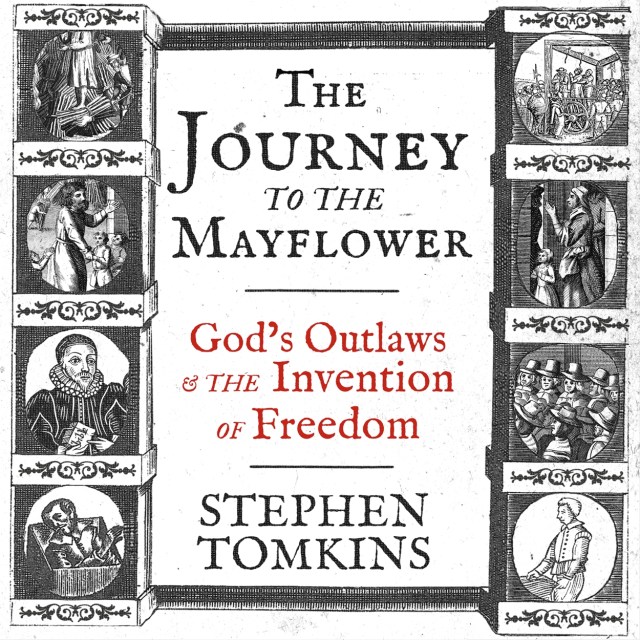
8) The Journey to the Mayflower by Stephen Tomkins


I borrowed this book from my Dad because I thought the topic of non-conformist churches and the lead up to the Mayflower voyage sounded fairly interesting, I read it because I wanted to clear my desk of borrowed books, I did not expect it to be a well told, action-packed rollercoaster. A book on church history thrilled me.


The tone is set by the first paragraph which introduces a Bishop being called to pay a fine “but everyone knew the truth: the Queen wanted him burned alive.” There then follows a description of Bishop Hooper’s imprisonment, torture and the an absolutely graphic extract from Foxe’s Book of Martyrs depicting his botched execution. (On a side-note, why isn’t there a proper edition of that book available?)


We move on to an explanation behind the Marian burnings of protestants as more than mad zeal. That religion, to a Tudor mind, was more than just a part of society, it was society itself and that it had to include everyone whether they wanted or not. It also shocked me by reminding me that Britain had been Catholic for over a thousand years and that protestantism was the foreign invader from Germany - a notion so obvious but so obliterated by growing up in a nominally protestant UK, that I was surprised.


The first few chapters of this book could be as easily in the action genre as the history, there are people escaping down the Thames and using their shoes as paddles. There was a man called John Bolton who was locked in prison with ‘a marvellous evil smell’ and where his captors sometimes threw in fireworks.There was also dreams and visions, one man called Symson who dreamt of a glowing man saying ‘ha’ at him ‘which he apparently found a great comfort’.


Come the reign of Elizabeth I and things should have improved for the protestants. However, they had been radicalised and greatly engaged by the experience of persecution and expected more reform from her than they got. The Act of Uniformity, which instituted a very mild form of protestantism, was expected to be a temporary measure. This is either because Elizabeth was expected to marry and power go to her husband, or because she wasn’t expected to rule without being deposed for very long. As it was, she ruled for over forty years and what was expected to be a placeholder reform, became the basis of the Church of England as it is now.


Those who had suffered under Mary’s persecution wanted a far more rigorous form of protestantism, and they wanted it to be enforced on the country. “As much as they accepted being tolerated for now, tolerance is not what they wanted.” The first fight was about vestments. These ‘Popish’ robes needed to go as they were un-Biblical, there were struggles between clergy who didn’t wear them and the authorities who required them.


Eventually, some of those who thought the CoE didn’t go far enough set up their own private congregations. I have to say I felt very sorry for Grindal, the Bishop of London, whose sympathies were with those who thought the church needed more vigour but was forced by his position to oppress those who refused to agree with the state church. 


We are introduced to Cartwright, a Cambridge professor so engaging, they took the glass out of the windows when he was lecturing so more people outside could hear. He argued that people shouldn’t separate from the Church of England but that it needed reforming, especially the functions of Bishops, which aren’t mentioned in the Bible. setting up a presbytery instead. 


We are also introduced to Browne, who argued that people couldn’t automatically belong to a church, but voluntarily signed up to a covenant and have the congregation rule itself as a body of believers, separate from the state. Many later separatists were known as Browneists. We also get the interesting titbit that Browne was from Rutland and his grandfather had been given a special dispensation to wear a hat in the presence of Henry VIII, though wasn’t told why. Browne later also tried to convince people to set up Stamford as a rival to Oxford, which never happened.. poor Stamford, always the bridesmaid. Browne as a whole seems impossible to work with, seeing himself as too holy to compromise with anyone else, this will prove an issue with subsequent churches.


It’s at this point the book becomes filled with so many different independent church leaders and congregations that the book is hard to summarise. Needless to say, it is all very well explained and coherent in the book.


Particular favourites included William Hackett, a man who bit off and ate up a schoolmaster’s nose in a fight, claimed he’d wrestled lions and won, said a Catholic set a witch on him, planned to overthrow everyone and become the King of Europe, and believed he was Christ - only to be arrested in Billingsgate, hanged, drawn and quartered. 


I also enjoyed Martin Marprelate who jokingly wrote to ‘his Canterburiness’ and summarised a particularly turgid tome as light enough to transport ‘if you have a strong horse’. Martin Marprelated was of course refuted by Mar-Martin, who was in turn refuted by Mar-Mar-Martin.


There was also a man called Barrow who managed to write an enormous body of work illegally whilst in prison, including a who full-length book written in the margins of, and responding to, another book.


Oh.. and references to the Church of England’s torturers, now known as a praise band.


To escape increasing persecution, some separatists moved to Holland. The trouble is, separatists got to separate and from one church (which called itself the Ancient Church because it was twenty years old) there became five or six. On church became the Baptists, who split into four, one of which consisted of one member and another of which tried to join a group of Dutch anabaptists but weren’t let in. 


In the end, it was the most welcoming of the churches, led by a man called Robinson, who decided to sailed on the Mayflower (thought Robinson didn’t go as he was too old to make the voyage). Unlike the myth I’ve heard from US media, it wasn’t that they were escaping persecution, as they weren’t being persecuted in Holland, indeed the Robinson congregation was growing in respect in Leyden. It was more the Biblical pull to create a promised land - and they royally screwed it up most steps along the way.


There was much wrangling to be allowed to go in the first place, almost destroyed by a man called William Brewster, who published anti-monarchist books in his small Dutch press. (Incidentally, he boarded the Mayflower with his wife and two of his sons called Love and Wrestling, I love Puritan names). Then they spent loads of money for two ships, the Mayflower and the Speedwell. The Speedwell was in such bad condition it almost sank, they had to return to London to fix it, then it almost sank again so they ditched it. The book ends with a group of people with no knowledge on how to run a colony getting lost and finding themselves on Plymouth Rock… the rest is history.


I really enjoyed The Journey to the Mayflower, it was exciting, funny, surprising and delighted me far more than a book about a bunch of argumentative God-botherers ought to.


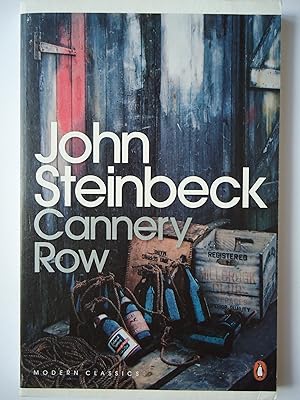
7) Cannery Row by John Steinbeck


Cannery Row has a wonderfully bucolic, nostalgic tone, which is odd because it reaches its second suicide by page eighteen, and that one with an icepick. Early on, the reader gets to see a metaphor of the book while looking into a rock pool. It’s a lush description of the creatures living their lives ‘tranquil and lovely and murderous’. 


It’s the solid shard of ice imbedded in the story, found in the suicides, the floating body, the casual references to spousal abuse and rape, that ensure that the book doesn’t become just a nostalgic look at character-filled poverty. Without that, it’d be like a chocolate box cover with picturesque poor people and their quirky lives. The book has the power to shock as much as it has the power to charm.


It is, however, a very charming book and, oddly, reminds me of nothing more than Cranford. Like that book, it appears to be a collection of short stories about a colourful cast of characters in a small location which becomes a celebration of the quiet heroic qualities of human niceness. In Cranford it’s Miss Matty but in Cannery Row, it’s Doc. 


Doc runs a marine biology lab, where he preserves sea creatures he has captured and sends them to university, school and industry laboratories. He invites young women over and plays them records of Benedictine monk chanting, he nightly visits Lee Chong’s shop to buy beer and he’s the a source of kindness and wisdom to everyone on the street. A group of very casual workers, live in an old warehouse just the road led by a man called Mack. The broad plot of the book is about Mack and the boy’s attempts to throw a successful party for Doc.


There are some wonderful sequences; the guys catching frogs, the woman who invites cats for a tea party, the couple living in a boiler who rent out pipes to people, the tour to catch octopuses where Doc eats brie with pineapple pies and a beer milkshake. There are also some wonderful sentences; like the one about the man going to a reform school where he was supposed to be taught violence but didn’t listen or the kid who couldn’t measure crayfish because ‘size relations just didn’t get through to him’. As someone with issues with size relations myself, I knew how the kid felt. 


I really loved this book and really enjoyed spending time with the characters, yet I felt the book was telling me something, by dappling the violence in with the charm, about the texture of life.


6) Charlotte by Katherine Shevelow 


Another book I’ve talked about before. I really regret not having read this sooner because Charlotte Charke’s life was a fascinating one, full of elements I really enjoy. Any story that involves cross-dressing, theatrical shenanigans and a resourceful, cheerful and independent main character, is likely to draw me in.


Written with the verve of a novel but all the notes and bibliography to make it trustworthy, I thoroughly recommend it.


Next week we'll count down to one.


Wednesday, 7 December 2016

The Fortunes of Francis Barber by Michael Bundock - at the Dr Johnson Bookclub


It was a special treat for December’s Johnson Reading Group, the author was among us (and had been for some time). 

‘The Fortunes of Francis Barber’ is a meticulous, clearly written and enjoyable account of the life of Samuel Johnson’s black servant, who later became his chief heir. 

There is painstaking research (and a little admitted guesswork) in finding his origins as a Jamaican slave; of how he was brought to London, freed and put into Johnson’s house. After being a little schooled, he went away to work for an apothecary and later into the navy. Brought back by a worried (and overbearing) Johnson he went to school again (a 20-odd year old man amongst teenagers) and worked in Johnson’s houses. Then he married and had children - this family being around Johnson at the end. Having been left an astonishing amount of money, the family moved to Lichfield where they ran into hard times and medical bills. Barber’s family survived and there are direct Barber relatives walking about today.

That’s the outline, but the journey is where the pleasure is. Bundock’s prose flows easily, with a sly humour in the background and a keen eye for telling details. The two most moving to him were the slips of paper, scraps from the making of Johnson’s dictionary, where Barber practised writing his name and the country ‘England’. The other being a prayerbook, which Johnson first gave to Tetty his wife and later to Elizabeth, Barber’s wife. A thoughtful gift and a strong indication of the worth he saw in Elizabeth.

We were struck by Francis - his ability to make friends (and the odd enemy), his adventurous nature - he chose a sailor’s life. We were struck by his apparent ability to enjoy himself and his looseness with money. We wondered how a man, a former slave, who had been educated at a grammar school and at the elbow of Samuel Johnson, was seen by other servants or by other black people in London. We were struck by the black nightlife, the balls, parties and gatherings of black Londoners, which Francis seemed a part. The evidence is small, incidental parts in letters and journals, the odd mention by Johnson, but the book teases out a notion of the man and his life - which we enjoyed teasing out even further. As one member said, ‘we know he read, what would he have made of Robinson Crusoe?’ What would he have made of Colonel Jack for that matter?

What of Barber and Johnson’s friends? It’s clear Hawkins hated him, he seemed to resent the amount left to Barber and to dislike him generally, giving seven pages of his Life of Johnson over to attacking Barber. In examining this relationship, Bundock said he tried to be fair to Hawkins - but none of us were on his side. Goldsmith seemed to be oblivious to Barber, in that pretty Goldsmithy way. Boswell and Barber became good friends, trading money, kind wishes and juicy tidbits of Johnsonian lore.

As for Johnson himself… it seemed to be a Father/Son relationship. It seems that Barber could never be a grown up in Johnson’s eyes and that Johnson was always a commanding figure in Barber’s, but there does indeed seem to be a love there - only two people had Johnson sign ‘affectionately’.

As well as all this, we spun in myriad directions: How could Thistlewood be a learned man and such a monster to his slaves? Did the CoE really own slaves and plantations? What connections did a celebrated Lord Mayor of London have with the slave trade? … And how did a Grub Street hack manage to get away with a life of Samuel Johnson by Francis, Barber - the (phoney) recollections of Johnson’s hairdresser? (Note the strategic comma.)


As usual, there was more to say then time to say it and conversation flittered through the house long after the evening was officially over. Another enjoyable evening and a book that I recommend be slipped into the stocking of anyone with a historical fancy - a rarely told tale, told well.

Wednesday, 5 October 2016

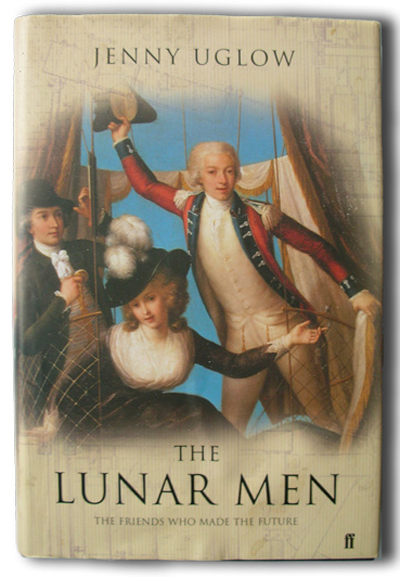
The Lunar Men by Jenny Uglow - at the Dr Johnson Bookclub


On the 4th of October, the Dr Johnson Bookclub met again after their summer break. There was much happy helloing, how-you-doing and what’ve-you-been-up-to-ing. We’d met up to discuss ‘The Lunar Men’ by Jenny Uglow. Many members had been on the trip in July to Lichfield to visit Johnson’s hometown and birthplace but also to explore Erasmus Darwin’s house and museum. (I’d visited it earlier in the year and can read my write up here). This recent visit meant that some of the locations in the book were fresh in our minds and informed our discussions.

The praises for this book were effusive. Not everyone had got through it, and all agreed it was a much longer, denser book then they first imagined. It tells a joint biography of seven or so men who met in each others houses to discuss whatever was on their minds, usually topics of a scientific bent and who thus found themselves at the forefront of pretty much every forward-looking and modern discovery of the late eighteenth century.

To list some of the achievements of the Lunar Society is something which is almost unbelievable; canal building, efficient steam engines, huge leaps in carriage technology; theories of tectonic plates, hot and cold weather fronts, evolution and technological standardisation - the pottery of Wedgewood, machines that spoke, the discovery of oxygen as well as huge experiments in social organisation, education, freedom of knowledge and knowledge of freedom. The book has to be recommended purely for the sheer amount of exploration and ingenuity the group had some major role in furthering.

Add to that, Jenny Uglow had the ability to explain all of the technical and scientific information in ways that had a room full of arts students feeling that they could understand it. Rarely has a book allowed a group of old-book nerds talk with relative authority on the theories of de-phlogisticated air. For an evening, we all became natural philosophers if not actually scientists. As George Elliot said about science in Middlemarch, ‘It leads to everything; you can let nothing alone’.

This was partly because of the clarity of the book, but partly because of the style of the Lunar Men themselves. They saw no knowledge as barred to them, they allowed their curiosity to wander over every spectrum, often blurring art, science and industry into one gigantic exploration. There was much lamenting over the compartmentalisation of knowledge in modern academic and research centres which may have impeded the serendipitous acquisition of knowledge because the focus is always so narrow.

We discussed if groups such as the Lunar Society could ever happen today. Whether it is possible to have that cross fertilisation of knowledge, whether you need a Darwin figure spinning ideas out to the rest of the group, a Dr Small healing the fractures. We also revelled in the Not-London element of it all. How these men, many of them dissenters and outside of the Oxbridge system, created an intellectual haven away from the strictures of London life. There was something gleeful in celebrating Birmingham and Derby, Glasgow and Truro - a reminder that not everything that happened in the eighteenth century took place under the sound of Bow Bells.

There was also a fondness for the warmth of the book. We did not merely have cold scientists and industrialists, we has people. There was optimistic Boulton in partnership with pessimistic Watt; careful experimentalist Wedgwood and haphazard Priestley, inventive Darwin and conservative Withering - with Edgeworth and Day circling round and providing strange anecdotes and hundreds of children.

We also thrilled in the book to see the Lunar Men grow up, marry some Lunar Women and have Lunar babies. We grew to know the families, see them study together, play together and at times, die in each other’s company.  We had the daft details as well as the big story - whether that be outdoing each other in ludicrous carriages, keeping sheds of skinned horses, dealing with a man who had a bed made of iron or wading in the garden pond to catch gas but catching a cold instead.

We also wondered why a group of men could get canals built in under ten years with their own money, PR skills and charm but Westminster can’t complete HS2 until the forever future.

It was an excited and breathless discussion, with voices pinging from all sides of the room, many fighting to join in - and that has to be the sign of a provocative and informative book.


As often happens, I was more enlivened by the discussion then the book, which tilted a little too much on the industrial/technical side for my taste - but a very good book which told me a little more than I wanted to know about some extraordinary people.


Saturday, 17 October 2015

According to Queeney at the Dr Johnson reading circle.


Last Tuesday was the first of a series of reading groups taking place Dr Johnson’s House in London and led by Dr Jane Darcy, who has written a lot about biography in the late 18th and 19th centuries - of course, I had to check it out.

The first book under discussion was Beryl Bainbridge’s ‘According to Queeney’.


A few years ago on this blog, I looked at representations of Samuel Johnson in fiction (this being before I discovered the ‘Samuel Johnson, Detector’ series). In that post, I had this to say about the book.

‘What Beryl Bainbridge does is take all the original material and use a roving omniscient narrator to give new angles to the scene, usually close ups instead of the original text’s habitual use of a long shot. This is done with such skill and grace that the reader forgets the fictional element of what they are reading and it feels as if they are sitting in the room alongside Johnson, Hester and the rest. Although this is done very well, I wonder what the point of it is.  Most of what she is doing in the books can be performed by a good reader reading the original accounts. I suppose I find the original cutlets nice enough without the need for extra sauce.’

I have to admit, I didn’t much enjoy the book on my re-read. Johnson was presented as old, tired and annoying. If there was any affection for him in the book, it seemed to me to be the kind of affection you may have for a dog which may have been loveable once but now was an inert, panting, lump.

I found all the characters to be rather unlikeable - but I was intrigued by how that unlikeability seemed to stem from hurt, upset and misunderstanding. It was not until the end of the book, with an image of Mrs Desmoulins sitting at home, pining for the dead Johnson and roasting chestnuts, that I felt rather touched - and wondered whether there was more to the book that I had missed. I was hoping the group would point me in the direction of those things.

When I left the group - I did have a greater appreciation for the book. Johnson’s life was often a struggle between reason and emotion, whereas Boswell focusses on the ‘sword of reason’ battling the forces of unreason in a gladiatorial arena, Bainbridge focusses on the emotion, the domestic and the fleeting. 

It was pointed out how many scenes happen in stairways, doorways and other liminal spaces, neither wholly private or personal. These were the little, unseen moments that had huge impacts. This was the Johnson pining for a home, Hester Thrale searching for love and Queeney, longing for the love of her parents. This is the small rubs of life, the accumulation of bruises and hurts that can shape an existence. I can’t say it’s a view that makes me feel very good, but it’s certainly Johnsonian.

Also, where Boswell focusses on the lofty, Bainbridge goes for the squalid. There are enemas and vomits, worms and pills and the constant shadow of pregnancy and infant mortality. It was also pointed out how many animals litter the book. Johnson takes a great interest in dogs, cats and even the nobility of a rat trying to eke out a life for itself.

 I had underestimated the importance of the body, and Samuel Johnson’s body in particular. His whole life was shaped by the effort of negotiating his twitching, dribbling, aching body through the world and that this shaped his character as much as his intellect. 


I also had a great time. It was wonderful to be able to talk Johnson without people rolling their eyes and mouthing ‘here he goes again’. A few of us also went to the Cheshire Cheese afterwards and had some lovely Sam Smith beer and a good chat - so I went home a very happy bunny and look forward to the next one.