Wednesday, 24 August 2022

Review: The Rape of the Locke by Alexander Pope


Pope’s The Rape of the Lock is a poem I’d read before but I reread it in advance of reading a novel about its creation called The Scandal of the Season. The version I read was the 1717 one in the student Twickenham edition.


In the introduction to this version, Pope claims the original version was printed against his will when he hadn’t finished writing it. How many times did Pope pull that stunt? With his letters, he even cheated a printer into publishing it before turning on him in print for doing so. He says that in his new version, he has made Belinda less like Arabella, the woman who actually had her hair snipped off. He also says he’s added Machinery, an equivalent to the muses, dryads, Gods and Goddesses of classic poetry. These come in the form of sylphs, a notion he’s nicked from the Rosicrucians. 


Famously, the poem is about “What mighty contests arise from trivial things”, in this case how a man cutting a woman’s hair led to her being upset. The tone is mock-heroic, in which the small details are described in the full lusciousness of epic poetry. I have to admit, I now find this poem extremely camp, and the sylphs don’t help.


We meet them swirling in the air, enacting all the pleasures and wishes of ‘polite’ society. They are Belinda’s dreams of all the things she’s hoping for in life but it’s presented as a grand vision. A vision with a warning of darkness in it. Belinda then gets up and puts on her make up. I many ways this reminded me of a tooling-up scene in an action film, these are her weapons and she plans to leave the house well-armed. There’s also a theme of prayer as she performs the “sacred rites of pride” that “calls forth the wonders of her face”. It’s almost like she, herself is a chief priestess but the vision in the mirror is her goddess.


We are then introduced to the villain, a Baron who is besotted by Belinda’s hair and is determined to take some. It reminded me a little of the episode in Casanova’s life, when he gathered the hair of a woman he was ‘in love’ with and turned them into sweets that he’d eat as he tried to seduce her - he actually failed that time. The Baron has his own altar, one to romance built of twelve French romances. However, if The Female Quixote taught me correctly about those books, they would not have suggested stealing hair, a hero would have been banished from his loved one for decades if he tried that.


There is a lovely (and very camp) description of Belinda going in a boat to the party, surrounded by her sylphs. They are described as fairylike, fluttering in many colours, with butterfly-like wings glistening. There are also hundreds of them guarding her, many around her skirts, many around her head and the chief one keeping an eye on her lapdog, Shock. She arrives like an invisible fairyland.


Those same sylphs then help Belinda win at cards. It’s described as being “combat on a velvet plane” and the cards are anthropomorphised into warriors, battling it out. The image of the cards physically duking it out was fun and seemed almost Alice in Wonderland to me. Belinda is not a quiet winner either, she shouts and hollers when she wins, a hint of her actions to come. Then the Baron approaches with his “two edged weapon” as she is looking into her coffee cup.


It’s actually a tense scene, with Pope repeating the word ‘thrice’ as the Baron steals himself to cut her hair. As he slices, he cuts a sylph, no need to worry though “airy substance soon unites again”. He cuts her hair and Belinda immediately screams, leading Pope to wonder how her hair has the sensation to let her know it’s been cut.


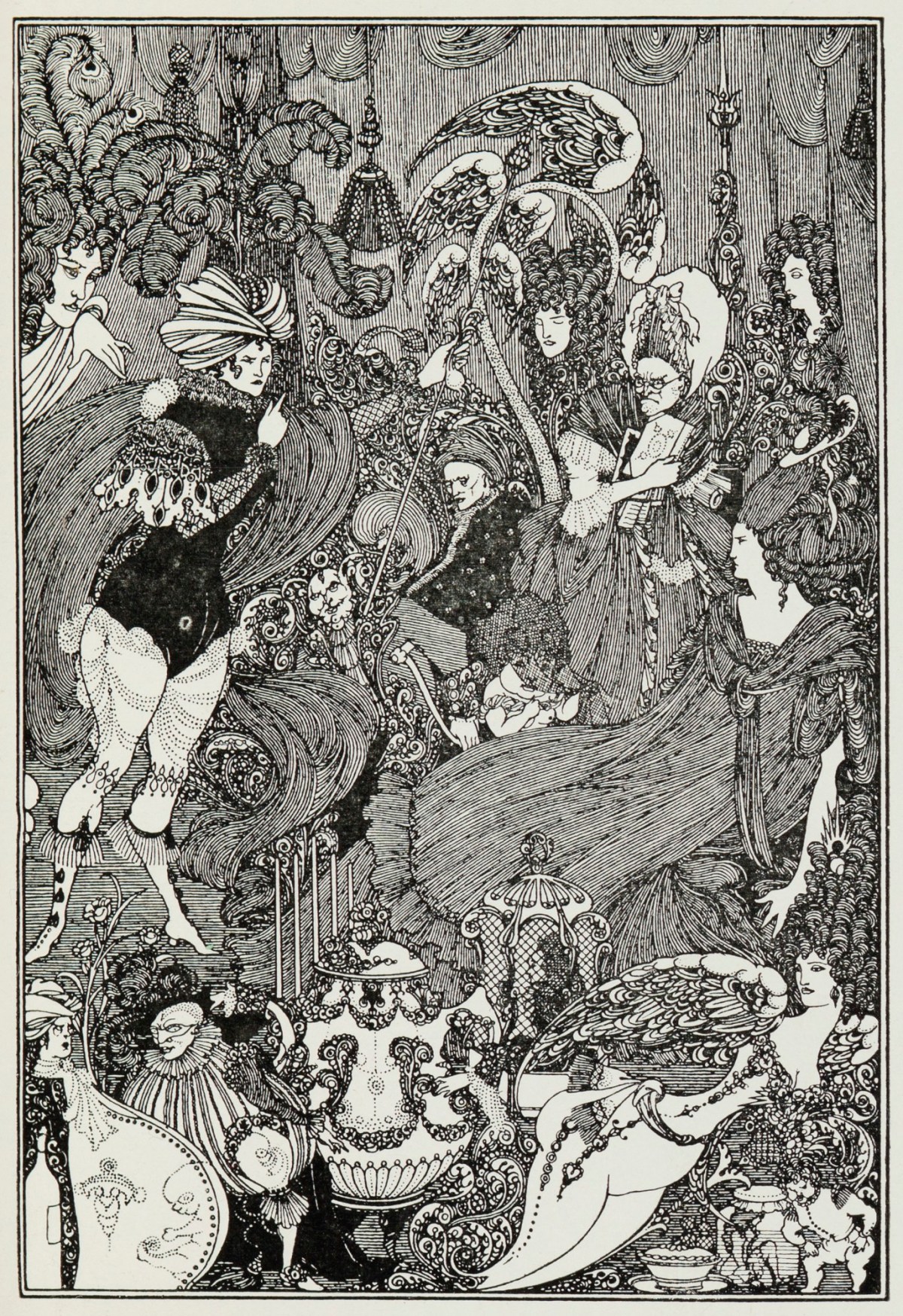
The next canto is the ‘Cave of Spleen’, which is pure camp. I may partly think this as I have a copy of Aubrey Beardsley’s illustration of it on my toilet door but the text does include living teapots and Mrs Potts is a camp icon. It’s essentially a psychedelic representation of a bad mood, especially the bad mood of someone who’s a little dramatic. She complains to her dad, who speaks crossly to the Baron in sweary cliché, a speech described as speaking “so well”. Belinda mourns the lock of hair, wishing she’d never been to the party and had been a hermit. 


The sylph Cassandra then comes and give the moral of the piece, it’s a crap moral. Essentially Cassandra argues that Belinda should cheer up, it’s only a lock of hair and that no men are going to like her is she seems melodramatic and fussy. I, however am rather on Belinda’s side. It really is a terrible invasion of space to cut someone’s hair without warning. I know the title uses the word ‘rape’ as part of its mock-heroic style, but there is a line crossed there for me. Luckily, everyone ignores Cassandra, as people always do.


Belinda goes into battle, first by shouting and giving dirty looks. Men “die in metaphor” in those angry eyes, it’s a massacre.. sort of. Then she takes some snuff and shoves it up the Baron’s nose, incapacitating him, something I definitely stealing for something I write sometime. She gets the pin out of her hair and is prepared to jab him with it when the hair becomes a comet’s tail, being placed in the sky for all to see and admire - like the stories where heroes become constellations. 


I found it odd the poem ends there, we never actually find out the resolution of the conflict. In real life the couple’s engagement was called off. I really enjoyed my re-read of this poem. It has a cartoony, technicolour quality and I enjoyed it as an (inadvertent?) example of high camp. I look forward to seeing what a novel does with the material.


Wednesday, 17 August 2022

Review: The Paper Chase by Joseph Hone


 The Paper Chase by Joseph Hone is a work of thoroughly researched history (with full bibliography, notes and index) that reads something like a thriller. It’s about an incendiary book, the covert way it was created and the huge spy-hunt to track down the people connected with it.

Starting with a woman in a mask delivering a manuscript to publishers, David Edwards and his wife Mary. It’s titled The Memorial for the Church of England and it argues that the dissenters, those protestants who feel the Church of England didn’t go far enough in its reforms, are the real dangerous people in the nation and deserve persecution. This was a particularly dangerous message for the government, which was pursuing a moderate path, which could easily be shaken up by a rise in sectarian strife. The government’s man on the job is Robert Harley (who will incidentally be the person whose library catalogue brought Samuel to the attention of the publishers who’d commission the dictionary).


It was a dangerous time to be a printer. The lapse of press regulation which had given birth to a free press was being clamped down. Publishers found themselves hung-drawn-and-quartered for putting out dangerous works and, at the lower end of punishment, were being put in the pillory, sometimes to be beaten insensible. There was even a version of the pillory where a person’s earlobes were nailed to the wooden board and would be sliced off to free them at the end of the ordeal.


What’s more, the government had a system of officers called messengers, many of them ex-bookmen, who would go under-cover, smash doors down or even use honeytraps to find the publishers of dangerous books. While some were diligent, many were crooked, which could work to a bookseller’s advantage if they had the money for a bribe or well-connected support but also meant they could be damned with planted evidence or paid witnesses.


 The central mystery in the book is an interesting one. There’s clearly a powerful set of people behind the Memorial and Edwards, as humble printer, is peripheral to their plot and an easy fall-guy. He goes on the run as his wife turns detective to find the culprits and force them to provide the safety and support they promised. She’s the best character in this book, putting together clues and creating false personas to get closer to the conspiracy while Harley and his state apparatus get nowhere.


One of the most interesting elements of this book is how it is framed. It’s the story of plucky printers avoiding the nasty government. Harley is frequently described as shifty with ‘little, dark, unfathomable eyes’. No one trusts him and he trusts no one. It’s strange, because the plucky heroes, the printers, put into the world a spite-filled invective that calls for oppression, suppression, persecution and death to dissenters. While the ‘evil’ government is seeking a moderate, centrist and tolerant approach. 


The real villains turn out to be the writers of the book, who are trying to ferment hatred for political ends and have no qualms about throwing poor Edwards and his family under the bus. It’s strange for a history book to have heroes and villains though. This is a very opinionated book, various politicians and writers are variously described as ‘shrieking’ or ‘wearisome’. It’s clear that the author is no Whig, no centrist and has a rather pessimistic view on humanity that is more Hobbes than Shaftesbury. He has the most vicious takedown of Shaftesbury and his view of innate human goodness; “It was abundantly clear that Shaftesbury mixed in exclusive, urbane circles, with fellow Whigs with impeccable and turgid manners”.


This is a well-written and gripping book about the political and religious divides of the early eighteenth century and successfully dramatises it using the case of Edwards and the Memorial. A look under the bonnet of the book shows a lot of research but it’s never dry or slow. While it did wear its own personal opinions a little obviously, they gave a little spice to the book and also reminded the reader that such opinions are in all books.


The book starts in the Edwards' print house in Nevill's Alley, just off Fetter Lane and I wondered if I could find it, as I go down Fetter Lane every week to Dr Johnson's House. To my surprise it turns out I go down Nevill's Alley every week as well but now it's just a gap between two large glass buildings filled with offices. 


I also learned there was a popular coffee house on Fleet Street called Nandos.


Wednesday, 10 August 2022

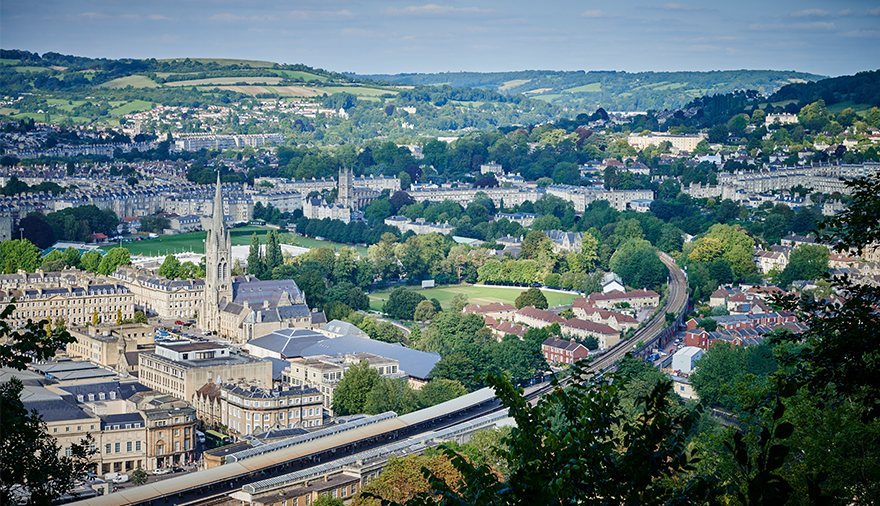
A Trip to Bath with The Dr Johnson Reading Circle (My Own Little Adventure)

 In my official writeup of the Dr Johnson Reading Society’s trip to Bath, I said that after the tour there was the choice to go to No.1 Royal Crescent or the Herschel Museum of Astronomy but, having been to both relatively recently, I went on my own adventure

I popped into the Bath Royal Literary and Scientific Institution for their ‘Beyond Beastly: creatures natural and imagined’ exhibition. It’s a fun and varied look at mythological creatures from unicorns to jabberslythes.


Dominated by a massive unicorn cut out with a narwhal’s tooth where the horn should be, this was right up my alley. I love mythical beasts with Chris Lavers’s The Natural History of Unicorns and Peter Dickinson’s The Flight of Dragons being some of my favourite books. The aim of ‘Beyond Beastly’ was to show how our ideas about animals have changed and how the rational and irrational parts of our culture feed into and off of each other. There are real creatures named after mythological ones because they reminded scientists of the legends, that in turn may have inspired the legends to begin with.


What’s really fun is the sheer range of items in the exhibition. There’s Dürer’s famous rhinoceros engraving and weighty works of natural history and proto-natural history but these are contrasted with fossils and bones, teeth from extinct sharks and Maori accounts of Moas to copies of Aquaman, Conan the Barbarian and My Little Pony. There’s even a jabberslythe model - a creature I had never heard of because it’s part of Warhammer and was leant to the exhibition by Bath’s local Warhammer Branch.


Free and fun, it’s very recommended.


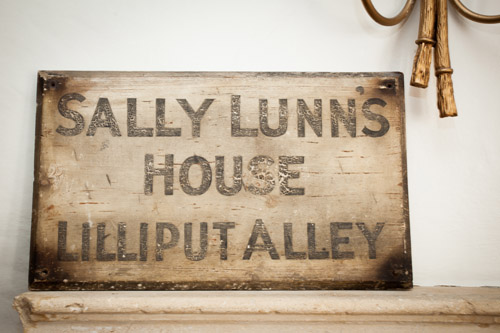
I then mooched and wandered, may have popped into a few bookshops before finding Sally Lunn’s, claiming to be the oldest shop in Bath. A little research reveals that much of Sally Lunn’s ‘history’, including the existence of Sally Lunn herself is highly dubious and probably invented in the 1930s when the present teashop was founded. 


However, I did have one of their buns. To be honest, I expected a little more, having heard of them a few times and unable to find the place last time on the really bad map Bath gives to tourists. The bun itself is a soft, white roll a bit brioche-y. It's perfectly pleasant but not all that special in itself. What made it special was that it has been warmed in an oven, slathered in butter and served with a really good lemon curd and a pot of loose leaf tea. I suppose there was virtue in its simplicity and, full of bun, I went to the forbidding but very cool bookshop by the station and then onto the Pizza Express to meet the rest of the group. (I had a starter for my meal, because I really was very full of bun).

Wednesday, 3 August 2022

A Trip to Bath with The Dr Johnson Reading Circle


 On Friday the 29th July, Members of the Dr Johnson’s Reading Circle managed to pick a day between train strikes and were rushing into Bath Spa. Outside the station we met Victoria and Andrew, the two foolhardy guides who’d agreed to give us a special tour of the city with a focus on Samuel Johnson, his friends and connections. 

Our first stop was on the South Parade, originally intended to be part of a hugely ambitious forum, it hadn’t quite come together but was a fine and elegant street in itself. We stopped at the house at the end, a quiet spot where we could hear the ‘pock’ sound of cricket being played in the field the other side of the river Avon. This was the house the Thrales took as their Bath residence, where they played host to Fanny Burney, shortly after she was revealed to be the author of Evelina. Her journal described the packed itinerary of concerts, balls and the occasional dull gathering that had to be endured. Receiving advice from her mentor ‘Daddy’ Crisp, she was told that Bath was ‘the great school of the world’. A little exaggerated perhaps, but Bath really was an intense social network packed into a fairly small town. These connections were the theme of the tour. 


One of her activities was to visit Bath’s Theatre Royal, only a couple of minutes walk away but taken by Hester and Fanny in sedan chairs (Henry Thrale opted out). Samuel Foote had performed at the Theatre Royal but the up-and-coming name when the Thrale party visited was Sarah Siddons. When she left Bath for London, she announced she had three reasons to leave behind her fond audience and chase the big city money, then her children walked on the stage and not a dry eye was left in the house. Towards the end of her life she visited Johnson in Bolt Court. There was nowhere for her to sit, leading Johnson to say ‘Madam, you who so often occasion a want of seats to other people, will the more easily excuse the want of one yourself.’ He could be quite charming when he wished. There’s a painting of this meeting in Dr Johnson’s House.


Our third stop was where Goldsmith stayed in Bath when he was researching his biography of Beau Nash and Burke later dwelt when he came to take the waters for his health. At this point we were only a few stops in and had seen locations connected with at least six of the books read by the Reading Circle up to this point.


We went to the houses of Hannah Moore and Elizabeth Carter, who were both given chapters in Wits and Wives (and painted by Francis Reynolds, subject of another chapter). Incidentally, Hannah Moore wrote a book called Coelebs in Search of a Wife, which had the subtitle Comprehending Observations on Domestic Habits and Manners, Religion and Morals - needless to say, my copy is in the post.


Just behind the Assembly Halls, there is a street called Alfred Street and in that street a house called Alfred House, which has a little bust of King Alfred on it. It was originally owned by the reverend Thomas Wilson, a man who looked, ‘so decrepit, it’d scarce be a sin to bury him as he is’. He gave the deeds of this house to his close friend (and lover?) Catherine Macaulay, noted historian and republican. It was at one of her gatherings that Johnson suggested the footman should eat with them, to really put her republican principles into action and then remarked, “your levellers wish to level down as far as themselves; but they cannot bear levelling up to themselves.” She also featured in Doctor of Love, where the Dr James Graham fell in love with her but she eloped with his twenty-two year old younger brother, with the deeds to Alfred House. 


On our way towards the famous Circus and Royal Crescent, we stopped outside eight Gay Street. Here, Hester Thrale-Piozzi lived out her last days, which sounded like a lot of fun. For her eightieth birthday she danced til five in the morning and was remarked for her ‘great elasticity’. Following the death of her beloved Piozzi, she had the friendship, and  was linked romantically (by gossips) to Thomas Conway, an actor whose good looks evoked caws from the tour group when his portrait was shown. It seems that she knew how to grow old.


The tour finished at the Royal Crescent with the choice of two parties. One being held by Elizabeth ‘fidget’ Montague, featuring rational entertainment and good conversation. The other held by Alicia McCartney, also known as Mrs McDevil. This may have been a more wild night but any indiscretions would be gossiped about later. Not that the Montague party would be entirely tame, we were shown a Reynolds print called ‘Breaking up of the Blue Stocking Club’, in which the women are brawling. An example of what Victoria proudly called ‘the bluestocking, badass women of Bath’


The tour was a big success, somehow managing to be a ‘greatest hits’ of the books we’ve read throughout the years so far, giving us stories we knew and ones that were new to us, enlivened by well chosen quotes and pictures. We wish to thank Victoria and Andrew. 


Following the tour and a little refreshment, the group broke up to tour No.1 Royal Crescent, home of Irish MP, Henry Sandford or to tour the domestic delights of Herschel Museum of Astronomy. At this point, your humble author went in such of beer and buns - and we all met up at a Pizza Express (naturally) to eat, drink wine and present Jane with a 1929 edition of Gilbert White’s The Natural History of Selborne. Thanks to Jane and Julia for organising the trip, and to Melanie for hooking us up with the guides. 


As Catherine Morland says in Northanger Abbey (and possibly paraphrasing Johnson) ‘Oh! Who can ever be tired of Bath?’


Wednesday, 27 July 2022

Review: The Art of Ingeniously Tormenting by Jane Collier


I’ve read Jane Collier’s An Essay on Ingeniously Tormenting a number of times but never reviewed it, so I thought I’d read it again and see what I have to say. it’s a brilliant idea, putting a satirical spin on two of the most popular genres for eighteenth-century, middle-class readers, the morally improving book and the ‘art of…’ format of ‘how to’ books. It’s a more subtle work than a simple ‘how to be nasty’ kind of work, it’s the art of ‘ingeniously tormenting’ and it is rather ingenious. 


My copy includes the ‘advertisement to the reader’ from the second edition which explains there not being many additions to the work because the author was taught “if you have nothing to say, don’t say it”, a maxim I wish more writers would adhere to. it also explains that she is not going to pad out the beginning with complementary letters she’s received, it’s not that she hasn’t received them, it’s that people are so full of “good nature and universal benevolence” that they’d assume the letters were made up. To be fair, such letters often were. 


The book then goes through numerous relationships, explaining how to torment best within them. it’s interesting to note that until the chapter on friends at the end, those relationships all have unbalanced power structures and the tormentor is always the powerful one. As much as I’d have liked a sequel about how the less empowered could torment those above them, it’s fitting that this book aims only at those with power already, as it’s really an attack on domestic abuse of power.


Tormenting isn’t about causing great harm, it’s not a deep jab with a knife but gently prodding the victim to “waste by degrees”. An ingenious tormentor starts of nicely, sets themselves up as friend or kindly employer before wearing the victim down. Raised expectations of kindness not only create more pain when they are let down, but mask the tormenting as it begins. Kindness exists in the book’s conception of the world but it is a rare commodity to be spent frugally and for specific purposes.


Examples of this include nursing a sick servant through bad health so that the tormentor can use that debt of gratitude at every moment after. Not that it matters so much when a servant is bullied into leaving, they are a commodity that can be easily replaced. If the tormentor has taken in a poor woman out of charity, there are two ways to go. The pretty ones can be teased about their looks and stupidity, infantilised, talked down to and treated as a pretty little pet. The smart, ugly ones can be given the “usual” insults given to smart women, make sure to call her a “wit” often.


Children are great. Not only can they be tormented, and actually have less legal recourse than anyone else in society, but they can be raised to torment others and even themselves. “Breed them up properly, to be a torment to themselves if they live, and a plague to all your acquaintance.” The key to this is doting neglect, let the children do anything and have anything they want. Only punish them about inconsequential things, like getting muddy or losing a bow and only hit them when you’re angry. There’s a whole section in the book about how to ‘accidentally’ kill unwanted children without losing a kindly reputation or being executed for murder - it’s essentially to let children do all the risky/stupid things that come into their minds without stopping them. It’s most important to quash any signs of intelligence in children, “unless you can in some way to turn it to your profit”.


Lovers only get a paragraph, they torment each other with the same instinct they have “to perform the act of respiration.”


As for friends, the most equal relationship in the book, it’s all about picking the right ones. Many people may seem to be natural tormentees, talking of benevolence and friendship but they can’t be trusted. It’s when a friend is actually seen performing a good act that it’s clear they are tormentable. There are many ways to torment them; feign illness and ruin parties, tell others their secrets as if by accident, be alternately clingy and pushy - the right friend will take everything and come back for more.


This book gives many practical ways to torment those around and even includes an exemplar of a long weekend and how to ruin it for everyone. The best thing is how it ventriloquises the tormentors, giving specific insults to use and excuses to make. There’s a real sense that every piece of nastiness in the book has been observed by Jane Collier, whether to her or to someone else and she is loving every minute of playing the role of tormentor rather than victim. 


A fable at the end of the book recontextualises the whole book, taking away any feeling that the author is actually a nasty person and leaving a thoughtful sting. It’s about a poem signed with an L that perfectly encapsulates the moment a prey animal is savaged. Some thing the lion wrote it, or the leopard - but it’s actually the lamb, as only the prey can really understand the process of savaging. In this way it becomes clear that Jane Collier herself has been tormentee rather than tormentor and that this book is her revenge.


It’s a shame Jane Collier died so young, this is a really funny and confident work. Her only other piece was written with Sarah Fielding and called The Cry, which I’d absolutely love to read. She died the year after, having planned a sequel called The Laugh. I’d love to have more from her but she died when she was 40. It’s a real shame.


Wednesday, 20 July 2022

My Month of Non-Fiction Books (About Parts of Books)

 In June I focused my reading on non-fiction books about aspects of the book (and also Gilbert White’s biography and book). Three of the books dealt with particular aspects of organisation within books, one about alphabetical order, another about indexes and another about footnotes. 


A Place for Everything by Judith Flanders is a history of alphabetical order.


What I found most interesting was how the slow adoption of alphabet order showed shifts in perspective. The early literate people in the Christian world were clergy, who believed in ‘the word’. The word ‘Deus’ wasn’t just a word meaning God but was a linguistic representation of God, so putting it in an alphabetical list where it comes after ‘Angels’ simply didn’t make sense, everyone knows God comes first. There needed to be a shift into viewing the words as simply words, consisting of letters that can be ordered. This shift of conception was aided by the technology of the printing press, whereas a word would be scribed, it was now constructed by moveable type.


Another interesting element was the development in specialised equipment that aids alphabetical ordering. You’d be surprised how interesting and complex the development of the card index or the filing cabinet are, not to mention the invention of the ring binder and shortly after, the hole punch. (Also as a complete aside, the Bodleian used to use the Vatican’s prohibited book list as a shopping list, knowing it’d turn up spicy stuff).


Where I disagree with the book is its insistence that alphabetical ordering is the most modern and best way of ordering information. It scorns mediaeval libraries arranged by topic and authoritative hierarchy (from Bible, to Church founders to later interpretation) despite the fact those libraries had, at most, fifty books and were arranged by the principals important to the library users. My own collection of books, far in excess of fifty, is organised by a complicated system of genre, chronology and my own personal intention for the books, whether I use them for reference, plan to read them soon, have read them recently &c. While alphabetical order is a useful way to organise data, it isn’t the only way and not necessarily the best way for every purpose. The book itself is not arranged alphabetically but chronologically with a thin veneer of the alphabet on top with chapters, A B C D E F G H I Y. Some of the alphabet is missed out there.


Index, a History of the, by Dennis Duncan is a book with a near perfect title. it covers many of Everything in its Place, a book about alphabetical order, it does so in a more conversational style. 

Both books talk about Grosseteste, the originator of the first (alphabetically ordered) index, but Duncan gives more of a biography and spends more time setting him in context beforehand. This means that the book, while more digressive than the alphabetical order one, is a more entertaining read.


There’s a pleasure in the bookish geekdom displayed in this book; whether that’s laughing at a monk called Hugh of Croydon, or experiencing ‘Stendhal syndrome’ (the awe of standing near something historic) from a book containing the first printed page number, it revels in it’s nerdiness. There were many fun details, like the manuscript perfectly copied, index and all, but the index doesn’t work because the paper size was different and none of the numbers led to the right page. Even funnier, some annoyed reader came along later, scraped the old numbers off and added new ones on. It also explains his awe at printed page numbers, an index wouldn’t really work until books were more standardised.


For an eighteenth-century nut, there were a lot of pleasures. There was a quote from the Grub St Journal, the century’s equivalent to Private Eye magazine. There was the introduction of indexes designed to mock a book, drawing attention to its sillier aspects, such as the one of the Transactions of the Royal Society which described the psychedelic after-effects of feeding his family ‘poppy pye’. There’s the wonderful old hack, Oldmixon, who was paid to index a history and used his position to undercut all the arguments in the history. There was also John Gay, who used the index in his poem Trivia to add jokes and clarifications, an idea that never really took off. Then there was the story about how Richardson (the dweeb), rather than writing a fourth novel, indexed the moral lessons in his other three, a work that he thought was greater than the novels himself. It was also revealed that Johnson, when quoting Richardson in his dictionary used the index rather than the novels themselves, judging by discrepancies between quotes in index and novel. Finally, there was the nineteenth century writer, Macauley, who made an index of all the tears in Henry Mackenzie’s Man of Feeling. The index is described in this book as ‘more of a drinking game’ than an actual index but it has been reproduced in every copy since.


There’s a running theme in the book about the fears people had about indexes, that they were a cheater’s way to the knowledge of a book, that they’d make people stupider, that people would read indexes rather than the book itself. This arguments are now being used about computer search engines (which work more as a superfast concordance than an index itself) but it was interesting to see how such fears haven’t died.


The Devil’s Details by Chuck Zerby was the most entertaining of the books about the features of books I have read this month, though it’s probably the scantiest in information. Zerby is a partisan in favour of footnotes and he charts and celebrates their use while going off on various entertaining tangents.


It makes sense the book frequently digresses, as the author sees the pleasure and purpose of footnotes to be a pleasing interruption to a text. He gives a number of examples, including one where a heavy philosophical subject is enlivened by a metaphor in a footnote, he also talks about a man called Marcus who was stung to death by bees. Such a book looks pretty peculiar in my notes, there’s a cluster of stuff about a man called Bentley, who showed up in a satirical index war in Dennis Duncan’s Index, a history of the, in my notes Bentley is calling a colleague ‘an old shoe’ and shooting bullets into the study of another - I’m not sure if he was a big player in the actual footnote story though or just a source of funny stories in another footnote. (Another figure in both the index and footnote books is Norman Mailer, who is the victim of an index-based prank in one book and feeds a horse vodka in this one).


A large part of the book dramatises the invention of the first footnote, which is found in The Book of Job in the Bishop’s Bible of 1568, though he says (in a footnote) that he’ll give a slap-up meal to anyone who finds an earlier one, and include them in a footnote in a new edition. When I say it dramatises the invention, it goes whole hog. Zerby has read one book about criminal life in Elizabethan London and a few about printer’s houses and goes full reconstruction - then it includes a footnote to explain how some historical writers hate all the dramatising stuff but it’s his book and he wanted to do it. Essentially, footnotes weren’t useful in days of marginalia but now they’re a tidy way of adding extra details.


He talks about three heroes of the footnote; Bayle, who uses them as an ‘underworld’ to place the really interesting stuff, Gibbon, who made footnotes respectable but still digressive and Ranke, who made them boring citations and little more.


This author is very opinionated about his footnotes. They should add to the text, put different spins on it and give authority - they aren’t merely for citations. Even poems can be improved with them, as Aphra Behn did, using a footnote to contextualise a religious seeming poem into one about syphilis. Alexander Pope, however, used his footnotes wrong, using them to browbeat the text and make footnotes look bad. 


He is very passionate.


Don’t even get him started on modern publishing’s preference for endnotes.


In some ways this book reminded me of the ‘angry x reviewer’ characters on youtube a few years ago, an exaggerated take on the real writer and his fondness for footnotes, though maybe he is really like this. Who knows?


Wednesday, 13 July 2022

Capybaras (and Goldsmith's History of the Natural World)

 My sister suggested this post to me while we were queuing for the Tomb Blaster ride in Chessington Word of Adventures. 


That morning we’d turned up to Chessington at eight in the morning, two hours before the park opened to feed some capybaras. We met our handlers and were taken through the empty park to the capybara enclosure to meet Victor, Timmy and Chesney. They share this enclosure with two tortoises who they cuddle up with at night, capybaras being very sociable creatures. They are pack animals though and poor old Chesney was the lowest ranked, probably because he had the silliest names.


We put on our plastic gloves, or at least, I tried to. Not only did I struggle into them but as I tried to force my sausage fingers into their proper position in the glove, the palm snapped. Then we took a bucket of carrots, sweet potatoes, normal potatoes and large cabbage leaves. The capybaras sidled up to us, with Victor picking me as his designated feeder. To hear the chomping, see the muscles in their mouths work, feel the sensitive whiskers on your hands and look into their narrow, blissed out eyes was really calming. Chesney-bullying notwithstanding, they had such a chill vibe it was impossible not to relax with them. I even got Victor and Timmy on the same cabbage leaf and watched them nibble into a Lady and the Tramp sort of situation. Our last job was to scatter remaining food for them to snaffle up as the day went on, then we left them to a relaxing day in the sunshine before we went to breakfast ourselves. Later, when the park opened, we saw more animals and rode rides, which brings us back to the queue for Tomb Blaster.


Faye asked me if anyone suitable for the blog had written about capybaras. Of course there are no mentions of them in mediaeval bestiaries as they hadn’t been discovered yet. The earliest European depiction of them was published in 1698 under the name capivard by Francis Folger. (Incidentally, the name capybara means ‘grass-master’, while their Latin name Hydrochoerus means water hog).


Johnson never mentioned the capybara (though he did do a spirited kangaroo impression) and Christopher Smart doesn’t mention them in Jubilate Agno (Let Adam Worship with the Capybaras, for they balance bliss and dignity.) However, Goldsmith did write about them.


Goldsmith spent much of his career writing compilations, popularisations and condensations of information aimed at a middle-class audience wishing to increase their knowledge. One of these was his History of the Natural World, which I managed to pick up at a school fair for 5p. Goldsmith was certainly no naturalist, his skill in the book is representing other people’s work in a readable and entertaining way. The book is most fun when he includes his own feelings and prejudices, whether it’s getting annoyed at do-gooding dolphins or devoting pages to the loyalty of dogs and a mere paragraph about the cat.


The capybara is in there, though it’s not the easiest to find, being listed in ‘animals of the hog kind’ rather then as a rodent. It’s clear that he’s never seen one but his description is a pretty straight parroting of other descriptions he’s read. He does notice though that, with its pointed snout, the capybara’s face is more like a rabbit or hare. He also calls attention to the feet, which are partially webbed.


Goldsmith then goes on to talk about its habits. That capybaras sometimes bray like donkeys but mainly snuffle and snort, that they love wallowing in water and will use deep pools as places to hide from predators and hunters. He says that they live in packs, rarely going alone and that even in the wild, they are ‘of a gentle nature’ and can be tamed from youth. Tame capybaras can come and go on command and show attachment to their keepers.


The biggest mistake he makes is about the capybaras diet. They are completely herbivorous but he describes their skill at fishing, using their mouths and ‘hooves’ to take fish to the sides of lakes and ‘devour them and its ease’. 


Then comes the part of Goldsmith’s write-ups that are the most surprising, what the animal tastes like. According to him (or the information he’s read) capybaras are “fat and tender” with a “fishy taste”. Apparently the tastiest part of a capybara is its head. Capybaras are still eaten in Venezuela, especially during Lent because the Vatican declared them as officially fish (or at least, fishy enough). Apparently they do taste a little fishy, but because of the water grass they munch on. Most capybara meat is dried, salted and shredded and most like salted pork. I can’t say I’ll be trying it.


The capybara entry into Goldsmith’s History of the Natural World isn’t one of the flashiest entries, he clearly had no experience of the creature himself and could only synthesise what he’d read in his researches. However, it is a really interesting snapshot of what Europeans knew about Earth’s largest rodent seventy years after hearing about it.


Anyway, that’s this week’s post. A heatwave is on and I’m going to lounge like a capybara.