Wednesday, 3 May 2023

Review: The Bull Calves by Naomi Mitchison

 My journey into novels featuring Jacobites continued with The Bull Calves, a book which also continues my look into the novels of Naomi Mitchison.

It takes place over two days in 1747, when the Haldane family meet in the family home of Gleneagles, a place on the border between the highlands and lowlands. The family themselves are a whiggish one but two of the people who’ve married into it joined in the ’15 Jacobite rebellion. Things are complicated by a man on the run after the ’45 (who joined because he was offered the chance to design the new currency), a Highlander called Lachlan who means the family ill-will and the unexpected arrival of Forbes, Scotland’s first minister. 


The book is essentially about reconciliation, how the family come together, air their grievances and look to a new future for Scotland. Of course, that new future looks different from all the many perspectives of the characters, and that’s where the book shines. There are family members who are highly tied to the British Empire, working in the navy, the army and the East India Company. There’s the improving landlord, adopting new scientific (and English) techniques such as planting trees and using turnips to put nutrients back into the soil. It’s funny how trees and turnips have been key indicators of whiggish tendency in these Jacobite books and adds a lot to Johnson’s discussion of trees in his own travelogue. There’s the Jacobite Highlander, who simply wants to settle down and try the new farming methods for himself. There’s also a sharp divide between the older characters, the weight of history that lies on them and an wisdom born of pain and experience with the younger generation who look to the future in hope. Each character in the book has a strong point of view which informs their actions and a history which explains that point of view - they feel really real.


This old/new, traditional/enlightened, highland/lowland dynamic also includes modes of worship and spirituality. The highlanders having a more formalised, Catholic(ish) Episcopalian belief and the lowlanders with their stricter, free-form prayers, long sermon form of Presbyterianism. There’s also the lingering superstitions of faeries, witches, boggarts and The Sight. 


The Bull Calves spends most time exploring the past of Kirstie and William, a couple deep in love who found each other after painful lives. Kirstie grew up with a deep spiritual sense which led her to marrying a Presbyterian minister who abused her as he preached damnation and hellfire from the pulpit. His job also forced her to move to different communities, a mining one, where the miners were serfs and a weaving one. Her position as preacher’s wife meant that she could never join those communities completely and she grew so bitter with her husband that she joined a coven of witches and believes she murdered him through witchcraft. Her lowest point is when she gives herself up to the devil, who she (amusingly to me) calls The Horny. Instead of The Father of Lies, the man coming into her house is William, who has long held a torch for her. William fled after the ’15 to America, where he failed in running a town for former clan members and instead married a native. This was a charmed life in a society that seemed not so different from the Highland way of life until he saw the torture and consumption of captives. How the two put those painful pasts behind them and create a new future together (as highlander and lowlander) is a microcosm of the ideal Scottish future. 


The book feels utterly authentic, portraying the rapid change of life and the kind of discussions and debates a well-to-do family of that time and place would have. What’s more, everyone seems authentic in the way they think, the conceptions, prejudices and assumptions they would have. There are no twentieth century characters ahead of their time in this book. Each character feels like a genuine result of their upbringing and culture. The range of characters also means that the past presented in the book doesn’t feel narrow or prescriptive. There are strong women and those against slavery, but they are in context - not modern airdrops. It’s probably the realest-feeling historical novel I’ve ever read, where the past has the variety and depth of the present.


The book also contains notes by the author, which are another treat. They aren’t academic notes but thoughts of Naomi Mitchison as related to the writing and conception of The Bull Calves. A descendent of the Haldanes, Mitchison spent WWII in Scotland where she wrote this, as well as working with the community as the wife of a Labour MP. There’s a lot of discussion of Scotland and the Scottish national character, as she sees it. There’s a lot about socialism, her frustration in the lack of a proper class consciousness and her hopes for the future. There’s also a lot about Jung, who she read during this time, which informed her characterisations. It’s like having a book group with the author and having her explain her intentions and processes, which I found really interesting.


Before this, I’ve read four other Naomi Mitchison books and they were all good but this is the first one that’s really great. There may be more fun historical novels out there, but I haven’t yet one that felt this authentic or as deeply and layered in its characterisation and the questions it poses. The Haldanes in the book wondered how they and their country would reconcile and move into the future after Bonny Prince Charlie’s landing, Naomi Mitchison was wondering how people would reconcile and find a new future after WWII. That question of reconciling difference and moving on is still as relevant today as it was then. 


Wednesday, 26 April 2023

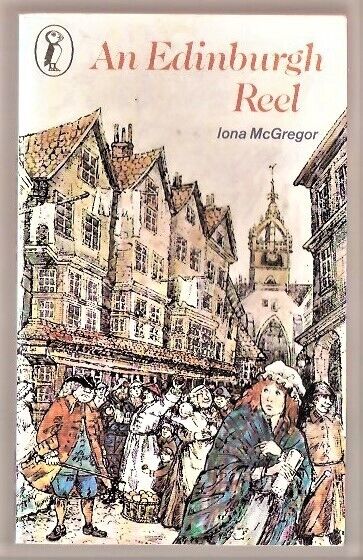
Review: An Edinburgh Reel by Iona McGregor

 Iona McGregor was recommended to me by one of my favourite authors, Leon Garfield, in his collection of stories, The Baker’s Dozen. He describes her as “a new writer - and fresh as a daisy” whose works are “as sharp at witty as one could wish.” Her story in the actual collection, Macfadyen’s Shirts wasn’t one of the standout stories but was a fun little thing about a conwoman who steals shirts drying on the bushes outside Edinburgh. It looks like she was set to become a name in children’s literature but her work becomes a succession of study guides.

According to Wikipedia, her career as children’s teacher and writer were hampered by her sexuality and after she quit teaching, she put more of her energies into LGBT advocacy, as well as being able to write a few books with explicit gay content. She wrote study guides because they paid well, lectured for the University of the Third Age and helped form a group called AD - officially called Anno Domini but for those in the know, actually called Aged Dykes. 


I decided to read An Edinburgh Reel because the anniversary of Culloden is coming up and I have a number of Jacobitey books I wanted to get round to.


Set in Edinburgh in 1751, Christine Murray is approaching adulthood and looking forward to a happier future. Her Father, the brother of a Laird, fought in the ’45, escaped to France and has spent six years as a soldier in the court in exile. Having received a pardon, he’s returned to Scotland with the hope of winning his old land back. She hasn’t seen him since she was nine and the cross, bitter old man is not the father she remembers. It turns out that he hadn’t merely escaped after Culloden but had been betrayed by somebody and spent a year in a hulk-prison, before escaping that. He has scores to settle and is obsessed with discovering the identity of his betrayer.


The relationship between father and daughter is really well drawn. It’s clear that they were the apples of each other’s eye before the ’45 but the younger daughter has worked through the trauma and poverty of defeat and is ready to make her way in the new burgeoning Scotland (represented by her fancybit, an idealistic law student). Her Father is stuck in the old ways, convinced that the only work for a gentleman is farming or inn-keeping and also convinced that he is still a gentleman. His bitterness and lingering resentment also serve to pull the man down whenever it looks like he may adjust. He is baffled by her acceptance of the new normal just as she is frustrated by his inability to accept how things are. Even better, these characters aren’t trapped within these world views, she begins to understand how her father must face his past just as he begins to be more flexible and even enjoys making use of his language skills as a clerk. 


Their distant cousin, Lord Balmuir serves as the symbol of the new, Whiggish Scotland. He has a Robert Adams house which “looks as bizarre as if Lord Balmuir had erected a Hindu Temple in his fields.” He also does the signaturely Whiggish thing of growing new trees on his estate, and most English of all, turnips. He has no time for crofters, only wishing to have long-term tenants who’ll farm in the modern, scientific method. He’s also heavily into the linen trade, wishing to grow it on Scottish shores. Remarkably, he’s not the baddy. He offers Christine and her father all the help he can and, when he has very good reasons to punish them, continues to help.


The plot involves a shady agent, who wishes to rope Christine’s father into using Balmuir’s linen contacts as a Jacobite postal service. It also concern’s Christine’s romance with the law student, which is hampered by the subterfuges she must give to protect her father. Finally, it’s about finding the person who betrayed her father, with the main clue being a snuff-box which once belonged to him. The twist is pretty obvious and could be guessed from even this loose recount.


What makes the book great is the depiction of certain things I’ve not seen in other eighteenth century historical fiction. There’s the tense build up and release of a theatre riot, an amateur cockfight, a depiction of the genteel but cramped highlife of an Edinburgh tenement and a game of golf in the snow. (I found the position of the caddy really interesting, similar to the London Porter but hireable for any kind of odd job - including following people in this book). I also loved how the book highlighted what a cultural shift has happened between 1745 and ’51, with a real sense of that earlier conflict being less about English and Scottish, but old ways and new ways - with the new ways clearly in the ascendence.


The book also used a lot of Scottishisms, my favourites being; weesht, tauchle, camsteerie, gey, tirl, fash, quaich, smeddum and (best of all) clishmaclaver. 


A short novel, ostensibly for children, An Edinburgh Reel managed to fit some interesting looks at eighteenth century life and a discussion of the new ‘enlightenment’ Scotland with a group of interesting characters (and one scene-stealing pig). The plot is a little rushed and the twist obvious but it’s exciting and memorable anyway - especially for its length and intended audience.


Wednesday, 19 April 2023

My thoughts on re-reading Tristram Shandy

When I saw that The Life and Opinions of Tristram Shandy, Gentleman was one of the books on the Dr Johnson Reading Circle list, I rubbed my hands gleefully. I’ve read the book before, even covered it on this site but it’s been a long time and I’ve read a lot since then.

Specifically, I’ve read a lot of the books that influenced Sterne. From Locke’s An Essay Concerning Humane Understanding, which he mainly used as a framework to joke from, to Burton’s Anatomy of Melancholy, Montaigne’s Essays and Rabelais’ Gargantua and Pantagruel. Did any of those books help me reread Tristram Shandy? No. But they did help me understand where he was coming from. 


Locke and Burton are examples of two completely different kinds of knowledge. Burton follows the humanist/scholastic tradition of knowledge by authority. Someone at the Reading Circle explained it best when they said it was knowledge that worked like legal precedent, a thing is true because it can be cited in a former text that is drawn from previous ones. The Slawkenburgis book about noses is just a nasal version of Burton’s Anatomy of Melancholy, a compendium of all the things previously said, synthesised and interpreted by a wise (and frequently funny) curator of knowledge. Locke is the opposite, reasoning some things out from principles but chiefly desiring to observe and test, a version of psychology with a greater empirical emphasis that Burton. 


What Sterne does is expose the flaws in both approaches to knowledge and psychology. He partly does this for the fun to be had but he is not saying that all knowledge is impossible, only that knowledge is limited by out human flaws. Flaws Sterne uses in the book to amuse, but also draw our sympathies.


There’s hardly a kindlier character than Uncle Toby, the man who would literally not hurt a fly despite his obsession with military fortifications (though as Tristram says, Toby is obsessed with the defensive, protective aspects of war, not the aggressive or attacking). He’s so kind that even the genuinely belligerent and insufferably argumentative Walter Shandy can’t help feeling for him. In re-reading, I found Toby’s relationship with Trim to be well-developed and sweet. I liked Trim more in general, how he is no-nonsense and all-nonsense at the same time. How quick he is to cry when he thinks of his brother Tom or the poor soldier Le Fever. When he cries, he asks Toby what’s wrong with him? Toby replies it’s “nothing in the world…but thou art a good natured fellow”. Sometimes Trim and Toby lose a story between them, like the one about the King of Bohemia but they are not only brothers in arms but brothers in spirit and it’s a relationship that heals them both. What’s more, in characters like Toby and Trim that we see Sterne using the flaws, idiocies and limitations of the characters to love them. 


In the Reading Circle, there was an argument that Tristram Shandy is a nihilistic, heartless book, which I found very surprising as to me the book seems to be full of heart. Every character in the book is broken, every action or communication is liable to fall apart or be lost in the gulfs between the character’s interior lives - but this isn’t a source of cruelty. If anything, the message of Tristram Shandy is that the thing that binds us humans together is that we are all broken and lost and flailing. We live small lives full of knots and rusty door hinges and miscommunication and that is what makes us loveable. 


Another accusation that was levelled at Tristram Shandy is that it had a limited view of life, that people should aspire to more than the petty dramas depicted in the book. I’m not sure what’s so wrong with a normal life - it’s not that easy to do, things go wrong, best-laid plans gang aft a-gley, I agree with one of Sterne’s influences, Montaigne, when he said “Life is its own objective” and declared the simple act of living as “not only the basic of employments” but also “the most glorious”. I’d say that Sterne does the same with his group of misfits in Shandy Hall.


What most struck me about re-reading Tristram Shandy is how quickly it moves forward. I know that sounds ridiculous, the book is famously digressive but as Sterne puts it they are ‘progressive digressions’. Yes, a simple linear plot doesn’t really happen but the book is always moving forward, there’s always something new happening or some new silliness to untangle. What’s more, the digressiveness of the book is deeply baked into the meaning of the book. In the first page, Tristram’s ‘animal spirits’ are dispersed - and so Tristram’s nature is one of dispersal, which is reflected in his life and opinions. Each digression shows us the kind of person that Tristram is, someone whose thoughts go down highways and byways - and as someone who often thinks like that myself, I’m happy to get a little representation. What’s more, the teasing at the end of every second volume, the promises of future stories that are always fulfilled, though not always in the most obvious ways and the many callbacks to earlier books in the last one create the feeling of a book which is under control but a dispersed, digressive sort of control. As Sterne asks his reader in the first volume, “only keep your temper”. He knows exactly what he’s doing and what kind of book he wishes to write.


Wednesday, 12 April 2023

Tristram Shandy by Laurence Sterne at the Dr Johnson Reading Circle


The Dr Johnson Reading Circle met to discuss Laurence Sterne’s The Life and Opinions of Tristram Shandy, Gentleman. It’s a book which caused heated debate and discussion in 1759 and continued to do so in 2023.

Some members picked beloved copies off the shelves for a cosy re-read, others clutched fresh, new copies and others finally finished the copy they’d bought for a pound and abandoned sometime in the last millennium. Initial reactions were largely split between people who held it as one of their favourite books and people who found it an unfunny slog, finished out of a sense of duty.


Tristram Shandy purports to be the life story of the title character, who frequently finds himself distracted from his stated purpose by his love of digression. The character is conceived in the first chapter but not born until the second book (of nine). Most commonly, he is drawn from his straight and narrow path by the quibbling of his overbearing father, Walter or the good-natured bumbling of his Uncle Toby. He’s also taken away from his story by legal debates, old curses and creaky compendiums of knowledge about noses. Anything that can lead Tristram away from a topic at hand does so. 


There was discussion over whether the book ever moves forward or not. Some readers found it a static, stuttering book that was determined to waste its reader’s time. Others agreed with Tristram that his were ‘progressive digressions’ which allowed the reader to understand the narrator and his world in ways that would be denied in a more straight-forward narrative. The book is obsessed with minutiae, with tiny items like lead window weights and a creaky door hinge given huge importance. These details that may never have been noticed in an ordinary book, yet in Tristram Shandy they are devoted whole chapters. 


Each (male) character in Tristram Shandy is given a hobbyhorse, an overriding obsession which colours their worldview. One of the clearest is given to Uncle Toby, an injured soldier who has becomes obsessed with the subject of fortification. As such, he frequently finds himself daydreaming and lost in the pseudo-intellectual conversation of his brother until he says a certain word related to fortification, which pulls Toby back in. Discussions of the bridge of a nose will remind him of fortified bridges in European towns or a Doctor’s description of a woman’s anatomy will bring various dykes and culverts to mind. He’s boxed into his own limited understanding, besieged in his own mind. This acts a source of farce and comedy but also irritation - expressed by both the other characters and the reader.


The book is very interested in conversation and communication. Some of the Reading Circle felt the book presents a nihilistic view of connection, with all characters imprisoned by the inadequacies of language and forced into solipsistic cycles where communication is impossible. Others felt that while the book portrays difficulties to connect, there are frequent moments where characters do, despite all the blocks and limitations. There was a big discussion about whether Tristram Shandy uses laughter to cover its bleak view of human life, or is a celebration of those moments when we touch each other across the gulf of our inner lives.


Of course not all communication is verbal and many of the most successful connections in the book are non-verbal. Corporal Trim, a man who likes to hear his own voice, is most effecting when he drops his hat on the floor to symbolise the shortness of life, or waggles his cane to show the difficulties of married life. The brothers communicate by their posture and body language as much (probably more) than the words they use. The book itself mixes verbal conversation, including direct address to imagined readers, with a succession of non-verbal cues, from the frequent dashes and asterisks, to blank and black pages.


One of those pages is a marbled one, which was originally unique in every copy. We reflected on the loss, in a mass produced age, of these individual pages and reflected further on how older books were produced from rag-paper, with each page containing clothes that formally travelled from lords to beggars before becoming a book. It was a suitable digression for a conversation about Tristram Shandy.


The biggest divide about the book was not whether the teasing nature of its telling is fun (or even readable) or not, but about whether Tristram Shandy is a heartless book, whistling Lillibullero in the face of a cruel and pointless life, or whether it’s a celebration of the complexity of even small lives. It seems a heavy conversation for a seemingly light book but is a good indication of Tristram Shandy’s unique power that it prompted such discussion. As to an answer of that question, it’s best for the dear reader to decide.


Wednesday, 5 April 2023

Christopher Smart, drag and 'Mrs Midnight's Oratory'.


I’ve been thinking about drag a lot recently. Part of this was sparked by the recent death of Paul O’Grady, every granny’s favourite drag queen but also due to a protest recently held outside a drag story-time event.


First of all, they weren’t actually holding a drag story-time event at the time of protest, it was merely a venue that has held such events in the past. Secondly, we must be importing our outrage if it’s seriously suggested that England has a problem with drag.


England loves drag. Most small theatres in this country only survive because every year they put on a show for children where a man in drag in one of the main attractions. A good Dame can make or break a panto. (Not to mention the tradition where the main male ‘hero’ row is played by a woman). English comedies thrive on drag, from Monty Python and The Two Ronnies to the drag festooned stage of the Music Hall where acts like Dan Leno ruled supreme.


What’s more English men are renowned for donning a dress at any opportunity. In 1666, Samuel Pepys turned a party into a hyper-party by swapping clothes with his wife and singing until four in the morning. Mary Seacole records the first action of soldiers entering the town of Sevastopol after an eleven month siege was to raid wardrobes, frock it up and frolic.


One friend of this site with a place in drag history is Christopher Smart, whose female alter-ego, Mary Midnight came off the pages of a magazine and onto the stage. He’d started The Midwife in 1751, it came out once a month, was about thirty pages long and Smart was the sole author. The fictional editor, Mary Midnight was an elderly midwife and the central joke was that her ‘old woman’s knowledge’ was sharper and more incisive than the standard sources of media. The magazine was also crammed with other voices, with Smart taking names such as Ebenezer Pentweazle (and indeed, the whole Pentweazle clan). There were machines to grind old people young, societies of antiquities that fished in sewers and a round-up of the international news that pointed out the inconsistencies of reporting in other publications. 


In January of 1752, Smart launched a new venture, a stage show based on the magazine. Previously, as a lecturer in Cambridge University, he’d put on a comic play with the students and he always showed an interest in theatre. Following the harsh licensing laws put in place after proposed play called The Golden Rump (which depicted politicians lining up to kiss a giant golden arse) there were only two licensed theatres. As a result the performance was held in the Castle Tavern, where the gimmick was that the audience were paying for a cup of tea and just happened to receive a night’s entertainment at the same time.


This method of narrowly avoiding the law had been pioneered by Samuel Foote, impressionist and comic who had run successful ‘tea parties’. The show was initially called Mrs Midnight’s Oratory, playing on the popularity of the Mrs Midnight character but also referencing Henley’s Oratory. Henley was a tubthumping preacher, literally tub thumping as he preached from a large tub - I have a biography of him but haven’t got around to it yet. As the show moved venues, at times being held in the Little Theatre in Haymarket, and even touring the south of England it had a number of names, including; Mrs Midnight’s Grand Concert, Mrs Midnight’s New Carnival Concert, The British Roratory, and Sack Posset.


The show was a revue, helmed by Christopher Smart in drag as Mary Midnight. She’d give a comic speech and introduce acts, most of them musical and given silly names. Performers included Signor Bombasto, Signora Spoonatissima, Signor Piantafugocalo, Mynheer Puffupandyke and Mademoiselle Rompereu. It sounds like a noisy night with many of the instruments being salt shakers and other household items.


Smart must have passed pretty well as he once met David Garrick ‘dressed as an ancient lady of the last age’ and fooled him. This is doubly surprising as Garrick would have known Smart through a number of acquaintances, including Samuel Johnson who didn’t rate Smart much as a poet but found him a good chat. Smart’s daughter Elizabeth said his short stature and dainty hands helped. 


There are a number of reviews for the show. Horace Walpole declared it the ‘lowest buffoonery in the world, even to me’ after seeing a performance in may 1752. Hester Thrale Piozzi agreed that it was ‘low buffoonery’ but said ‘it pretended to be nothing better, and it was wondrous droll and what the wags call funny.’ Newbery, Smart’s publisher and father-in-law declared in a puff for the Reading Mercury that Mrs Midnight’s Oratory was “conducted with the Utmost Decency and received with the most Extraordinary Applause.”


There was some controversy. At one point Smart booked a wooden-legged dancer called Monsieur Timbertoes and there was outrage that he’d be employing a Frenchman in a time of war. Smart had to explain that Monsieur Timbertoes was so called because he danced the French-clog and was actually an English man who’d lost his foot whilst serving in the English Navy against the French.


Orator Henley, who inspired the original show’s name, tried to stir outrage by declaring that Mrs Midnight was nothing but a man in a dress and tried to expose the true author of The Midwife magazine. Smart responded by saying that he was only jealous of Mary Midnight, as he was also an old woman but not as pretty. Henley hit back by calling Smart a Molly - slang for a man who attended Molly Houses, a secret underground of gay/trans hangouts where men would dress as women, have sex and even perform fake marriages and births. 


Chris Mounsey, in his biography Christopher Smart: Clown of God, goes further. He claims that Smart’s show was performed in Molly houses and that Smart had been seen wearing women’s clothes off the stage. He sites people calling him Kitty Smart, the feminine form of his nickname, Kit. That he was seen frequenting gay hookups with Samuel Foote, who had come in to play Mary’s daughter Dorothy and who was later accused of forcibly buggering a footman. (The one-legged Foote declared “buggery: I can’t stand for it” - which he possibly couldn’t).


Newbery also published a book called A Collection of Pretty Poems for Children Six Feet High, featuring a frontispiece that Mounsey declares is Smart, looking very camp and including poems that could be interpreted to ‘out’ Smart and castigate him for cheating on his wife, Newbery’s adopted daughter. Mounsey uses this to build a case to argue that Newbery engineered the sane Smart’s incarceration in a madhouse as revenge against his cheating on his wife, and also to distance himself from the increasingly politically dangerous things Smart was saying in his Midwife magazine and during the live performances. I’ve never been wholly convinced of Mounsey’s argument, I personally think Smart probably had a form of bi-polar disorder and his family had become concerned for him after he forced people to pray with him during a manic episode.


Certainly, Smart found himself in a bad place. The Midwife had been slowing down as a magazine as the live show kicked off, with 68 performances in its first year. He’d been ill, whether his asthma, the fever he memories in Hymn to the Supreme Being or a depressive part of his bi-polar cycle. People such as Foote stepped in when he wasn’t available and the show became a selection of animal acts and the drag revue element dropped off. Smart himself was incarcerated in 1757 but the Mary Midnight shows carried on a little while after.


Much critical and biographical focus ends up talking about Smart in his incarceration, where he created The Song to David, and Jubilate Agno - two very different masterpieces, but I think it is worth thinking of Smart in his theatrical heyday, dressed as an old woman, laughing, joking and having a good time. Nothing controversial about that is there?


Wednesday, 29 March 2023

Reviewing for The Reviews Hub


Since January I’ve been writing theatre reviews for The Reviews Hub. A friend of mine from the Dr Johnson Reading Circle was already writing for them and got me in and I’ve had a lot of fun. 

My biggest challenge has been the short turnaround period between seeing the performance and handing in the review. The deadline is midday the next day and as I get to work at 8:15, I don’t have time in the day to write it, meaning I have to write the reviews as soon as I get in. This hasn’t been a problem for short productions in easy to reach places but can be a struggle if I have to get back from a far-flung place in London or if the performance starts late, some have been as late as 9:45. Then I have to force myself to write decent copy at double-quick time before going to bed and getting up for work the next day. It’s been a taste of the real Grub Street writers, forcing themselves to their writing out of necessity but has probably been pretty good for me overall.

I’ve seen a whole range of things, surprisingly few plays. I’ve reviewed mime-cabaret featuring dancers with learning difficulties, a whole range of drag, a number of one man/woman/other shows and even a puppet show on a barge. Whatever the performance and whatever the venue, there’s always a thrill when the house lights go down. I often find myself grinning like a loon, not a professional critical expression at all.


Much of my short time as a critic has coincided with the VAULT festival, which has featured 800 shows in two months. From a practical viewpoint, I like these shows as they are never more than an hour long and the VAULT venues in Waterloo are an easy journey. They are underneath Waterloo Station and trains rumble through each performance, often adding to the atmosphere of them. I do hate the smell though. There’s something about sitting in the VAULT that feels unhealthy, with the thick miasma allowing one performance to include striking lighting effects normally needed by a smoke machine.


I’ve reviewed other productions in more standard theatres, the swankiest being Sadler’s Wells where I reviewed a ballet called Creature. It was a press night and I was invited to hob and nob with the other guests, where I got talking to a film-maker. I’ve rarely felt so out of place, dressed rather scruffily and with no knowledge of the ballet world, but I met some other out-of-place reviewers and we formed a temporary gang. The most magical place was the Puppet Theatre Barge, currently moored in little Venice. It’s a cramped, pokey place with retired puppets hanging from every cranny and raked seating pointing at a miniature stage.


So far, I’ve only given one middling review and a number of good to great ones. Perhaps I am too happy to be experiencing all the strangeness to be discerning but I genuinely feel it comes from being very lucky in the things I’ve seen. There’s also the interesting fact that the reviews are intended to be as objective as possible. While reviewing for this blog, my approach is all about my own personal reactions to the books, plays &c I encounter, relating them to past experiences and other texts. When writing for The Reviews Hub I have to attempt to write for a generalised theatre-goer. The test I make is, what did the performance appear to be trying to do, and how successful is it in fulfilling that. As a result, I gave one piece I went to see a very positive review despite not having enjoyed it that much because I realised my lack of enjoyment was more due to my own tiredness and the fact that I went on a night filled with the performer’s friends, which made it feel in-jokey. When I went over my feelings and notes as I got home, however, I realised the piece intended to be knock-about silly fun and succeeded at exactly that.


I hope to carry on writing for The Reviews Hub over the next year, despite that fact it’s slowed my reading down somewhat.


Here are links to my reviews:


Thick and Tight by Tits and Teeth

I Fucked You in My Spaceship

David Copperfield

Home X

Healing King Herod

Caligula and the Sea

Clementine

The Blue Pool of Questions

How To Be a Pirate

The Black Cat

Creature

Sasha Ellen: Character Building Experience


With hopefully many more to come.


Wednesday, 22 March 2023

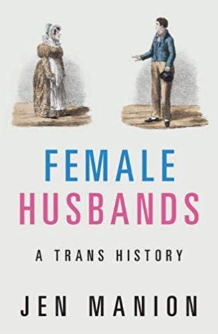
Review: 'Female Husbands' by Jen Manion

 A female husband is someone born female who lived as a man and took a wife, we tend to know their stories because something the exposed them to the public. As such, female husbands are at an interesting crossroads of gender, sexuality and sociological expectations and the book, Female Husbands by Jen Manion examines these clearly, with detail and nuance.

I was first introduced to the notion of female husbands due to the Fielding piece of the same title, this piece set a template for a form of newspaper story that would be popular in the UK until 1800 and the US after. What’s interesting, is that the tropes of these stories may have then led other people to attempt being female husbands for themselves.


The book introduces us to a number of female husbands, taking them at chronological order and examining what each case reveals about female husbandary in general, the people involved in specific and about the way they were seen and treated reveals about the societies they lived in. These ranged from the ‘well known’ story of Deborah Sampson (well known in America I suppose) to Adolph Guelph (who pretended to be a nobleman forced to live as a woman sometimes), Joseph Lobdell (who lived as a woodsman) and James Allen (outed by a workplace accident). While there are certain patterns to the female husband story, partly arising from conventions in how such stories were reported, the individuals and their stories are well told, interesting and different.


It did feel a little strange sometimes to have these people described as they/them, as it seemed clear that many would have preferred he/him and some comfortable as she/her. In fact, the only pronouns none of the subjects would have used for themselves was they/them, as understanding and language beyond a gender binary wouldn’t have been known to them. However, I did see the purpose of they/them pronouns in being a way to easily talk about the totality of their lives, both when they lived as men and as women in a tidy way.


I’m British, aka a resident of TERF-island and even as a person who’d rather tuck myself into a nice book, I’ve not been able to escape all the think pieces about ‘the gender debate’. One feature of this debate is that it’s almost always about transwomen, transmen are either infantalised as women who’ve fallen off the noble path or ignored completely. The question always seems to be ‘what is a woman?’ but this novel raises the question ‘what is a man?’ - or at the very least, ‘what does is mean to be a husband?’. For many of the female husbands in this book, being a husband was, in the eyes of the community, sufficient proof of manhood.


I found this particularly interesting in the case of James Allen. Married for over twenty years, he (and I’m sticking with he for this person) was a hard-worker who not only fulfilled his role as husband but also took part as a good man in his community. It wasn’t until a workplace accident left him dead that a coroner’s inquest found him to be biologically female. However, the coroner declared him a man on his death certificate as he had been married by law and so was legally male, whatever his biology said. In his case, being a man was a result of successfully (and even admirably, according to his neighbours) embodying the role of man. 


I found it interesting that most of the female husbands in this book were working class. It does highlight the economic aspect of living as a man. Men had more freedom to roam and more access to better paid jobs. However, this doesn’t mean that living as a man was purely pragmatic, had it been, more women would have done it. I suppose there was also greater restrictions for upper class women, especially those whose womanhood (and ability to have children) are tied to the passing on of great estates. There’s also an interesting economic element of marriage, that while these marriages may have been emotionally and sexually fulfilling (and some may not of course) there was economic sense in marrying and pooling resources - a function of marriage beyond sex and gender.


One very interesting aspect in the relationship was the greater position of power of the wife in such a marriage. While a cis-marriage gave all the power to the husband, the wife to a female-husband could pull the plug on the marriage and cite the ‘true’ sex of their spouse at any time. The examples from the papers show that society is ready to believe a wife who says she was tricked, however unlikely that seems, in order to restore ‘normal’ function. At the same time, if a marriage was outed by accident, like in James Allen’s case, the wife would have a lot of difficult questions to answer. 

As time went on, the problem people had with female husbandry seemed to lie less in the taking on of a masculine gender, especially as women were securing more rights, but in the notion of a same sex marriage. This is when the phrase female husband was replaced by woman husband. I found it very interesting how this change in nomenclature changes the nature of the relationship from a female (sex) husband (gender) to a woman (gender) husband (gender). Which aside from anything else helped me understand the difference between the terms female and woman and also helped me understand why misogynist weirdoes always use the word female where woman would fit more comfortably.


I enjoyed this book, it presented a difficult and complex topic with admirable clarity, gave me a lot to think about and had me wondering a few things also. One wonder I couldn’t shake off was, ‘what about the female husbands who were never discovered?’ Did they exist or was it inevitable that they would be found out? I also thought a discussion of Charlotte Charke might have been interesting, they’re mentioned briefly but dismissed, despite living as a husband with a woman for a number of years. What’s interesting about them is that they were famous before living as a man and only did so when that fame had dimmed, despite that fame being based on playing male parts - often as parodies of her own acting family. I just thought her story may have something to give.


I have used a lot of parentheses in this review, I think it’s because it’s a knotty and delicate topic and I’ve tried to be nuanced, even if that isn’t my greatest strength.