Wednesday, 15 March 2023

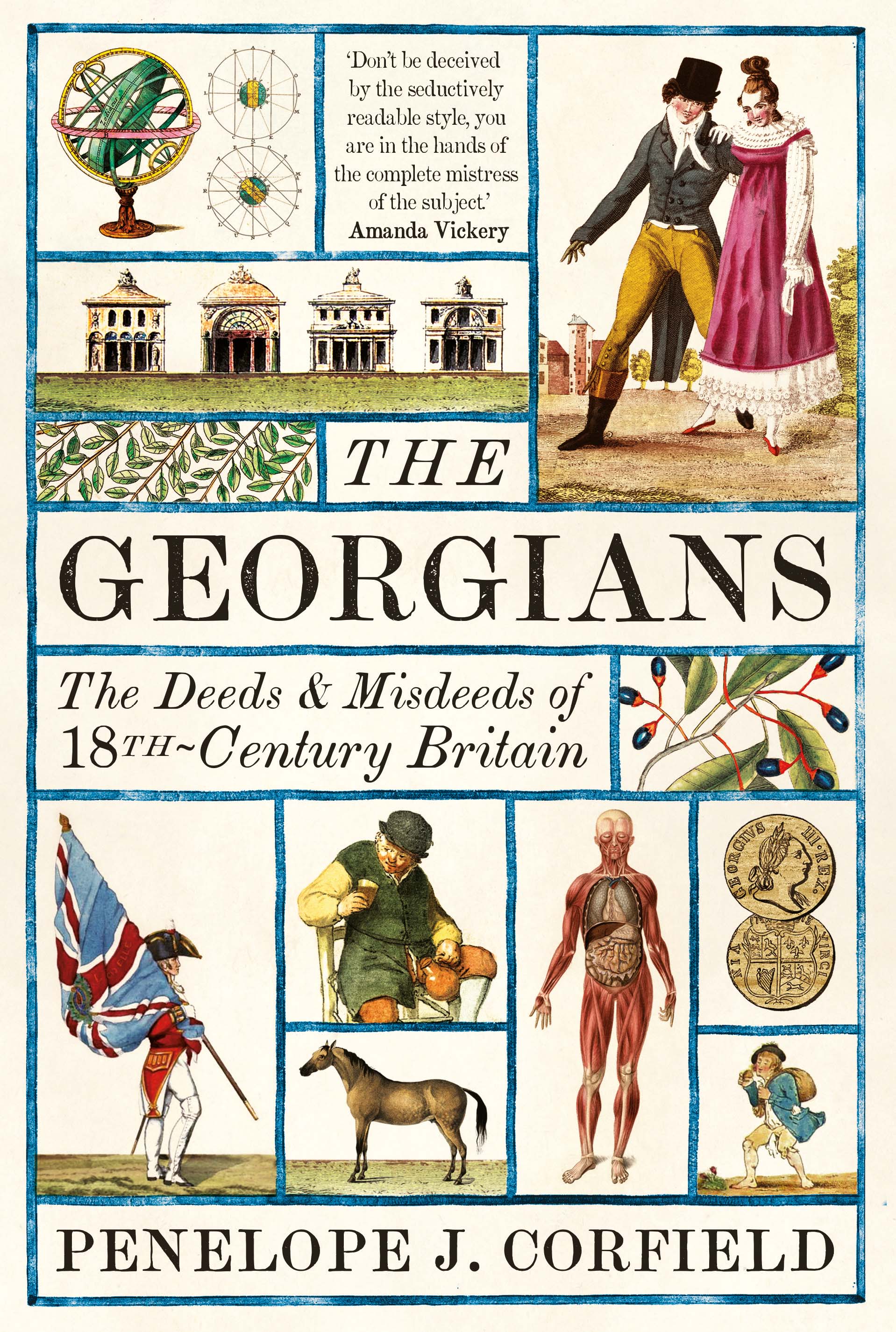
Penelope Corfield's 'The Georgians' at the Dr Johnson Reading Circle

 The Dr Johnson Reading Circle met at the house on the 7th of March to discuss Penelope Corfield’s The Georgians, a broad sweep through the long eighteenth century, taking in literature, politics, economics and a whole host of other disciplines.

There was a little joking at the length of this eighteenth-century, which sometimes went back as far as the 1660s and as far forward as the 1840s but Corfield noted that her desire in the book was to follow themes throughout the period, examining the constant tension between continuity and change. In taking this step back, the book seeks to ask questions about the nature of the society that produced such a distinctive moment in British (and world) history. There was also an interest in comparing what people now make of the Georgians to what they made of themselves with one of the starting places of the book being a collection of statements people living at the time made about what was happening around them. 


The responses of the Georgians picked up on a number of different themes, from Johnson talking of ‘an age of innovation’ to the personal letters of private people talking about ‘an age of politeness’. However, all these ‘ages’ can be broadly categorised as optimist or pessimist. Corfield comes right out and declares her optimism and did so again in the meeting, possibly a brave thing to say in an age of doomscrolling but one backed up by the fact that certain advancements of the Georgian era, from increased literacy to widening forms of democracy are still with us today. 


Fitting for a book which draws a picture of trends, the discussion of literacy involved lots of different areas. We spoke about the habits of reading out-loud as a public good, with workshops delegating someone to read to people as they were working, not too dissimilar to many modern uses of audiobooks. We also discussed the role Britain’s protestant and mercantile traditions in creating a desire for literacy from the bottom up, a state pushed literacy not being in place until 1870 (and too late for even this book’s reach). Corfield even includes a section on the less discussed rise in numeracy, pointing out the fiendish mathematical puzzles posed in The Lady magazine, answered in following weeks by skilled amateur mathematicians.


The Georgians is a refreshingly democratic piece of history, while it happily uses comment and anecdote from famous names, its conception of change (and continuity) are treated as broad, sociological functions. There’s a striking chapter about the change in lower-class consciousness, from being ‘the poor’ to ‘the working class’ and a discussion of the formation of early trade unions called combinations. As such, it’s a history that includes everybody without apportioning blame or glory.


We had a spirited discussion on social mobility, talking how people like the son of a penniless bookseller could become a leading intellectual figure. With a growth in urbanisation, wider platforms of discussion and a decline in court favour could lead to plutocrats sitting at the same tables of aristocrats. This could also lead to those who felt they hadn’t received their own fair shares, with characters like Richard Savage believing his (alleged) noble birth and his (pretty genuine) talents should have given him a better deal. This is not to say the Georgian era was a meritocracy (and is any age?) but there was a notion that talent and merit could bring a person further in life than ever before. 


The book, and the evening, started with Corfield saying that what drew her towards the eighteenth-century is that it was terra incognita, barely touched by a-level or even undergraduate history. This means it’s still an era with lots to give and lots to say and where fledgling academics still have space to make a name. She told us an anecdote about one of her students who was searching the letters captured from Spanish ships and held, often unopened, in British archives. This student not only got to open many of these letters for the first time but discovered the earliest written records of the Basque language - a discovery that made him something of an academic celebrity in his home town. 


A distinctive feature of The Georgians are the elements at the end of each chapter called ‘Time Shifts’. These take a theme from the chapter and pull it forward into the modern day, either encouraging the reader to visit a museum or landmark, read a particular short text or watch a film. Corfield conceived of these as a teaching-aid, bringing the time up to date.


There are times where The Georgians could be described as a comprehensive skim through the era, with many intriguing aspects which want filling out a little. It’s very possible these were filled out in the original draft of the book, which had been twice as long. Fuelled by enjoyment and a surfeit of material, she had handed in a whopper of a manuscript and was told to cut it in half or void the contract - whether this feeds into the potential sequel, is yet to be decided.


After a dense conversation that could probably have lasted twice as long, the meeting was called to an end, with the now traditional wander for some pizza. There Penelope Corfield asked us all if we were optimists ourselves… much like the book itself, it was a good prompt for discussion.








Wednesday, 8 March 2023

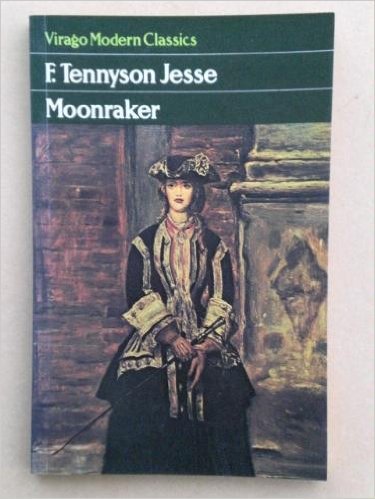
Review: Moonraker by Fryniwyd Tennyson Jesse

Moonraker is an adventure novel written by an author with the wonderful name of Fryniwyd Tennyson Jesse. Published in 1927 it wished to capture the same spirit as Treasure Island and the similarly named Moonfleet. It’s a short novel that covers a lot of material, from pirates, to women’s liberation and the betrayal of Toussaint L’Overture. 

It’s framed as a yarn being told by an old salt, with the first few chapters being a peculiar mix of purple prose and seaman’s slang. Our hero, Jacky Jacka, not only has a girl’s name but is often described as being particularly feminine in his beauty with his long golden hair, rosy cheeks and ‘eyes of the greenish-blue of the deep water near the rocks.’ Not much is done with his prettiness, which is surprising given the twist towards the end of the book. He’s also sensitive and saves a witch from being stoned. She lets him glimpse his future and he sees images he’ll then encounter in the course of the book.


He sets sail on the Picksie, a ship whose captain has a deep relationship with. The ship is attacked by pirates on board the Moonraker, and rather than build up any tension, the ship is attacked and exploded within a paragraph. Jacky is then forced to live among the pirates where he develops a fixation with their captain, Lovel. He is also sick to the stomach to now be a pirate, though when the pirate attacks a French ship, he ‘could not but enjoy it’, which is described as ‘a thing not to be wondered at’. They capture a young French man called Raoul, whose presence changes Captain Lovel and sets them on a course to Santa Domingo and not the nearby island of Tortuga, where the pirates planned to search for Kidd’s treasure. 


Santa Domingo is in a place of relative peace, having fought a number of slave uprisings and slave-owner backlashes, the country is now stable under Toussaint L’Overture and even building forward-looking architecture celebrating the now free island. However, Napoleon has sent a fleet with the instructions to lure and capture the ‘rebel’ leaders and bring the country back under the thumb of the French.


The next part of the book follows Jacky as he follows L’Overture in his last fights. He’s doing well but his generals are lured over to the French and he is eventually tricked into captivity. The events themselves, the military to-ing and fro-ing, the ambushes and battles, are all rushed through as quickly as possible in order to spend time with Jacky’s point of view of L’Overture and his struggle. He’s portrayed as the wisest and most authentic man Jacky has ever met, yet Jacky is constantly surprised to be admiring a black man. He regards L’Overture as ugly, brutish and compares him to an ape yet also recognises wells of humanity, goodness and even a shadow of divinity in him. It’s a strange mix and reads oddly ninety-odd years after the novel was published. A modern reader finds themself wondering if the surprise and recognising a ‘great’ person who is also black is supposed to be one encountered by the 1790s figure of Jacky, or if it’s a surprise expected in the 1920’s reader. Suffice to say there are also n-words thrown about the text by both characters and narrator.


There’s a lot of potential in the Toussaint L’Overture section, as there was in the forced piracy section but the book moves too quickly to properly develop them, a fault with much of the book. There are some wonderful sections, particularly when L’Overture compares Raoul’s political and idealistic conception with freedom with the genuine struggle for bodily freedom he has had to fight. It’s a good point and well made, but a slower, more fleshed out version of this book could have developed those points and differences far better (though maybe to the detriment of the book’s nippiness).


Raoul’s original plan was to evacuate L’Overture and his fancy-bit on the Moonraker and take them to America but with L’Overture captured, it’s just Jacky, Raoul, fancy-bit and fancy-bit’s friend who board the ship. Captain Lovel is acting even stranger, refusing to attack legitimate targets and seeming to risk everyone’s life on board the ship to take Raoul back to France. In a tense dinner scene, the captain invites the main characters to a dinner where Jacky is the waiter. The Captain enters wearing an elaborate frock and fancy-bit thinks he’s having a laugh and cross-dressing, declaring that as handsome a man as he is, he’s a really ugly woman. This is when it’s revealed that Captain Lovel is actually a woman called Sophy. 


It’s a really striking scene, because Sophy/Lovel had picked the dress as the prettiest they’d ever seen and was hoping it could be a wedding dress - in a wedding with Raoul. There’s something so cruel in the description of her ugliness in it, the opposite of a romantic movie glow-up. Then the crew mutiny and all see the truth of their captain. She fights, bare-breasted, the dress stripped down to the waist, skewering numerous mutinous pirates. When a stale-mate ensures, she loads the named characters on a longboat and explodes the Moonraker…


…Jacky lives his life, becomes a captain himself and marries but he’s always haunted by the two realest people he’s ever known, Toussaint L’Overture and Sophy Lovel, who make his wife seem as insubstantial as smoke in comparison. When he feels this, he kisses his wife, who’s pleased by the act of affection but doesn’t understand why. It’s a surprisingly moving and sombre ending to an oddly perfunctory story. 


I couldn’t help but wonder if this book would have been better if it had been expanded and deepened, there were so many interesting stories of freedom vs constraint in the lives of Jacky, Sophy and L’Overture that could have been compared. There was the whole element of Jacky’s prettiness, how he as a born male would have passed as a woman better than Sophy could. There was the whole tragedy of L’Overture and his betrayal, as well as the hidden love of Sophy for Raoul. If the book was bulked out, it would have lost its adventure story bracket, and perhaps Tennyson Jesse wrote it for a quick buck, but I couldn’t help but feel that this book could have been more. It was good, but there are seeds of great in it.


Wednesday, 1 March 2023

Review: Mischief Acts by Zoe Gilbert


Zoe Gilbert’s Folk was one of my favourite books of a few years ago, I loved how she took folk and fairytales and plaited them together to create the island of Neverness. I also loved how textured the world was, with plenty of description of smell, taste and touch. My only disconnect with the book was how the non-existent Scottish island felt walled off and detached from the real world. In Mischief Acts, Gilbert spins a similar web of folktale and myth but grounds it more fully into a real place and shows it affected by time. Even more fun for me, it’s a place a know fairly well.

Mischief Acts is the story of Herne the Hunter. A mythological man of the forest with a crown of stag antlers, he was first mentioned by Shakespeare but later written about by arrange of other authors including one of my favourites, William Harrison Ainsworth, who did his thing and rejuvenated the myth for a few more years. Gilbert creates an origin story, Herne is the king’s favoured hunter but that causes envy among the other courtiers. They wish harm on him and he is killed when a stag rushes for the king and he steps in the way. The wizard Bearman brings him back to life by placing the antlers on his head but also taking away his hunting skill. Ostracised from his peers, he hangs himself but returns as the spirit of The Great North Wood.


The book then tracks the fate of this wood and it’s guardian spirit through the course of history and into the future. Often there is a form of Bearman, existing as his antagonist. Herne’s form, name and presence changes as the forest does but whenever he does appear, some form of mischief will follow. As such, the mischief is tied into the unpredictability of nature and is compared to the desire for order and control inherent in man (in these stories a variation of Bearman). 


One of the best elements of this book is how the tone, genre and structure of the book completely fit the theme. Each story is set in a specific time period and the species of writing matches it. The origin story is told as a ballad/prose poem, there’s a renaissance set story which takes advantage of the eras dabbling in dryads, nymphs and other Arcadian visions, there’s a gardener’s almanac, a scientist’s notebook, a modern relationship drama. The stories set in the future try and evoke futuristic slang, probably the closest element to a misfire, but I loved the intent.


As nature is understood and the wood is built on, Herne himself becomes implied rather then seen. He becomes a concussion vision, an acid trip vision and the last thoughts of a dying (and decomposing) man. I loved how, as the enchantment of nature diminished in popular understanding, so the enchantment of the book is diminished - I also loved the positive notions of the ending, where a re-wilding and re-enchantment can take place. The book argues how a connection with the mischief of mother nature is also a connection with magic and our natural, animalistic selves. This magic is also threaded through the books by the songs between each story and the charms immediately before them.


What’s more, these are good stories. I loved the sweetness and strangeness of the lesbian acid-trip story where the word nymph plays two roles. I enjoyed the farce of the scientist’s story, balloon-trip accident and all. As a child who grew up among trees downed by the 1987 hurricane, I loved how it was described as Herne’s howl of pain and anger. I also enjoyed the use of historical personages and events, from Edward Alleyn to the scandalous eighteenth century actress Ann Catley. Did you know it was Herne who burnt down the Crystal Palace? I’m glad he left the dinosaurs though.


While I loved Folk, Mischief Acts is a definite improvement, tying the myths into the landscape and more importantly into how the landscape changed over time (and the guess at what might happen to it next). Herne himself is never particularly knowable as a character, he exists as a force but the characters he does affect are well developed. The threads that link the stories stop the book feeling fractured but the different tones and genres re-engage each time. I really loved this book and am eager to see what Zoe Gilbert writes next.


Wednesday, 22 February 2023

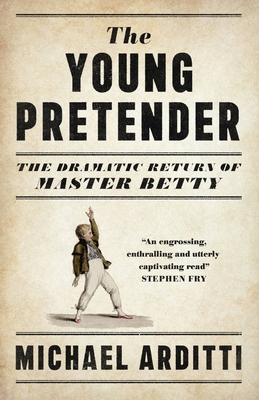
Review: The Young Pretender by Michael Arditti

 William Betty first came as one of the side-stories in Andrew McConnell Stott’s The Pantomime Life of Joseph Grimaldi. At the turn of the 18th century, both society and theatre was extremely chaotic, leading to all sorts of fads. There were fads for ‘aqua-dramas’, which took place on flooded stages, a rise in speciality acts, a number of celebrity dogs - and there was Bettymania.

Rather like Beatlemania, Bettymania created huge crowds but unlike Beatlemania, people died in Betty’s crowds. There were duels, not even about whether Betty was a good actor, but about which role he fulfilled best. For just over a year, the whole of the UK were obsessed with one actor, someone who played all the main roles in Shakespeare and beyond, playing Hamlet and Macbeth in the same year, and was only 12 years old.


When I picked up The Young Pretender, I thought, for a moment, that I was picking up a biography but this is a novel. Set a few years after his heyday, the now 21 year old William Betty has decided to make a comeback. He navigates the difficulties of returning to the theatrical world but also comes face-to-face with the memories of his former life as a supposed prodigy. 


Betty is a very engaging character, trying to hang on to his dignity, having to remind everyone he meets that he is ‘Mister’ now, not ‘Master’. He has very little arrogance about his former dominance, hyper-aware that he is meeting fellow actors at a far more even level than he was in his superstar years. He hopes that his maturity will have improved him as an actor and is not blind to the idea that he was never a great actor so much as a fad. True, it hurts him if other people tell him these things, but they are not new ideas to him. He also holds a truly sweet and naive hope that, with work, he may become the actor he was previously hyped up to be. It’s charming how he amuses his little sister, tries to connect with old friends and just tries to be a decent professional, without becoming despondent by the increasingly clear ambivalence that audiences have to him as an adult. He also weathers a number of comments about his increased weight with aplomb. 


There’s a lovely scene where he meets up with Dora Jordan, ditched by her royal partner. The two reminisce, not about life on stage but about the time she took an exhausted Betty and let him recuperate at the family home. There’s also a very good scene where Betty decides to be ‘a man’ and sleep with a prostitute. It just so happens that the one he picks up saw him on stage a few years earlier and she remembers it as one of the high-points of her life. Not wanting to ruin her memories, he gives her the money and leaves with the deed undone. 


The biggest problem with the novel is the matter of amnesia. Whether it’s because of suppression, or the drugged up haze a lot of his acting career was performed in, but Betty has almost no actual memories of his time in the spotlight. These memories leak in as the book progresses, with Betty and the reader discovering them at the same time. The trouble is, this element of the book tests disbelief too hard. There is no way Betty wouldn’t be able to remember whether his tutor, Gough, sexually abused him or not. Nor is there anyway he couldn’t remember a certain ‘fan’ certainly tried to until the end of the book. Betty’s access to his own memory is plot-convenient in a way which breaks realism too much.


Were I to write a book about William Betty, I’d have been tempted to write a farce. The notion of a boy taking the central male roles in popular plays and playing them against adult casts (indeed, adult love interests and antagonists) and it being phenomenally successful, is a farce. Michael Arditti has chosen to write a drama, however. This is probably fairer to Betty, who ended his own life following a second unsuccessful comeback but it does mean the book is a fairly drab affair, full of disappointment, hazy memories of parental abuse and possible child abuse. What’s more, the character of adult Betty is so passively accepting of what has happened to him, his realisations are met calmly, until at the end he decides to kill himself (an attempt which failed, incidentally).


As such, Arditti probably respects the historical Betty more in his dour telling but didn’t give me all that much joy.


Wednesday, 15 February 2023

Review: Gargantua and Pantagruel by François Rabelais


 I’d long wanted to read Gargantua and Pantagruel because of its influence on comic literature, particularly Tristram Shandy, which I plan to re-read later. After reading Anatomy of Laughter, my desire to read the book piqued even further so I picked it up.

The first book (written second) tells the adventures of Gargantua, an intelligent and convivial giant. The second book (written first) is about his son, Pantagruel, his all-worthy son. The third book is about finding the answer to a conundrum posed by Pantagruel’s friend, Panurge and the last two books are about a travel round the world to find an oracle to answer that question. 


Most of that is beside the point, this is not a novel, it’s a piece of freewheeling prose fiction. Rabelais doesn’t want to tell a psychologically complex, long story; he wants to tell anecdotes, to prod thoughts and tickle laughter. Gargantua and Pantagruel is a waste of time and it’s supposed to be.


The most common technique in the book is to bring everything back to the body. That human beings have bodies and that those bodies shit, puke, piss, cum, queef, vomit, fart and burp is of great amusement to Rabelais. Even funnier is when the main characters are giants and their bodily functions are exponentially bigger. Norman Inkpen admits to finding Gargantua and Pantagruel too big a jobbie in his genre-defining Shit Jokes- a study of Scatological Humour and following his sad demise will never be able to read his Rabelais-based follow-up, Gargantuan Turds.


Rabelais also makes great effect of mixing bodily functions with more intellectual elements. It may be the developing arts of the index and concordance to produce a list of different kind of bollocks or fool. He may use classic, university style chopped logic to discuss the likelihood of being cuckolded or modern humanist understanding to explore the same. Rabelais also loves lists. Many of these come in the form of overenthusiastic synonyms but some are actually formatted as such. The book consists of a list of types of ball-bag and also types of fool. There’s also a scripted dialogue at one point. Rabelais (or the translator) also loves semi-plausible nonsense words, people are philogrobolized in the brain and monks go on circumbilvaginations. 


I particularly enjoyed the prologues to each book, where Rabelais insulted his audience in a jocular manner, made extravagant claims about the success of his work and hopes for how they’ll be received. At one point he says he hopes everyone is so taken by his book that they’ll forget to do anything else but read them and civilisation will fall apart. This won’t be so bad though, as everyone will have memorised his works and will all be laughing nonetheless.


The first two books are pretty similar. They both tell the story of a giant’s birth and childhood, how they went to Paris to be educated and how they returned to their homeland to defend it from invaders. Both drown those invaders in piss at one point. 


The first giant, Gargantua is poorly served by his education at first. He starts of a natural genius, using experimentation to discover the best bum wiper (and settling on the downy neck of a live goose) but being destroyed into uselessness by his tutoring. He’s turned around by a good tutor though and is ready to recapture his country with the aid of Fr John, a drunken, violent monk and Gymnaste, who vaults actual horses. 


The second giant, Pantagruel is better served by his education, becoming a genuine renaissance man. He meets Panurge, a character who has numerous ways to gain money but even more numerous to lose it. Panurge initially responds in a melee of languages, begging for food and drink, before he gets it and becomes part of the team. There’s a wonderfully ludicrous chapter where Panurge argues a thesis with a British academic only in the form of mime. The book describes all their strange movements but has no commentary on what is actually being discussed.


The third book takes a turn. Not only is it the first where Rabelais names himself as author, he also describes himself as being among the characters. This is where Panurge becomes the focus and Pantagruel steps back. Panurge wants to get married but is worried he might be beaten, robbed and cuckolded by his wife. The gang ask numerous experts, soothsayers and quacks and each give the same answer - that everything Panurge fears will come true but he’s stubborn and keeps asking more people. I quite liked this running joke and it gave the third book more of a shape. 


The fourth and fifth book depict a voyage halfway across the world to visit the ultimate oracle and ask it Panurge’s question. It’s a real proto-Gulliver, with each world having a different satiric purpose. There’s the land of The Belly, a ‘Ventipotent God’, an island of clergyman birds, one of cat-lawyers (known as ‘clawyers’) and another of people who worship Papal Bulls to an extreme degree. Fr John and Panurge bicker a lot throughout these books, with the formally brave Panurge now a reluctant coward against the bluff clergyman. One odd element is the setting off of the voyage contained six chapters describing a magical weed they bring with them, which isn’t ever mentioned on the voyage itself.


It’s debated whether the fifth book is fully Rabelais, or whether it’s built from bits, pieces and notes. I didn’t find it to be a significant drop-off in quality and actually enjoyed the descriptions of the Temple of the Bottle. There was even a slightly grand moment when Panurge receives his wisdom, a big fat yes. Yes to everything, to the joys of marriage, to the pitfalls, to life in general. Yes.


This is the ‘point’ of the whole book though. Embrace life. Be big. Be magnanimous, generous, giving, curious. Enjoy life. Enjoy being alive right now, in a messy, hungry, thirsty body. Embrace everything that life throws at you or thrusts upon you. The small, petty, pedantic and blinkered are the opposite of this - don’t be them (or you might drown in piss). It’s an oddly enlivening book with a surprisingly positive message. Though the misogyny of the book can’t be denied, nor can the spitefulness of the main characters sometimes (especially Panurge). It does lessen the book, it can’t be so magnanimous as to include women - this is a book written by the blinkered vision of a (twice-former) monk in the 1500s. Yet the intended spirit of the book comes through, making it oddly more enjoyable in the abstract than the specific. There were times I was bored reading this (despite the.. ehem gargantuan efforts to entertain) and there were times Rabelais’s limits to include women in his vision were off-putting but thinking of the overall message, this is a great and positive work.


Aside from anything else, I find it hard to walk into the classroom I work in after lunchtime and not feel that I am being “pickled in farts” and if I ever get the chance to call an old friend, “my velvety ball bag”, I’ll be a very happy person.


Wednesday, 8 February 2023

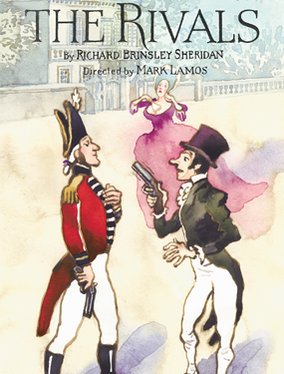
The Rivals by Richard Brinsley-Sheridan at the Dr Johnson Reading Circle (Part Two)

 Having been pleasantly surprised by how funny the first part was, the Dr Johnson Reading Circle settled once again online to perform the rest of Richard Brinsley Sheridan’s The Rivals.

Act 3, Scene 4 starts with the country squire, Bob Acres admiring his new ‘city’ look. His servant, David, declares him as a ‘Devon monkeyrony’, so spruced up is appearance that at home the cook, Mrs Pickle would cry ‘Lard preserve us’… (I think it’s a good little joke, anyway). Sir Lucius O’Trigger comes round to encourage him to challenge the mysterious Ensign Beverly to a duel, stoking his bloodlust so Bob ‘catches courage’ from him. Despite the best efforts of David, Bob is committed to the idea of duelling and sends for Captain Absolute to send the challenge and talk up his prowess as ‘Fighting Bob’. Absolute, knowing there is no Ensign Beverly is happy to take the letter. 


As he’s coming out of Bob’s lodgings, he’s cornered by his father and dragged to the most awkward of meetings, where he must reveal to Lydia that he was not Beverly, but Absolute all along. He tries to put it off, relying on her looking the wrong way and trying to put on a rough voice but the damage is done and Lydia never wants to see him again. His father is not-so-secretly pleased that his son is a trickster and lover but Captain Absolute is despondent, putting him in a particularly fatalistic mood when Sir Lucius O’Trigger calls him to a duel for a perceived slight.


The rest of the play involves various characters preparing for, trying to stop, or gleefully anticipating the duels between O’Trigger, Fighting Bob and Captain Absolute. There’s a pause to catch up with Faulkland, who is still moping. He lies to Julia, saying that he needs to escape town and asking if she could join him in poverty as a fugitive. When she accepts, he reveals that it was a lie and it’s this that finally breaks their relationship - there were fist pumps of happiness for her at this moment.


When the characters all converge at the duelling spot, there’s some fun at Bob’s courage oozing from him at the thought of being buried in Bath Abbey but the jokes largely cease for the characters to quickly clear up their confusions, introspect and pair up. Lydia realises she does love Captain Absolute, even if she has to forfeit the romance of an elopement and the two reunite. Unfortunately for us, Julia and Faulkland also patch up their differences and he promises to be less of a selfish weirdo - I’m not sure I believe him. Bob is single but happy for his lucky escape and Sir Lucius finds out his epistolary paramour was actually Mrs Malaprop, who he declines, leaving her cursing men.


There’s something rushed about the second half of The Rivals. Lucy, the trickster maid, disappears completely and the other characters seem to charge ahead to the tidy dénouement, rushing scenes that could have produced more laughs. Thinking of Shakespeare’s false duel in Twelfth Night, the characters are trying to run away and being stirred up at the same time but these duelists have a polite conversation and clear everything up before they’ve even measured out the field of combat.


What’s more, the romantic pairings don’t feel like great triumphs. The relationship between Captain Absolute and Lydia Languish seems too shallow to really celebrate. A modern audience would be actively against Julia being shackled to the insufferable Faulkland and Bob and Sir Lucius are left with nobody. Also left alone is Anthony Absolute, the bluff father, who could have at least landed tricksy Lucy as a mistress, and Mrs Malaprop, who definitely deserved a happy ending for all the mean things people said about her. For a play that started so strongly, it ends a little whimperingly but it was still fun to perform and be performed to and I like forward to see what play we may try next.


Wednesday, 1 February 2023

The Rivals by Richard Brinsley-Sheridan at the Dr Johnson Reading Circle (Part One)


 The temperature below zero, the wind whipping around outside and the Dr Johnson Reading Circle stayed tucked up in their cosy homes to perform Richard Brinsley Sheridan’s The Rivals over video call. 

His first play, written in 1775, The Rivals is one of relatively few eighteenth-century plays to be performed, read and studied today. Most of us had dimly remembered run-ins with the text, some nonsense about lovers and being forced into pretending Mrs Malaprop’s wrong word choices were amusing. However, in performing the play for each other, we discovered that it was far funnier than we remembered and the humour came from characters we had not expected.


The action takes place in Bath. Captain Absolute is pretending to be a poor ensign in order to woo Lydia Languish, a woman who has enough money to ‘pay the national debt as I would my washer woman’. She’s very aware of the attraction of this money and so is determined to run away without her aunt’s approval and forfeit the fortune. She is also being unsuccessfully pursued by Bob Acres (who likes his swears to match the subject) and an Irish peer called Lucius O’Trigger. Unfortunately for Trigger, Lucy, Lydia’s unscrupulous maid has been giving his letters to Lucy’s aunt, Mrs Malaprop, who thinks he’s courting her. To add complications (of course) the Captain’s overbearing father has arranged a marriage between him and Lucy, something which should be ideal if it wasn’t for Lydia’s distaste for ‘humdrum marriage’. Then there’s Lydia’s friend Julia who is trying to manage the emotions of her overwrought lover, Faulkland.


It’s strange that this play has a reputation for being something of a Mrs Malaprop show, as every character has a clear personality and funny lines. Particularly funny were the servants, the only people who really know what’s what in this play, but they enjoy the spectacle too much to clear anything up. The coachman at the beginning goes into a vigorous defence of the fading practice of wearing wigs. The servant Fag complains about how unfair it is for his master to take his anger out on him, before mercilessly beating an errand boy. The maid Lucy gets many funny moments, whether it’s totting up how much money she is getting to deliver love letters and her joy of misdelivering them; or a conversation with Lucius O’Trigger, in which she excites his amorousness to kissing in the street - or into the camera in the case of our Zoom meeting. Those lips will haunt our dreams for some time.


This is a play where none of the scenes drag and each one stands out in its own way. Even two characters talking about books becomes a funny takedown of careless library users, a Lady Slattern-Lounger has ‘a most observing thumb’ and she dog-ears pages. These books, all of them real and many from authors we have read, including Smollett and Elizabeth and Richard Griffith, were then hidden in the covers of more sober works, many of which had been used as curl papers. 


This reading is a clear danger as far as Sir Anthony Absolute, the Captain’s father, is concerned. He’s a Squire Western-esque figure of loud, enthusiastic praise which can quickly be turned into wild, enthusiastic abuse as he is ‘compliance itself when I’m not thwarted’. He discusses reading with Mrs Malaprop ‘the old she-dragon’ as they set up the marriage between the Captain and Lydia. Mrs Malaprop (famously) thinks she is something of an intellect although she often gets the wrong word - when has Captain Absolute read her a letter he has (unbeknownst to her) written, it’s the nasturtiums cast on her learning that upsets her more than being called an old she-dragon.


Then there’s Faulkland… oh Faulkland. He’s a man of feeling and nothing will stop him being so. First he’s deeply upset that his beloved, Julia may have been ill or upset without him. Then he’s in pieces because she’s been jolly in his absence. There is no winning with him, his love keeps him in permanent misery and he’ll twist everything to maintain this misery. There’s a wonderful detail where Julia walks out on her and he sits, listening at the door, thinking that he hears her returning, then not, then returning again, then not.


A play really does come to life with performance and The Rivals is very willing to give lots of pleasure and laughs. With some in hydrostatics, this was one of the funniest evenings of the Reading Circle and there’s another evening to go.