Wednesday, 16 February 2022

My Month of Time-Travel Fiction


As I pulled out books I fancied reading in the year ahead, I found myself piling them up into discreet groups with vague but persistent thematic similarities. One of these piles consisted of novels related to time-travel and January being the month of new beginnings, time-travel seemed appropriate. In all, I read eight books that featured time-travel somewhere in the blurb and it was interesting to see how a concept can be spun in many different directions and came to a few interesting conclusions.


First of all, it’s interesting how rarely time-travel is used for its own sake. Only one of the eight books was really about time-travel. The Society of Time by John Brunner told the story of a world in which the Great Armada had succeeded and the future was based on the traditions of Imperial Spain. As such, it is now 1988 and the world is stagnated technologically and socially. There hasn’t been an agricultural or industrial revolution, slavery is still common and women are also property – but there is time-travel. In this case, the discovery was made by a priest and functions by a simple machine of alternating metal pieces. This discovery is regulated by The Society of Time, a religious order who function as both time police and pious monks. I found the mixture of religion and time travel particularly interesting as there’s a notion that God has ordained time to be as it is and going back and interfering is messing with the divine plan. 


This means when an exquisite piece of Peruvian art looks too new, it’s an offence against the church as well as time. It’s important that the item is returned in a way that vibes with history as it has already been played out. Things are even trickier when renegade members of the society attempt to create the perfect killers and things go a little wrong. Finally, it all goes wrong and history is changed. The notion is that any reality with time-travel in it is too unstable, too vulnerable to people going back to have a little tinker that it will eventually become one without time-travel, that people will stop going and changing things only when the option is no longer available. This means poor Don Miguel, a decent and intelligent if not particularly fleshed out protagonist, is stranded in a world completely different to any he knows – ours. The seemingly alternate reality world isn’t at all, it’s our world as it originally was before people mucked about with it.


While The Society of Time showed time-travel as having huge implications, even reality warping possibilities, the rest of the books were more content with using time-travel to explore personal stakes. Only HG Wells’s OG time-travel story, The Time Machine travelled into the future. The Time-traveller introduces the idea of time as a fourth dimension, and like the ones of height, length and width can be travelled in. So he does, taking his machine to the far, far, distant future.


What I found most interesting about the book is how the Time-traveller puts together his observations to form theories. He notices that there are no private houses, only large communal dwelling places and decides it’s the result of a form of communism. Then, watching the innocent future people, the Eloi, frolic around without any animals or even stinging plants, he concludes that he is seeing humanity after their peak - that he has stumbled into a world post-utopia where humanity solved all life’s problems and as a result are devolving. I really liked this idea of post-utopia, that it’s only through having problems to solve that humanity reaches towards its best self, the Eloi are so blasĂ© that they accept one of their number drowning without even trying to help. 


It’s the discovery of the Morlocks, the albino, underground troglodytes that changes his views, there was only utopia for some. Seeing they come from underground, hearing machinery coming from beneath and seeing how the Eloi are clothed and fed without any effort on their part, he now concludes that the Eloi are the idle class and the Morlocks a working class mutated to serve them… However, when he travels under the ground and sees a Morlock feast, he realises the truth, that the (literal) underclass are (literally) eating those above them. It’s this parable, this warning that the book is really about and time travel was our way of getting there.


Where Were You, Robert by Hans Magnus Enzensberger also uses time-travel to explore other ideas. Robert is a teenager who finds that when he stares at an image and rubs his eyes, he falls into it and the time it was created. First he falls into a documentary about Soviet Siberia and finds himself there, then he goes to the cinema and falls into its filming in Australia, then an old photo, even sketches. A particular problem for Robert is that he can only fall backwards in time as images are always created before the time he is in. Another problem is acclimatising and adjusting to the different places and times he finds himself in. 


At first, I thought the book was about that, about the ability for people to adapt and create new lives for themselves, Robert has to do it time and again. However, as the book continued, I began to realise it was about the strain of having to do that. The book takes place over two years in Robert’s personal timeline, he is changing in himself. Not only that but the need to create a new life in each new time and place means he becomes many different people; from spy, to painter, to brigand. How can Robert maintain his sense of self and what is a self when it can’t even be charted along a timeline? The book ends with Robert back in his own timeline and at the age he left, yet he’s had two years of intense development. There’s an odd, lingering queasiness to the way he’ll have to suppress the experiences he’s had and pretend to be the person he was which really lingers. After all this, Robert will never be the same Robert again. (Besides the fact that there isn’t any reliable way of knowing he won’t find himself shooting off into time again).


Another character who finds himself lost in time is Ibn Shalaby in Khairy Shalaby’s The Time-Travels of the Man Who Sold Pickles and Sweets. He has a bad case of the Billy Pilgrim’s, finding himself unstuck in time.  As he wanders Cairo, he finds himself slipping into moments of the city’s history, from its founding to various rebellions and riots.  He seems to have little control, barrelling into different times and situations. Sometimes he can sense where he’s going, occasionally seeing the future as layers above him, like a layers in archeology, going as far as tickling the feet of the future people walking above him. He’s not the only one, there are historians who wander in time but they seem to have more control than Shalaby. It’s surprising how many non-time-travellers accept the arrival of Shalaby and have met other time-travellers before - indeed, the whole essence and mechanics of time-travel are rather fuzzy.


Naturally they are fuzzy, like most of the time-travel books I’ve read, the travel is a tool to explore other elements. This book uses time-travel to explore ideas of psycho-geography and to create a picture of Cairo through the ages and the people who walked through it. Interestingly, the picture of the Egyptian people, specifically the ‘Brothers of Shalaby’, the vendors and kiosk-people, are downtrodden followers of every herd, invasion and coup. He traces this as a result of them being the serf class in the days of the Pharaohs and that this inherent servility is the secret of their survival through centuries of political torment.  Beside the Ocean of Time by George Mackay Brown also sought to create this comprehensive overview of one place through time but the blurb lied, the main character didn’t travel in time at all, he was just someone daydreaming of other periods.


Finally, there were the books were time-travel was used to solve specific problems. The children in Dyan Sheldon’s The Difficult Job of Keeping Time had to go into the Victorian era and dodge some devious adults to find the deeds of a church which held time together. Al Choudrey in Ross Welford’s Time Travelling with a Hamster and Huck in Gillian Avery’s Huck and Her Time Machine went back to solve family problems.


Huck’s problem is that her family are known screw-ups, famous in their town for outlandish behaviour. She takes members of her family back in time to teach them a lesson but accidentally (and I’m not sure how) has them possessed by previous ancestors who turn out to be just as bad as the ones she lived with. The message being one of accepting your family despite their flaws. This is a strange book in general, the time machine (which is actual the one that HG Wells’s time-traveller used) is found in a dump by Huck’s brother, Barty. It’s actually Barty’s point of view we remain in and although Huck goes back in time, her brother, and so the reader, never does. There’s also a lot of fudging over the end over whether the story we just read actually happened or not, I found it quite an unsatisfying book.


Far more satisfying is Time Travelling with a Hamster, where Al is given a letter that his dead father had left him to open on his twelfth birthday. It turns out his father had built a time machine and wants Al to use it to prevent an accident which would later turn out to kill him. The time machine in this book is a mathematical code which runs on a laptop and displaces a connected object, in this case an old bath, in space-time. There’s a lot of fun in the book about the machine being such an unwieldy object, this is further complicated that it is located in a secret basement in their old house and Al has to repeatedly break into the house to use it.


This was also the only book other than The Society of Time which had actual time-travel rules, something I was expecting a lot more of. HG Wells’s protagonist goes to the future which is less paradox heavy, Ibn Shalaby and Robert interact with the past but don’t seem to change anything in particular, Huck’s story may or may not have happened and the children in The Difficult Job of Keeping Time go on their quest to change one thing and there’s no particular consequence to their other actions. The main rule in Time Travelling with a Hamster is that a person can’t travel to where they already are, a no doppelgänger rule. However, his attempt to save his dad does have a horrifying effect, in that he (and the hamster, Alan Shearer) accidentally kill his dad at the age of eight. Rather than wipe Al out of existence it leads him back to a present where his Dad is still dead but his mum has no idea who he is. It’s a scene which taps into a really strong childhood fear of having your parents not recognise you. I leave it to any reader to see how that gets cleaned up.


My month of time-travel books was a really interesting little exercise which made me realise how peripheral the time-travel is to so many stories about it and also made me realise how many stories using this device are still out there, many unwritten.

Wednesday, 9 February 2022

'The Times' by Elizabeth Griffith at the Dr Johnson Reading Circle (Part Three, Final)


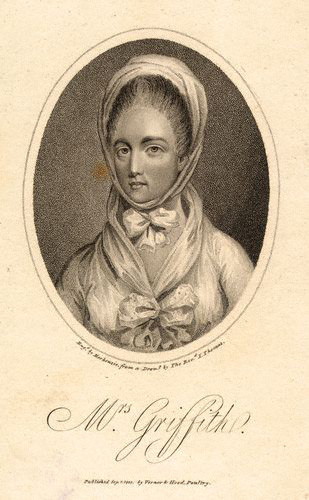
Dr Johnson’s Reading Circle came back to their screens to see how The Times by Elizabeth Griffiths plays out. At the end of Act 4 we were left with marital confusion, imminent financial ruin, a big party with extravagant costumes and an obviously significant pair of earrings that have passed through many hands. I predicted a dramatic ending.


Act 5 starts with the servant Forward setting up for a night of gaming at the Woodleys’. As usual, he’s out to grab what he can, earmarking the expensive candles, the nice cards (not the bent ones covered in snuff) and even the specialised card tables for his own use. The Woodleys walk in to finalise the details. They are sweet together, holding hands and giving each other little compliments. After confusion over who Sir William is trying to marry Louisa to, Mr Woodley finally admits to his wife that they are seriously short of funds. He’s expecting Lady Mary to react badly, the audience is expecting her to react badly but instead she says that she’d happily live in Dorset(shire) without a full complement of servants as long as she can still be with Mr Woodley. He’s delighted that she’s taken the news so well, his fear of telling her has been his main conflict in the play and he leaves happily. Then she makes the longest speech, where she even quotes Hamlet, and declares that she’s happy to give up all the glitz for her true love but she will miss society and the friendship of people like Mrs Bromley.


Then follow a couple of short scenes, one where Woodley and Colonel Mountfort are annoyed that they can’t get in contact with Louisa, and one where Louisa is talking with Sir William, which is why she can’t contact the other two. As usual Sir William is not listening to anyone else and is sympathetically trying to tell her that her marriage to Belford (who she doesn’t wish to marry) is off while she’s trying to tell him about the Woodleys’ decision to go to the country.


Then follows the main scene the play has been building towards, an evening of various card games at the Woodleys. The room has been set so that different games occur in different areas and the conversations of the whist, loo and quadrille players interject, overlay and interact with the conversations had by the main cast. It’s a pretty dynamic piece of staging and we imagined there was probably a lot of business happening that isn’t in the stage directions. Were we more knowledgeable of eighteenth century card games and the language that went with them, all the talk of pams, loos, monsters and beasts may have added to the meaning. As such, they added to the texture.


Early on in the scene, Lady Mary tells Mrs Bromley of her decision to move to their country house and invites her to visit but she is rebuffed and starts to look at Mrs Bromley differently. Then she sees that Mrs Bromley is wearing her earrings from the beginning of the play which she thought were being added to but were actually sold to Mr Bromley. When Mrs Bromley rudely gloats that they are hers now as she actually has the money to pay for them, Lady Mary is repelled. Then Mrs Bromley sits down to play loo and is immediately found cheating. She looks to Lady Mary for support but finding none, storms out. Then there’s a message that bailiffs have come, sent by Mr Bromley, and the room clears, everyone owing something to somebody.


Louisa wakes Sir William up to help, the bailiffs having been shooed away by Colonel Mountfort and his money. William blusters and bluffs, saying how the Woodleys deserve prison for their spendthrift ways but is clearly pleased that this hasn’t happened because of the good Colonel, who actually he rather likes now and has probably always liked, even if he argued with him in the previous act. They come together and Sir William, pleased by the Colonel, allows him to marry Louisa. Also pleased with Lady Mary’s decision to move to the country, he decides to settle the Woodleys’ debts and give them the house so they can come to London for the season. He talks over everyone’s attempts to thank him and the play is over.


It must be said, The Times ends on something of an anti-climax. While it was clear that Sir William had the power and means to solve everyone’s problems, it seemed there needed to be rather more happening to bring him round. Set up as pig-headed and blinkered, unable to hear anyone’s views but his own, he changes his mind considerably at the end of the play. Similarly, Lady Mary, who seemed to be completely immersed in commercialism suddenly decides that she loves her husband more than any of the fripperies she had been spending thousands of pounds on. While Mrs Bromley was exposed as a card cheat and hissed out of the room, Mr Bromley isn’t on stage in the last act and his comeuppance is a hasty line about being imprisoned for tampering with his bills. The beginning of the play teased a big masquerade, where Lady Mary would be dressed as a Sultan, dripping in jewels, this never happened. And while the earrings did play a role in Lady Mary’s opinion of Mrs Bromley, they didn’t have the huge Desdemona’s Handkerchief level significance that the play seemed to have been building to.


There were fun characters and good set-ups but it felt like the play hadn’t given them enough to do or escalated into an intractable ball of confusion to be sorted out at the end. Whereas other eighteenth-century comedies we have read together needed a flow-chart to understand, The Times felt a little rushed and easy. That said, it did have the dynamic card table scene, the joy of Sir William’s bluster, Lady Mary’s easy spending and the Bromley’s fun two-facedness. It was a fun play but just a little undercooked.


Part One here.

Part Two here.


Wednesday, 2 February 2022

'The Times' by Elizabeth Griffith at the Dr Johnson Reading Circle (Part Two)


On Tuesday the Dr Johnson Reading Circle sat down at their computers again to read The Times by Elizabeth Griffith. The first two acts had mostly dealt with setting up the characters, setting and theme. Principally we were introduced to Mr Woodley and his wife Lady Mary who are seriously low on funds, though Mary doesn’t know it. Their situation is not helped by Mr and Mrs Bromley who pressure the couple to spend more. The solution: make up with their rich, argumentative uncle William - but that doesn’t look very likely. 


Now we’re all set up, it’s time for the fun to begin and in this instalment there’s lots to be had with Lady Mary’s ignorance of her position, Sir William’s bull-like attempts at match-making and a real exposure of the Bromleys’ two-facedness. A lot of these two acts are taken up by three characters I didn’t fully introduce in the first section: Louisa, related to the Woodleys and of marrying age; Counsellor Belford, Sir William’s friend who is not of marrying age and Colonel Mountfort, who loves Louisa and is loved back. 


Sir William has decided his friend Belford and his relative Louisa would make a really good couple. He hasn’t asked them their opinions at all, nor does he consider the fact that Belford is old enough to be her father a real drawback. As far as he is concerned, they are both good people (i.e they do as he says) and so are a perfect match. With his customary tact, he brings up the notion of marriage with Belford, leading his hints closer to his proposed match and becoming increasingly peeved that he is not understood until he has spell out the idea in full. Like many things, the proposed marriage seems self-evident to Sir William, Belford said that Louisa would make someone a happy man and doesn’t Belford want to be one? When Belford suggests that maybe his being forty-eight and her eighteen might be a problem, Sir William simply tells him not to reveal his age. The more Belford tries to tell Sir William that although he is flattered by the suggestion, he doesn’t think it very fair on Louisa, the more Sir William takes it to mean that he accepts it. It’s a great scene, with one character railroading the other into accepting a hand in marriage that the woman in question hasn’t even offered.


In the next scene it is Louisa who is forced into accepting the proposal and Sir William leaves happy with his machinations for the day. She and her prospective husband meet and, without the influence of Sir William, manage to talk sensibly about their strange predicament. It’s clear that Belford wouldn’t mind being Louisa’s husband but doesn’t want to cause her distress and is content to be her ‘old friend’ - with an emphasis on old. He’ll even put in a good word for Colonel Mountfort.


Louisa appears to have two guardians, the older Sir William and the younger Mr Woodley. Colonel Mountfort succeeds in getting Mr Woodley’s permission to marry and is even the first to hear of Mr Woodley’s financial troubles. Now he has to get the elder. Sir William is in a good mood at first but certainly isn’t when the Colonel asks to marry Louisa. It seems clear to Sir William, the Colonel is just a soldier, he can get any woman so he should leave his Louisa alone. The two argue and Colonel Mountfort leaves. Then Belford comes in to reject the offer of Louisa’s hand and those two argue and Sir William storms out. For now, Louisa’s fate is uncertain (well, it’s not, the play’s a comedy, of course the lovers will get together, but how?)


Interspersed with these scenes, we see more of Lady Mary and Mrs Bromley, as well as Mr Woodley and Mr Bromley. The Bromleys are given more asides than they were in earlier scenes, allowing them to show their untrustworthiness more explicitly. Both have been encouraging their Woodley to spent exorbitant amounts of money but now Mr Bromley finds out the Woodleys are running out of it, he realizes it’s time to make one last hit before they move on to someone else.

In a little aside, I find it interesting that Mr Bromley’s first name is Robert and he frequently calls himself ‘Honest Bob’. Despite it being many years after the Walpole administration, it still seems that the name Bob indicates a money grabbing and devious character. 


In the last scene of the fourth act Bromley and his wife talk privately for the first time. He wants to cash in and sue the Woodleys for the eye-watering sum of seven thousand pounds. What’s more, he considers it a fair exchange for keeping the foolish couple company and introducing them to the ‘best’ people. Mrs Woodley wants to wait till after the big ‘do’ the women have been preparing for but she’s placated by the gift of the earrings which were passed about so much in the first two acts. The pair prepare to make their score, muttering asides about their dislike for each other and twirling their respective moustaches. We are set up for the big event and a number of large confrontations. It should be a dramatic finale. 


(Click here for part one)


(Part Three)


Wednesday, 26 January 2022

'The Times' by Elizabeth Griffith at the Dr Johnson Reading Circle (Part One)


Dr Johnson’s Reading Circle went back to our computers to read one of the plays in the Oxford Classics edition of Eighteenth-Century Women Dramatists. This time we entered into the unknown, reading The Times by Elizabeth Griffith.


Elizabeth Griffith was the daughter of the manager of the Smock Alley Theatre in Dublin. After a mediocre career as an actor, she caught the public’s attention by publishing the love letters between her and her fiancĂ©. She channelled this attention through a full career of plays, translations and novels. The Times is inspired by the Venetian comedies of Goldoni, who tried to update commedia dell’arte into a comedy of manners.


Mr Woodley is facing serious financial ruin but can’t admit it to his wife, Lady Mary Woodley, who blithely carries on spending. This rapid spending of money is facilitated by Mr and Mrs Bromley, who not only encourage the couple in their extravagance but lend them credit. Seeing bankruptcy on the horizon, Woodley’s valet-de-chambre looks out for how much he can steal before there’s nothing left. There is one glimmer of hope for the couple: Woodley’s uncle, Sir William, who has the funds to relieve them but doesn’t approve of the marriage.


The first two acts primarily set up the themes and characters. It would seem like everyone is poor, or at least everyone is spending more money than they have. Mr Woodley tries to make it seem that his selling his racehorse is not due to poverty at all but because he is suddenly uninterested in horse-racing. He and his friend, Colonel Mountfort have fun pretending to be horse auctioneers, claiming that the horse is related to Alexander’s famous horse, Bucephalus. 


Enter his wife. Unaware of the couple’s financial position, she’s looking forward to an auction because “one meets with so many fine things there one never thought one wanted before.” She’s not a complete spendthrift though, she won’t have her earrings adjusted for any more than a thousand pounds. These earrings pass through a few hands in the first two acts and it seems that those earrings may play a role in the story to come. 


The last main character to introduced, the uncle, Sir William, is a ranting, hyperbolic man, calling one character “pert, coxcombical and lazy”, and castigating another servant as “Mr Slow-Boots”. At one point he harangues another character about why she doesn’t want to get close to him, presumably as he’s been throwing himself around throughout. He isn’t all bad, he has a sentimental streak for children and is known as a generous benefactor to those he feels worth his help, which unfortunately for Lady Mary and her husband, does not include them.


So far this play has been full of fun words and phrases, whether it’s a character afraid of being “sneered to death” or the use of John Gay’s phrase “cool as a cucumber”, there were a number of fun little linguistic titbits. Another favourite was Sir William’s use of ‘coxcombical’, a word meaning foolish and dandified; or ‘fubsy’, meaning short, stout and squat. One word which caused consternation was ‘cisibeo’, a sort-of ‘safe’ male who can accompany women to dances which we parsed as a non-gay gay-best friend. 


It was interesting when we finished our reading and proceeded to talk about the play so far how each person was keen to justify the actions of the person they were playing. The person playing Mrs Woodley insisted she was more aware and thoughtful than she seemed, Woodley said that his wish to shield his wife show him to be kind, Sir William insisted that he was a generous and friendly person when not provoked - it showed how the writing had produced slightly deeper clothes than they first appeared. 


It’ll be interesting to see how far the Bromleys will push the Woodleys, how deep in trouble the Woodleys are going to find themselves and if Sir William will ever be nudged out of his temper to help them. I look forward to the next instalment to find out more.


Part Two

Part Three


Wednesday, 19 January 2022

Samuel and Boris - Johnson's article on cunning

 One of the real pleasures in reading Johnson’s essays is the fact that each is fully dated. This means that it is possible to know that exactly 262 years ago he published an article in his Idler essay series about cunning.


He starts off by saying that “every man wishes to be wise, and they who cannot be wise are almost always cunning.” I am not a particularly cunning person, my face leaks my feelings and I am not the kind of person who is very good at thinking ahead or strategising - a chess master I am not, nor a layer and enactor of plans. I doubt I’m very strong on wisdom either, if my past decisions are anything to go on.


Johnson differentiates the styles of wisdom and cunning. Wisdom is represented as clear-sightedness with a certain goal in mind. There may be obstacles and detours from the straightest path but those detours are always made with the end in sight. Cunning is described as reactive, like wandering in a fog or dense wood, making split second decisions about real or imagined problems, paranoid as to the next one.


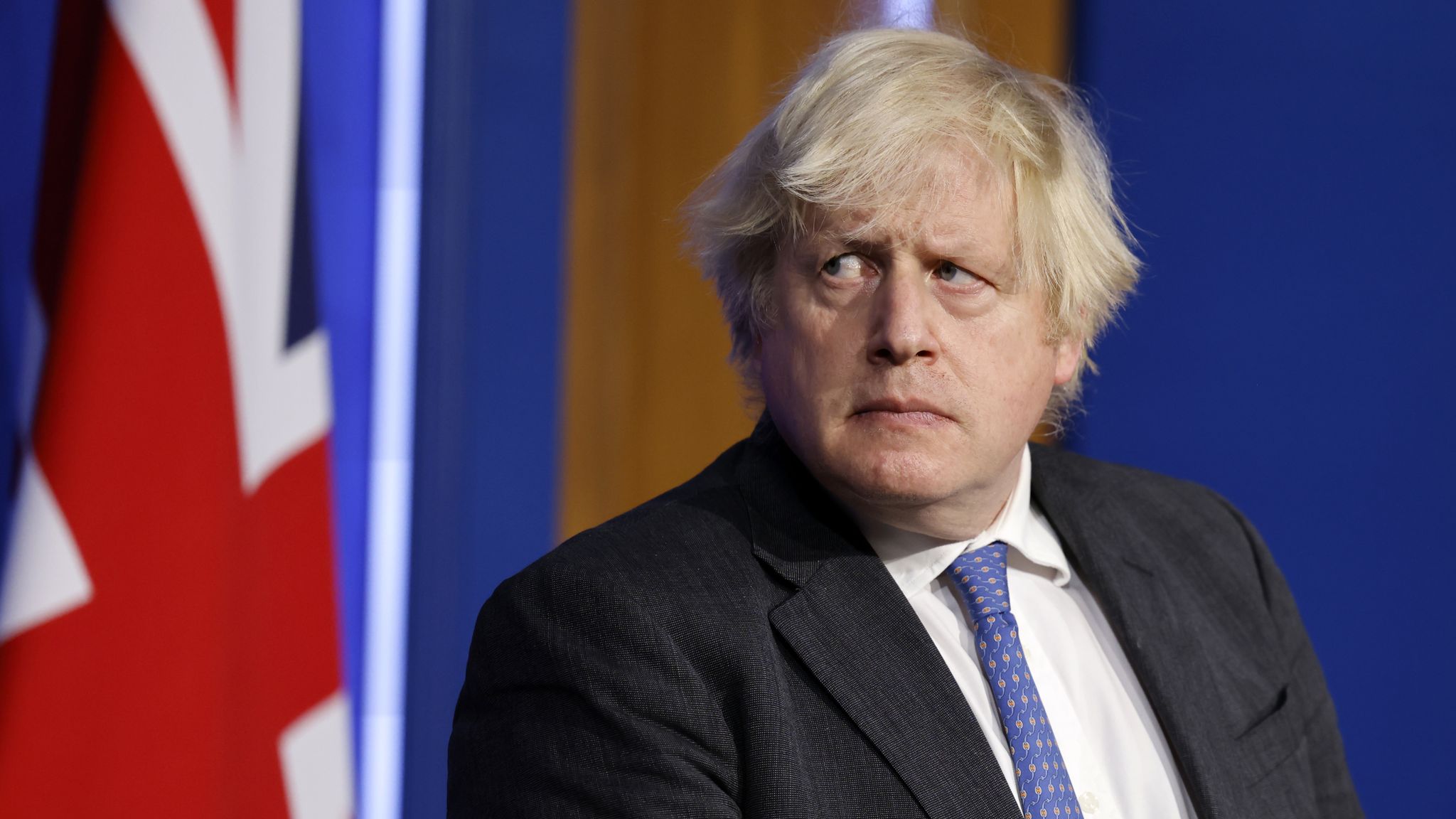
However, there is a place where (at present) wisdom seems to have no say and cunning be the only form of intelligence - our current parliament. It’s very likely that all parliaments have been the same but I can’t say I have ever, in my lifetime, known such a duplicitous, cunning bag of snakes as in the current Tory Party. Who knows where Samuel Johnson would stand on Boris and his ilk but it is interesting that two of his personality sketches seem to sum up two prominent members of our current political elite. These characters are Tom Double and Will Puzzle.


“Tom Double has formed a habit of eluding the most harmless question. What he has no inclination to answer, he pretends sometimes not to hear, and endeavours to divert the inquirer’s attention by some other subject; but if he be pressed hard by repeated interrogation, he always evades a direct reply.”


He certainly reminds me of someone….


Boris Johnson, a man who never-knowingly tells the truth and can lie in any direction at any time. Relying on naff jokes, the odd Latin buzz-phrase and an out of place non sequiturs (his trip to Peppa Pig World anyone?) the Prime Minister has actually hidden in a fridge to hide from answering questions.


Then there’s Will Puzzle who


“… prides himself upon a long reach. He foresees every thing before it will happen, though he never relates his prognostications till the event is past.”


Like Cummings, the supposed four-dimensional chess-master of number ten who has now turned his attentions to bringing down the Prime Minister he built up. He’s also a man who genuinely does go back into his blog to retro-actively put predictions of things that have already happened so he looks like he was right.


However, Samuel Johnson has some encouraging words about the limits of cunning. Ultimately, he sees cunning as self defeating, its reactive and paranoid tendencies mean that the cunning undo themselves and each other.


“The whole power of cunning is privative; to say nothing, and to do nothing, is the utmost of its reach.”


We can only hope as we carry on into this new year, some wisdom can be added to the qualities of out leaders, though where that wisdom is to come from, I’ve not much clue. 


Wednesday, 12 January 2022

Review: Gone With the Wind by Margaret Mitchell


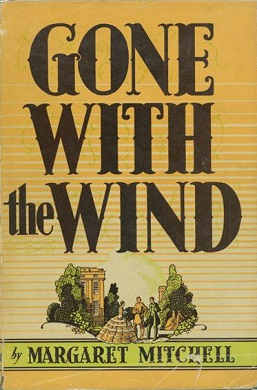
Here's a little detour from the eighteenth century to talk about one of my long reads at the end of the year.I picked up Gone With the Wind for free. I have a feeling that when any institution using books as decoration, it’s free game to take those books and so I did that in a cafe in Soho. I decided to read it as I always read something large and engrossing in the run up to Christmas. Usually it’s a Dickens book but 2021 being my year of reading women, I decided to give Margaret Mitchell a go.

I was aware of the accusation of the book of being racist and I was alert to it as soon as I begun. What I found remarkable at first was the lengths the book went to, at least at its beginning, to position the reader very carefully. While this a story takes place in an inherently racist society and our point of view characters were all inherently racist in themselves, the reader is explicitly told not to accept their point of view unquestioningly. As each character is introduced, the narrative voice takes great pains to point out how unimaginative, unreflective and unthinking the characters are. The pre-war South is a utopia, but it’s a utopia created for (and in turn creating) selfish, arrogant idiots. They live in a society where the source of their riches are unexamined and the slaves are amusing childlike objects to be worked and taken care of. They are violent, finding it bad manners to hold a grudge when one shoots the other in anger and they whoop and holler into war without any thought of consequence.


The war itself shows reality seeping into this fool’s paradise. The people experience want and hardship for the first time but are still blinded by the notion of a Cause which they all pull towards. Interestingly, none of the characters really ask what the Cause is, that it is a Cause is enough. It’s the parts of the book following the war, during the Reconstruction where the positioning of the audience slips. It’s a long book, the reader spends a long time with the characters and Margaret Mitchell had been with them even longer, so the inevitable pull of sympathy tugs us all towards the characters and the narrator no-longer places the audience at a wry distance. From then on the book is undeniably racist, the narrator informs us that ‘lynching the negro seemed a sensible solution’, Black people are a threat and the KKK are represented as benighted heroes who are unfairly oppressed. We’re no longer encouraged to feel sympathy for the fools who have lost their deeply-rotten paradise, we’re encouraged to miss it too.


However, beyond a slide into Confederacy nostalgia, this is the story of a particularly remarkable protagonist, Scarlett O’Hara. She’s a horror; a narcissistic, narrow minded, selfish, psychopath. The beginning of the book makes this explicit, saying that she had no interest in what went on in other people’s minds, nor even any notion that other people may have their own minds. What’s more, the pressures of war and building herself up from nothing re-enforce her grasping, acquisitive amoral worldview and this makes her fascinating. I was always keen to know what she would do next, what taboo she may break or what person she’ll happily swindle to get what she wants. Scarlett cares for nobody. Her ‘love’ for Ashley, which motivates many of her actions seems to be little more than the fossilised envy at his rejection of her, not helped by his own weak-willed and prevaricating personality. Because she makes things happen, the reader roots for her even as she is not likeable in any way.


She meets her match in Rhett Butler, a cardsharp turned war-profiteer who is probably the most self-reflective and clear-eyed character in the book. Unlike almost every other character (including Scarlett) he thinks. What’s more, he has a moral compass, he cares for other people but his own shrewd pragmatism usually comes to the fore. If anything, his great weakness is in ignoring that pragmatism and pursuing a love for Scarlett. He spends much of the book saying the two are alike but he’s wrong, while he shares the broad, wry viewpoint of the early narrator, she is blinkered and narrow. Every time Rhett and Scarlett are together, the book lights up.


The other characters are well drawn; whether it’s the nervous Aunt Pittypat, the genial Mr Kennedy, the all-knowing Mammy or the blowhard Dr Meade - they all have their roles to play and it’s interesting to see how all the wider events affect them or not. I found Ashley the most loathsome character in the book because he never commits to anything but Melanie, his wife really was a well-drawn picture of quiet strength and dignity. I’d have wished that she had known about Scarlett and Ashley’s dalliance all along, she’d have seemed even stronger then.


The book is at its best when it presents the reader with powerful set pieces. The opening bbq at Twelve Oaks is one such scene, the party where Scarlett dances in her widow’s weeds, Melanie giving birth as Atlanta burns - even the comic scene where the men feign drunkenness to hide the fact they were at a KKK meeting. However, for each of these brilliantly presented scenes, there were pages and pages of exposition to show time passing and the reduced circumstances of the characters. These grew longer as the book progressed and it was also in these parts that the positioning of the reader shifted and the book became genuinely racist. These parts slowed the book down and soured the tone so much that it was not the engrossing, carry-me-away book I was hoping for and my enjoyment was rather lessened.


Wednesday, 5 January 2022

The Top Ten Books 2021 (Part Two)


The first part of this countdown is here.


If you are interested in seeing what I read this year my traditional listchallenges list is here. If you want to see me trying to shame myself for buying books, my list of shame is here.


So, in this year of reading women, let's see what the top five books were.


5: The Wonderful Adventures of Mrs Seacole in Many Lands by Mary Seacole


I’ve already written about this book here, but it must be stressed what an engaging voice Mary Seacole has and what interesting positions she finds herself in.


4: Vera by Elizabeth Von Arnim


Of course Von Arnim was going to appear on this list, she’d rapidly becoming one of my favourite authors.


Having adored Elizabeth and her German Garden and been enchanted by The Enchanted April, I asked for more Elizabeth Von Arnim books so I could be uplifted by their ebullience and delight. I received Vera. Instead of a sunny, funny story of joy, it’s a taut psychological thriller written as a comedy of manners. Elizabeth and her German Garden had a portrait of her first husband as ‘The Man of Wrath’, but it was a peculiarly affectionate portrayal. There’s nothing affectionate about the portrayal of her second husband in the character of Everard Wemyss.


Lucy Enthwhistle meets Everard Wemyss on the day her beloved father has suddenly died. She’s still numb in her grief and so politely listens to his tale of woe, his wife had died the week before after falling out of a third story window but the inquest recorded an open verdict. We already know all we need to know about him, his sadness is not from his wife’s death but from his losing face at the inquest and being obliged to leave town for a while. However, I didn’t fully pick up on this yet.. nor for a while.


The courtship of Everard and Lucy does seem strange, and he in particular seems rather gauche, especially in company. Lucy’s aunt Dot has her misgivings, and there are further hints of Everard’s character from how she is beloved or an utter nuisance depending solely on how easy she makes it for Everard to get his own way.


Further red-flags are raised by the way in which Everard obsesses over Lucy’s height, youthfulness and particularly her bobbed hair. He delights in the fact that her particular haircut means that she could look as young as twelve. When his physical babying of her, taking him in his arms, rocking her and calling her his ‘baby’ - and warning signs are flying around. (Incidentally, she had that haircut at her father’s request, who obviously liked her to still look like his little girl, and he obviously infantilised her also in the way he never expected her to keep up with his conversation. Was their relationship ever that healthy in the first place?)


Despite the warnings, the tone of the book informs us not to be too worried. It’s told as a comedy of manners, we laugh at Everard’s absurdities and we expect things to work out fine in the end. Even Auntie Dot convinces herself that all shall be fine as they go off in a taxi to their honeymoon.


This is when we find out that things shall not be fine. Lucy’s chance remark that she’s been exhausted since her marriage and feels she has no space to be herself is chilling. Everard’s ‘wholesome’, ‘uncomplicated’ and ‘simple’ ways become horridly controlling. Most heartbreaking of all is that he has power over Lucy because she loves him and doesn’t want him upset. He can use this upset and a whole panapoly of sulks and tantrums to get his own way. It’s not just seeing her dominated, it’s seeing her dominated by someone so weak and petty that is the true horror. Yet the comic tone doesn’t ease, we are still encouraged to laugh at Everard’s pathetic nature just as we fear it. It’s a wonderful and gripping tight-walk.


When the couple return from honeymoon, it’s clear how little he loves Lucy, even if he thinks he does. She is an interchangeable ‘wife’ figure and she must now slot into place in the vacant ‘wife’ slot once filled by Vera. When we were first introduced to Vera, we were told she was a stupid, thoughtless woman who didn’t know what was best for her. All indications suggest she was intelligent and independent with a love of music and travel and she was worn down by Everard.. and Lucy seems to be going down that path much faster than Vera ever did.


The book ends before any grand tragedy or heroic rescue. I’ve seen some readers think it a hopeful end, with the seeds of escape sown. I personally see it as a tragic one, Lucy still makes excuses for the man she thinks loves her, she is deep down the rabbit hole and I don’t think will escape. I think she’ll simply waste away. The book gives the kindness to not make that certain.


This book gripped and incensed me, made me laugh and gasp, It’s as inescapable as the other two works I’ve read by Elizabeth Von Arnim but in a completely different way. I loved it.


3: Abigail by Magda SzabĂł


Magda SzabĂł was one of my favourite authors I discovered this year. While I enjoyed all the books I could find of hers, Abigail was easily the best.


When Gina is suddenly torn from her old life as a schoolgirl in 1940s Budapest, she finds herself on the far eastern edge of Hungary, deposited in a strict school. She doesn’t know why and she resents her move, finding the traditions of the schoolgirls as silly as the rules of the adults. What on the surface felt like a children’s book, a little like The Secret Garden or a Malory Towers novel becomes a more in-depth exploration of the benefits and dangers of conformity. 


The Matula is not an evil school, it’s not a Lowood Academy, the clothes are well made, there’s lots of food (though oddly, not those extensive descriptions of feasts we get in school stories right up to Harry Potter), there’s very strict discipline but not abuse. The teachers are not evil, in-fact, more often than not they have their own issues to deal with, some of which are noticed by the girls and some isn’t.


Within the community, Gina resists against the girls and refuses to ‘marry’ an object in the class. Their ostracism, though a staple of these kinds of books serves to show how conformity comes from pressure from within as well as out. When Gina succumbs to it she can be happier in the institution, and safer from the outside world, where conforming to the lie that Hungary’s war is going well is starting to have deadly implications.


The Abigail of the title is a statue that helps pupils when in need and, becomes the secret voice of the resistance, sending warnings about Hungary’s increasing precariousness as Nazi Germany’s weak partner and providing documents to save a number of children with Jewish heritage. The mystery at the centre of the book is, who’s Abigail.


I’d love to have read this as a teenager, as Gina and her classmates read the people around them based on their own limited experiences. Gina is essentially wrong about nearly everyone around her and to my viewpoint, these errors were obvious but I wonder how much they would have been to a teenage me.


I was gripped throughout, lost in both the children’s book world of the Matula school and the adult realities just outside. I loved how both areas interacted with each other and were interpreted through Gina’s own (often small-minded and slightly selfish) perspective. This did not make Gina a dislikeable character, only a real one in the context of the story and I loved the other characters, both in the simplistic ways Gina saw them and the more complicated ways implied beyond her own point of view.


2: The Waves by Virginia Woolf (I could also have put To the Lighthouse here and Mrs Dalloway not far off)


The Waves bowled me over with its warmth, the understanding of character and the literary description of the forming of people’s identity and the passing of their lives.


Framed by a description of a sun rising above a seaside setting, each part showing the quality of the light on the objects as it reached its zenith and then began to set. It was a tidy image of a life lived, the haze and indistinct nature of personality at first; the clarity as the sun rises till at midday, things are almost fixed in place by light and then the muzzy haziness as the sun begins to set. It worked very well as a metaphor and to tell us which part of life we were now going to explore. Some of the details of these parts repeated a little but it served it’s purpose well.


At first the six characters had single lines, representing their smaller senses of self, then each began to have short paragraphs. As the book went on, the characters would have longer monologues to themselves, their own issues and images that haunted them and that they kept returning to, either to go beyond or be defeated by it. Early on, the style seems strange. The sentences are short, there’s a ‘see spot run’ element to them but the sentences develop as the characters do.


Another strange part is that the monologues all start; “something something,” said someone - even when they never said it. Even if it was something they did say, it was never expressed in the way they would naturally say it. This isn’t stream-of-consciousness in any straightforward way, like To the Lighthouse, the consciousness is reported but in a way that is even more detached from reality. It takes a little acclimatising.


Of the six, Bernard was my favourite. As a child he finds power in ‘spinning phrases’, like all the men in the book he develops a desire to write. He fills a notebook up with his phrases but never uses them to make the book. His desire to spin phrases becomes making stories, he can’t see a person without inventing a story for them, again he plans to use these in a writing way but never quite does. As he ages, he sees his stories as a way he tries to connect with the world but also a thing that places him at a remove from it, he can’t help adding an artificiality. By the end, he says he is over stories and phrases, he leaves his notebook behind, he says he’s done with it all and ready to immerse himself fully in life without the protection and use of words. I didn’t believe him for a second as he gave up words in a twenty-page monologue in which he used all the phrases he’d collected. He hadn’t given up words at all, he’d just run out.


My least favourite character was Neville, the one of the three men who actually becomes a writer. He starts of clean and fastidious, it becomes clear he is gay and he loved Percival.. then he loves various men one at a time. I didn’t like him because as a child and young man he seemed to hate everyone around him and feel he was better and I never could see why he would think that. I felt sorry for Louis with the constant chip on his shoulder. I also felt sorry for Rhoda who connected with the world so little she ended up throwing herself off a rock.


Jinny lived in and for her body, which worked for her but as a clumsy uggo, would never work for me and Susan started off as a creature of hate who subsumed herself first as a countrywoman, then as a mother, a choice she seems to regret.


This book was full of wonderful little details; a statue that pigeons whiten, some overheard gossip that lingers for years, a shining moment by the river. It also showed what it’s like when friends get together, the way the different entities mix together at those times, their monologues becoming shorter and beginning to answer each other. It really did feel the way it feels when friends get together.


It also made me think about my life, the moments that have formed my sense of self, what my sense of self actually is. There’s a depth and richness to The Waves that I haven’t found many other places, a real summation of life, a real evocation of those private moments in private mythology. It really captured a sense of being and a sense of friendship and I really loved it. 


And my favourite book of the year was…


1: Nights at the Circus by Angela Carter


I was blown away by Nights at the Circus. This book is an assault on the senses; on they eye, the ear and the nose - full of noise and smell and texture, with an overabundance of telling details and bulging with strange tricks of point-of view, narrative perspective and general writerly trickiness which at no point seemed false or stretched but more like the book was trying to rein in its exuberant explosion of words.


The first section is probably the best. Fevvers, a trapeze artist who claims she was genuine, functional wings is recounting her life story to the journalist Jack Walser. She’s being aided, challenged, interrupted and looked-after by her friend/mother-figure Lizzie throughout. We have the cluttered, clustered atmosphere of the dressing room and lead into the fantastical, cluttered story of her life, which she narrates in a mixture of stage-cockney and rotund oratory. She’s instantly engaging and, for an arial being, is very earthy. She is highlighted eating greasy food with gusto, her feet smell, she belches and raises a cheek from the seat to fart. She reminds me a lot of the characterisation of Falstaff in the Robert Nye novel. 


Her life, as she tells it, is a picaresque tale with many outlandish yet specific details. There’s a wholesome brothel where all of the prostitutes spend their time in sisterly harmony and improving themselves. Next, a freak-show ran by a woman who may actually be dead that includes women with working eyes on their nipples or a woman who’s story is ripped from Thumbelina. That’s followed by a tussle with a nerdy magician. The language and characters have all the gaudy colour of the circus, yet there are also moments of grounding grit and dirt. The reader is won over by it all, and although the reporter wonders if the story is true or not, I can’t say that I cared, I was enjoying myself too much.


The beginning of the second part in St Petersburg broke the spell a little, opening with a description of a woman pumping the bellows of a samovar that used a metaphor which stretched a little too far and over two pages. This is followed by one of the most jarring breaks of perspective in the book, where the ‘writer’ breaks in to talk about how Russia is shortly to have a revolution and this knowledge colours the world of St Petersburg in the story. Now I was alert to games in the point-of-view that I had previously been swept up by. The curtain of fiction was dropped just a little too low. Luckily, we are then introduced to a psychic pig and are brought back into the story. Though I am beginning to notice how skilfully and subtly Angela Carter weaves in and out of tenses, something I only stop noticing once the story fully engages me again.


Walser has become a clown so he can follow Fevvers. This part of the book is more of an ensemble piece, Fevvers has moments but it’s not all about her. We learn the story of Mignon, a poor abused young woman who becomes a singing lesbian lion tamer. We also learn about the strong-man’s lifetime of spiritual weakness. The clowns and their clown culture which is claustrophobic and nasty and nightmarish. The king of the clowns, Buffo, has a ‘deranged majesty’, the clowns themselves are always on the edge of madness and insanity and I have never come so close to understanding fear of clowns (instead of mild disdain) as when hanging out with the clowns in this book. This is also the part of the book which has a fondness for animals acting like people. Whether it’s the chimpanzee act, who are among the more sensible characters in the circus, or the tigers who dance waltzes and grow savage if they feel their romantic attentions snubbed.


The third part takes place in Siberia and is most noticeable for how the story is now in Fevvers’s first person and an omniscient third person, slipping in between the two. It’s mainly about how she finds herself having lost elements that defined her identity and languishes and how Walser has a completely new identity made for him but re-finds his old self making a new self from the two parts. 


It’s a book that would take a long time to unpack properly. There are impossibilities and weird twists and jokes that could be read many ways and all of it delivered in this constantly shifting voice filled with a voluptuous excess of language. It’d definitely be a book to read a number of times just to see how it works but what I can say after one reading is that it does work, and it does so brilliantly.