Wednesday, 13 October 2021

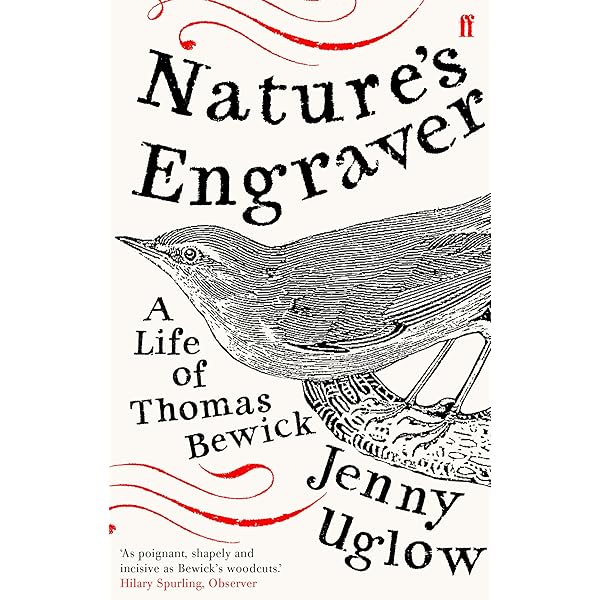
Jenny Uglow's Nature’s Engraver: A life of Thomas Bewick at the Dr Johnson Reading Circle


It was with delight that the Dr Johnson Reading Circle met again in person for the first time in sixteen months. While the more regular online meetings had been something of a lifeline for members, they were not the same as being together and in Dr Johnson’s House. Much had changed, people had moved to further flung corners of the country but there was still enough people to form a decent group and there were even a new visitor, who had a family connection with one of Thomas Bewick’s works.


We were there to discuss Nature’s Engraver: A life of Thomas Bewick by Jenny Uglow. We had greatly enjoyed Lunar Men together and anyone who picks up one of her biographies would agree that she has a talent for telling a life in a way that is both authoritative and enjoyable to read. 


Bewick engraved on wood, often for publications and his work has probably seeped into British consciousness. It was only the American member in the room who had never come across him before, everyone else having grown up with him, either in the Opie’s collection of nursery rhymes, as end-pieces in country cookbooks or with his own Book of English Birds. Since creating his images, they’ve become a part of childhood in the UK, popping up in Jane Eyre, as she hides behind the curtain to look at the pictures or with Virginia Woolf, sitting on her father’s lap. What kind of life led to the creation of these images?


Uglow starts the book in the countryside outside of Newcastle, in a small village called Cherryburn where the oldest son of a farmer (and coal-mining sub-contractor) is running wild. He bunks off school, scribbles pictures in the back of a pew and takes his friends on a voyage down an almost freezing river on an iceberg. Spanking doesn’t correct him, nor does being locked in the church bell tower - he proceeds to ring the bells as loud as he can. The boy needs an outlet for his energy.


He finds this in Newcastle, the nearest large city, which is growing rapidly at this time. It’s a place subject to massive storms, one of which swept its only bridge away, complete with the houses on it. There, Bewick became the apprentice of an engraver. He’d always enjoyed drawing and found himself very skilled at the task. At first he was given the easy jobs but he began to work on more difficult ones. He heard of a new way of achieving woodcuts far more textured and detailed than the ones that had been in chap books and cheap broadsides, using the dense end of boxwood to create subtler pictures. It’s interesting that someone with so much energy could concentrate for hours at a time carving out careful lines. Both his scattershot energy and his ability to focus minutely would aid him to become the best at what he did.


He seems to have been a tremendously physical person, walking seventeen miles home in all weather every weekend to see his family and taking even longer walks to distant parts of the country. The countryside made him happy and although he grew to hate bloodsports, he would go out fishing for days at a time. These walks inspired many of his characteristic little engravings, all of them full of detail and movement, often telling stories. There’s one of a horse with evil intent in its eye as a baby comes to pat it. The mother is running to the baby as the nursemaid is meeting company in a bush beyond. There’s another of a farmer carrying a cow across a river to save the toll on the perfectly good bridge behind him. These are small works full of energy but engraved with care and the book gains massively from their inclusion throughout.


In some ways, the book could be read as an example of the story of the ‘good apprentice’. A formally unruly child knuckles down to hard work, produces things he can be proud of and builds up a business and family that allow him to be respected in his community and beyond. Unlike Hogarth, he doesn’t yearn to be more than an engraver, he wishes to be the best engraver he can. There are tragedies in his life, he is greatly affected by the deaths of his parents and his younger brother, but his is a life relatively unruffled. He had a quick temper and often fell out with business associates but was also quick to make up, and these associations continued long after they were useful. He was politically radical, attending discussion and debate groups, but not so outspoken he was ever picked up by the increasingly paranoid authorities. He loved animals and hated cruelty to them, but would frequently depict fox-hunting scenes because he knew they would sell with the wealthy horse and dog set. Like his work, his life was a balance between his energy and his steady focus.


As a result, this biography is a pleasant, gentle, measured book. The story of a man who diligently made beautiful things. There isn’t the tragedy of Mrs Jordan’s Profession, nor the hubbub of Casanova: Actor, Lover, Priest, Spy. It’s a book to read on a calm, summer’s day - or when longing for one, and it was a smooth, unruffled return to meeting in person.


Wednesday, 6 October 2021

Review: The Lives of Cleopatra and Octavia by Sarah Fielding


 Sarah Fielding seems something of a dark horse, whether it was being ahead of the sentimental novel trend with David Simple, or being the first writer of a school story with The Governess, she was a writer who wouldn’t be contained by genre. (I’d love to get my hands on a copy of The Cry, which she wrote with The Art of Ingeniously Tormenting author, Jane Collier). The Lives of Cleopatra and Octavia is another experiment but not one that I think succeeds.

It’s a paired biography of two women from the first century AD who were both linked to Mark Anthony, as wife and mistress. My copy of the book (edited by Christopher D Johnson) went to great pains in the notes to show how much research had gone into the book, citing not only Plutarch, Suetonius and Josephus but also fictional representations of the characters by authors such as Shakespeare. The aim seems to have been to create a genuine, factual biography but to twist the telling of them for other purposes.


Although the book is biography, the lives are narrated by the women themselves who have come from the underworld to tell their stories in the first person. This seems to be a bit of a faf at one point, I came across it in the snippets of Friendship in Death by Elizabeth Singer Rowe The overall aim of the book is clearly didactic, to compare the ambitious, relentless and dishonest Cleopatra with the straight-forward and uncomplicated loving nature of Octavia and recommend the second. Like many didactic works though, Cleopatra, the negative example gets three times as much page space as the positive one of Octavia. (Also, who are people more likely to have heard of? Which is the star name on the cover?)


I can see how the first-person perspective could have worked to invigorate the biography but Fielding doesn’t fully commit to the idea. As ‘shades’ of themselves they are more objective than they were in life, able to ‘reveal those secret Motives of my Actions, which were so little known to myself’. Thus they seem too impartial and cold in describing their actions, like people blandly reading a pre-written statement, not feeling the feelings they describe that animate them. Cleopatra was clearly a fascinating person, but she has no personality in this text.


If anything, the Cleopatra part of the text becomes boring. She has no love for Mark Anthony and recounts the ways she kept him wound up in a knot of passion, preferring him angry with her than reflective, because any thought would bring him to his senses and away from her. Most of the time she plays him like a fiddle, flatters his ego, pretends to great waves of sadness or joy and is secretly laughing up her sleeve the whole time. 


There was some interest towards the end when she manipulates Mark Anthony into war with Octavian knowing he would probably lose but considering it a crowning achievement to push him to lose all for her. There were also the parts right at the end where she had to make it so Mark Anthony would lose without making the world see she was betraying him but making it clear to Octavian that she was, so she could begin the process of snaring him. Then, when Mark Anthony had died in her arms, she shilly-shallied with Octavian, testing the water but when she ultimately saw the cold, calculating Octavian wouldn’t fall for her tricks, killed herself to cement her legend. (There was also a whole paragraph where, preparing for this eventuality, she tried a variety of poisons on prisoners before settling for a snake to “execute its friendly office”.)


Of course, this book uses the character of Cleopatra as handed down to us by Roman sources and they are deeply unfair. The real Cleopatra was a polymath, known as ‘the Queen who needs no translator’, a scholar and the inheritor of a declining kingdom and a dynasty with a royal bloodline with a gene pool as shallow as a puddle. Her last hurrah for the many thousands of years of Egyptian self-rule almost came true and she seems to have been a very capable monarch (even if there was rather more brother-marrying/murdering than a modern politician can get away with). To have her so resolutely bad, so predictable in her selfish choices, untouched by any love or affection made her all the more boring.


The Octavia stuff is shorter and does nip along far quicker. I was interested in her description of perfect first husband, Marcellus because Sarah Fielding doesn’t merely give us the list of rational virtues we expect but lingers on the fact that he was also fun, funny and full of imagination. “He gave way to his Imagination, loved to indulge it; and from the most Trifling Circumstances could derive Pleasure and Amusement.” The notes stated that this characterisation of Marcellus comes from no other account, so I presume it must be a description of the kind of person Sarah Fielding was attracted to, someone who could be enjoyable to be with as well as good - I found it quite touching. Then Marcellus dies, Octavia is pledged to Mark Anthony but he goes off with Cleopatra and we largely get repeats of what we’ve already heard but from a slightly different perspective.


Sad to say, the part of the text I found most engaging was the list of subscriptions. I liked finding names I knew, such as Richardson (who worked with her on other projects) Garrick, and her brother’s friends like Hogarth and Saunders Welch the Bow-Street Runner. 


That said, I respect Fielding’s ingenuity, for trying a different kind of book and if it didn’t quite come off this time, it doesn’t mean it wasn’t worth attempting. 


Wednesday, 29 September 2021

Video: All About Christopher Smart

It's no surprise to readers of this blog that I am a huge fan of Christopher Smart, in this little video I try to explain why.


Wednesday, 22 September 2021

Under the Glass.. how to plan a novel.


I’ve said before how I have an attract/repel relationship to quotes, how enjoyable it can be to find someone you admire saying something you believe in but how easily they can be moulded and bent when not in their original contexts.


This is even more so when quoting a fictional character. I’ve so often heard “To thine own self be true” uttered as real advice, divorced from the fact that the character saying it is a bumbling old busybody full of too much banal and untrue advice. Even more wobbly is to quote a character who is themselves tricky, the following quote is spoken by the unreliable Tristram Shandy by the even more unreliable Laurence Sterne, it’s about writing process.


“Of all the several ways of beginning a book which are now in practice throughout the known world, I am confident my own way of doing it is the best – I'm sure it is the most religious – for I begin with writing the first sentence – and trusting to Almighty God for the second.” 

Laurence Sterne The Life and Opinions of Tristram Shandy, Gentleman.


I’m deeply doubtful that Laurence Sterne actually wrote like this though I’ve not read enough about his writing process to confirm those doubts. Tristram Shandy may have an unconventional shape but it does have a shape. If Sterne really did just start putting words on a page and trusting the process to supply him with more, then he must have rewrote, perhaps even as he was writing and he must have been able to hold a great many threads in his head. For all its digressions, Tristram Shandy is full of callbacks to former parts, anticipations to the future and a set of running themes, interests and allusions. However, as untrue as I suspect the sentiment to be when applied to Sterne, it may be true to the character of Tristram himself.


There are people who set to work without any planning. Samuel Johnson tended to hand in first drafts of everything - even the original dictionary was in essence a first draft, compiled in the printshop, though he did return to revise it. His essays are definitely first drafts, he reveals in one that he is writing it as the messenger boy is waiting for it, yet those essays are tightly constructed and written. I suppose Johnson had a well of topics in his head that he could dip into when needed. 


Goldsmith seems to have been a worrier of texts, his noted readability may have had something to do with drafting and redrafting, and he is reported talking about how he wandered the fields trying to think of ways to be funny. I’m less sure of Christopher Smart, certainly Jubilate Agno was written with a plan in mind that grew to be less important and relies on its form than anything else (and by the end, was never supposed to be published).


In modern internet-writing-forum speak, someone who doesn’t plan ahead is a ‘pantser’, someone who writes by the seat of their pants. My first novel certainly had an element of this, I had some characters I enjoyed and a general situation but it took a lot of time to find a story and I think the failure of it is that I never fully did. On the other hand, the few projects I had a full and detailed plan for, were never finished. I simply couldn’t be bothered to put on page stories I already knew without the fun and joy of discovery.


My own planning style when it comes to a novel is one that I expect is pretty common. I usually start with an image or two that grab me and suggest a story, the people in these images develop into characters which then suggest the images place in a larger shape. With this general shape in mind, I start writing, at first with only a few concrete stopping places. The analogy that fits best is probably one of walking in a dark wood with a torch. I know the direction to head in and I know the end point and although I may not know the whole journey, the torch illuminates what is immediately ahead of me and allows me to plot a detailed course for the tiny bit in-front of me. Sometimes the torch falters and that can be terrifying, sometimes I just have to push ahead and hope it works out. When I’ve done the journey once, I go back to the beginning and do it again, usually making some different choices of direction, sometimes some huge ones. I simply keep doing this till I can’t see a different way through the wood and then that novel is finished. If I plan too much I’m not interested in the journey, if I write one sentence and trust to the next, I am too frightened to move on. It’s not a glamorous method, certainly not as exciting and free as the one suggested by Tristram but it’s the only way I know how.


Excuse me, I have another wood to get lost in.


Wednesday, 15 September 2021

Keeping Books

 Sometimes I think about moving house and it gives me the cold sweats. It’s not just that I am very happy where I am now, nor is it the general stress of moving, it’s a specific problem - it’s my books. I have over two thousand of them, some of them in boxes at my parents but many more of them here in my little impoverished-writer’s-garret. The shear faff of having to pack so many books, having to carry them down the stairs and into my new place, of having to carry them up makes me feel a little sick.


Why do I do it? Why saddle myself with so many physical objects? Especially books, some of which I may never read, and some of which I have read but may possibly never read again?


There’s been a tweet doing the rounds that says this;


Essentially, that I carry all these books about with me as a boast of my bookishness.


There are a couple of problems with this. The first is that no-one else really sees my piles of books. I live in a studio-flat in which there are two rooms; a bathroom and a bed/kitchen/library. I am a fairly sociable person but meet up in pubs and restaurants, in the seven years I’ve lived here there have been 4 visitors, it’s simply not a space set up to socialise. What’s more, I was utterly embarrassed when those people saw the books clogging up my space, they seemed a testament to my lack of control rather than any learning.


The only time I really do ‘show-off’ my books is when I use them as a background in my videos, but they are videos about books so it seems pretty ‘on brand’ and I imagine viewers having fun being nosy at my bookcases behind me.


Actually the article by Julian Baggini (linked here) is a lot more in-depth than the hot twitter takes give it credit for. It suggests that physical books also hold links to our identity, both in who we used to be and who we wish to be. I, for one, can see a book I read and remember where I was and the situation I was in as I was reading it. Books we have read and re-read many times seem a part of who we are and books we intend to read make claims of where we wish to go.


The article suggests that we should view books as we do other positive experiences, keep our memories of the books and pass them out into the world to do good for others. He even suggests that holding onto our books may be a way of hiding from new experiences, a way of cocooning.


Whether that is true or not, I shan’t be getting rid of my books. I still regret books I got rid of 20 years ago and although I sometimes decide a book isn’t keeping, it would hurt to give many away and I’d start filling those holes again. The fact is simply that I like a room full of books and I get a certain pleasure from my room full of my books. It may be a cocoon, but what else is a little garret for?


Wednesday, 8 September 2021

Review: 'Ducks, Newburyport' by Lucy Ellmann


 I picked up Ducks, Newburyport as a book to challenge me and it certainly did that. Most of its thousand pages is a long, unparagraphed stream of consciousnessseperated only by commas and the phrase ‘the fact that’. Occasionally, this is broken up by the story of a lioness having, losing and looking for her cubs told in a standard omniscient perspective with properly formed sentences. What was I to make of this book? Why was it told in such an obtuse and peculiar way?


There was one particular pointer. At the end of the book lie two appendices. The first was a list of acronyms which wasn’t as helpful as I thought it may be, the meanings of the acronyms turned out not to be very important to the text. The second was a selection of quotes. The first quote in that section was part of the ‘cat Jeoffrey’ portion of Christopher Smart’s Jubilate Agno. I’m a huge fan of this poem and Christopher Smart in general and the inclusion of this in the quotes, and in the book also, pointed me in a certain direction. The poem was written while Smart was incarcerated for an unspecified ‘madness’. It started at as a religious poem, a hymn to all creation which gathered all plants, animals and minerals together with all people, knowledge and experience to praise God. As the poem went on, Smart used it as self-therapy, as a diary, as a way to discuss moral and scientific questions, as a way of remembering his friends and also as a way of counting down his days. It became an encyclopaedic, rambling and dense gathering of everything in Smart’s head and that explains the sheer length of Ducks, Newburyport. The narrator similarly chronicles everything she sees, her worries about the climate, memories of her family, films, books, advertising slogans - the book dramatises exactly how much ‘stuff’ is in her head and while this point could have been made in far fewer words, it couldn’t have been made as resoundingly. Her mind is so full. (There’s also the mirroring of the novel’s ‘the fact that’ phrase matching Smart’s ‘let’, ‘for’ phrases.)


This fullness also explains why this stream of consciousness novel does not read like an actual stream of consciousness. I’ve often seen this in that kind of novel, I had a fever when I read part of Ulysses and even then my mind wasn’t as jumbled and discursive as the book was - and Ducks, Newburyport is even more jumbled than that. For a while I thought maybe I was reading a stream of unconsciousness, the things bubbling under the narrators recognised mind but I noticed she kept correcting her thoughts. For example on page 94 she talks about going to a crematoria to collect the ashes, then birds migrating, then ashes and has to consciously say ‘people, I mean, not birds’. This is often done many times for comic effect but it shows the text is supposed to be her consciousness. Then why does she go on free-associative trails, rhyming and echoing words, often without meaning? Is this supposed to be normal or something strange about her? I think it was yet another way of ramming the idea of her mind crammed with stuff, and much of it useless to her.


To compare the narrator and the lioness, the animal has a simple life with simple motivations whilst the narrator is so crammed with the complications of being a self-conscious animal in a complex world that it interferes with her life and relationships. Which brings us back to the manic stream of consciousness, self-consciousness is the enemy.


This makes the book a tough and at times irritating read but that irritating quality is dictated by the point it is making and which match the manner of it’s telling. Or it would, if it wasn’t for the plot. By the end of the book, Ducks, Newburyport has become a conventional narrative (if not exactly told in a conventional way), there are even heroes and villains, examples of foreshadowing, set-ups and pay-offs. When I got to the end of the book I felt a little cheated, that I’d read a rather average story dressed up in outlandish clothes but I changed my mind when I thought about it a little more.


A book I love that never gives up on its weirdness, or gives in to standard plotting is The Life and Opinions of Tristram Shandy, Gentleman. Though there are events, it refuses to take the idea of plot seriously at the beginning and still does at the end, laughing at any readers who expected it to wrap in a neat bow (as it could be argued Ducks, Newburyport does). There’s a point where it maps out its ‘plot’ in a series of squiggles. Duck’s Newburyport also has a map, of the lioness looking for her cubs and she goes in a spiral. The book is crammed with spirals as pages circle around events and phrases circle around each other. The plotting of the book also functions as a spiral, being wide and loose at the beginning but getting tighter and tighter. At first there are mentions of real life plot-worthy events happening around the country, then made up plot-worthy events happening in the area of the book, then to other characters in the book and finally to the narrator. The plot of the book spirals closer and closer until the narrator finds herself in a generically plotted book. 


So, in terms of structure and style, this is a very clever book but I couldn’t say I found it wholly enjoyable. Although the increments in plot fit the structure, it did leave me feeling dissatisfied by the end - I almost feel the telling of the story should have become more standard as the plot did as I was left with a standard plot told in a weird way. Despite finding some of the narrator’s parts funny and there were some great descriptions (the old people in the mall on page 589 for example), I did not find her great company. She was so dour, so tired of life, so querulous and so reactive, so self-loathing that she made me feel rather exhausted and anxious. I also found ‘the fact that’ was never a phrase that didn’t call attention to itself or sometimes confuse the things she was saying. I found it a book for more fun to think about than to read.


Wednesday, 1 September 2021

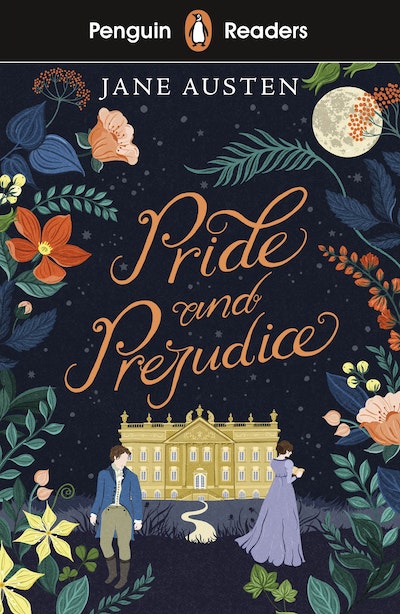
Review: Pride and Prejudice by Jane Austen


My first meeting with Pride and Prejudice was probably not the most auspicious one. The book may have hundreds of die hard fans and an adaptation every ten years but it seemed stuffy and a little full of itself. True, grabbing it because it was the only book that fit in my pocket, reading it on a bus and taking it into a drum-n-bass nightclub, where I was frisked for it - may not be the idea time and place.


Now, prepared to give it more than a first impression, I find a sparkling, sarcastic novel with a far subtler romance than I was expecting. My problem the first time was that the book takes a little bit of time to establish exactly whose story is being told. Even by the time it establishes it’s principal hate-turned-love couple, it remains something of an ensemble, offering a number of potential brides and four inevitable husbands. 


The Bennetts are a family leaving to the limit of their means, largely through a certain laxness on the part of the Bennett parents. These consist of Mr Bennett, a man I originally liked for his easy-going nature and sarcastic sense of humour but eventually begin to dislike for those same reasons. Mrs Bennett was instantly a little grating, a shrieking, nosy, embarrassing woman who also displays some sneaky, game-playing tendencies throughout the novel. Indeed, a novel of the courtship between Mr and Mrs Bennet would be an interesting one, if not necessarily a romance, or if a romance, maybe not one with the happiest of endings. The eldest daughters are Jane, who is niceness personified, and Elizabeth who is smart and with a wit that is sharper and closer to her father than anyone else’s. The three younger daughters are Mary, who is bookish but not smart, Kitty and Lydia. Kitty and Lydia are both young, foolish teens who like flirting with local army officers. Austen walks a fine line with the characters of the family particularly, we’re supposed to like them and be invested in their romances and their futures but at the same time, one the running jokes in the book is how embarrassing families can be. 


Our choice of men consists of: Mr Bingley, fairly rich but a little non-committal; Mr Darcy, extremely rich but arrogant and vain; Mr Wickham, seemingly nice but possibly untrustworthy and Mr Collins, who’s a pretentious fool. The fact is, that I wasn’t hugely enamoured with any of the male selection. Bingley seemed the best, he’d be a nice and easy going person to spend time with but he is so very easily led. It seems he can’t make decisions for himself and even when he has strong feelings is happy to acquiesce to his friend’s feelings on the matter. He’s still better than Wickham though, who you couldn’t trust as long as you could throw him, nor would you want to spend much time with Collins.


As for Mr Darcy, the much praised and beloved Mr Darcy, I seemed to miss the part when he moved from stiff, arrogant and rude to a perfect husband. From the little Jane Austen I’ve read, I far preferred Mr Tilney, he was a tad socially awkward but he had a sense of humour, I am sure Darcy has none. He’s not even fascinatingly tortured, he’s just a rather rigid, uncharismatic, dull man. That Elizabeth starts to like him after she sees his house is no terrible reflection on her but I think the idea is that her conversation with the housekeeper is what tips her towards re-evaluating her feelings to Darcy and not the size of his.. estate. 


I liked these people and I liked the style - I can see the smile in Jane Austen now, but I have to admit to not being particularly invested in who went with who. Perhaps it was the limited selection of hunky men, perhaps it was the fact this story is so ingrained in the collective conscious that I already knew the final pairings but I found Pride and Prejudice a book I could see the quality of, enjoy but not get particularly invested in.