Wednesday, 26 January 2022

'The Times' by Elizabeth Griffith at the Dr Johnson Reading Circle (Part One)


Dr Johnson’s Reading Circle went back to our computers to read one of the plays in the Oxford Classics edition of Eighteenth-Century Women Dramatists. This time we entered into the unknown, reading The Times by Elizabeth Griffith.


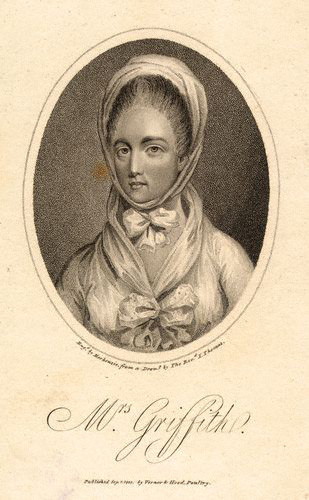
Elizabeth Griffith was the daughter of the manager of the Smock Alley Theatre in Dublin. After a mediocre career as an actor, she caught the public’s attention by publishing the love letters between her and her fiancĂ©. She channelled this attention through a full career of plays, translations and novels. The Times is inspired by the Venetian comedies of Goldoni, who tried to update commedia dell’arte into a comedy of manners.


Mr Woodley is facing serious financial ruin but can’t admit it to his wife, Lady Mary Woodley, who blithely carries on spending. This rapid spending of money is facilitated by Mr and Mrs Bromley, who not only encourage the couple in their extravagance but lend them credit. Seeing bankruptcy on the horizon, Woodley’s valet-de-chambre looks out for how much he can steal before there’s nothing left. There is one glimmer of hope for the couple: Woodley’s uncle, Sir William, who has the funds to relieve them but doesn’t approve of the marriage.


The first two acts primarily set up the themes and characters. It would seem like everyone is poor, or at least everyone is spending more money than they have. Mr Woodley tries to make it seem that his selling his racehorse is not due to poverty at all but because he is suddenly uninterested in horse-racing. He and his friend, Colonel Mountfort have fun pretending to be horse auctioneers, claiming that the horse is related to Alexander’s famous horse, Bucephalus. 


Enter his wife. Unaware of the couple’s financial position, she’s looking forward to an auction because “one meets with so many fine things there one never thought one wanted before.” She’s not a complete spendthrift though, she won’t have her earrings adjusted for any more than a thousand pounds. These earrings pass through a few hands in the first two acts and it seems that those earrings may play a role in the story to come. 


The last main character to introduced, the uncle, Sir William, is a ranting, hyperbolic man, calling one character “pert, coxcombical and lazy”, and castigating another servant as “Mr Slow-Boots”. At one point he harangues another character about why she doesn’t want to get close to him, presumably as he’s been throwing himself around throughout. He isn’t all bad, he has a sentimental streak for children and is known as a generous benefactor to those he feels worth his help, which unfortunately for Lady Mary and her husband, does not include them.


So far this play has been full of fun words and phrases, whether it’s a character afraid of being “sneered to death” or the use of John Gay’s phrase “cool as a cucumber”, there were a number of fun little linguistic titbits. Another favourite was Sir William’s use of ‘coxcombical’, a word meaning foolish and dandified; or ‘fubsy’, meaning short, stout and squat. One word which caused consternation was ‘cisibeo’, a sort-of ‘safe’ male who can accompany women to dances which we parsed as a non-gay gay-best friend. 


It was interesting when we finished our reading and proceeded to talk about the play so far how each person was keen to justify the actions of the person they were playing. The person playing Mrs Woodley insisted she was more aware and thoughtful than she seemed, Woodley said that his wish to shield his wife show him to be kind, Sir William insisted that he was a generous and friendly person when not provoked - it showed how the writing had produced slightly deeper clothes than they first appeared. 


It’ll be interesting to see how far the Bromleys will push the Woodleys, how deep in trouble the Woodleys are going to find themselves and if Sir William will ever be nudged out of his temper to help them. I look forward to the next instalment to find out more.


Part Two

Part Three


Wednesday, 19 January 2022

Samuel and Boris - Johnson's article on cunning

 One of the real pleasures in reading Johnson’s essays is the fact that each is fully dated. This means that it is possible to know that exactly 262 years ago he published an article in his Idler essay series about cunning.


He starts off by saying that “every man wishes to be wise, and they who cannot be wise are almost always cunning.” I am not a particularly cunning person, my face leaks my feelings and I am not the kind of person who is very good at thinking ahead or strategising - a chess master I am not, nor a layer and enactor of plans. I doubt I’m very strong on wisdom either, if my past decisions are anything to go on.


Johnson differentiates the styles of wisdom and cunning. Wisdom is represented as clear-sightedness with a certain goal in mind. There may be obstacles and detours from the straightest path but those detours are always made with the end in sight. Cunning is described as reactive, like wandering in a fog or dense wood, making split second decisions about real or imagined problems, paranoid as to the next one.


However, there is a place where (at present) wisdom seems to have no say and cunning be the only form of intelligence - our current parliament. It’s very likely that all parliaments have been the same but I can’t say I have ever, in my lifetime, known such a duplicitous, cunning bag of snakes as in the current Tory Party. Who knows where Samuel Johnson would stand on Boris and his ilk but it is interesting that two of his personality sketches seem to sum up two prominent members of our current political elite. These characters are Tom Double and Will Puzzle.


“Tom Double has formed a habit of eluding the most harmless question. What he has no inclination to answer, he pretends sometimes not to hear, and endeavours to divert the inquirer’s attention by some other subject; but if he be pressed hard by repeated interrogation, he always evades a direct reply.”


He certainly reminds me of someone….


Boris Johnson, a man who never-knowingly tells the truth and can lie in any direction at any time. Relying on naff jokes, the odd Latin buzz-phrase and an out of place non sequiturs (his trip to Peppa Pig World anyone?) the Prime Minister has actually hidden in a fridge to hide from answering questions.


Then there’s Will Puzzle who


“… prides himself upon a long reach. He foresees every thing before it will happen, though he never relates his prognostications till the event is past.”


Like Cummings, the supposed four-dimensional chess-master of number ten who has now turned his attentions to bringing down the Prime Minister he built up. He’s also a man who genuinely does go back into his blog to retro-actively put predictions of things that have already happened so he looks like he was right.


However, Samuel Johnson has some encouraging words about the limits of cunning. Ultimately, he sees cunning as self defeating, its reactive and paranoid tendencies mean that the cunning undo themselves and each other.


“The whole power of cunning is privative; to say nothing, and to do nothing, is the utmost of its reach.”


We can only hope as we carry on into this new year, some wisdom can be added to the qualities of out leaders, though where that wisdom is to come from, I’ve not much clue. 


Wednesday, 12 January 2022

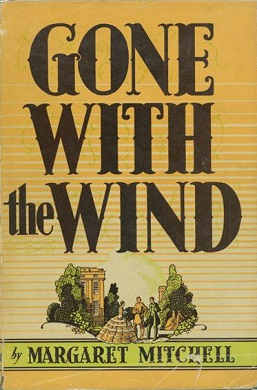
Review: Gone With the Wind by Margaret Mitchell


Here's a little detour from the eighteenth century to talk about one of my long reads at the end of the year.I picked up Gone With the Wind for free. I have a feeling that when any institution using books as decoration, it’s free game to take those books and so I did that in a cafe in Soho. I decided to read it as I always read something large and engrossing in the run up to Christmas. Usually it’s a Dickens book but 2021 being my year of reading women, I decided to give Margaret Mitchell a go.

I was aware of the accusation of the book of being racist and I was alert to it as soon as I begun. What I found remarkable at first was the lengths the book went to, at least at its beginning, to position the reader very carefully. While this a story takes place in an inherently racist society and our point of view characters were all inherently racist in themselves, the reader is explicitly told not to accept their point of view unquestioningly. As each character is introduced, the narrative voice takes great pains to point out how unimaginative, unreflective and unthinking the characters are. The pre-war South is a utopia, but it’s a utopia created for (and in turn creating) selfish, arrogant idiots. They live in a society where the source of their riches are unexamined and the slaves are amusing childlike objects to be worked and taken care of. They are violent, finding it bad manners to hold a grudge when one shoots the other in anger and they whoop and holler into war without any thought of consequence.


The war itself shows reality seeping into this fool’s paradise. The people experience want and hardship for the first time but are still blinded by the notion of a Cause which they all pull towards. Interestingly, none of the characters really ask what the Cause is, that it is a Cause is enough. It’s the parts of the book following the war, during the Reconstruction where the positioning of the audience slips. It’s a long book, the reader spends a long time with the characters and Margaret Mitchell had been with them even longer, so the inevitable pull of sympathy tugs us all towards the characters and the narrator no-longer places the audience at a wry distance. From then on the book is undeniably racist, the narrator informs us that ‘lynching the negro seemed a sensible solution’, Black people are a threat and the KKK are represented as benighted heroes who are unfairly oppressed. We’re no longer encouraged to feel sympathy for the fools who have lost their deeply-rotten paradise, we’re encouraged to miss it too.


However, beyond a slide into Confederacy nostalgia, this is the story of a particularly remarkable protagonist, Scarlett O’Hara. She’s a horror; a narcissistic, narrow minded, selfish, psychopath. The beginning of the book makes this explicit, saying that she had no interest in what went on in other people’s minds, nor even any notion that other people may have their own minds. What’s more, the pressures of war and building herself up from nothing re-enforce her grasping, acquisitive amoral worldview and this makes her fascinating. I was always keen to know what she would do next, what taboo she may break or what person she’ll happily swindle to get what she wants. Scarlett cares for nobody. Her ‘love’ for Ashley, which motivates many of her actions seems to be little more than the fossilised envy at his rejection of her, not helped by his own weak-willed and prevaricating personality. Because she makes things happen, the reader roots for her even as she is not likeable in any way.


She meets her match in Rhett Butler, a cardsharp turned war-profiteer who is probably the most self-reflective and clear-eyed character in the book. Unlike almost every other character (including Scarlett) he thinks. What’s more, he has a moral compass, he cares for other people but his own shrewd pragmatism usually comes to the fore. If anything, his great weakness is in ignoring that pragmatism and pursuing a love for Scarlett. He spends much of the book saying the two are alike but he’s wrong, while he shares the broad, wry viewpoint of the early narrator, she is blinkered and narrow. Every time Rhett and Scarlett are together, the book lights up.


The other characters are well drawn; whether it’s the nervous Aunt Pittypat, the genial Mr Kennedy, the all-knowing Mammy or the blowhard Dr Meade - they all have their roles to play and it’s interesting to see how all the wider events affect them or not. I found Ashley the most loathsome character in the book because he never commits to anything but Melanie, his wife really was a well-drawn picture of quiet strength and dignity. I’d have wished that she had known about Scarlett and Ashley’s dalliance all along, she’d have seemed even stronger then.


The book is at its best when it presents the reader with powerful set pieces. The opening bbq at Twelve Oaks is one such scene, the party where Scarlett dances in her widow’s weeds, Melanie giving birth as Atlanta burns - even the comic scene where the men feign drunkenness to hide the fact they were at a KKK meeting. However, for each of these brilliantly presented scenes, there were pages and pages of exposition to show time passing and the reduced circumstances of the characters. These grew longer as the book progressed and it was also in these parts that the positioning of the reader shifted and the book became genuinely racist. These parts slowed the book down and soured the tone so much that it was not the engrossing, carry-me-away book I was hoping for and my enjoyment was rather lessened.


Wednesday, 5 January 2022

The Top Ten Books 2021 (Part Two)


The first part of this countdown is here.


If you are interested in seeing what I read this year my traditional listchallenges list is here. If you want to see me trying to shame myself for buying books, my list of shame is here.


So, in this year of reading women, let's see what the top five books were.


5: The Wonderful Adventures of Mrs Seacole in Many Lands by Mary Seacole


I’ve already written about this book here, but it must be stressed what an engaging voice Mary Seacole has and what interesting positions she finds herself in.


4: Vera by Elizabeth Von Arnim


Of course Von Arnim was going to appear on this list, she’d rapidly becoming one of my favourite authors.


Having adored Elizabeth and her German Garden and been enchanted by The Enchanted April, I asked for more Elizabeth Von Arnim books so I could be uplifted by their ebullience and delight. I received Vera. Instead of a sunny, funny story of joy, it’s a taut psychological thriller written as a comedy of manners. Elizabeth and her German Garden had a portrait of her first husband as ‘The Man of Wrath’, but it was a peculiarly affectionate portrayal. There’s nothing affectionate about the portrayal of her second husband in the character of Everard Wemyss.


Lucy Enthwhistle meets Everard Wemyss on the day her beloved father has suddenly died. She’s still numb in her grief and so politely listens to his tale of woe, his wife had died the week before after falling out of a third story window but the inquest recorded an open verdict. We already know all we need to know about him, his sadness is not from his wife’s death but from his losing face at the inquest and being obliged to leave town for a while. However, I didn’t fully pick up on this yet.. nor for a while.


The courtship of Everard and Lucy does seem strange, and he in particular seems rather gauche, especially in company. Lucy’s aunt Dot has her misgivings, and there are further hints of Everard’s character from how she is beloved or an utter nuisance depending solely on how easy she makes it for Everard to get his own way.


Further red-flags are raised by the way in which Everard obsesses over Lucy’s height, youthfulness and particularly her bobbed hair. He delights in the fact that her particular haircut means that she could look as young as twelve. When his physical babying of her, taking him in his arms, rocking her and calling her his ‘baby’ - and warning signs are flying around. (Incidentally, she had that haircut at her father’s request, who obviously liked her to still look like his little girl, and he obviously infantilised her also in the way he never expected her to keep up with his conversation. Was their relationship ever that healthy in the first place?)


Despite the warnings, the tone of the book informs us not to be too worried. It’s told as a comedy of manners, we laugh at Everard’s absurdities and we expect things to work out fine in the end. Even Auntie Dot convinces herself that all shall be fine as they go off in a taxi to their honeymoon.


This is when we find out that things shall not be fine. Lucy’s chance remark that she’s been exhausted since her marriage and feels she has no space to be herself is chilling. Everard’s ‘wholesome’, ‘uncomplicated’ and ‘simple’ ways become horridly controlling. Most heartbreaking of all is that he has power over Lucy because she loves him and doesn’t want him upset. He can use this upset and a whole panapoly of sulks and tantrums to get his own way. It’s not just seeing her dominated, it’s seeing her dominated by someone so weak and petty that is the true horror. Yet the comic tone doesn’t ease, we are still encouraged to laugh at Everard’s pathetic nature just as we fear it. It’s a wonderful and gripping tight-walk.


When the couple return from honeymoon, it’s clear how little he loves Lucy, even if he thinks he does. She is an interchangeable ‘wife’ figure and she must now slot into place in the vacant ‘wife’ slot once filled by Vera. When we were first introduced to Vera, we were told she was a stupid, thoughtless woman who didn’t know what was best for her. All indications suggest she was intelligent and independent with a love of music and travel and she was worn down by Everard.. and Lucy seems to be going down that path much faster than Vera ever did.


The book ends before any grand tragedy or heroic rescue. I’ve seen some readers think it a hopeful end, with the seeds of escape sown. I personally see it as a tragic one, Lucy still makes excuses for the man she thinks loves her, she is deep down the rabbit hole and I don’t think will escape. I think she’ll simply waste away. The book gives the kindness to not make that certain.


This book gripped and incensed me, made me laugh and gasp, It’s as inescapable as the other two works I’ve read by Elizabeth Von Arnim but in a completely different way. I loved it.


3: Abigail by Magda SzabĂł


Magda SzabĂł was one of my favourite authors I discovered this year. While I enjoyed all the books I could find of hers, Abigail was easily the best.


When Gina is suddenly torn from her old life as a schoolgirl in 1940s Budapest, she finds herself on the far eastern edge of Hungary, deposited in a strict school. She doesn’t know why and she resents her move, finding the traditions of the schoolgirls as silly as the rules of the adults. What on the surface felt like a children’s book, a little like The Secret Garden or a Malory Towers novel becomes a more in-depth exploration of the benefits and dangers of conformity. 


The Matula is not an evil school, it’s not a Lowood Academy, the clothes are well made, there’s lots of food (though oddly, not those extensive descriptions of feasts we get in school stories right up to Harry Potter), there’s very strict discipline but not abuse. The teachers are not evil, in-fact, more often than not they have their own issues to deal with, some of which are noticed by the girls and some isn’t.


Within the community, Gina resists against the girls and refuses to ‘marry’ an object in the class. Their ostracism, though a staple of these kinds of books serves to show how conformity comes from pressure from within as well as out. When Gina succumbs to it she can be happier in the institution, and safer from the outside world, where conforming to the lie that Hungary’s war is going well is starting to have deadly implications.


The Abigail of the title is a statue that helps pupils when in need and, becomes the secret voice of the resistance, sending warnings about Hungary’s increasing precariousness as Nazi Germany’s weak partner and providing documents to save a number of children with Jewish heritage. The mystery at the centre of the book is, who’s Abigail.


I’d love to have read this as a teenager, as Gina and her classmates read the people around them based on their own limited experiences. Gina is essentially wrong about nearly everyone around her and to my viewpoint, these errors were obvious but I wonder how much they would have been to a teenage me.


I was gripped throughout, lost in both the children’s book world of the Matula school and the adult realities just outside. I loved how both areas interacted with each other and were interpreted through Gina’s own (often small-minded and slightly selfish) perspective. This did not make Gina a dislikeable character, only a real one in the context of the story and I loved the other characters, both in the simplistic ways Gina saw them and the more complicated ways implied beyond her own point of view.


2: The Waves by Virginia Woolf (I could also have put To the Lighthouse here and Mrs Dalloway not far off)


The Waves bowled me over with its warmth, the understanding of character and the literary description of the forming of people’s identity and the passing of their lives.


Framed by a description of a sun rising above a seaside setting, each part showing the quality of the light on the objects as it reached its zenith and then began to set. It was a tidy image of a life lived, the haze and indistinct nature of personality at first; the clarity as the sun rises till at midday, things are almost fixed in place by light and then the muzzy haziness as the sun begins to set. It worked very well as a metaphor and to tell us which part of life we were now going to explore. Some of the details of these parts repeated a little but it served it’s purpose well.


At first the six characters had single lines, representing their smaller senses of self, then each began to have short paragraphs. As the book went on, the characters would have longer monologues to themselves, their own issues and images that haunted them and that they kept returning to, either to go beyond or be defeated by it. Early on, the style seems strange. The sentences are short, there’s a ‘see spot run’ element to them but the sentences develop as the characters do.


Another strange part is that the monologues all start; “something something,” said someone - even when they never said it. Even if it was something they did say, it was never expressed in the way they would naturally say it. This isn’t stream-of-consciousness in any straightforward way, like To the Lighthouse, the consciousness is reported but in a way that is even more detached from reality. It takes a little acclimatising.


Of the six, Bernard was my favourite. As a child he finds power in ‘spinning phrases’, like all the men in the book he develops a desire to write. He fills a notebook up with his phrases but never uses them to make the book. His desire to spin phrases becomes making stories, he can’t see a person without inventing a story for them, again he plans to use these in a writing way but never quite does. As he ages, he sees his stories as a way he tries to connect with the world but also a thing that places him at a remove from it, he can’t help adding an artificiality. By the end, he says he is over stories and phrases, he leaves his notebook behind, he says he’s done with it all and ready to immerse himself fully in life without the protection and use of words. I didn’t believe him for a second as he gave up words in a twenty-page monologue in which he used all the phrases he’d collected. He hadn’t given up words at all, he’d just run out.


My least favourite character was Neville, the one of the three men who actually becomes a writer. He starts of clean and fastidious, it becomes clear he is gay and he loved Percival.. then he loves various men one at a time. I didn’t like him because as a child and young man he seemed to hate everyone around him and feel he was better and I never could see why he would think that. I felt sorry for Louis with the constant chip on his shoulder. I also felt sorry for Rhoda who connected with the world so little she ended up throwing herself off a rock.


Jinny lived in and for her body, which worked for her but as a clumsy uggo, would never work for me and Susan started off as a creature of hate who subsumed herself first as a countrywoman, then as a mother, a choice she seems to regret.


This book was full of wonderful little details; a statue that pigeons whiten, some overheard gossip that lingers for years, a shining moment by the river. It also showed what it’s like when friends get together, the way the different entities mix together at those times, their monologues becoming shorter and beginning to answer each other. It really did feel the way it feels when friends get together.


It also made me think about my life, the moments that have formed my sense of self, what my sense of self actually is. There’s a depth and richness to The Waves that I haven’t found many other places, a real summation of life, a real evocation of those private moments in private mythology. It really captured a sense of being and a sense of friendship and I really loved it. 


And my favourite book of the year was…


1: Nights at the Circus by Angela Carter


I was blown away by Nights at the Circus. This book is an assault on the senses; on they eye, the ear and the nose - full of noise and smell and texture, with an overabundance of telling details and bulging with strange tricks of point-of view, narrative perspective and general writerly trickiness which at no point seemed false or stretched but more like the book was trying to rein in its exuberant explosion of words.


The first section is probably the best. Fevvers, a trapeze artist who claims she was genuine, functional wings is recounting her life story to the journalist Jack Walser. She’s being aided, challenged, interrupted and looked-after by her friend/mother-figure Lizzie throughout. We have the cluttered, clustered atmosphere of the dressing room and lead into the fantastical, cluttered story of her life, which she narrates in a mixture of stage-cockney and rotund oratory. She’s instantly engaging and, for an arial being, is very earthy. She is highlighted eating greasy food with gusto, her feet smell, she belches and raises a cheek from the seat to fart. She reminds me a lot of the characterisation of Falstaff in the Robert Nye novel. 


Her life, as she tells it, is a picaresque tale with many outlandish yet specific details. There’s a wholesome brothel where all of the prostitutes spend their time in sisterly harmony and improving themselves. Next, a freak-show ran by a woman who may actually be dead that includes women with working eyes on their nipples or a woman who’s story is ripped from Thumbelina. That’s followed by a tussle with a nerdy magician. The language and characters have all the gaudy colour of the circus, yet there are also moments of grounding grit and dirt. The reader is won over by it all, and although the reporter wonders if the story is true or not, I can’t say that I cared, I was enjoying myself too much.


The beginning of the second part in St Petersburg broke the spell a little, opening with a description of a woman pumping the bellows of a samovar that used a metaphor which stretched a little too far and over two pages. This is followed by one of the most jarring breaks of perspective in the book, where the ‘writer’ breaks in to talk about how Russia is shortly to have a revolution and this knowledge colours the world of St Petersburg in the story. Now I was alert to games in the point-of-view that I had previously been swept up by. The curtain of fiction was dropped just a little too low. Luckily, we are then introduced to a psychic pig and are brought back into the story. Though I am beginning to notice how skilfully and subtly Angela Carter weaves in and out of tenses, something I only stop noticing once the story fully engages me again.


Walser has become a clown so he can follow Fevvers. This part of the book is more of an ensemble piece, Fevvers has moments but it’s not all about her. We learn the story of Mignon, a poor abused young woman who becomes a singing lesbian lion tamer. We also learn about the strong-man’s lifetime of spiritual weakness. The clowns and their clown culture which is claustrophobic and nasty and nightmarish. The king of the clowns, Buffo, has a ‘deranged majesty’, the clowns themselves are always on the edge of madness and insanity and I have never come so close to understanding fear of clowns (instead of mild disdain) as when hanging out with the clowns in this book. This is also the part of the book which has a fondness for animals acting like people. Whether it’s the chimpanzee act, who are among the more sensible characters in the circus, or the tigers who dance waltzes and grow savage if they feel their romantic attentions snubbed.


The third part takes place in Siberia and is most noticeable for how the story is now in Fevvers’s first person and an omniscient third person, slipping in between the two. It’s mainly about how she finds herself having lost elements that defined her identity and languishes and how Walser has a completely new identity made for him but re-finds his old self making a new self from the two parts. 


It’s a book that would take a long time to unpack properly. There are impossibilities and weird twists and jokes that could be read many ways and all of it delivered in this constantly shifting voice filled with a voluptuous excess of language. It’d definitely be a book to read a number of times just to see how it works but what I can say after one reading is that it does work, and it does so brilliantly.



Wednesday, 29 December 2021

Top Ten Books Read in 2021 (Part One)


This year has been a busy, exciting and fun-filled one - as far as reading goes. If you are interested in seeing what I read this year my traditional listchallenges list is here. If you want to see me trying to shame myself for buying books, my list of shame is here.


As usual I shall split my top ten into two parts and count down from ten, starting with…


10: Folk by Zoe Gilbert


This was an easy book to get lost in, a series of invented folk and fairy tales set on a fictional island called Neverness it manages to weave together a strange and intense atmosphere, close to nature and full of deceit and hardness.


There’s a frank (and rather unromantic) sexuality about these stories, many of them dealing with love superstitions, hatching, matching and dispatching. The book starts with a ceremony in which girls shot arrows with ribbons into thorn bushes and boys root through them, hoping to pick up an arrow and kiss the girl. The girls most hope to kiss the boy with the bloodiest, most thorn-pricked lips. There’s a mistake and a boy ends up being burned within the bush - and that’s not the only time there’s a little bit of Summer Isle about the book.


The stories were full of sea/salt/gorse/mud/cows/birds/rain/wind - with a real texture and sense of grit, many of the stories permeated with chill and cold and strong smells. There were hints of other stories; one suggested selkies, another suggested the song ‘The twa’ swans’, and another had a wendigo vibe. The stories dealt with jealously, love of siblings, postpartum depression - and all manner of other topics, always with a sense of grit and darkness but there were a number of sweet stories also to leaven the book. It made a really wonderful collection overall and I enjoyed it a lot.


9: Piranesi by Susanna Clarke


I’d very much enjoyed Jonathan Strange and Mr Norrell and The Ladies of Grace Adieu and so was excited about Susanna Clarke’s new novel, Piranesi, pre-ordering the paperback copy and reading it immediately.


It’s a novel very different from the earlier, far shorter and tighter with a cast of three characters instead of dozens. Piranesi lives in an immense (possibly infinite) building, with huge rooms filled with statues, where clouds float around the top floors and seas sweep through the lower ones. The seas have fish and seaweed and rush through the corridors in fierce tides. Piranesi explores the rooms, living off the fish and seaweed, blessing the House for its kindness. He guards skeletons, giving them food and flowers, interpreting the flights of birds and the meanings of statues.


He calls himself a scientist but his curiosity isn’t excited by the most obvious discrepancies in his life. First among them, he knows he is not called Piranesi but never wonders what it may have been once. Nor does he see it significant that his journals used to be numbered ‘2012’ but now are named after significant events in the year. He explains it away by arguing that the new system is better as it gives the years more character. If there are things about his past he’s forgotten, he’s happy not to remember.


Another mystery is the Other, the only other living person of his world. The Other sends him to explore the house and report back what he finds, looking for Great Knowledge. The Other is always dressed in an impeccable suit and sometimes gives him items that obviously cannot be provided by the House. Again Piranesi doesn’t question how he knows what a good suit is, nor where these other items come from.


This first half is clearly the best, as the reader is tossed into this strange world and is given frequent hints that things are not as they ought to be. I enjoyed guessing what the real situation may be. In the second half, when the mystery is revealed, it fits with the facts well and is satisfying though wasn’t as fun as the first half.


As well as a mystery, this is a book with humour and heart. The chapter titles frequently make ironic comment on their contents and would probably be more so on a second reading. Piranesi himself is such a guileless, trusting character that it’s a pleasure to be in his company. If anything he seems improved by his life in the House, living within the world rather than against.


Despite the differences between Piranesi and Jonathan Strange and Mr Norrell, there are a number of similarities. Both talk of a time when magic existed before leaving the land, the world of the House looks much like the Fairy Roads, there are two wizards who attempt to bring back the magic and there are ‘lesser’ characters who suffer as a result. Clarke originally planned to write a sequel to the early work which focused on those characters and Piranesi does likewise.


8: We Have Always Lived in a Castle by Shirley Jackson


I went into We Have Always Lived in the Castle expecting to be surprised and wrong-footed and I wasn’t disappointed. Starting with a near perfect first paragraph that casually tells us all we need to know about Merricat, the book’s narrator, it only gets stronger from there.


The Blackwood family are the local horror story, six years ago most of the family were poisoned at dinner. The survivors are a doddery uncle and two young women, the older of which was acquitted for the murders. It’s not like the family were even popular before the incident, with their snobbish and highhanded ways with the local villagers. During the course of the novel, the little family have their delicate equilibrium disturbed and become urban myths in the process.


There are so many ways a reader can interpret why the family were poisoned, why the poison was administered how it was, what the relationships between the three family members is now as well as their relationship with the outside world. The text could generate theories for days.


The key to the slippery (and so fascinating) quality of the book is hidden in the title, that they have always lived in the castle. We receive so little information about what the family dynamic was before the poisoning, that it’s hard to make definite decisions on how its changed them. Merricat is the narrator and for her, they’ve always been like that; Constance has always preferred to stay at home and cook, they’ve always had a pseudo mother and daughter relationship, her idiosyncrasies have always been laughed away with a ‘silly Merricat’. We have no way of finding out if that is the case.


The book ends with the perfect happy ending… for Merricat.


7: Female Quixote by Charlotte Lennox


I’ve written about The Female Quixote extensively, both here and here. What surprises me is how a book I already enjoyed has lingered in my memory more than other books I enjoyed more at the time of reading them.


6: The Water Cure by Sophie Mackintosh


The Water Cure is instantly gripping and unsettling from the first sentence, “Once we have a father, but our father dies without us noticing.” This would imply that the father, known as King, is an incidental part of the character’s lives, which is far from the truth. 


King and his wife live in a secluded spot in an abandoned hotel with their three girls. They escaped there to save the girls from the increasingly poisonous air of the mainland, a poison that seems to be generated by men. King is the only man who doesn’t create these poisons and is the only one strong enough to visit the mainland for occasional supplies. To keep them strong and free of poison, the girls have a vigorous programme of treatments.


Of course, that’s not what’s really going on.


The treatments take the form of tortures and endurance tests, all with their own strange paraphernalia, whether it’s the sweating sacks, the drowning dress or the ice buckets. They don’t remove poisons at all but weaken the girls’ bodies and wills. It’s a not unknown pattern, behaviours that begin as protective but infantilise the subjects leaving them open to abuse. There was a real shock, late in the book when the characters ages were revealed and the girls aren’t girls at all but women. It’s notable that one of the girls, Grace, is pregnant and the only man around is her father.


But that’s not all that’s going on.


There really are problems in the outside world. The world really is heating up, the hotel was a retreat for dozens of sick and dying women who found themselves getting better after undergoing the treatments and the water cure.


It’s all very uncertain. There is much said but far more hinted.


I really liked the three ‘girls’ and how they fit into the dysfunctional family unit in different ways. The oldest, Grace, was positioned to be the handmaiden and successor, Lia the whipping post and Sky the coddled baby. Their views and actions in the book are heavily affected by their place in the family. Lia sees her body as a receptacle of pain, sees herself as too craving of love and puts herself in danger to seek it. Grace has a fatalism, she expects harm to come to them but responds cold and unemotionally. I’d like to have seen more of Sky’s thoughts, with the other two daughters narrating chapters, it almost seems like Sky responds to moments and has little of a mind of her own.


I found the twisted family dynamic really interesting, particularly when it came to the notion of how much the abuse was planned and how much was intended to be protection. How sincere was the false utopia and how real were they dangers they were being protected from?


Then, there’s the allegorical/fable element of the book. The poisons are always called toxins - and the toxins come from men. The ‘girls’ are encouraged to see themselves as weak, their only real defence against men is suicide, which they call life-guarding. And the men do bring trouble.. perhaps they do bring sickness, and the one man who said he was the bastion against the others might have been the most harmful of all, even if he wasn’t trying to be.


It’s not ponderously or showily written but there is a tight control over the whole book which weaves enough of a tale to grab a reader but leaves enough holes to make that reader constantly question and ponder. I really liked it.


Wednesday, 22 December 2021

My Year of Reading Women


My year of reading women didn’t start intentionally. I started making a pile of books I wanted to read during the year and I noticed that all the books I had piled were by women writers. I thought it may be fun to keep piling up women writers and to see if a year of reading women taught me anything. I expected it probably wouldn’t, but I kept on anyway.

As a proviso - I have read some men this year. Seven of the eighty-eight books I have read this year have been by men. Two were for the reading circle, two were for work, one was for a video and two because I just had to read them. Also, an additional three books were written by a woman but translated by a man (but they were the Magda SzabĂł books and I have no regrets).


So, what did I learn?


In some ways, my year of reading women re-enforced my feeling that genre defines a book far more than any other element. Women sci-fi novels were more like sci-fi than anything else, women biographers, women gothic novelists, women fantasy writers - genre always trumps gender.


There have been more female protagonists, which is no great surprise but that’s not to say that many of the books featured men as the main character as well. I suppose family has been a theme more prominent in the books I’ve read this year. Whether it’s been French women tearing apart a family in Someone at a Distance or a French girl proving the perfect daughter in A Daughter in a Fortnight; a cultish family in The Water Clue or the cosy family of Hitlers in Young Adolf - families were a key element. There were surrogate parents, found families, displaced families and feuding families.


Other odd links between books included people who could dream new pasts. There were numerous books that included uses of sympathetic magic that included magic sewing and a magic model town. A number of spinsters looked after their novelist fathers, and two characters were locked up for suspected witchcraft.


This was the year I finished my last Penelope Fitzgerald, exposed myself to more Austen and was introduced to two writers in particular. Magda SzabĂł entered my life in the delightful Abigail, which balanced school story charm and WWII resistance excitement. Her other novels were a little more bleak; Katalin Street was a complex and engaging look at nostalgia, shame and bitterness, The Door was about independence and pride and so was Iza’s Ballad to a certain extent. Most luckily, I broke my Virginia Woolf taboo, finding her surprisingly warm, with real and fully-developed characters. 


I’ve really enjoyed my year of reading women but maybe because of my varied reading diet, it didn’t bring any amazing revelations. It did, however, lead me to a great many enjoyable books and I shall go through the top ten over the next couple of weeks.


It's funny, some people would be able to write a whole blog out of their experiences in reading a little differently, I barely managed a post.


Wednesday, 15 December 2021

Beau Brummell by Ian Kelly at the Dr Johnson Reading Circle


December’s Reading Circle was held online, not because of fears of covid but due to the jet-setting (and Trans-Siberian Railway-riding) exploits of the author Ian Kelly, who joined us from a log cabin in Northern California to talk about his book Beau Brummell: The Ultimate Dandy. This allowed the group to chat about all the exhibitions, theatre and books they wanted safe from their own homes as a storm raged outside. 


Beau Brummell is the biography of a man whose position in history seems to be built on the thinnest of threads; famous for his poise, his wit and his immaculate fashion sense, he dictated the fashionable world of London, influenced the creation of modern West End tailoring and died penniless, raving and incontinent in an asylum in Normandy. The book set out to prove that he was more than a ‘fribble’, a word Johnson defined as the verb ‘to trifle’ but which also came to be used as a noun. 


One of the pleasures of having an author at a meeting is to explore ‘backstage’ of a book, to see what it set out to be and the process that shaped it into what it became. This book started when Kelly was looking up a quote from Brummell to use in his book on the eighteenth century celebrity chef Marie-Antoine CarĂ©me. ‘Who’s your fat friend?’ Brummell asked a friend satirically after being snubbed by the Prince Regent. This jest finally severed the patronage of the admittedly rotund royal. Ian Kelly said he was hoping to write a book about tailoring, the growth and shaping of the West End of London as a shopping hotspot and to explore the realm of masculine fine dressing with the creation of the dandy - or as he put it, ‘a nice book about clothes and shopping.’ It was his discovery of Brummell’s medical records in an asylum in Caen that opened up a whole new line of enquiry when it became clear that the disease which killed Brummell was tertiary syphilis – a discovery which led to a very excited call to his publisher.


Initially though, Brummell led a rather charmed life. His grandparents may have been servants to the wealthy, but his father had got in with the North administration where he’d legally (and most likely less-legally) acquired a fortune. Born the second son of the family in number 10 or 11 Downing Street and later raised in grace and favour apartments in Hampton Court, the young George Brummell had his portrait painted by Reynolds when he was three years old. This almost cherubic figure was sent to Eton where he became everyone’s friend and ‘had a genius for excelling in apparently trivial acts,’ like making cheese on toast. Later he took his inheritance and joined the Hussars, largely because of the fetching uniform. There he became friends with the Prince Regent, even becoming best man at the Prince’s wedding. 


After quitting the army, he used his connections to live off credit where he formed the ‘dandiacal body’, holding levees where the important and fashionable would watch him dress. Unlike the of former macaronis, Brummell’s style was based on muted tones and sharp cuts. Precision and attention to detail were the hallmarks of a gentleman, not flashy excess. He also underwent a vigorous bathing routine and used a series of razors to shave ever closer. Amazingly, many of the shops that supplied Brummell with his clothes are still in business and holding their records so there is a very detailed portion of the book about the skill that went into creating the perfect dandy. Thanks to the wine merchants, The Berry Brothers, there’s even regular accounts of his weight, as it became a fashion to use their scales.


Brummell’s delicate balance of credit was due partly to sales of an item going up if it was known he used it (like macouba snuff) but also due to his relationship with the Prince Regent. As long as people expected him to do well out of a future George IV kingship, the future expectation of money was still there. Like most relationships with ‘Prinny’, Brummell’s was not always a smooth one. Although it suited the prince to adopt the dandy look, his tastes were rather more flamboyant than Brummell’s. What’s more, Brummell’s ‘brand’ relied on a certain cynical and imperious attitude which could offend the thin-skinned royal. After the gaff about the ‘fat friend’, Brummell’s creditors started calling and he had to escape to France.


In Calais, he resumed his celebrity, gained a whole new group of creditors and become one of many British residents who couldn’t go back home but needed a passport to go further into France. When George became king, Brummell started to petition for the position of a consul, which was denied to him until just before George’s death, making Brummell consul to the Norman town of Caen. It was not a strenuous job and he told the government that such a position was probably not needed, hoping to be moved to somewhere more glamorous. The position was axed, but Brummell was not offered anything else.


Unable to live within his means, he found maintaining his lifestyle increasingly difficult, even with a subscription of people back in England to support him. He was put in debtors’ jail until another call for funds across the Channel had him released. The first thing he did was dress up in his best outfit, attend a formal dinner and sit down to a very welcome meal of salmon. By this time he was not well though, sometimes losing control of his muscles and eventually becoming doubly incontinent and strapped to his bed. The hotel he lived in couldn’t help and he was sent to an asylum where he was kept as comfortable as possible until he died.


The book contains a vivid description of syphilis, of how it would have started as a rash and eventually progressed to a horrid and degrading end. There’s a lot of discussion in the book of Brummell’s sexuality. Many previous works had depicted him as asexual, too dedicated to his look to worry about anyone else. From his death though, this is clearly not the case. He certainly moved in circles where sex could be had at any price, attended parties held by ‘The Three Graces’ and other courtesans. He was known to propose marriage frequently, though never to pursue such proposals seriously and he wrote letters that could be construed as ‘flirty’ to a number of women. He also wrote letters that could be construed as ‘flirty’ to men, including Byron. Certainly he lived in a homo-social world, from school to the military, and it’s clear that both men and women looked at him in an erotic way (and, judging from the cut of his trousers, that he wasn’t against encouraging that). Ultimately, it can’t be known when he caught the disease or with whom. Ian Kelly said that one of the features in writing history is that the writer can only present evidence as it is found, leaving readers to decide for themselves.


Ian Kelly described his book as commercially risky, being too long (at 500 pages) about a subject which has an aura of embarrassment which meant there hadn’t been a post-war biography of Brummell. Only recently has the idea of the ‘over-aesthetic’ man been discussed, together with and notions of male fashion and metro-sexuality. It’s interesting how hard it is to pin down George Brummell, to say exactly what he is famous for and what impact he has had. The book starts with the Greater London Council having difficulty describing who Beau Brummell actually was. It was a difficulty we had fun engaging with.