Wednesday, 28 July 2021

Review: A Visit from Voltaire by Dinah Lee Küng


A Visit from Voltaire is a book that makes absolutely no sense. The cover proclaims it a novel but it seems to be anything but. If the blurb is to believed, it’s about an American woman who moves to Switzerland with her family and finds it difficult to acclimatise to the new culture, she’s helped along the way by a man who turns up, claiming to be Voltaire. The blurb is not to be believed.


For a start, the main character and her family may be fictionalised but they are not fictional. The husband in the book is the author’s husband, with the same name and job; the children are her children and the main character is the author herself. If anything, it seems more like diary extracts of her move and the feeling of alienation she has with Wikipedia articles of Voltaire dropped in. I couldn’t find a description of how this book came about but I imagined that she’d moved to Switzerland, felt cut off from her old role as a foreign reporter in Hong Kong and trapped by the Swiss expectations of motherhood which led her to reading a life of Voltaire, creating imaginary conversations with him as she performed her daily chores. What’s more, a detail at the beginning, where her mother’s books on history were sent to her rather than her own was, I think, the secret catalyst that sparked her interest in Voltaire. 


Not only does my little supposition seem to fit, it’s the only reason I can think of that the character that follows her around is Voltaire rather than anyone else, there is no answer to the question, ‘why Voltaire?’ It’s doesn’t even adopt the playful notion that the person coming around her house is a person from the village who thinks he’s Voltaire but is straight up Voltaire’s ghost who simply pops up, much as an imaginary Voltaire might to a bored woman wandering about her cut-off Swiss house.


There’s not a plot to the book exactly, the book goes through Voltaire’s life chronologically, with the ghost ageing as it continues. In each chapter, Voltaire’s life throws up some theme in which the daily Swiss life or in her memories of being a reporter in Hong Kong are awkwardly made to reflect. Early in his life, Voltaire was put in prison, so her son accidentally commits a crime and is hard in front of the town council. At another time Voltaire uncovered a scandal, so she remembers uncovering a scandal during her reporter days. Voltaire spent some time in England, so the main character suddenly has some English friends she has to visit. The book never makes a convincing case that Voltaire’s memories of the eighteenth century, the memories of 90s China and the modern experience in Switzerland ever match up convincingly. The whole book creaks with contrivance. 


I can’t say I liked the narrating character very much. Compared with Voltaire, her spirit seemed so petty and she never seemed to learn much. There was a definite whiff of racism; from her broad grouping national stereotypes (even in places she’d lived), to her distaste of Kwanzaa, Hanukkah and other non-Christian winter festivals and her seeming hatred of the Swiss as conservative and small-minded. She didn’t seem a great mother, seeming rather uninterested in her children and finding them a hinderance to her own interests, resenting her daughter for fitting in more successfully than her and the odd thing that she made them only watch old videos - leading to her children playing ‘I, Claudius’ for fun. (Really - why be so strict about what they watch that they only have access to pre-approved things and then giving them something as adult at that?)


The part which solidified my dislike for the narrator was a chapter themed around Voltaire’s time in the French court under the patronage of Madame de Pompadour. The narrator declares her own marriage as a bit tired and Voltaire agrees it is a little ‘sombre’, suggesting that she liven things up with a party the way Madame de Pompadour used to. The two proceed to plan a party, he in his royal eighteenth century opulence, she toning him down. Already the party is not being held for honest social reasons but to liven up her sex-life, the guests she invites are not really her friends (and if they are, why does she have such rude friends?) and the gathering has no real connection. Because the people in the party all seem like they’d rather not be with each other, it feels like an episode of ‘Come Dine With Me’ where everything relies on the food and entertainment rather than the enjoyment of company. It summed the narrator up for me, obsessing over the details and missing the main point.


I found most of her friendships hard to believe in, either coming about because they were useful to her work or because they had access to someone who might be useful. In a chapter that was supposed to be sad, a friend of hers comes over to Switzerland to recuperate after a car accident that has caused her to lose an arm and an eye. Maybe it’s the Brit in me, but it seemed completely strange that neither of them made pirate jokes - it didn’t feel like real friendship at all. 


Yet - as much as the book seemed like a strange bashing together of elements that didn’t work, I peculiarly liked it. The real Voltaire was an interesting person, with an interesting life and even this slightly weak-sauce ghost version of him made interesting company. Also, while her relationships with her family and her supposed friends didn’t ring very true (or if true, not very warm), the relationship with the Voltaire ghost was peculiarly charming. My own fantasised origin story for this book, that the author imagined her own Voltaire when she was wandering about at home, comes from my own experiences of internally talking to an imaginary Samuel Johnson when I’m doing my own boring chores. Through this, I saw a vulnerability in the narrator that got me to like her and feel for her, lost in the Swiss winter.


At the end of the book, she and Voltaire take a visit to his last home where a ‘well fed college girl’ gives a tour of his house. She knows all the facts of his life but none of the flavour. I finished reading this book in a Dr Johnson’s House, a museum where I (myself rather well fed) talk to people about Samuel Johnson. It got me thinking about how much my own discussion of him is related to my imaginings of what he’d be like if he saw the world now. Ultimately, I concluded that both my imaginary Samuel Johnson and the Samuel Johnson of facts are not the historical one and it’s impossible to get to know him - this book concluded that the narrator knew Voltaire better than anyone else ever could. I’m done with this book.


Wednesday, 21 July 2021

Journal of the Plague Year 2020 ( Entry Ten: 2021, so far.)


 Entry Ten: 2021, so far.


While it could be hoped that this ‘Journal of the Plague Year’ would only have to cover one year, as we entered 2021, it was clear that covid would not go away. After much umming, awwing, threatening and u-turning, the government decided on another national lockdown and to this time include schools.


Our school responded to this by going online but drawing on past experience, it managed to create a far more comprehensive coverage, with a full day of teacher-led stuff through video chats and other trickery. I was given the children who find it hard to access stuff in class, it was no surprise that they couldn’t access anything at home. For the first few days, whatever I did they simply stared at me with blank faces - except for the one who bounced on his couch. I’m no quitter though and the level of satisfaction I received when just one of the kids managed to turn in a piece of work was immense.


Then the lockdown ended, the children came back and things carried on much as they had been. I caught a cold in May but we were over panicking about things like that. One Wednesday in mid-June, I was feeling a bit off and began to resign myself to another cold. I carried on going to work as the cold centred in my chest, being a ball of phlegm, which I would occasionally cough up. On Saturday I had my second covid jab at the Science Museum and walked through Hyde Park. 


Sunday I felt rather rough and booked a lateral flow test first thing the next morning. I did this for two reasons; I could find myself missing a morning of work and with covid ruled out, I could go to my GP for some antibiotics to quell the rapidly worsening chest infection. To my surprise it turned positive for covid, what’s more, I was one of 7 people at school who had caught it.


I thought the next thing was to hibernate and home and wait it out but first I needed to have a PCR test, which they did in a different bit of London, which I had to walk to. All-in-all, on my first day of a positive covid diagnosis, I walked eight miles round London taking various tests. With that all done, I finally hibernated.


I wasn’t allowed to hibernate quietly though, friends from work, outside work, family were pouring in offers of assistance and of comfort. I probably could have filled a supermarket with all the people who offered to pick me up a few bits and pieces. I was reminded that people are quite nice really and I’ve been very lucky to meet some good ones. Of special note is my landlord, who was the one who actually did pick up some of my shopping and his wife who made me a lovely salmon meal and a number of tofu and miso soups. 


Less welcome were the track and trace people who texted me every two days and told me to stay at home. They also rang a number of times, reading from a script and never really listening to my answers. Who knew catching covid involved so many customer service feedback forms?


As for the sickness itself, the phlegm-ball that had been the main feature as the illness ramped up (and had confused me it was not covid) disappeared and was replaced with the classic dry-continuous cough. I burned for five days, every single joint hurt, even the little ones at the tops of my fingers, everything hurt. By some miracle, I still managed to sleep at night so I had some energy to deal with the pain and do the little I had to do in the morning before being kiboshed by fever and aches again. 


The next three days were the worst, not pain but a word semi-nauseous fog, punctuated by moments of confusion.. After that, it was done, the main thing I had left was exhaustion but that didn’t matter all that much to work who swept me right in, expecting me to do double because other staff were off with covid.


As much as I would have preferred a gentler return, I think the full-throttle back at work has probably done me better than sitting about. Three weeks afterwards, my cough has gone and my energy is mostly regained. The only long-term effects I’ve had from covid are the occasional blank mind when searching for a word, and a soul-deep hatred of our corrupt and murderous government.


Wednesday, 14 July 2021

The Belle's Stratagem with the Dr Johnson's Reading Circle (Part 3)


The Dr Johnson’s Reading Circle runs alongside the school/university year and so our performance of the last chunk of Hannah Cowley’s The Belle’s Stratagem was our last meeting of yet another strange year. Big thanks are owed to Jane Darcey, not only for carrying the meetings on but for making them more frequent, complete with special guests and involved discussions. Having a Reading Circle to look forward to each month was a real highlight for the members and it’s been a real pleasure to attend. Next year’s programme has already been finalised and it promises to be as good as the others. 

We meet back with our characters processing the consequences of the grand masquerade. First catching up with Courtall, who feels he has easily got the Lady Francis in his grasp, although we know she’s a decoy. He congratulates himself on being irresistible and looks forward to writing an illustrious name on his list. When Saville, Flutter and a group of revellers burst in to see which particular fish he’s caught, the decoy Lady Francis is revealed to be Kitty and he is roundly laughed at, being so embarrassed he flees to Paris. Later, Sir George thanks Saville for protecting his wife by giving him his sister’s hand. We never discover the sister’s opinion of this idea but Sir George is convinced they’ll hit it off.

Schemes escalate at the Hardy’s, where the family plan to twist the  knife into Doricourt a little more by tricking him into marrying Letitia before she reveals herself as the mysterious ball-guest and he still thinks her an idiot. As part of this plot, Letitia’s father must pretend to be sick, something he is proud he has never been. He also fears that feigning sickness might invite it but despite his fears, he agrees. Doricourt is also going forth with ill-conceived schemes, deciding to go ahead with his plan to feign madness to get out of marrying Letitia. He tells his friend Villiers to spread the word. Naturally, when Flutter gets hold of this story it loses much of its reality and becomes a tale of his being poisoned by an Italian countess with drugged sweets.

The two plans come into collision when Doricourt is summoned to see the ‘sick’ Hardy. He tries his best and playing the madman, demanding that Flutter returns his soul, much to the confusion of the poor gossip who promises he’s never even seen it. There is one flaw in Doricourt’s plan, he is a ham and everyone sees straight through it. Mrs Rackett also shows him how he should have done it. He is, however, distraught that he’s been tricked into marriage with the (he believes) gormless Letitia. He feels even worse when the mysterious, masked figure from the previous night turns up and is not the kept woman Flutter thought she was. Then the woman reveals herself to be Letitia to his (and no-one else’s) surprise. She declares that she has the potential to be any kind of wife Doricourt wants, but he says he only wants her to be herself, it’s very sweet.

The characters then try to outdo each other for who deserves the most congratulations and we are left with the epilogue. It reminds us that we all wear masks and that behind the genial face may lay a domestic tyrant… it then makes the dubious claim that only actors show the truth which, whether true or not, is something actors like to tell themselves.

As well as the likeable characters, the smart dialogue and the fun plotting, Hannah Cowley makes great use of contemporary details. Whether it’s slipping in references to popular plays; John Monro, the keeper of Bedlam, known coffee houses or Langfords, the auctioneers  - she has an ability in presenting her contemporary world as a lived in and real place, rather than the clear stage-world that’s often evoked.

I also nominate Mrs Rackett as the player of the match (I’m writing this the day of the Euro finals, maybe it’s affected me). Whether she was teleporting around the city, playing the madman with great skill or defending the honour of the term ‘gentlewoman’, she was always entertaining. I particularly like how she made romance with her sound like a threat;

   “He holds women in contempt, I should like to have the opportunity of breaking his heart for that.” She also notes that when she does re-marry, young men throughout London will hang themselves. I’d like her confidence.


And so we came to the end of a very enjoyable play and a very enjoyable year at the Dr Johnson Reading Circle, and look forward to another enjoyable year to come.


Wednesday, 7 July 2021

The Belle's Stratagem at the Dr Johnson Reading Circle (Part Two)


Dr Johnson’s Reading Circle met a little later than usual, following an English win at the Euros, to perform the next section of Hannah Crowley’s The Belle’s Stratagem. Where the first part had enjoyed a rather simple plot, the levels of shenaniganry ramped up significantly.


We start in an auction house, where the auctioneer goes over plans with his puffers. One puffer’s job must talk up the items for sale, the other has to appear as a lady buyer and raise the biddings. None of the three seem to know very much about what they are selling. But it doesn’t really matter, as a lady of fashion enters and shows that she doesn’t really know what she’s buying either, confusing a picture of David spying Bathsheba bathing for Actaeon in a similar situation, seeing the naked Diana in Ovid’s myth. 


Then Lady Frances enters, on a girls’ day out with Mrs Rackett and Miss Ogle. They discuss a wax model of a city, the auctioneer having to admit he doesn’t know exactly which city it is. He nonetheless tries to make a selling point of it, showing how, with a little imagination, the model could represent all cities: ‘call it Rome, Peking, or London, ‘tis still a city. You’ll find in it the same jarring interests, the same passions, the same virtues, and the same vices’. I’d love to see the prop of this city which manages to be every-place and no-place. Lady Frances is a bit confused by everything and is disturbed by the figure of Courtall staring at her. After being introduced, they chat. She feels that she’s being merely polite to a friend of her friends, but he reads her politeness as encouragement. He imagines he’s making romantic advances and may have a chance with her later. When describing her day of fun later, Lady Frances observes: ‘Everybody about me seemed happy; but everybody seemed to be in a hurry to be happy somewhere else.’ Sure enough, the ladies don’t have time to actually attend the auction itself and rush off to the next engagement.


The next scene is at Hardy’s house where Letitia is talking to Mrs Racket, a woman who seems able to get everywhere. Letitia’s plan is to act a complete fool in front of Doricourt, her lacklustre intended. This, she hopes, will make him hate her, her risky long game being to then turn this hatred into powerful love. She comes in as he’s appreciating the beauty of her portrait and proceeds to run her mouth off, talking nonsense ‘as fast as anybody’ and pretending that she thinks Gulliver’s Travels is a true account. Has Doricourt, she wonders, met any talking horses on his own travels? Most annoyingly, she pretends to think she’s witty and clever, making riddles of people’s names (‘What a lamb says, three letters?’ Answer: Baker - Baa-ker). Doricourt takes the news that his intended is a simpleton well, deciding to either run straight to Bath or kill himself. But an invitation to a masquerade diverts him.


All the characters start making plans for the masquerade. Hardy (Letitia’s father) decides to go in disguise to convince Doricourt that Letitia isn’t an idiot, but Letitia has her own plans. Sir George decides he will accompany his wife after all (and orders the most boring costume). However, the character with the most plans for the masquerade is Courtall. He has been utterly won over by Lady Frances and, while admitting he would hate to have a wife of his own, has a fondness for other people’s. He bribes a servant to find out what Sir George is to wear, planning an identical disguise so he can carry off Lady Frances. He even bets on his success with Saville, also her admirer. Saville, however, decides to save Lady Frances by bringing along another young woman disguised, as you’ve guessed, in Lady Frances’s costume. If he can switch the real Lady Frances for a fake one, Courtall will find he’s made off with is in fact Kitty Willis, the name ‘Kitty’ apparently signalling that she is a woman of loose virtues. (I hope everyone’s getting this.. I said it gets more tricky).


Finally, we get to the masquerade. One of the features of this kind of entertainment that we have lost in modern fancy dress parties is that everyone who is dressed up as a particular kind of person must roleplay the part all evening. While I could see this getting irritating eventually, I’d much rather go to a party where all the James Bonds have to act like James Bond and all the Wonder Womans have to talk like her. 


Cowley has great fun introducing the characters in masquerade. There’s a Merry-Andrew, talking nonsense from a hobby-horse; a mountebank plying fake potions and a soothsayer whispering prophecies in people’s ears. Hardy has gone as a popular Jewish stage character, leading to a number of jokes any modern production would wish to excise. Sir George is dressed as a Domino. This is the spoil-sport’s choice, as it’s a plain costume with no particular character. When his wife is called away, he wants to follow but is stung by all the nasty things people are saying about his possessiveness, even referring to him as a Hurlo Thrumbo (the eponymous hero of the eighteenth-century play which had the second longest run because people went to laugh at him).


Meanwhile, Doricourt catches the eye of a beautiful woman. She dances gracefully, sings purely and flirts up a storm. They have a tremendous back and forth, he starting with a rather weak, ‘did you come from the stars?’ She responds that she plans to reascend soon and proceeds to tease him – she’ll reveal herself later when he’s least expecting it. He’s in raptures: here is a woman as alluring and witty as any foreign lady. But with the benefit of an English accent! He asks around for her identity, stupidly asking the gossip Flutter, who is always wrong. Should he also feign madness, he wonders, to avoid marrying Letitia? Who could the mystery woman be? 


Meanwhile, Courtall has approached Lady Frances alone, convinced her that he’s Sir George and ordered her back into the carriage. But loyal Saville has switched out Lady Frances for the fake one - so all’s well there. 


And that’s where we ended for the night. Will Doricourt discover his mystery lady? Will Lady Frances and Sir George decide to live their marriage as they want to without worrying about other people? Will Courtall be content with his faux-Lady Frances? Will Flutter ever get a single piece of gossip correct? That’s to be seen in the final instalment.


Wednesday, 30 June 2021

The Belle's Stratagem at the Dr Johnson Reading Circle


 Play reading at Dr Johnson’s Reading Circle is always a slightly unknown quality. O’Keefe’s Wild Oats had been a surprising delight, whereas Fielding’s A Modern Marriage had been far more cynical than we were prepared for. Thanks to Angela, who gave us a brief introduction to the playwright Hannah Cowley, we were not flying completely blind when it came to her comedy The Belle’s Stratagem 


Born in Tiverton, Hannah was the wife of an occasional reviewer who got a job with the East India Company which promptly killed him. At first supported by Garrick, Hannah wrote a range of scripts including an oriental musical comedy. Although Sheridan, the next owner of Drury Lane was not as supportive, she still built up her career and became part of the Whig set with the Duchess of Devonshire. The Belle’s Stratagem was her most successful play, dedicated to Queen Charlotte and with the part of Letitia becoming one of the favourite roles played by Dora Jordan, subject of our last book. The play has been performed a couple of times this century, most intriguingly in 2011 to a soundtrack that included the Spice Girls. 


In our first session we read halfway into the second act and, unlike some of the other plays we’ve read, the plot can be easily described. It primarily features two couples, one who need to intensify their relationship and one who need to cool things down a little. 


The first couple are Doricourt and Letitia. He’s recently returned from a Grand Tour and is filled with continental fancies. He’s dressed in all the finest new fashions, has the swankiest new coach and has hired only foreign servants. He claims this not because he’s foppish at all but that English men are too independent to make great servants, especially when there are those naturally servile Frenchmen all about. To illustrate this, we meet once of his servants who speaks in an outrageous accent in fluent Franglais. The trouble is, he has also formed some opinions about English women. While they may be naturally beautiful, intelligent and kind, compared to the mysteries of the French and Italians, they simply aren’t all that exciting. 


This is a problem for Letitia, the woman Doricourt has returned to England to marry. While the marriage was settled years ago and is still going ahead, she’s fallen head over heels for him and is none-too-pleased that he seems merely content to settle for her. 

‘He should have looked as if a ray had suddenly pierced him,’ she complains and so comes up with a scheme to spice up their relationship. She plans to be so odious that Doricourt learns to hate her. Having read a fair few romantic comedies, she feels that a passionate hate will be easiest to transform into passionate love. Surprisingly her aunt and father support this risky plan.


The other couple are Sir George and Lady Frances. George has surprised all his friends, forsaking all the fine ladies of Paris to marry Frances in a whirlwind marriage. He is besotted with her, rumoured to be so in love that he let her little bullfinch go because he was jealous of the love she gave it (though there are also rumours that he killed it, or that she let it go… primarily because our head rumour-monger, Flutter, is a little sloppy when it comes to detail). He wants to spend time with his new wife and is cross that the whole of London keeps coming round to visit her. When Doricourt comes to meet her, he tries as many pathetic excuses as he can, but it gets him nowhere. 


Lady Frances herself has led a sheltered upbringing and is content to live a quiet life with George. He has old fashioned views, longing for a time in the past when people lived quietly and everyone filled their station properly: young women were young and old women were old, dowdy and judgmental. Frances is tempted when Miss Ogle and Mrs Racket come round offering her a day of pleasure and a night on the town. George is dismayed, worried they mean to turn his new wife into one of these ‘fine ladies’, a licentious, materialistic, money-grubbing drain who is never at home. Mrs Racket makes a spirited response, describing the ‘fine lady’ as benefit on society, polite to all she meets and bringing joy and pleasure wherever she goes. Frances is won over, especially when she finds out George did free her Bullfinch. She decides to go and sample some pleasure.


The real joy of this play is the dialogue, there are no flat characters and everyone has their own little bit of business or point of view. Particularly fun were some of the more incidental characters, such as Crowquill, the grubby hack, ready to pay money to servants for gossip, or Courtall, trying to hide from his inconvenient bevvy of country cousins. There’s also the character of Flutter, a gossip who loves a good story so much that he finds it impossible to keep them straight in his mind. From him comes a story (later proved false) about the man who bought a distressingly life-like depiction of people dying of the plague for his nursery wall, his reason being it was the same size as the Dick Whittington picture already there and so they match.


In performing it, the liveliness of the writing really came to the fore, with the conversation galloping along nicely, not snarled up in an overcomplicated plot. It was also pleasant to be among nice characters who will deserve their matchings and pairings despite the bumps they may experience on the way.


In out next reading, we’ll hopefully see Letitia’s stratagem begin to play out and see her try and make Doricourt hate her, we’ll also see if Frances enjoys her day of pleasure and what reaction George will have to it. Will Courtall keep escaping his cousins? Will Crowquill get a scoop? Will Flutter finally get a story straight? We’ll see.


Wednesday, 23 June 2021

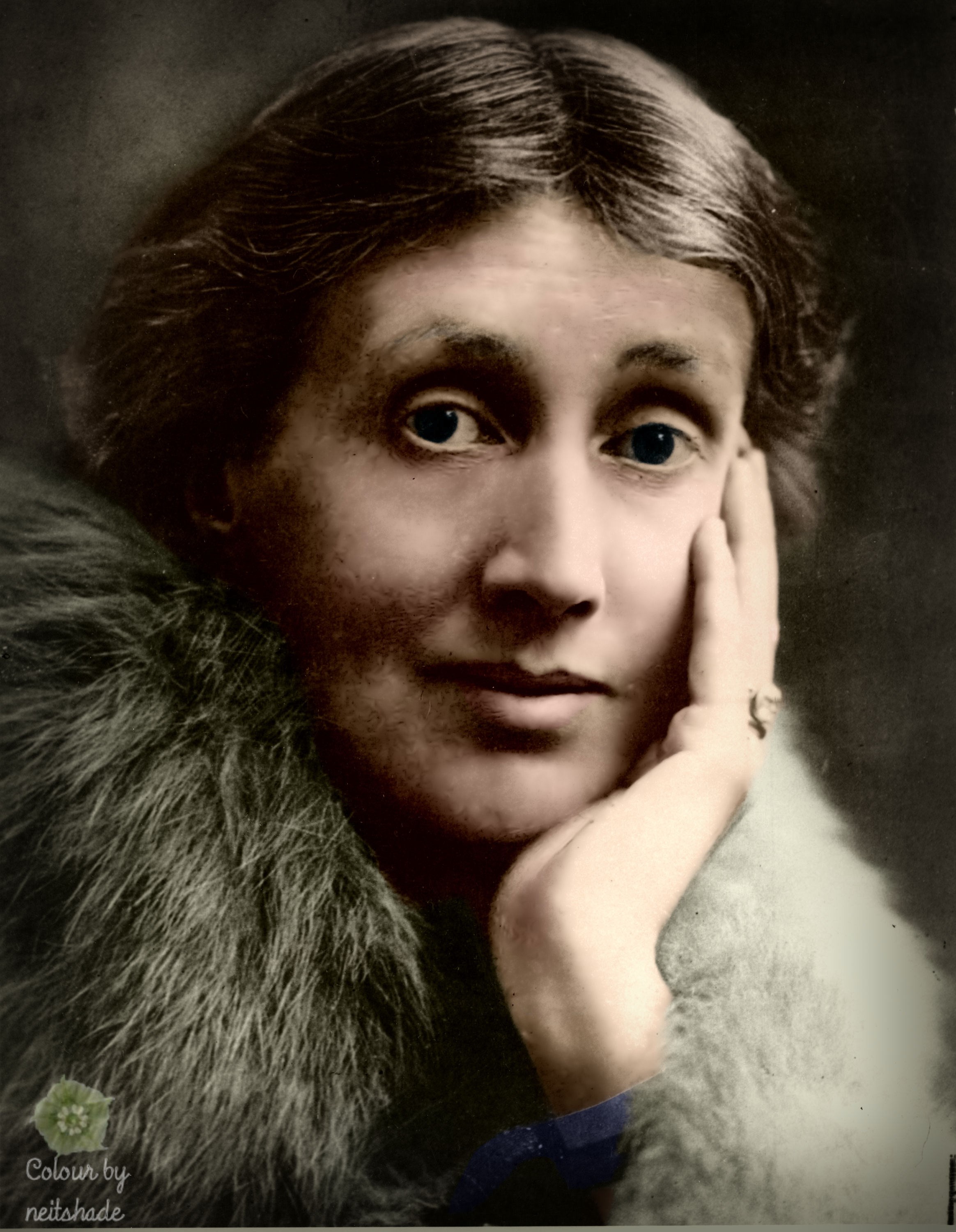
How I Learned to Stop Worrying and Embrace Virginia Woolf


I must admit, I was afraid of Virginia Woolf. I’m a little wary of modernism in general, partly from lack of exposure but mainly because the exposure I’ve had was off-putting. While there is a lot of experimenting in modernist texts, it feels to me that it comes from either deep ideological reasons I don’t feel or a sense of showing off. I’m happy with a confusing, experimental text like Tristram Shandy because it seems to come from a joy of playing. I never got much sense of joy from modernist stuff.


Then I read Ulysses. True, I didn’t follow all of it and I really disliked any time hanging with Stephen Dedalus but I love Leopold Bloom and began to see a very traditional novel buried in all the argy-bargy. When I read Middlemarch shortly afterwards, it seemed the more experimental novel in the way it positively encouraged the reader not to engage with the characters.


Having tackled that big beast, I was still nervous of Virginia Woolf’s shorter works. The little I knew of her life, with multiple suicide attempts that culminated in a successful one implied that they were going to be truly joyless pieces. What’s more, I’d heard she was significantly more intellectual and controlled than Joyce, denser and harder to follow. I had these images of impenetrable blocks of miserable text, cold and aloof. I found I was very wrong.


I took the plunge with To the Lighthouse and found myself enjoying it so much I quickly read The Waves and Mrs Dalloway with only a book in between them. As it stands, I’ve read all the Woolf in my own collection and may have to seek out more. Rather than cold and impersonal, I found these books to be rich in character, in specific, telling detail and full of humanity. I even found a few good jokes.


At first, I found reading To the Lighthouse a little like swimming through it, things can be a little murky and it does feel that we are too close to the characters and things around them, there isn’t the clear ‘top-down’ approach of other novels and it takes a little getting used to. That said, I didn’t get lost in the book. What I had anticipated as vague musings were actually very concrete feelings and thoughts that were directly relevant to the characters and the things they held dear or feared. This meant that those musings built up character but also that it was very easy to tell which character you were lingering in at that moment. The same was true of The Waves, which was very careful to orientate you in which character you were spending time with, and the characters were so clearly drawn that it would have been possible without this care. Mrs Dalloway was a breeze.


While I feel her technique is not a very accurate rendering of a momentary stream-of-consciousness, her way of reporting the characters shifting thoughts seemed to accurately convey how we think about thinking. The experience of life as Virginia Woolf paints it, is that we flick between all these different selves and it’s only to other people that we have consistent selves. There’s a lot about how people fail to connect, how little of those around them they actually see, even those they love. Yet, these works show moments of connection and communication - they are are imperfect but possible and worth so much for that. Though I do find her characters tend to worry about the lack of connection far more than most people do, they also think far too much about death (and a number of characters long for it.. and find it).


My biggest surprise was how much I loved her characters. Whether it was Bernard in The Waves, who feels his best self is when he’s mixed with others, a true extrovert; or whether it was Mrs Ramsay in To the Lighthouse, keeping her world together through almost imperceptible moments of empathy and connection. I felt for Mrs Dalloway, analysing her past and the possible missed opportunities or poor Rezia, watching her lover disappear in front of her. Where I was expecting novels of ideas, and to a degree found them, I was not expecting novels filled with realistic people.


As for jokes, I’m sure To the Lighthouse starts with one, The first two sentences are short ones where Mrs Ramsay declares that the next day’s trip to the lighthouse shall go ahead. We then have a page long sentence of her son James delighting in that news, how his happiness colours all the objects around him and how strong his emotions flow in him. The next is a very short sentence of his Mr Ramsay saying the weather won’t be good enough to go. It’s a short puncture to the long sentence and a comic reverse. There’s also the part in Mrs Dalloway where all the characters watch a royal car moving its way up The Mall, filled with patriotic sentiment before being distracted by a skywriter advertising toffee - it’s not a knee-slapper, but I thought a good comic moment.  


I found a depth and richness to these books that I haven’t found many other places, a real summation of life, a real evocation of those private moments in private mythology. They really capture a sense of being, a sense of friendship and the eternal struggle to make life count. I’m surprised to say it, but I found Virginia Woolf a life-affirming experience.


Wednesday, 16 June 2021

Video: Princess Caraboo - the biography, the biopic and the novel.

 I took my Caraboo reading to their natural conclusion, a look at the film and a comparison with them to the book versions. I also give a little outline of how I'd tell the story.