Wednesday, 16 March 2022

Horace Walpole's Selected Letters at the Dr Johnson's Reading Circle


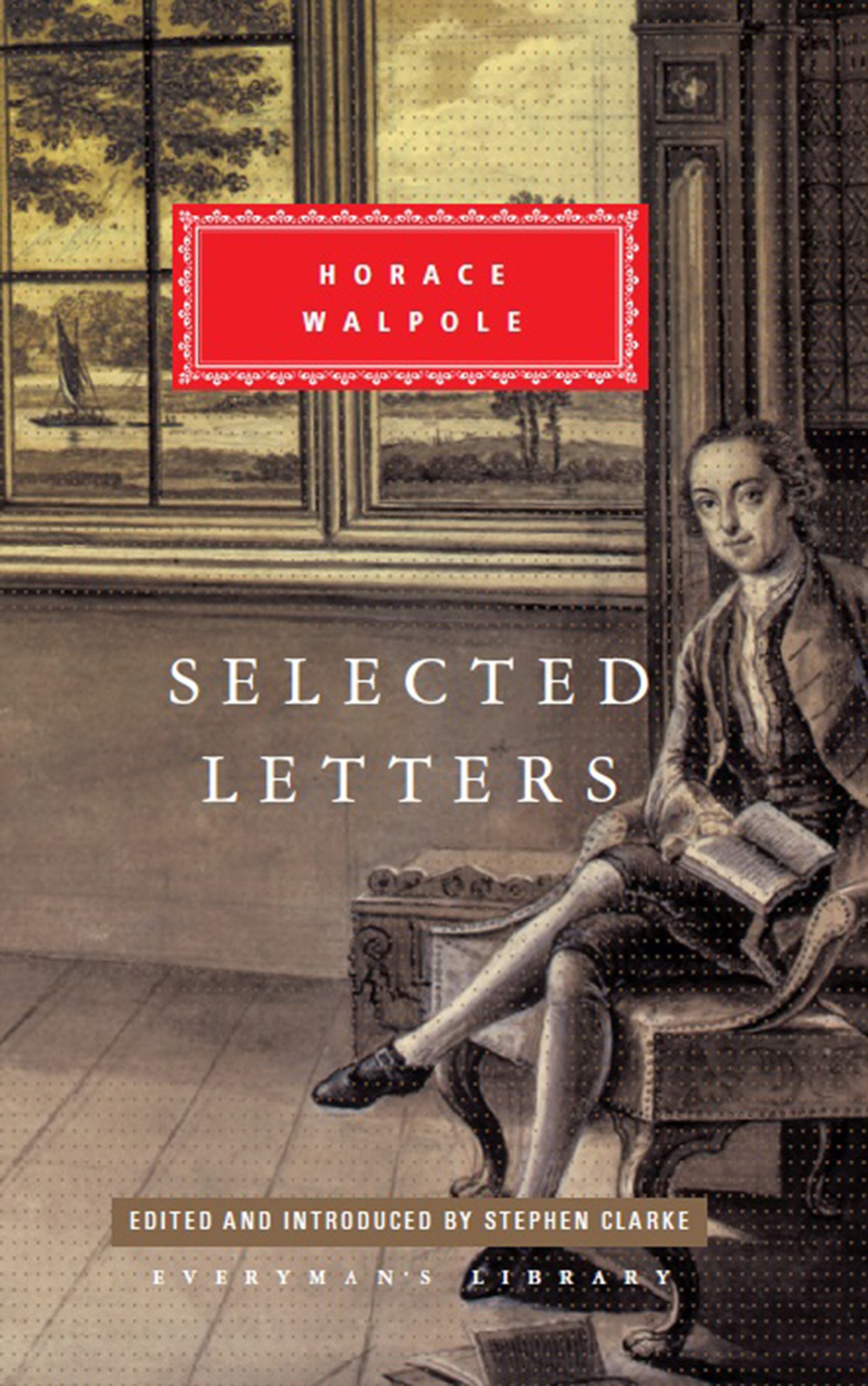
 The Dr Johnson Reading Circle bundled back into the house again to talk about Horace Walpole’s Selected Letters, edited by Stephen Clarke. Walpole could reasonably be described as a keen letter writer, with his full epistolary output running to forty-eight volumes. Even with a selection of only five percent of his total letters, this book is a six-hundred page beast. Luckily we had Peter Sabor, editor of Walpole’s Critical Heritage to help us navigate the life and letters.


Horace Walpole was the son of ‘Prime-Minister’ Robert Walpole and a member of parliament for twenty years. As well as socialising in political and court circles, he collected antiquities and created his own dream castle in Strawberry Hill where he published his own works, including The Castle of Otranto and the works of friends like the poet, Thomas Gray. He maintained a number of relationships by letter, including one to Horace Mann, a diplomat in Italy, for over forty years. The letters in the selection cover topics as diverse as the Gordon Riots, the death of George II, political upheaval during the American War of Independence, the joy of rooting around old churches, experiments in interior design and nights out at Vauxhall Gardens.


An interesting area of discussion was about how far the letters were written to be performance pieces and how far they were personal communications. Walpole certainly asked for some of his letters back to make copies and the more news-based ones have a journalistic quality that beg to be shared. It’s interesting to compare his descriptions of life in George III’s court to Frances Burney’s. She, being short sighted and deeply introspective dwells upon her own feelings of awkwardness but Walpole, much more at home in such settings can dwell on the details - he takes an especial pleasure in describing the women’s dresses and hats. Even in his more intimate letters he seems to be a man constructing himself by words, and it’s really interesting to see how his image of himself changes as he gets older. 


He begins as the Eton schoolboy, sporting the nickname ‘Tydeus’, a brain-eating character from Greek mythology. As the son of the British Prime-Minister, he brashly took his Grand Tour with schoolfriend Gray until they had a falling out. When he grew older, he seemed to have mellowed, making jokes about being a mediocrity, dabbling in his hobbies (if starting a craze for Gothic architecture, giving birth to Gothic literature and accumulating a sizeable collection of arts and antiquities counts as dabbling) and attending too many social functions. Leaving middle-age, many of his letters talk about how shocking it is that someone of his esteemed years can keep the extreme hours of the partying set, before reaching old age and hobbling around with gout. Throughout it all, he maintains a playful, charming, and straightforward demeanour, whether it’s talking issues of national importance or about bickering in the corridors of power.


It’s amazing that he maintained so many relationships for so many years. While he clearly had a sharp tongue and was prepared to hold a grudge along political lines, once Horace Walpole was a friend, he was one for life. His letters are adapted to his recipients. Those to Hannah Moore are full of compliments mixed with over-the-top references to her piety and saintliness. George Montagu was given society news and court gossip, though when he lazily didn’t reply to his letters the correspondence drifted to the Lady Ossory. Horace Mann received personalised newspapers of British political life, while Revd Cole had news about antiquities and new methods to relieve gout. The most personal letters probably went to Henry Conway, whom Walpole said he loved and offered significant financial aid to at various points of his life.


Of interest to the Johnson Reading Circle was Walpole’s relationship to Johnson himself, or rather, his lack of it. Although they certainly moved in different circles; Walpole was located around court and parliament in the West of London, while Johnson was located in the City, they had many friends in common. Not only Hannah Moore, a frequent correspondent of Walpole, but Topham Beauclerk, a member of The Club whose wife gave her name to the conical tower in Strawberry Hill. The two, however, did not write and possibly never even spoke and if they did, would probably not have hit it off. Walpole regarded Johnson’s writing as ‘teeth breaking’, and while they agreed that slavery was an evil, they would have clashed on almost any other political discussion, particularly the American Revolutionary War, which Walpole saw as a fair reaction to Britain’s heavy-handed treatment, Johnson saw as a hypocritical ‘yelp’ for liberty.


The Reading Circle could have spent many more hours discussing the nuances of Walpole within his letters, and the sheer variety of subject and incident but time was ticking and the local pizza place is on reduced hours, so we had to break our meeting, still brimming with wine and thoughts. It was a delight to be in the house, a delight to have a number of new members, a delight to see each other in person and a delight spend some time with Horace Walpole. 


Wednesday, 9 March 2022

Review: The Secret History of Mama Oello


 My copy of Eliza Haywood’s The Adventures of Eovaai contained a number of extra texts, including an anonymous novella from 1733 called The Secret History of Mama Oello. The titular Mama Oello is not a mama in any sense, she’s a Peruvian princess who is beset by a corrupt politician to marry an hideous man for political reasons rather than the one she’s given her heart to. The book finishes before the problem is resolved but promises more which never came.


Like The Adventures of Eovaai, The Secret History of Mama Oello is another disguised history, using a very thinly drawn veil of Peruvian-ness to hide itself from libel laws much as Samuel Johnson’s parliamentary reports were pitched as the reports of a Lilliputian parliament, rather than the British one. Published in a separate volume was Loque Yapanqui, which promised to be a key to unravelling this text.


The plot is simple, Mama Oella is a princess, the daughter of the chief Manco Capec who is in love with an unnamed Cacique, or Lord. However, his advisors (or Curacas), especially the sly and conniving Curaca Robilda force the chief to make her marry Atabalipa, the prince of Quito. This prince has a reputation for being a decent-enough person but he is deformed and ugly. What’s more, he doesn’t seem that into it, deigning to send a proxy to marry her and even being slow about that. This gives her the chance to snatch stolen moments with her favourite in a garden and to exchange love poems whilst pining for her fate.  At the end of the text, she hears that Atabalipa himself is on the way to marry her and should land within a month and she curses Curaca Robilda as the ‘Author of he Misfortunes’.


It’s not hard to guess who Curaca Robilda is, the corrupt advisor who twist the King and Queen to his will and lines his own pockets, he’s our old friend Robert Walpole. He’s not a wizard in this book and he turns no-one into a monkey, indeed he’s a character the reader barely meets but who has tendrils everywhere and power over everyone.


Mama Oella herself is Anne, the daughter of George I who was first proposed as wife to Louis XV of France but issues of religion complicated things and she was eventually married to William of Orange, who suffered from a spinal deformity. The suggestion in this book is that Anne was already in love with another (suggested in the key as Lord Carmichael, the first Earl of Hyndford) and that they continued a connection as the preparations for the wedding dragged on. It could be that is book is a hot piece of secret knowledge, or merely baseless court gossip. Certainly, the writer wasn’t attached enough to their convictions to carry on the work and portray the wedding. Nor is there any other source suggesting a relationship between Anne and Lord Carmichael. Indeed, Anne is reported to be very keen on getting married after her first near miss with Louis XV, declaring to her brother she’d be happy to marry a baboon than not marry at all. By most accounts the wedding was a success, with a Handel hymn using lyrics written by Anne herself. Though not liked by the Dutch, it seems Anne had a pretty good marriage as well, with warm letters existing between her and her husband. If there is a basis of truth in this story, it was a passing fancy rather than an eternal love.


This is a very badly written book, or at least a hastily written one. It falls easily into melodramatic cliché, full of ‘deluges’ of tears and cries of ‘oh ye Gods’. The book also features some torturous metaphors, particularly one about the Cacique and Mama Oello’s relationship being in calm still waters but now the ‘storm clouds rage’. At another point, Mama Oello declares she’d rather have been a shepherdess than princess. My personal favourite moment in the book is when the Cacique sees her after a while and declares his love by, “seizing her fair hand and throwing himself down at her feet”, which put me in mind of a judo move more than anything else. Also, the conceit that the book is taking place in Peru is only held up by the made-up names, job titles and references to God as Pacha Camac. It does lead to a very funny line referencing the navies of the English and the Dutch as those ‘terrible canoes’.


This book is ultimately a rushed job, hurried out anonymously to capitalise on a scandal that probably didn’t even take place - in other words, it’s a very typical Grub Street production and I’m under no delusion that I’d have been writing anything better were I writing at the time.


Wednesday, 2 March 2022

Review: The Adventures of Eovaai by Eliza Haywood


 The Adventures of Eovaai immediately caught my attention by being one of the stranger titled works of one of my favourite eighteenth century authors, Eliza Haywood, someone who writes with a strange, over the top quality in itself. It’s a weird blend of fantasy, political satire and amatory novel which I found less consistently enjoyable than other works but it had its moments.


The book was initially published anonymously despite Haywood being a big name, presumably to aid the pretence that this is the work of a translator, bringing a work that has been long studied in China and which took place before the Garden of Eden. The second edition, which came out four years later, has her name on the cover. It may also be that publishing this book anonymously was a way to avoid the consequences of a story which casts the famously litigious ‘prime minister’ of the country as the villain.


Eovaai is a princess who has been raised to be a fair and compassionate ruler. When her father dies, he gives her a magic jewel which keeps both the kingdom and ruler safe. The jewel is kept safe by being set in a necklace but interested in an inscription on the other side, she proses it out where it is promptly stolen by a bird. Being the Queen who lost the jewel, her authority is diminished and the country descends into civil war, not only that but she is not personally protected and is easily taken by the wizard Ochihatou.


If the fact that Ochihatou was the sole/prime minister of a neighbouring country doesn’t ring Robert Walpole alarms, the fact that the first sentence about him describes him as ‘The Great Man’ should. The word ‘great’ was long established as describing Walpole by this point and would be the whole crux of Fielding’s later novel Jonathan Wild, in which the main joke is that greatness is the enemy of goodness. Haywood, not the subtlest of writers, makes her Walpole stand-in, Ochihatou, truly odious. He is ugly, bent and deformed but uses his nefarious magic to create what Doctor Who would describe as a perception filter around him. Using this borrowed stateliness and charm he worms into the King of Hyptofa’s court and bewitches him with a magic feather. Thus in power he lines his own pockets with unfair taxes, creates a standing army to strong-arm opponents and fills all key roles with family and sycophants - all things Walpole’s enemies accused him of. He even almost manages to seduce Eovaai but is interrupted by court business.


At this point the book is interrupted by the story of Yximilla, and here I think it becomes very clear how much fun Haywood is having naming her distant countries and people. Yximilla is a queen in love with the noble Yamatalallabec (the best name in the book) but the evil Boscomon, king of a small principality, has teamed up with the ferocious queen Tygrinonniple to invade Yximilla’s country of Ginksy, force her to marry him and rule together. Yximilla calls on Osiphronoropho, the King of Fayoul to help her but he is too far away to launch an immediate campaign. From this paragraph alone, I think it’s clear how the names, while fun really do send the reader’s eyes swimming and the complex war/political story that plays out with them in not helped by that fact. It’s not a happy ending for Yximilla, she is captured, drugged and dragged to the altar where she is forced to marry - ending any hope for her and ending the little interlude.


Ochichatou has been called to court to advise on what his country should do about the situation and when he returns, Eovaai has escaped by being whisked away by a good spirit. She finds herself still in the land of Hypotofa and sees how ruined it has become by Ochihatou’s bad management. Then she enters the stronghold of the resistance and hears a long speech by the leader of the patriots. Not so incidentally, the Patriots were the name the anti-Walpole resistance gave themselves and the speech is essentially an article by their leader, Bolingbroke. She escapes to the safer country of Oozof, which is a republic and is ranted at again, this time about the benefits of republics over monarchies. These parts were the draggier parts of the novel, being largely undigested political speeches.


However, the action ramps up again after Eovaai is kidnapped from Oozof and brought back to Ochihatou’s love pad. There she sees a monkey who hands her a tablet with some words on, these words turn her into a human and we hear her story. The monkey used to be a woman called Atamadoul and she was the maid of a beautiful princess that Ochihatou wanted to marry. Unfortunately for the Big O, the princesses parents wouldn’t allow it but Atamadoul the maid was in love and disguised herself as the princess to make a midnight flit. While disguised Ochihatou put a ring on her finger which would magically force her to lust over him constantly and away they flew. However, when they got back to Ochihatou’s love pad, he realised that she was someone else and was so furious he changed her into a monkey. Even crueller, he chained her to the wall of his love pad so she would be forced to watch him having sex with other people, the ring of lust making it even more torture to see. Most cruelly, he occasionally torments her with a horny baboon who he allows to almost rape her and says he’ll let it go all the way one day. Utterly horrifying and peculiar, you never know where you’ll end up with when Eliza Haywood goes full excess. Atamadoul has a plan, when Ochihatou returns to have his evil way, request the light is off, place her in human mode and let her take Eovaai’s place on the bed. They carry out this plan, of course Eovaai watches but then the light is turned on and Ochihatou sees the trick. Poor Atamadoul is turned into a rat this time and we don’t see her again.


However, the light has been turned on because the patriots are storming his house and he grabs Eovaai and runs off to a safe country with a sob tale about the evil patriots trying to kill their king. This ruse lasts a little while but the wizard is rumbled again and decides to whisk Eovaai back to her home country where he can marry her and run her land for his pleasure and gain. Weirdly, despite the magical flying crystals, the chariots pulled by doves and antelopes, Ochihatou says they only way they can get back is by stripping naked to be changed into birds. This means that when they land if Eovaai’s country they are naked and Ochihatou ties her to a tree by her hair and grabs some stinging nettles to torture her into accepting him.


This is when a hunk comes in and saves her. The hunk has also saved the country from the civil war and is acting as Protector. They fall instantly in love but there’s a hitch, he is only allowed to love the woman who has the case for a sacred jewel he’s found. To no reader’s surprise it turns out to be the sacred jewel from the beginning of the book and Eovaai has the necklace to put it in. They marry, the man is also the prince of Hypotofa so the two countries unite and have a great future. Ochihatou has run into a tree and killed himself by this point.


So, there we have it. Truly one of the stranger works of fiction knocking about and in parts great fun for its shocking nastiness, it’s silly naming and a fairy tale ending. It also has that boring run in the middle though. As such, this is probably the weakest of Eliza Haywood’s books that I have read so far but it is still worth a read just to go on the peculiar and improbable journey.


The introduction makes a lot of points about the footnotes that Haywood uses in the book. How they are a cacophony of voices, from the supposed translator of the book, especially his own views the centuries of scholars who have commentated on the book in China. The translator has a  problem with a particular commentator who interprets the events in the most misogynistic ways and corrects him on a number of points. Although the footnotes were a fun element, I feel that Eliza Haywood could have used them more playfully and added more jokes and tangents, as they were used in Pope’s Dunciad. They weren’t an un-fun addition, but there could have been more.


Wednesday, 23 February 2022

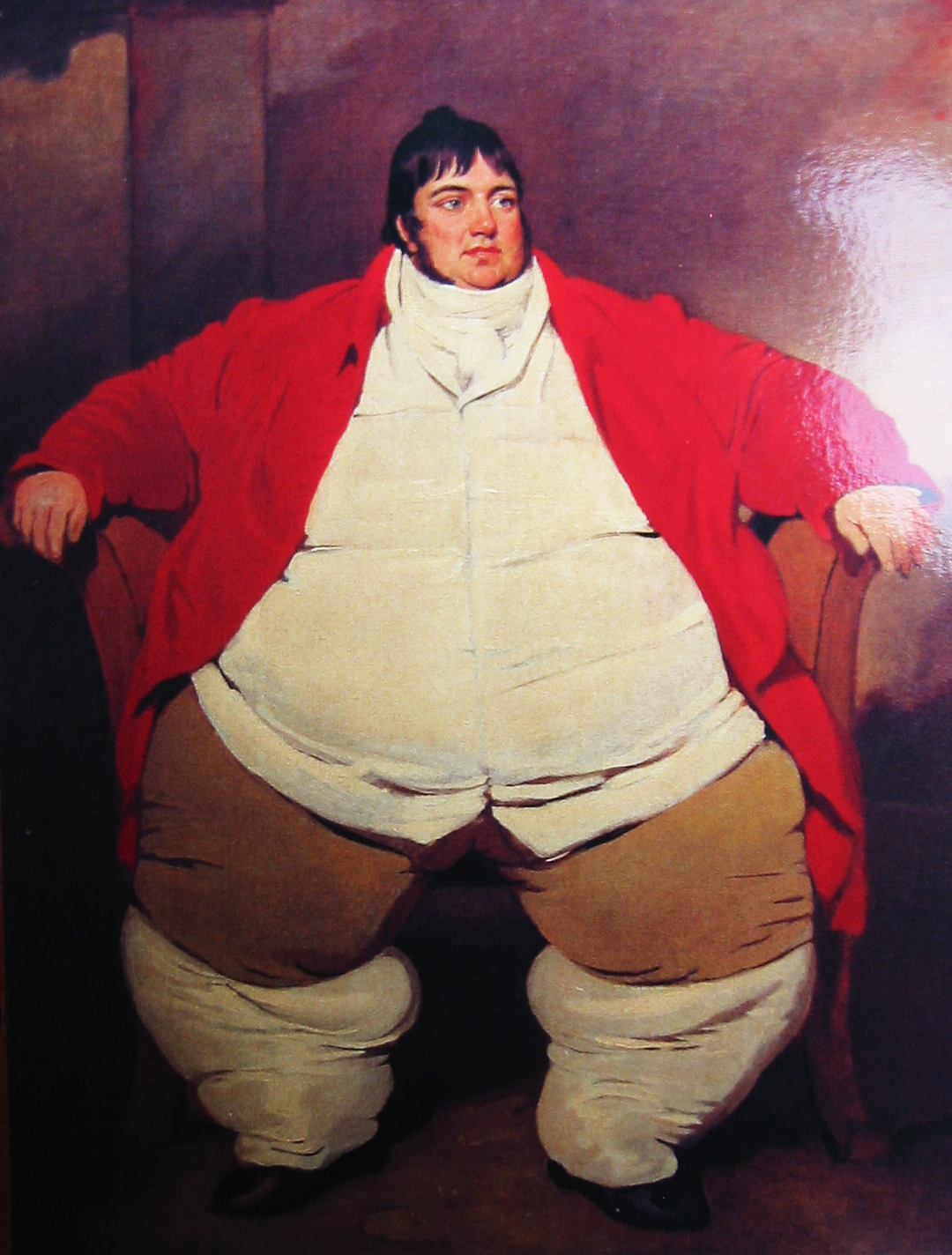
Daniel Lambert the famous fat man.

 A few years ago my parents moved to Stamford, a pretty stone town in the East Midlands. Like a lot of that area, I was surprised how important Stamford almost was. Once an important walled city that made cloth that was famous as far as Venice, it’s now rather unknown.The could have put its wool-riches into industry but the Lord Burlington didn’t want railways or canals near the place. It was touted as the third place to have a university town after Oxford and Cambridge but Durham beat it to it. As such the people of Stamford have to be happy with (and are proud of) living in a pretty little town best known as a go-to location for period dramas.


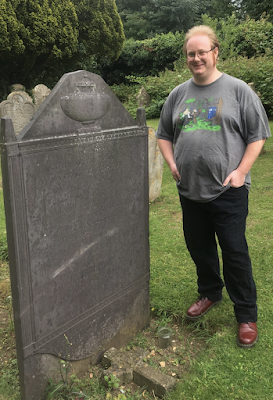
While there are a number of interesting things about the town, like a running of a bull held there for hundreds of years, during my visit in 2020, not much was open but church graveyards. One of the graves is for Daniel Lambert, here I am at it.


Why was his grave particularly noted on the ‘visit Stamford’ notice-boards? His grave explains.


“He measured three Feet one Inch round the Leg
nine Feet four Inches round the Body
and weighed
Fifty two Stone eleven Pounds!”


You need to be a rather large person for your measurements to be celebrated on your gravestone.


Born the son of Leicester gaol’s keeper, Daniel was into sports and outdoor pursuits. Quite rarely for his time, he learnt to swim and gave swimming lessons to other children. He also liked hunting, horse-racing and breeding dogs for sporty pursuits (most of them involving in the death of some animal). He worked as an engraver for a while but ended up working with his dad in the prison, later taking over his dad’s job. It was while doing this largely sedentary job that he started to gain weight. He was reputedly very well liked in his position, being considered honest and kind to those under his watch. He also carried on dog breeding, reportedly punching a dancing-bear in the head to rescue one of his prize dogs from the bear’s paws.


However, when the gaol was closed, he was made redundant. Because of his good standing, he was given £50 a year pension and he still made money from his dogs but he began to grew more reclusive and to gain in weight. Soon, his weight was famous and people game to look at him. He was so discomforted by this, that he didn’t leave the house. That was until his finances forced him to.


He had a specially built coach made, rented rooms in Piccadilly in London and charged people a shilling to meet him. Then he and his guests would chat, often about dogs, races and other sports, though some guests would ask him questions about his weight. When one person asked him how much his large coat cost, Daniel told him that whatever it was, he’d be happy to do without the material brought by the enquirer’s shilling. Soon the shy, retiring Daniel Lambert was a media sensation and taking his private showings on tour around the country. It has to be asked (and has been by John Woolf in his book The Wonders) how this shy man became so keen to get himself ‘out there’ that he took himself on tours and crowd funded portraits of himself to be engraved and sold. It’s also strange that being forced against his deepest desires to exhibit himself out of lack of money, he had enough for the outlay of a purpose built carriage and lodgings in Piccadilly. 


From then on, Daniel Lambert alternated touring and pursuing his sporting interests. He developed his dog breeding and found a lot of success in that. Often he’d mix business and pleasure and it was at the end of a tour when he visited Stamford to watch the races and make some money showing himself off. It may have even been his planned last engagement as he’d made enough money to live comfortably off. The morning of the race he woke up, set to shaving and experienced trouble breathing. He died ten minutes later.


His funeral was a huge affair in Stamford, with crowds gathered to watch the specially-made xxxxl coffin being taken to the specially enlarged grave. He wasn’t the fattest man on record for long, an American soon pipped him to that post but he is still a local legend and even has a beer named after him. 


You could do worse.


Wednesday, 16 February 2022

My Month of Time-Travel Fiction


As I pulled out books I fancied reading in the year ahead, I found myself piling them up into discreet groups with vague but persistent thematic similarities. One of these piles consisted of novels related to time-travel and January being the month of new beginnings, time-travel seemed appropriate. In all, I read eight books that featured time-travel somewhere in the blurb and it was interesting to see how a concept can be spun in many different directions and came to a few interesting conclusions.


First of all, it’s interesting how rarely time-travel is used for its own sake. Only one of the eight books was really about time-travel. The Society of Time by John Brunner told the story of a world in which the Great Armada had succeeded and the future was based on the traditions of Imperial Spain. As such, it is now 1988 and the world is stagnated technologically and socially. There hasn’t been an agricultural or industrial revolution, slavery is still common and women are also property – but there is time-travel. In this case, the discovery was made by a priest and functions by a simple machine of alternating metal pieces. This discovery is regulated by The Society of Time, a religious order who function as both time police and pious monks. I found the mixture of religion and time travel particularly interesting as there’s a notion that God has ordained time to be as it is and going back and interfering is messing with the divine plan. 


This means when an exquisite piece of Peruvian art looks too new, it’s an offence against the church as well as time. It’s important that the item is returned in a way that vibes with history as it has already been played out. Things are even trickier when renegade members of the society attempt to create the perfect killers and things go a little wrong. Finally, it all goes wrong and history is changed. The notion is that any reality with time-travel in it is too unstable, too vulnerable to people going back to have a little tinker that it will eventually become one without time-travel, that people will stop going and changing things only when the option is no longer available. This means poor Don Miguel, a decent and intelligent if not particularly fleshed out protagonist, is stranded in a world completely different to any he knows – ours. The seemingly alternate reality world isn’t at all, it’s our world as it originally was before people mucked about with it.


While The Society of Time showed time-travel as having huge implications, even reality warping possibilities, the rest of the books were more content with using time-travel to explore personal stakes. Only HG Wells’s OG time-travel story, The Time Machine travelled into the future. The Time-traveller introduces the idea of time as a fourth dimension, and like the ones of height, length and width can be travelled in. So he does, taking his machine to the far, far, distant future.


What I found most interesting about the book is how the Time-traveller puts together his observations to form theories. He notices that there are no private houses, only large communal dwelling places and decides it’s the result of a form of communism. Then, watching the innocent future people, the Eloi, frolic around without any animals or even stinging plants, he concludes that he is seeing humanity after their peak - that he has stumbled into a world post-utopia where humanity solved all life’s problems and as a result are devolving. I really liked this idea of post-utopia, that it’s only through having problems to solve that humanity reaches towards its best self, the Eloi are so blasé that they accept one of their number drowning without even trying to help. 


It’s the discovery of the Morlocks, the albino, underground troglodytes that changes his views, there was only utopia for some. Seeing they come from underground, hearing machinery coming from beneath and seeing how the Eloi are clothed and fed without any effort on their part, he now concludes that the Eloi are the idle class and the Morlocks a working class mutated to serve them… However, when he travels under the ground and sees a Morlock feast, he realises the truth, that the (literal) underclass are (literally) eating those above them. It’s this parable, this warning that the book is really about and time travel was our way of getting there.


Where Were You, Robert by Hans Magnus Enzensberger also uses time-travel to explore other ideas. Robert is a teenager who finds that when he stares at an image and rubs his eyes, he falls into it and the time it was created. First he falls into a documentary about Soviet Siberia and finds himself there, then he goes to the cinema and falls into its filming in Australia, then an old photo, even sketches. A particular problem for Robert is that he can only fall backwards in time as images are always created before the time he is in. Another problem is acclimatising and adjusting to the different places and times he finds himself in. 


At first, I thought the book was about that, about the ability for people to adapt and create new lives for themselves, Robert has to do it time and again. However, as the book continued, I began to realise it was about the strain of having to do that. The book takes place over two years in Robert’s personal timeline, he is changing in himself. Not only that but the need to create a new life in each new time and place means he becomes many different people; from spy, to painter, to brigand. How can Robert maintain his sense of self and what is a self when it can’t even be charted along a timeline? The book ends with Robert back in his own timeline and at the age he left, yet he’s had two years of intense development. There’s an odd, lingering queasiness to the way he’ll have to suppress the experiences he’s had and pretend to be the person he was which really lingers. After all this, Robert will never be the same Robert again. (Besides the fact that there isn’t any reliable way of knowing he won’t find himself shooting off into time again).


Another character who finds himself lost in time is Ibn Shalaby in Khairy Shalaby’s The Time-Travels of the Man Who Sold Pickles and Sweets. He has a bad case of the Billy Pilgrim’s, finding himself unstuck in time.  As he wanders Cairo, he finds himself slipping into moments of the city’s history, from its founding to various rebellions and riots.  He seems to have little control, barrelling into different times and situations. Sometimes he can sense where he’s going, occasionally seeing the future as layers above him, like a layers in archeology, going as far as tickling the feet of the future people walking above him. He’s not the only one, there are historians who wander in time but they seem to have more control than Shalaby. It’s surprising how many non-time-travellers accept the arrival of Shalaby and have met other time-travellers before - indeed, the whole essence and mechanics of time-travel are rather fuzzy.


Naturally they are fuzzy, like most of the time-travel books I’ve read, the travel is a tool to explore other elements. This book uses time-travel to explore ideas of psycho-geography and to create a picture of Cairo through the ages and the people who walked through it. Interestingly, the picture of the Egyptian people, specifically the ‘Brothers of Shalaby’, the vendors and kiosk-people, are downtrodden followers of every herd, invasion and coup. He traces this as a result of them being the serf class in the days of the Pharaohs and that this inherent servility is the secret of their survival through centuries of political torment.  Beside the Ocean of Time by George Mackay Brown also sought to create this comprehensive overview of one place through time but the blurb lied, the main character didn’t travel in time at all, he was just someone daydreaming of other periods.


Finally, there were the books were time-travel was used to solve specific problems. The children in Dyan Sheldon’s The Difficult Job of Keeping Time had to go into the Victorian era and dodge some devious adults to find the deeds of a church which held time together. Al Choudrey in Ross Welford’s Time Travelling with a Hamster and Huck in Gillian Avery’s Huck and Her Time Machine went back to solve family problems.


Huck’s problem is that her family are known screw-ups, famous in their town for outlandish behaviour. She takes members of her family back in time to teach them a lesson but accidentally (and I’m not sure how) has them possessed by previous ancestors who turn out to be just as bad as the ones she lived with. The message being one of accepting your family despite their flaws. This is a strange book in general, the time machine (which is actual the one that HG Wells’s time-traveller used) is found in a dump by Huck’s brother, Barty. It’s actually Barty’s point of view we remain in and although Huck goes back in time, her brother, and so the reader, never does. There’s also a lot of fudging over the end over whether the story we just read actually happened or not, I found it quite an unsatisfying book.


Far more satisfying is Time Travelling with a Hamster, where Al is given a letter that his dead father had left him to open on his twelfth birthday. It turns out his father had built a time machine and wants Al to use it to prevent an accident which would later turn out to kill him. The time machine in this book is a mathematical code which runs on a laptop and displaces a connected object, in this case an old bath, in space-time. There’s a lot of fun in the book about the machine being such an unwieldy object, this is further complicated that it is located in a secret basement in their old house and Al has to repeatedly break into the house to use it.


This was also the only book other than The Society of Time which had actual time-travel rules, something I was expecting a lot more of. HG Wells’s protagonist goes to the future which is less paradox heavy, Ibn Shalaby and Robert interact with the past but don’t seem to change anything in particular, Huck’s story may or may not have happened and the children in The Difficult Job of Keeping Time go on their quest to change one thing and there’s no particular consequence to their other actions. The main rule in Time Travelling with a Hamster is that a person can’t travel to where they already are, a no doppelgänger rule. However, his attempt to save his dad does have a horrifying effect, in that he (and the hamster, Alan Shearer) accidentally kill his dad at the age of eight. Rather than wipe Al out of existence it leads him back to a present where his Dad is still dead but his mum has no idea who he is. It’s a scene which taps into a really strong childhood fear of having your parents not recognise you. I leave it to any reader to see how that gets cleaned up.


My month of time-travel books was a really interesting little exercise which made me realise how peripheral the time-travel is to so many stories about it and also made me realise how many stories using this device are still out there, many unwritten.


Wednesday, 9 February 2022

'The Times' by Elizabeth Griffith at the Dr Johnson Reading Circle (Part Three, Final)


Dr Johnson’s Reading Circle came back to their screens to see how The Times by Elizabeth Griffiths plays out. At the end of Act 4 we were left with marital confusion, imminent financial ruin, a big party with extravagant costumes and an obviously significant pair of earrings that have passed through many hands. I predicted a dramatic ending.


Act 5 starts with the servant Forward setting up for a night of gaming at the Woodleys’. As usual, he’s out to grab what he can, earmarking the expensive candles, the nice cards (not the bent ones covered in snuff) and even the specialised card tables for his own use. The Woodleys walk in to finalise the details. They are sweet together, holding hands and giving each other little compliments. After confusion over who Sir William is trying to marry Louisa to, Mr Woodley finally admits to his wife that they are seriously short of funds. He’s expecting Lady Mary to react badly, the audience is expecting her to react badly but instead she says that she’d happily live in Dorset(shire) without a full complement of servants as long as she can still be with Mr Woodley. He’s delighted that she’s taken the news so well, his fear of telling her has been his main conflict in the play and he leaves happily. Then she makes the longest speech, where she even quotes Hamlet, and declares that she’s happy to give up all the glitz for her true love but she will miss society and the friendship of people like Mrs Bromley.


Then follow a couple of short scenes, one where Woodley and Colonel Mountfort are annoyed that they can’t get in contact with Louisa, and one where Louisa is talking with Sir William, which is why she can’t contact the other two. As usual Sir William is not listening to anyone else and is sympathetically trying to tell her that her marriage to Belford (who she doesn’t wish to marry) is off while she’s trying to tell him about the Woodleys’ decision to go to the country.


Then follows the main scene the play has been building towards, an evening of various card games at the Woodleys. The room has been set so that different games occur in different areas and the conversations of the whist, loo and quadrille players interject, overlay and interact with the conversations had by the main cast. It’s a pretty dynamic piece of staging and we imagined there was probably a lot of business happening that isn’t in the stage directions. Were we more knowledgeable of eighteenth century card games and the language that went with them, all the talk of pams, loos, monsters and beasts may have added to the meaning. As such, they added to the texture.


Early on in the scene, Lady Mary tells Mrs Bromley of her decision to move to their country house and invites her to visit but she is rebuffed and starts to look at Mrs Bromley differently. Then she sees that Mrs Bromley is wearing her earrings from the beginning of the play which she thought were being added to but were actually sold to Mr Bromley. When Mrs Bromley rudely gloats that they are hers now as she actually has the money to pay for them, Lady Mary is repelled. Then Mrs Bromley sits down to play loo and is immediately found cheating. She looks to Lady Mary for support but finding none, storms out. Then there’s a message that bailiffs have come, sent by Mr Bromley, and the room clears, everyone owing something to somebody.


Louisa wakes Sir William up to help, the bailiffs having been shooed away by Colonel Mountfort and his money. William blusters and bluffs, saying how the Woodleys deserve prison for their spendthrift ways but is clearly pleased that this hasn’t happened because of the good Colonel, who actually he rather likes now and has probably always liked, even if he argued with him in the previous act. They come together and Sir William, pleased by the Colonel, allows him to marry Louisa. Also pleased with Lady Mary’s decision to move to the country, he decides to settle the Woodleys’ debts and give them the house so they can come to London for the season. He talks over everyone’s attempts to thank him and the play is over.


It must be said, The Times ends on something of an anti-climax. While it was clear that Sir William had the power and means to solve everyone’s problems, it seemed there needed to be rather more happening to bring him round. Set up as pig-headed and blinkered, unable to hear anyone’s views but his own, he changes his mind considerably at the end of the play. Similarly, Lady Mary, who seemed to be completely immersed in commercialism suddenly decides that she loves her husband more than any of the fripperies she had been spending thousands of pounds on. While Mrs Bromley was exposed as a card cheat and hissed out of the room, Mr Bromley isn’t on stage in the last act and his comeuppance is a hasty line about being imprisoned for tampering with his bills. The beginning of the play teased a big masquerade, where Lady Mary would be dressed as a Sultan, dripping in jewels, this never happened. And while the earrings did play a role in Lady Mary’s opinion of Mrs Bromley, they didn’t have the huge Desdemona’s Handkerchief level significance that the play seemed to have been building to.


There were fun characters and good set-ups but it felt like the play hadn’t given them enough to do or escalated into an intractable ball of confusion to be sorted out at the end. Whereas other eighteenth-century comedies we have read together needed a flow-chart to understand, The Times felt a little rushed and easy. That said, it did have the dynamic card table scene, the joy of Sir William’s bluster, Lady Mary’s easy spending and the Bromley’s fun two-facedness. It was a fun play but just a little undercooked.


Part One here.

Part Two here.


Wednesday, 2 February 2022

'The Times' by Elizabeth Griffith at the Dr Johnson Reading Circle (Part Two)


On Tuesday the Dr Johnson Reading Circle sat down at their computers again to read The Times by Elizabeth Griffith. The first two acts had mostly dealt with setting up the characters, setting and theme. Principally we were introduced to Mr Woodley and his wife Lady Mary who are seriously low on funds, though Mary doesn’t know it. Their situation is not helped by Mr and Mrs Bromley who pressure the couple to spend more. The solution: make up with their rich, argumentative uncle William - but that doesn’t look very likely. 


Now we’re all set up, it’s time for the fun to begin and in this instalment there’s lots to be had with Lady Mary’s ignorance of her position, Sir William’s bull-like attempts at match-making and a real exposure of the Bromleys’ two-facedness. A lot of these two acts are taken up by three characters I didn’t fully introduce in the first section: Louisa, related to the Woodleys and of marrying age; Counsellor Belford, Sir William’s friend who is not of marrying age and Colonel Mountfort, who loves Louisa and is loved back. 


Sir William has decided his friend Belford and his relative Louisa would make a really good couple. He hasn’t asked them their opinions at all, nor does he consider the fact that Belford is old enough to be her father a real drawback. As far as he is concerned, they are both good people (i.e they do as he says) and so are a perfect match. With his customary tact, he brings up the notion of marriage with Belford, leading his hints closer to his proposed match and becoming increasingly peeved that he is not understood until he has spell out the idea in full. Like many things, the proposed marriage seems self-evident to Sir William, Belford said that Louisa would make someone a happy man and doesn’t Belford want to be one? When Belford suggests that maybe his being forty-eight and her eighteen might be a problem, Sir William simply tells him not to reveal his age. The more Belford tries to tell Sir William that although he is flattered by the suggestion, he doesn’t think it very fair on Louisa, the more Sir William takes it to mean that he accepts it. It’s a great scene, with one character railroading the other into accepting a hand in marriage that the woman in question hasn’t even offered.


In the next scene it is Louisa who is forced into accepting the proposal and Sir William leaves happy with his machinations for the day. She and her prospective husband meet and, without the influence of Sir William, manage to talk sensibly about their strange predicament. It’s clear that Belford wouldn’t mind being Louisa’s husband but doesn’t want to cause her distress and is content to be her ‘old friend’ - with an emphasis on old. He’ll even put in a good word for Colonel Mountfort.


Louisa appears to have two guardians, the older Sir William and the younger Mr Woodley. Colonel Mountfort succeeds in getting Mr Woodley’s permission to marry and is even the first to hear of Mr Woodley’s financial troubles. Now he has to get the elder. Sir William is in a good mood at first but certainly isn’t when the Colonel asks to marry Louisa. It seems clear to Sir William, the Colonel is just a soldier, he can get any woman so he should leave his Louisa alone. The two argue and Colonel Mountfort leaves. Then Belford comes in to reject the offer of Louisa’s hand and those two argue and Sir William storms out. For now, Louisa’s fate is uncertain (well, it’s not, the play’s a comedy, of course the lovers will get together, but how?)


Interspersed with these scenes, we see more of Lady Mary and Mrs Bromley, as well as Mr Woodley and Mr Bromley. The Bromleys are given more asides than they were in earlier scenes, allowing them to show their untrustworthiness more explicitly. Both have been encouraging their Woodley to spent exorbitant amounts of money but now Mr Bromley finds out the Woodleys are running out of it, he realizes it’s time to make one last hit before they move on to someone else.

In a little aside, I find it interesting that Mr Bromley’s first name is Robert and he frequently calls himself ‘Honest Bob’. Despite it being many years after the Walpole administration, it still seems that the name Bob indicates a money grabbing and devious character. 


In the last scene of the fourth act Bromley and his wife talk privately for the first time. He wants to cash in and sue the Woodleys for the eye-watering sum of seven thousand pounds. What’s more, he considers it a fair exchange for keeping the foolish couple company and introducing them to the ‘best’ people. Mrs Woodley wants to wait till after the big ‘do’ the women have been preparing for but she’s placated by the gift of the earrings which were passed about so much in the first two acts. The pair prepare to make their score, muttering asides about their dislike for each other and twirling their respective moustaches. We are set up for the big event and a number of large confrontations. It should be a dramatic finale. 


(Click here for part one)


(Part Three)