Monday, 4 July 2011

Living with Samuel Johnson (Part Three - Joys of TV)


PART THREE: JOYS OF TV
In which Samuel Johnson discovers television.
It’s been some weeks since I’d snatched Samuel Johnson from his rightful century and plonked him down in ours. He’s got used to walking around without a wig, although he’s often complained that his head is cold and has kept a beany on most of the time, which, with his puffy face and stocky build made him look more like a market salesman then the Great Cham of literature. He’s got the hang of the tube and taps his Oyster with inordinate pride. At first he gleefully skimmed his way through Dickens novels and left orange stains all over my copy of Ivanhoe. I’ve tried to introduce him to Harry Potter but he didn’t understand it, the muggle world is too magical for him.


He has, however become comfortable with the television and has taught himself the mysteries of the remote and can remember exactly which number goes with which channel, something I have never mastered. He’s also developed a keen fondness for both Doctor Who and Eastenders but an enraged hatred for panorama and horizon which made him red faced with rage at the lack of information amongst the visuals. 
Indeed, I feel we had been getting in a bit of a rut and if this was a relationship, we have become one of those boring couples who had nothing to say to each other except what’s on telly tomorrow, what we had already watched and what we want to watch next. For a legendary conversationalist, he’s become pretty boring.
So, it was on a Saturday night when I decided to surprise him with something a bit different. I knew there was no point talking to him till after Doctor Who but as soon as the ‘next week’ trailer was over I switched the television off.
     “Sammy, we need to go out.”
     “But the television gives me pleasure, more so then any play or concert and with much less effort than any book. It is a marvellous creation, opening a window into any life it wishes, sending narrative and emotion and learning, such variety of learning. It is right to learn a little about everything that a person can. Take Eastenders, those people know that life is but stumbling from tragedy to tragedy and a funny bit with streetsweepers and a dog, almost Shakespearian.” 
    “What have you learned today?”
    “Erm,” Johnson’s eyes rolled as he tried to remember what he had watched.
     “And yesterday, what did you watch yesterday?”
     “Cars, I learned about cars yesterday. I want a Ferrari Testarossa. There must be no more pleasure than riding in a Ferrari Testarossa with a pretty maiden.”
     “Top Gear?”
     “Yes, and there’s another one on now.” He switches the channel and I sigh. Maybe I can think of something to get him out the house. 

Until Next Time...  


Thursday, 30 June 2011

Fuller Thought on Evelina, the Final Letters


The final fuller thoughts on Evelina as the bookgroup comes to an end.

Rather than jump the shark, Evelina throws in the dressed monkey...what a strange way to end what has been a brilliant book. Some fairly minor comedy character is savaged by a dressed up monkey. It was nice to have the good Captain back, I liked his continued ribbing of Lord Lovell for the stupid comment the Lord made all those months ago. Loves the way he builds it up, winding him up about paying serious money to show friends that he is alive.
However, Lovell is so easy to take the piss out of (I mean, his fake modesty is so incredibly fake, even when he is surrounded by fake people) and we have Mrs Selwyn doing a terrific job of taking the piss without Captain Mirven’s tender ministrations. Another wonderful line from her, “Don’t be angry with the gentleman for thinking, whatever be the cause for I assure you he makes no common practice in offending that way.” - No wonder the Thrale set convinced Fanny to write a play, though I think it odd when none of them particularly like Mrs Selwyn, when I would have liked her in the book much earlier on.
As for the bulk of the section - well, the man to man chat was interesting. Firstly, it must be only time we hear characters talk frankly about their intentions and about Evelina - I still don’t hate poor ol’ Clement Willoughby, it is obvious that he does love Evelina and it is his fecklessness and stupid money that stops him being the sort of fun loving but serious lover that I’d have wanted for Evelina.   However, he is a rotter - writing that letter ‘from’ Orville, and his final letter, anyone else’s heart melt, or just me? 
As for Orville, I learnt to like him. I even learnt to like him and I am sure he and Evelina will be very happy. Nah, I’m being to harsh on him, as he got more passionate, I loved him more. He became a good match for her - he will love and respect her and treat her good.
As for the whole Lord Belmont/Fake Lady Belmont/McCartney stuff - I understood what was happening, but it’s pretty stupid. Poor ol’ Fake Lady Belmont, losing her identity in one go, and what a stupid man Lord Belmont is, bringing up a kid who looks nothing like him or wife and then all the snivelling and crying...and what happened to the Branghtons? And Madam Duvall? 
In total, I found the whole last chunk rather disappointing, though not at the time, it’s only thinking about it after then time that has brought the disappointment.
Still, in summary I think that Evelina is a very enjoyable and gripping book and that Fanny Burney has an eye for character details that raises her as a writer, and a sly viscousness that gives her a dash of interest and danger. I enjoyed it thoroughly.
I’d love to do another one of these soonish, maybe August (I got the month off) - I’d like to do ‘The Female Quixote’ by Charlotte Lennox.

All yours


Tuesday, 28 June 2011

Conversations With History (A Manifesto of Sorts)

One of the common pitfalls a person interested in history finds themselves in is the mistaken belief that they can ever fully understand or recreate history. 
I’ve done it lots of times, walking down Fleet Street, picturing the hustle and bustle of eighteenth century London; the noise, the smell, the people pushing you out the way so they can ‘take the wall’ and stay clean…Or is that modern London? 
Sometimes I kid myself that when I am reading an eighteenth century novel, I am entering the world of the original reader, especially when I’ve read a few in a row. I read the afternotes with a knowing smugness, pre-empting the information and adding other titbits the editor has not mentioned.
Another thing I see other people doing, is to pick apart something (a film, a book, a costume) and focus on the little details that are anachronistic, or chosen for aesthetic rather than strictly historical reasons.
But it’s all nonsense – a person today can have no more than a conversation with history, even last year was experienced in a completely different set of expectations and references and mental links.
This becomes even more pronounced when reading old fiction – it’s hard not to link characters to ones we as a reader have experienced first, and feel to be an original despite the fact that they may have been written before and actually be a template for the character we have encountered before.
Even harder to appreciate is the literary/popular and cultural references in a book. We may have read Burton’s Anatomy of Melancholy or Horace’s Epistles – but there is no way we read it as our forbears would have. We can’t have made the intellectual links that they would have, because our intellectual culture is completely different and the  ways of thinking have changed.
It becomes clearer to me as I go on, that an interest in history is not a strict religion of authentic orthodoxy, but a living engagement between the past and the present. A chat. A lark. A giggle.
An interest in the past is just one of many tools that can colour and add variety to a person’s thinking, but it opens up a whole palette of textures and techniques that many people have ignored/not been made aware of.
Nobody can live in the past, no matter how much they may want to, but we can bring that past into the present and make both sing with possibility.

Yours


Thursday, 23 June 2011

My Full(er) Thoughts on Evelina, Letters 54-71


Hehe, I love the Branghtons, they have magnificent cheek, using Evelina’s name to borrow his coach, and that divvy young Mr Branghton sticking his head through the window and then using it as a business opportunity. I can see why Evelina finds them so toe-curlingly embarrassing but I think they are wonderful characters. I was also impressed that her actions worked and that Mr Smith is no longer bothering her.
Indeed, I was loving the Branghtons so much, that I was a little upset to let Evelina back to Berry Hill for some peace and quiet with the worthy Mr Villars. So I was thrilled when Lord Orville’s letter came along, and I thought it a rather lovely letter indeed, but Evelina obviously didn’t. I wrote in my notebook, ‘this part, absolutely fantastic, the way the letter’s change as mood does’ - which is on the things I most love about Fanny Burney’s writing, her ability to find the true moment in the situation. (I also wrote down, but did not cite this little snippet, ‘...a violent burst of tears, which indeed proved a happy release’. Of course it did, such a real little moment.) I also do not believe Orville wrote the letter, my money is on Smith.
After some dull moping, we get to go to Bristol with the very entertaining Mrs Selwyn, where we meet some old friends and some new ones. In this whole section, Lord Orville finally comes to life, Fanny gives him his human moments to give him a real personality, he gets to to have moments like this, ‘...hardly spoke a word, and his grave and thoughtful: yet, whenever I raised my eyes, his, I perceived were directed towards me, though instantly,upon meeting mine, he looked another way.’  I think it is this, that he finally gets to become himself is what warms Orville to us, rather than his jealousy over McCartney and Willoughby. 
Other old friends are the Lord’s Merton and Lovell. Where, in the city they seemed harmless and irritating fops, in Bristol, they’ve become driven half mad by boredom. They race light chariots against each other, thank goodness Mrs Selwyn is there to prick their pomposity and tell them how stupid they were. This absurdly led to the old lady race - one of the strangest and cruelest things I have ever read. I found the idea of the young Lords training the women very funny, but the race where the poor women were falling over painfully, it was horrid and no longer funny.
As for new characters, Mrs Larpent - what a cow. As Mr Smith was faux-gallant, she was faux-feminine. Pretending to be weak and easily scared, when it is clear that in her air-headed way she is as firm and cold and steely as something firm and cold and steely. I hate the way she ignores Evelina as well, though that means that Evelina gets to spend time with the increasingly warm Lord Orville and I don’t think she’d have much to do with Lydia anyway.
And as for Mrs Selwyn, I love ‘er, she’s incredibly good fun and to her I’ll give her the last word, when asked how Evelina enjoys her time she responds;
 "In a manner that your Lordship will think very extraordinary.... For the young Lady reads.” Good on the young lady, good on Mrs Selwyn.

Yours

Wednesday, 22 June 2011

Visit from the Past

I usually have to go and seek out the eighteenth century, but today it turned up at work.
I work at a school and normal service was interrupted by a visit by the Cavatina Chamber Music Trust. So, instead of an afternoon of maths I got to see minuets played (and danced) by people on recreation eighteenth century instruments. I hadn’t considered how instruments have changed; the cello didn’t have a spike, the violin and viola didn’t have chinrests and strings made of guts, while the flute was made of wood - I’m sure I heard a different tone to the instruments, but I may be imagining things.
-Still, was better than work... :)


Coming up soon...

More At Home With Samuel Johnson (He discovers television, goes to a roller disco and ponders fame)

More Eighteenth Century Book Reviews - including Evelina
and soon a review of The Beggar's Opera at The Regent's Park Open Air Theatre.

Maybe a giveaway and some other stuffs.


Yours


Thursday, 16 June 2011

My Full(er) Thoughts on Evelina, Letters 38-53


Usual stuff, Evelina bookgroup - see the discussion here

Mr Smith, yuck. I may have a soft spot for Willoughby but no-one will ever get me to like Smith. Incidentally Smith was Samuel Johnson’s favourite character and he used to do impressions of him, which I can completely imagine. All that creepy crawling ‘I don’t care about me, whatever the ladies want’ stuff. All that mock concern when it is obvious that he couldn’t care less for anyone but himself.
And the Branghtons, I found them rather sweet at first, they bicker and moan amongst each other and have all those very real tiffs and in-jokes but then they started to grate. Young master Branghton needs to grow up, he is so incredibly immature and the idea of Evelina getting together with him is nearly as icky as her getting together with Mr Smith. (I don’t mind the prospect of her and M Du Bois, he seems a sweety, and his poor little moping when she turns him down.)
The Vauxhall scene is my favourite in the book so far. The day I read it, I went to the Museum of London and they replay parts of it in the Vauxhall Gardens Experience they have there. There is the bit with the dumb Mr Brown looking ‘half the garden’ for her and the bit with her on in the Dark Lanes being saved by my old mucker Willoughby. Again, she is in his debt - but I still reckon they are as honourable as his intentions can get.
I like the bit where they make Smith look silly talking about the paintings, ‘I think a pretty picture is a-a very-is really a very - is something very pretty.-’ Now if that isn’t one of the most perfectly captured little piece of embarrassment. If you notice, Madame Duval’s reaction is not to laugh, but to agree. I think the mystery of her closeness to the Branghtons is simply that although she is rich and can buy rich clothes, she has not taste.
Next comes another fantastic scene, the one where Mr Smith takes Evelina and Madame Duvall to the Hampstead Assembly where she learns from her first assembly that she can’t dance with him after being offered by others and so essentially stands him up. I love how his mask melts at the thought of having to dance with the older lady, who is far more up for it then he hoped. 
This is followed shortly by McCartney’s letter. McCartney was another one Johnson had a soft spot for but he hasn’t really set my soul on fire. I’ve read a lot of eighteenth century novels the last few years and it is pretty common for any novel after the 1750s to have a weepy subplot that doesn’t contribute all that much to the main plot as some token nod to the cult of sensibility. I predict that McCartney will be Evelina’s. Not that I dislike the cult of sensibility, Tristram Shandy and Vicar of Wakefield are two of my faves, and I even enjoyed The Man of Feeling, but I don’t feel such a subplot is needed in Evelina.
Finally, the Marybone Gardens scene, which is too close to the Vauxhall one, except she gets saved by Lord Orwell instead. Again I am struck how every bit of the representation of Orville’s character is about how he makes Evelina feel - we still haven’t discovered him through Fanny Burney’s exquisite use of little character moments and so, although he is a perfectly nice person, he is still not a vivd character. 

All yours


Wednesday, 15 June 2011

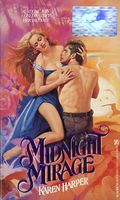
Midnight Mirage - Karen Harper


Don't know why it's called Midnight Mirage


I found this book in a box by a bus stop with a bunch of other generic looking romance novels. Now, I always love a free book or more and I’ve never read a proper romance book despite being more softhearted than my rugged exterior would suggest. I would have taken a bunch but I only had room in my back for one, so I picked ‘Midnight Mirage’ (Tagline: Just one man could satisfy her dreams!) Why that book? Because it has a doody holgram on the cover.

My rugged exterior.

Now, a quick look at the cover again. The man has a short-back-and-sides haircut, a tanned ripped top and a pair of brown jeans held up by a brown belt. He is groping a woman with long flowing blonde hair threaded with lose flowers and wearing a strappy 1970s(?)-esque gown. The background is a swirly thing, evoking sunsets and tropical climes, there is a rainbow and storks are flying. So of course, the book is set in eighteenth century London. 
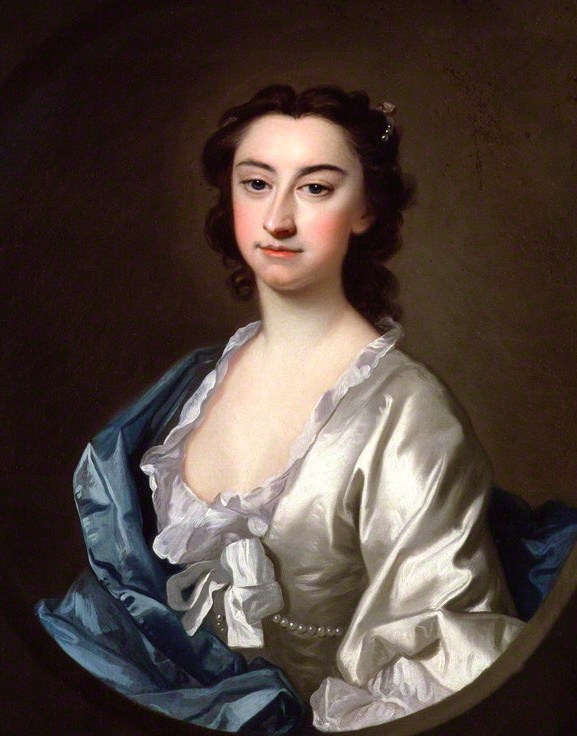
Susannah Arne/Cibber

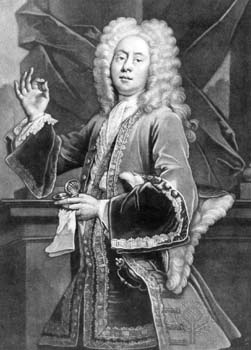
Not only that, but it’s a vaguely true story. First, the characters: Our heroine is Susannah Arne, a great tragic actress and the sister of Thomas Arne, the  composer of ‘Rule Brittannia’. Susannah is married to Theophilus Cibber, spoilt son of the much ridiculed actor/manager Colley Cibber. (Colley Cibber will be featured a lot in this blog, he was defined as the emperor of Grub Street, a figure of fun, heavily ridiculed in the works of Fielding. I also have his biography to review at some point.) Theophilus also has a sister, Charlotte, a liberated crossdresser who has much fun, incidentally another true character. Finally, there is the hero, Tenn Sloper - I could find out less about him, but he really did exist.

Theophilus Cibber

And that is the point - this is a wonderfully researched book. A great deal of the novel takes place in and around the theatrical world of Eighteenth Century London. It brings to full and vivid life the tensions and the feuds of that life; including the historically accurate tension between Susannah and Kitty Clive. There is the drama around Charles Macklin, the Irish actor who was tried for manslaughter after jabbing his cane is someone’s eye. There is also the fascinating character of Charlotte, who’s free ways and crossdressing tendencies get her in trouble.

Colley Cibber

The love story is a good one as well. Theophilus Cibber is pictured as a selfish, vindictive, tosser who spends his wife’s money on gambling and has no theatrical knowhow. He dominates the infinitely more talented wife Susannah, who finds peace and joy in her own Lord Orville, Tenn Sloper. Indeed, we know that there were legal accusations of forced menage a trois and Theophilus and Susannah ran off with Tenn. The love story has definite roots in truth and is extremely excitingly written.

Charlotte (in pink)

But this is where the book becomes the romantic novel it is advertised as. The constant cycling of fling-hide-fling-hide-kidnapped-fling-hide-kidnapped etc... is rather repetitive. Also, the writing is adjective heavy, in order to make sure we have everything clear, which gets both confusing and irritating. I find a book that describes the big, large, shining, illuminating orb of the sun a bit wearying. We have to be reminded of Tenn’s hair (brown) and Susannah’s beauty (very) every few seconds, which can be a bit dull at moments but I enjoyed the book a fair amount.
I am very glad the book had a hologram on the front cover, because instead of getting some ol‘ tosh I managed to get myself a pretty interesting historical novel. Now, I find you can usually judge a book by it’s cover - I know a black book with a white band will be an Oxford Classic or a pink book with a cartoon woman with a glass of wine will be some kind of chick-lit. But for once I found that I couldn’t judge a book by it’s cover. 


Yours