Wednesday, 4 January 2023

Top Ten Books of 2022 (5-1)

 Last week I counted down my  books of the year 10-6. 

If you want to see if you’ve read what I’ve read, here’s the list.


I’ve also been naughty and bought too many books and here’s that list.


In at Number 5


The Pantomime Life of Joseph Grimaldi - Andrew McConnell Stott (also What Blest Genius?)


I’m starting with a cheat. I read two Andrew McConnell Stott books and they were both great fun. He has a real skill at telling a fun story, emphasising the most fun parts and finding supplementary fun stories that don’t feel like filler.


I wrote about What Blest Genius here and The Pantomime Life of Joseph Grimaldi here. I think Joseph Grimaldi edges it slightly. While the central story of Jubilee plays far more into my interests, the sheer range and lunacy of the side stories in Grimaldi were too fun to ignore. A book that includes a craze for a ten-year-old playing Hamlet, a clown sailing a ship through a storm and a trained dog called Moustache, is one that has to be in a top ten somewhere. 


Number 4


Moonfleet - J. Meade Falkner


I wrote about Moonfleet here. It’s hard to say any more about it, this book is exciting, well constructed with clear and interesting characters going on exciting journeys. The set pieces are put together extremely well and the whole book wraps up movingly and satisfyingly.


Number 3


The Color Purple - Alice Walker


This is very unfair, because I’d always assumed The Color Purple by Alice Walker was boring because it was made into a prestige film that won Oscars (a film I’ve never seen). However, when I saw it at a local book-swap I gave it a look because I recognised the name. The copy I picked up had the name anglicised into ‘colour’ and had been published by The Coventry Evening Telegraph as the third in a series of ‘Great Family Reads’. I read the first page and was utterly shocked, while it seemed like a great read, it is certainly not a good choice for a family bed time.


The first page features a paedophilic-incest-rape, performed and described terribly matter-of-factly. Shortly afterwards the baby conceived by that act is taken away. Not only were the events terribly shocking but the tone of normality made them more so. Celie lives in a society where, as a poor, Black woman, she is utterly disregarded, mounted by men as they please and passed off to another family because she can keep a household fed and clean. Her world is so narrow and her place in it so low that she barely registers or questions it at first.


I was amazed at how expressive the telegrammatic style could be. When she says, ‘Not much funny to me.’ She sums up how little in her life has been something she could laugh at - there were many other incidences of this throughout.


What made the book truly wonderful was how, despite being ‘nothing at all’, she does grow. First she asserts, ‘I am here,’ and from there she even finds family, purpose, talents and hope. The first key to this is Shug, a blues singer with a tarnished reputation. It’s her admiration and love of Shug that starts her progression. Shug even shows her how to love her body. But Shug isn’t the only one. She accumulates all sorts of broken, wonky people into her found family, even finding space for the husband foisted on her who abused her so. That’s what I loved about the book, every person in it developed and changed and they did it because of the impact of the other characters around them. That we reach a happy ending at all is because of the resilience of the community that Celie builds around her.


Which is to say nothing of the sub-plot about Celie’s sister, finding her own family. The discussions of God that both women have, their refashioning of God into an ‘it’ that can be found anywhere rather than another male with a fragile ego. There’s some very interesting discussions on white people, how the characters in the book almost see them like dogs, they may seem friendly and wag their tails but you should always be wary of their bite. There’s interesting talk about sexuality, about how many of the male characters try to project strength by beating down before discovering joy in something more community.


It’s a short book but it says a lot.


Number 2


The Monk - Matthew Lewis


I wrote about The Monk here. Did I use the phrase ‘ne plus ultra’? If not, I should have, It’s the that of Gothic books. Everything Gothic books has been working towards at that point is accomplished by The Monk in fine, entertaining and grandstanding style. The book even manages to award the stiffness that afflicts later Gothic works. It’s bonkers, it’s genuinely disturbing at times and it’s very memorable.


Number 1


The Woman in White - Wilkie Collins


The Woman in White by Wilkie Collins is a genuine classic, a masterful blend of tight plotting, varied and interesting narrative voices and characters that burst out of the page.


It starts with a sly joke about how the book has been created because the legal system needs too much ‘lubricating by the oil of gold’ to be the proper place to lay out the story and set the record straight. It then warns the reader that the book will be told in a number of different voices, much like witnesses in a trial. These voices are one of the main triumphs of the book. The first is Walter Hartright, he essentially takes the part of prosecutor and his is the most neutral. There’s also the diaries of Marian Halcombe, packed with her forthrightness, bravery and intelligence. There are the voices of various accountants, lawyers and functionaries that show their understanding of their positions. Then there’s Fairlie’s account, a whiny, petulant piece full of complaint and blame. Finally, there’s the narrative of Count Fosco, as amoral, grandiloquent and strangely appealing as the character himself. Victoria novels, especially these serialised ones, sometimes get a bad reputation for eking out a story in long, needless prose but the switching of voices in this book not only adds a range of flavours to the book but show Collins’s skill at ventriloquism. Although I love his friend and mentor, Charles Dickens, the Inimitable could not have put himself in so many roles.


As for the plot, it starts proper with Walter Hartright walking down the Finchley Road at one in the morning and meeting a woman who seems a little ‘off’ though not dangerous, so he helps her out. As someone who lives a little away from that road, I have often met such people whilst coming home late at night, though none have embroiled me in a labyrinthine plot of abduction, identity theft and false imprisonment. The reader is given the pieces of the main plot fairly early on but because the villains themselves are concocting the plot as the book goes on, the reader can’t predict ahead too far as the villains haven’t got there yet. It walks that beautiful tightrope of being feasible whilst being outlandish and has a particular spiciness because one of the villains is fiendish but stupid and the other is too clever to cause harm where it’s not necessary.


There are some huge coincidences in the book and it’s a weak and slightly peculiar conceit of getting Hartright to go on a barely explored Patagonian adventure with disease, cannibals and shipwrecks - but the big things land right and comeuppances are as sad as they are satisfying. A big, driving element of the plot is the keeping of Sir Percival Glyde’s Secret. While The Secret doesn’t seem worth all the energy and heartache it took to keep, it ties in with the theme of how flimsy such things as identity, position, wealth and sanity really are. 


If the book soars above many others, it’s because of the characters. Walter Hartright is a decent-enough hero character and his love interest, and the centre of shenanigans, Lucy isn’t an awful example of that Victorian ideal child-woman. The fact that some of her experiences actually reduce her as a person and make her more pathetic than before is actually quite moving and show her relative agency before.


Marian Halcombe, her half-sister is a different prospect. She’s initially described as a butterface with a moustache but such ‘deficiencies’ allow the writer to treat her as a proper agent in the story. She’s smart, sneaky when needed, strong and loyal. She speaks her mind and reads a room. She makes plans and acts them out. She’s great. Unfortunately, she does get relegated to her sister’s keeper but her strength in the first half, and the respect she gets from Fosco keeps her flame alive in the second.


Fosco is a brilliant character. He’s undeniably evil, utterly amoral and goal orientated but he does have a sense of kindness (if principally to small, cute animals) and his intelligence dictates that he doesn’t cause suffering he doesn’t deem absolutely necessary. Marian says she is won over by him despite herself, and I, as a reader, found myself won over by him too. The biggest suggestion of his darkest side, the utter devotion of his wife, he attributes simply to that, devotion. I’m not convinced there isn’t a far nastier backstory there somewhere. 


I also loved Anne, the woman in white, an utterly unreliable witness but deeply intriguing. I also has a huge soft spot for the wimp, Fairlie, he’s so deliciously, selfishly pathetic. 


It may be no surprise, seeing as I have gushed over this book, but I thought it wonderful and would easily recommend it. 


Wednesday, 28 December 2022

Top Ten Books of 2022 (Numbers 10-6)

 It’s that time of year again, time to count the top ten books of the year. I’ve read around 100 books this year and I enjoyed most of them but the best books shone brightly, making it an easy choice.


If you want to see if you’ve read what I’ve read, here’s the list.


I’ve also been naughty and bought too many books and here’s that list.


In at 10


The Belly of Paris - Emile Zola


I wrote about The Belly of Paris here. I’ve read quite a few French books over the year, many of them were depressing and money-obsessed, though very engrossing reads. (As an aside, my big take away from Les Miserables is that it’s not about misery but about hope. It’s also let down by sheer size, the great parts get swallowed up by all the other parts, good or not).


The Belly of Paris contained some elements of joy, a sheer ebullience of detail, a frothing cornucopia of food that ferments as the book continues. The first chapter, in Les Halles Market, with the dew soaked fruit and vegetables piled up in the early morning gloom is beautifully evocative and the last line is a wonderfully sardonic joke.


At number 9


Hermsprong - Robert Bage


I shall shortly review this book. As a spoiler, it’s far more entertaining than it suggested itself to be, a sitcom more than a satire. The character of Hermsprong himself might be a bit dull but his impact on those around him is very funny.


Number 8


I’m The King of the Castle - Susan Hill


I’ve read two Susan Hill books before, The Woman in Black and The Small Hand, both of them ghost stories. I’m the King of the Castle is far more haunting.


The Hoopers, father and son, live in a gloomy house in the country. Mr Hooper invites the widow, Mrs Kingshaw to be his housekeeper, though he’s hoping a relationship might come from it. She brings her son, the same age as Mr Hooper’s and they two single parents expect their sons will hit it off and become friends. That’s not exactly what happens.


Immediately, the strange and petulant Hooper send Kingshaw a note to inform him that he’s not welcome. He’s boastful and bullying, insisting on his mastery of the house over Kingshaw. When he discovers some of Kingshaw’s fears, he makes use of them, locking him in the room of dead insects and putting a stuffed crow in his bed. What’s impressive is that although Kingshaw is scared, and he grows to be very scared of Hooper, he fights back occasionally but, more impressively, doesn’t.


Kingshaw decides to run away and goes into the deep wood, Hooper follows him. In the wood, the roles are reversed, Kingshaw finds himself far more competent than Hooper, he also finds himself braver. When a thunderstorm hits the wood, Hooper wets himself in fear, but soon after, he’s trying to assert himself again. It’s a brilliant depiction of a bully, Hooper is scared of many things but at the times he isn’t filled with fear, he is on the attack. Kingshaw shows that he is a better person, helping Hooper when he bashes his head when trying to fish. There was a point when I thought the rest of the book would take place in the wood and it would have been an interesting book if it had. However, I think it was a better book to save them from the wood and show how quick the status quo resumes.


There’s a chapter later in the book which actually takes place in the ruins of the castle. Again, it showed Kingshaw’s decency and the fear that drives Hooper’s actions. 


The boy’s war of attrition is contrasted with the growing romance of the single parents. Their actions also show how little they actually observe their children and their decision to become a family is the final push into tragedy. A tragedy that Hooper responds with ‘a spurt of triumph’.


This book is a chilling look at the a bully/bullied relationship, the weakness that drives the bully and the helplessness of being bullied. Forget ghosts, the real chills come from the people.


Number 7


Memoirs of the Formosan Fraud - George Psalmanazar


I’ve written about this book not only one part, not only two but three.


I found George Psalmanazar fascinating and I was so excited to hear him in his own words. I got more than I expected. Not only did I get to find out the strange and thrilling story of a man from France who pretends to be Taiwanese and, for a time, succeeds; I also got a wonderful account of what it was like being a hardworking denizen of Grub Street. It’s possibly the fullest account of that hack life that I’ve read and it was a great bonus.


Number 6


The Chase - Louisa May Alcott


Little Women was my favourite book the year I read it but it was interesting to find out that Louisa May Alcott thought it boring. She was more into her racier novels and when asked to write one for serialisation she wrote A Long, Fatal Love Chase, which was deemed ‘too sensational’ for publication. My copy, published in 1995 is more simply (and less spoilery) titled The Chase.


Eighteen-Year-Old Rosamund Vivien declares that she’s sell her soul to Satan for a year of fun and then essentially does just that, becoming the bride of Phillip Tempest, a sexy man in his mid-thirties who arrives at her island home on a boat and in a storm. She’s swept away by him and they have a glorious year together before she starts seeing cracks in his facade (other than the fact he’s always boasting about how evil he is). Realising her marriage is a fake and her not-husband is a murderer she runs away and he chases her, ending in a grand climax which proves fatal - the spoiler was in the title, or indeed in the vision he tells her in the second chapter.


The fun in this book comes from the whole ‘dun-dun-dunnnnn!!’ level of goofy the book frequently provides. Our first overtly evil action of Phillip is in the one chapter which we spend away from Rosamund, where he murders a man with a heart condition by making his take extreme exercise and then making him go in a stuffy church. The pattern of the book is that Rosamund does something fairly Loony Tunes (like crossdress or hide in a basket) to escape Phillip and he does something equally Loony Tunes (like crossdress or bribe a priest) to find her again. When he suddenly turns up, it’s handled as a cliffhanger of a cheap soap, a moment of shock but also a moment of lust. It’s not directly in the text but there’s a dual ‘oh-no’ and ‘hubba-hubba’ element to his reappearances - at least for the first few. After a while the reaction becomes a little more ‘oh, you again’ but the book ups the ante shortly after and ends with the cheesiest statement of possessive love I’ve ever read. This would make a wonderfully cheesy mini-series.


I principally enjoyed the book for the inventive escapes and captures and to laugh during the over-the-top moments, but I’m sure I was laughing with this book rather than at it. The heightened nature of it all invites a playful approach to the text and it certainly provided me with a lot of entertainment which is the core purpose of commercial, serialised fiction. 


Next week I shall count down 5-1


Wednesday, 21 December 2022

Review: The Manuscript Found in Saragossa by Jan Potocki


 The Manuscript Found in Saragossa is one of the most difficult books to describe when asked what it's about. Far easier is it to describe what it’s doing, a character goes about and meets people who tell him their stories, and in their stories are people who tell them stories, and in those stories there are people that tell stories until it’s a big nested set of stories in stories in stories. Though people tend to look a bit confused when you explain that, so you explain the author was a Polish count who killed himself with a silver bullet because he thought he was becoming a werewolf - that tends to end the conversation.

The frame story itself is far more interesting than I expected. Beyond the outer frame of a French soldier finding the manuscript in an abandoned house in Saragossa, the inner frame of Alphonse, the Walloon officer is fascinating in itself. The blurb seemed to suggest that Alphonse was stuck in an inn and would listen to the stories there, rather like The Decameron or a static Canterbury Tales, instead it’s a whole peculiar adventure in itself.

If anything Alphonse’s story reminded me (at first) of the first book of Don Quixote. Not only is Alphonse a fairly quixotic character himself, dedicated to a specific military form of honour but he wanders the Sierra Morena and gets into scrapes. Not only that, but the interpolated stories in The Manuscript Found in Saragossa are structurally similar to Don Quixote. They have a very different tone though, gothic with hints of demons and supernatural goings on. The beginning is almost structured like a nightmare, with Alphonse trying to get as far away from the gibbet as possible but always waking up underneath it.

What’s more, the gothic/supernatural elements are quite extreme. At one point it is heavily suggested that Alphonse has partaken in an incestual, diabolic, necrophiliac, gay threesome and that numerous other characters may have done also. Being a fan of the gothic, particularly the more outré versions of it, I was fascinated by these sections and was really keen to know what was going on, who were the mysterious Emina and Zubeida and what was the deal of the Great Sheikh of the Gomelez.

In the early parts, I particularly liked the character of Pacheco. He had been visited by the possible succubi who had led him to devils. One of these devils had pulled his eye out and “darted his burning tongue in my eye socket and licked my brain” before ripping his leg open and playing the tendons like a guitar. My favourite thing about him is how he lurched about, an Igor like figure until the hermit commanded him in the name of his saviour to speak and then he let out a howl of pain before telling his story in a cultured and straightforward manner - it’s like a Mel Brooks joke.

Alphonse meets other characters; a cabbalist and his cabbalist sister, a man who sees the whole world through mathematics who annoys the other characters with his pedantry, and a Gypsy Chief. This Gypsy is the main source of stories through the middle and into the end of the book, with the people in his stories often telling stories also (and those in them, and those in them). The nature of the stories then change, veering away from the uncanny. The Gypsy’s own story is a classic bildungsroman, he finds himself in many stations in life, takes on many identities and sees his society from top to bottom as he grows older. Unlike many figures in these sorts of stories, he even spends some time as a young lady when he swaps with a woman who is not interested in her suitor. This is drawn right up to the line and I almost thought he’d end up being married. He even repeats the crossdressing act a little later.

The stories the Gypsy collects are largely amatory tales and amatory farces. Chief among these is the story of a merchant’s son who falls in love but is constantly thwarted by the ‘help’ of a meddling idiot called Busqueros. This character is probably the one who changes the most in the book as he is met by other characters in the stories in stories at different points. I suppose most of the people we ‘meet’ in the book are largely at the end of their story but Busqueros, never actually being met is always in a state of change. He changes from being a meddling idiot to a grade A creep, describing his childhood as a peeping Tom, a habit he continues into adulthood. As the stories then take a turn away from the romantic and towards the political, he becomes a spy and the chief antagonist of those within the story of the story.

The introduction to the book by the translator, Ian Maclean is really good, especially because it doesn’t spoil any of the surprises in the book but it does say the ending falls a little flat with most people. It did with me as well. All the exciting, peculiar gothic stuff at the beginning of the book was orchestrated as a set of trials to test Alphonse’s suitability to father the heirs to the Grand Sheikh of the Gomelez, a (literal) underground society of shiite muslims. There were no succubi or demons and my boy Pacheco was a circus performer playing a part. Maclean suggested in his introduction that Potocki had changed his mind about the tone and veered into something more grounded, but I actually think the reveal is consistently set up.

After the introduction of the Gypsy Chief, the stories do become less supernatural and the supernatural occurrences in all of them are eventually explained away. Busqueros poking is head in a window is mistaken for a ghost and the ‘dead’ Leonora is a fake out. Most telling was the story of the Knight of Torres. He was a playboy who didn’t worry about purgatory until his friend told him he was going to a duel and if he died would confirm or deny purgatory to him. That night, the Knight hears a sound outside his window, flings it open and calls to the air if his friend is dead. A voice replies in the affirmative. He then asks it if there is a purgatory and the voice again replies ‘yes’. It’s over a hundred pages later when we get the story of Lope Soarez, who climbs up a ladder to see his love, gets the wrong window, is knocked out by a flung shutter and dazedly answers ‘yes’ to the questions he’s asked. This story establishes that even earlier supernatural stories in the book have daft but worldly reasons. As such, the second half of the book builds a slow disenchantment which sets up the ending. The book is set in a world in which people go to fantastical lengths to reach their goals but there’s no hocus pocus.

This is a fascinating and unique book and I recommend it to anyone prepared to put the effort in. While I certainly preferred the stranger first half to the more grounded second, and I did think the book hit a bit of a rut for a while, it’s worth reading and will probably be worth re-reading.


Wednesday, 14 December 2022

Johnson's Selected Essays at the Dr Johnson Reading Circle

On Tuesday 6th of December, the Dr Johnson Reading Circle met to discuss Johnson’s essays, chosen from Penguins Selected Essays. There were ten essays, four from The Rambler and three from The Adventurer and The Idler, with the first nine written while he was in residence at Gough Square. The topics ranged from literary discussion, Johnson’s interest in biography, musing about grief, and the nature of beginnings and endings. 

First, we talked about the physical nature of the essays. That The Rambler and The Adventurer were single sheets, bought cheaply or subscribed to by public places like coffee houses. They were intended as quick reads, to prompt thought and discussion, with an estimated circulation of about five hundred. The Idler was a running column in a larger magazine. Johnson didn’t receive percentages from the sales but sold the copy to the print-seller who could do with the work as they wished.


While not a massive success, collected editions of Rambler pieces, combined with the finished Dictionary were the works that established Johnson’s reputation in the public mind. Boswell was on the hunt to meet Rambler Johnson, not Dictionary Johnson; and Goldsmith, in a piece published before he met Johnson, had him swept to fame for his essays and not his lexicographical work. Even Johnson regarded The Rambler as the truest expression of his works, describing the others as “wine and water” but those essays as “pure wine”. When he showed the early editions to Tetty, she exclaimed;

   “I did not imagine you could have written something equal to this.” A bound copy of The Rambler was his last gift to her, shortly before she died.


Before beginning the first Rambler, Johnson wrote a prayer, hoping for the work to have a positive moral impact and to do good. The first essay comes across a little diffident, shy behind a gruff exterior as Johnson bemoans the difficulty of making a good first impression in as short a work as an essay. He also jokes about how the shortness of the work is a benefit, the reader hasn’t wasted much time in reading it, nor the writer in writing it. The shortness of the essay also meant that the writer could make small experiments, with nothing much lost if those experiments go wrong.


Johnson made use of this benefit, filling his essays with short stories, character sketches, playful rants that could almost be observational comedy, and pretend letters from readers. It’s unfortunate that very little of this can be found in Penguin’s Selected Essays, with David Womersley choosing essays that focus on Johnson the stern moralist, a stentorian voice that reasons from generals to specifics and back out again. Despite that, there was a lot we found universal and recognisable in the essays we did read.


Rambler 23 was about editors and critics. Johnson was obviously getting some helpful comments a few months into his essays about how he should be more like The Spectator and should do jokes about funny clubs. He maintains that he is his own person and his own writer and can only follow his own path. He also makes some interesting comments about how a printed word has authority a manuscript doesn’t and everybody feels they can add something to a manuscript. Some people even feel they need to so that they are not “consulted for no purpose”. The editors in the room nodded at that.


Adventurer 138 talked about the life of writers. He describes them as ‘addicted to complaint’ (see Writer’s Twitter) but that they don’t have it so bad;

  “To write is, indeed, no unpleasing employment,” though sometimes ideas won’t come or seem to disappear as soon as they are about to be written down. Johnson tackles daydreams of inherited wealth in Adventurer 111, saying that, “life affords no higher pleasure than surmounting difficulties,” and painting the idle wealthy as “the useless filler of existence.” There’s a thoughtful discussion on The Black Act, and the widening of capital crimes in Rambler 114 and a fun look at why people disagree with each other in Adventurer 107.


Rambler 60 sets out Johnson’s views on biography. He explains how it’s an easy genre to exercise reflection and empathy, that all lives have their lessons that can be learned by all people and how the lives of ‘great’ people are most telling in their smallest details. No matter who the person is, they are best understood once “exterior appendages are cast aside”. This was precisely what Boswell would go on to do, to describe Johnson’s life in as much detail as possible, from conversation to smallest habit - he never did get a good answer to what Johnson did with his dried orange peel though.


The last Idler is about endings. There’s always a small pain in saying goodbye and so there was when time was up with the meeting. However, this goodbye was delayed, as all the restaurants were full with early Christmas bookings and we sat at a table in Johnson’s house with takeaway. It was a cosy and convivial time and it was with contentment that we said goodbye, happy to meet again in the new year.


Wednesday, 7 December 2022

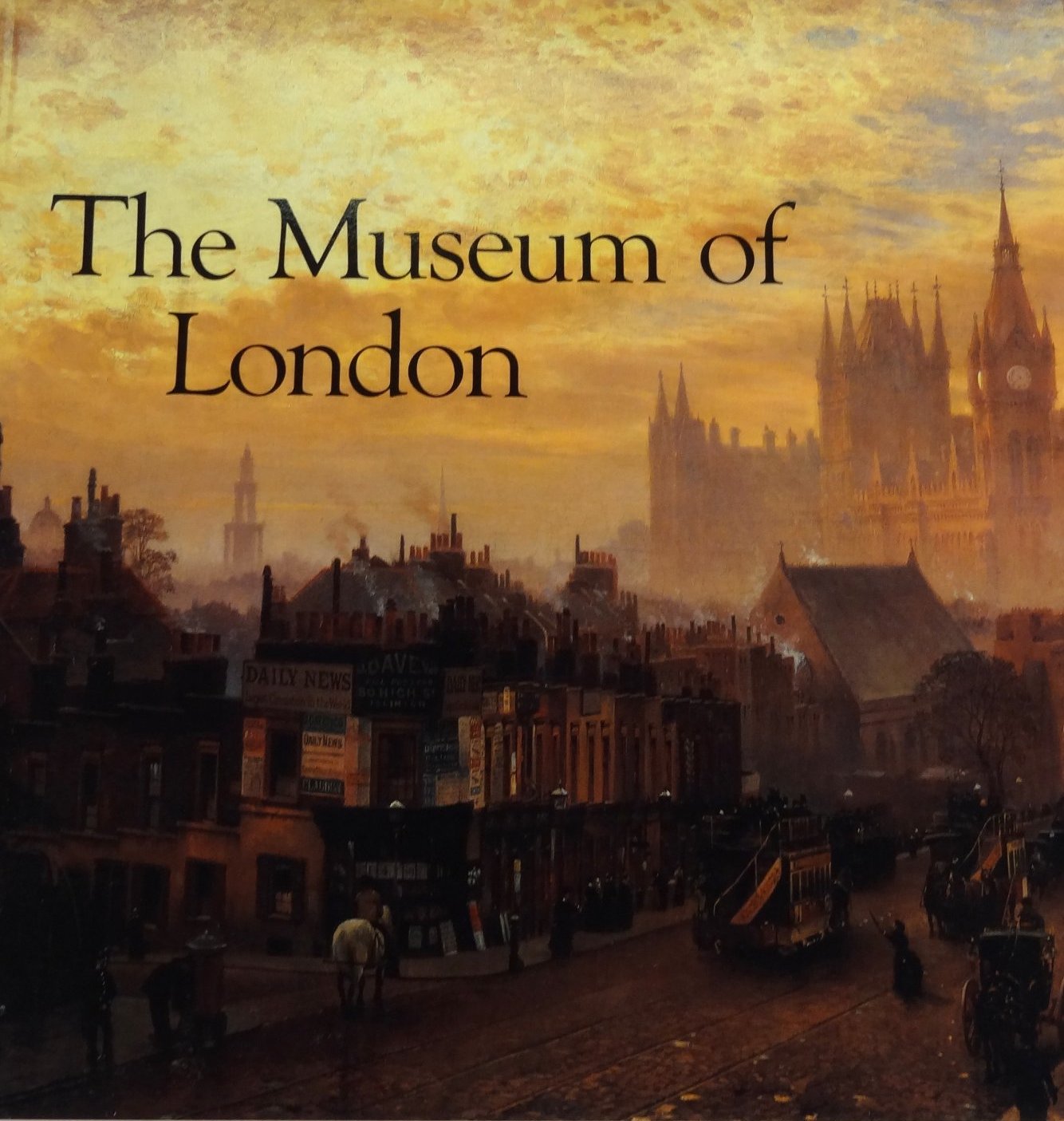
Goodbye to the Museum of London (for a bit)

 At 5pm on the 4th of December, The Museum of London closed after being at the Barbican for 46 years. It’ll resurrect itself as The London Museum at Smithfield Market in 2026.  The museum went out with a bang, holding a 24 hour goodbye party so I peeked in, earlier on in the celebrations at 3pm on the 3rd. 


I’ve got a personal fondness for the Museum of London, being one of the first museums I remember visiting. My family lived a little south of London and once a week in the summer holidays we’d go to the train station. If we crossed the bridge we were going on a train going right, which usually meant a trip to the beach and if we stayed on the platform near the entrance we went left, which meant to London. I think it was probably 1993, which would mean I’d just turned eight and my sister would have been two-and-a-half. We first went to Saint Paul’s Cathedral, which had wowed me and taught my sister the word ‘down’ after descending the dome. We saw a sign for the museum, didn’t know anything of it and went to check it out. 


What must have appealed to Mum was that it was free, this was before the major London museums were subsidised to do this and if St Paul’s was as comparatively expensive as it is now, then a freebie would have been very welcome on the budget. I have distinct memories of the Dick Whittingtons leading the way and amazement at the sheer expanse of stuff. I’d been to museums before, a trip to the Maritime Museum the year before gave me a lifelong fondness for pirates, but the scope was something else. Plus the museum had little models of London streets, showing how they looked in different periods. I got the guidebook, which I used to peer into, even if I didn’t understand all the words. (For old times sake I bought one of the discounted guidebooks in my most recent visit, as a bookend. Though, I’d have understood far more of the recent guidebook, it’s far more pictorial).


When I moved to London, I was skint and The Museum of London became one of my favourite ports of call. In the long, boring stretches of unemployment, I’d often take time out and visit - even though only the top gallery was open because the bottom was being renovated. I visited on my birthday, again with my sister. I was under the weather with what turned out to be Swine Flu, was overcome by sleepiness and had a nap in the Saxon house.


There was also a dark lure to The Museum of London, possessing, as it did, the best selection of books about London history and figures available. I bought the first of my Lathem Mathews Pepys books there (1660 of course) and it was not cheap. Another dark aspect of the museum was they kept advertising jobs I could do and then not interviewing me for them.


In more recent times, I visited the newly refurbished downstairs and had a giggle sitting in the Vauxhall Gardens, listening to dialogue from Evelina I had read on the tube getting there. It’s where I went to the fantastic exhibition on crime, and another on bodysnatching. I also went to the frankly bonkers ‘Beasts of London’. I saw a number of lectures at their theatre, including the one where part of this blog was featured, and I also went to a behind the scenes look at the fashion department and went up and personal with a potentially deadly dress.


Going round again, I was struck by how well everything is arranged and what a good story it tells. Back to the earliest humans the museum focuses on individual lives experienced in this patch of earth and amazingly, as the city becomes larger and more complex, the individual stories become more highlighted. The tour and the new guidebook both end with the cauldron of the Olympic flame from 2012, presenting it as London’s ultimate expression and, perhaps it was. Certainly, walking down the increasingly abandoned Fleet Street, or Oxford Street, empty of everything but American sweet shops that are money-laundering fronts, it would seem London’s best years are behind it. Though I’m sure that’s what the people of London thought when the Romans pulled out, or they saw the smoking ruins of the fire or the Blitz, hopefully the London Museum still has some exciting times ahead of it to record and interesting stories to tell.


Wednesday, 30 November 2022

Review: The Yorkshire Witch by Summer Strevens


Hanged on the Knavesmire at York in 1809, Mary Bateman met her end at the same place as one of the Pendle witches in 1612. However, Mary, the ‘Yorkshire witch’ was not executed for witchcraft and, even if she had, the modern story of a poor, innocent woman railroaded by the justice system wouldn’t have applied to her. Mary Bateman was anything but innocent, a thief and con-artist who was hanged for murder, it’s very possible she killed at least three other people, making her a serial killer. 


She started from a young age with a career of opportunistic thievery, a habit that never really left her. As a result she was passed from job to job and moved from area to area and town to town. There was one time she bumped into an errand-boy from a butcher’s shop and pretended to be a cook angry for the lateness of the beef. She them bopped him on the head and took the beef home to cook. She married John Bateman, a conscientious cooper, who swore that he knew nothing of his wife’s criminal propensities. This seems unlikely, as in one case she forged a message from his mother, saying she was dying so that she could get John out of town in order to sell off all their furniture and pay back money she had stolen to someone else. Mary may have been brave in her criminal dealings but she wasn’t wise and frequently found herself having to give back items she’d been caught stealing, a practice that kept her out of official trouble.


One of her more successful swindles was to pose as a charitable collector, particularly after a great cotton mill fire. She’d collect money and useful items for the injured families and keep it all. She also set up shop as a ‘wise woman’, a keeper of botanical and magical lore who could heal the sick, end curses and find lost objects. This is where her nickname as a witch came from. It’s also became her principal hustle and the one that sealed her fate.


One interesting link between Bateman and one of my other interests is that she became a Southcottian and received (or had forged) one of Joanna Southcott’s famous seals. She used these connections to score free accommodation with a woman in York, who she proceeded to swindle in time-honoured fashion and when she went back to Leeds she had a new plan. She announced to the world (and Southcottians in particular) that she had discovered ‘The Prophet Hen of Leeds’, a fortune telling chicken whose eggs foretold the coming end-times. The first one read, ‘Crist is coming’, which may have included a crucial spelling error but was presumably not bad for a chicken. It caused a sensation, with people paying to see the miraculous hen and her marvellous eggs but the hoax was rumbled pretty soon when Mary was caught stuffing a pre-messaged egg into the chicken.


Away from the Southcottians, she also carried on her role as wise woman, or rather, as the intermediary between customers and a real wise woman (the non-existent, Miss Blythe). Her longer con involved her reading a fortune for someone, often a dark one, and suggesting the help of Miss Blythe to combat it. The usual way ‘Miss Blythe’ combat a dark fortune was to be sent 4 gold guineas, to seal them in pouches with special mystical ingredients and, via Mary, to deliver them to the person in need to sew into their bed. There was a warning though, not to open these packages for a set time period. For those poor people that did, they found the guineas had magically turned into lead weights or other useless items. In the more difficult circumstances, Miss Blythe would need other help. One family were told that the demonic forces had possessed Miss Blythe’s tea set and sugar, so they’d need to buy a replacement for her. Another bought Miss Blythe underwear, another a new dress. It seems painfully obvious what was happening, especially when Mary Bateman used that tea set or wore that dress, but maybe that’s part of the con, like spelling mistakes in a phishing email.


Bateman eventually went too far, feeding a couple, William and Rebecca Perigo, a special ‘magic’ pudding with arsenic in it, followed by honey laced with antimony. The wife died and, for a while, the husband kept going to her for advice. The husband tested the cake on a cat, which died and then went to the police. He arranged to meet up with Mary for more advice but had special constables in attendance. The arrested her and she pretended to throw up, claiming that William had given her a drink. It was a bottle with arsenic in that she had intended to give him. She was convicted of the murder of Rebecca Perigo and hanged. It’s very possible that she was not the first victim, there were the two Misses Kitchin and their mother who all died in quick succession after employing the services of Mary, who also claimed all their belongings when they died. They weren’t looked into and it’s unknown how many people were swindled or even killed by Mary Bateman.


Her post-mortem treatments was particularly brutal. Part of her skeleton was on display at a Leeds museum until 2015. Her pickled tongue ended on somebody’s mantlepiece and her tanned skin was used to back two books and also made into souvenirs distributed all over Yorkshire. Interestingly, her dissection also showed that she had a genetic anomaly that give her an extra rib.


The story of Mary Bateman is a fascinating one of crime, gullibility and the continuation of old, folk beliefs into the 19th century. The book The Yorkshire Witch by Summer Strevens is a fairly flawed affair. From the bibliography, it’s clear that the book is largely a reskinning of a contemporary biography with a few additions. The main addition is the last chapter, intended to be a modern psychological look at Mary but largely being a slightly waffly, trite discussion of Mary as a psychopath or sociopath. I don’t think this chapter was really helped by references to Cleopatra or Lucretia Borgia, she may have used poison but was not playing the high power games of those women. I think it probably didn’t need twin tower references either. The book is often padded out by digressions, as books based on limited sources have to be. I did enjoy the information about the York hangman, William ‘Mutton’ Curry but I didn’t need to be told that the Romans called York, Eboracum. I also thought Strevens was a little too liberal in her use of the exclamation mark, it gave the book a ghost tour flavour which is very York but not very authoritative. It’s still a fascinating story though and this book the easiest way to read it. 


Wednesday, 23 November 2022

Review: The Lancashire Witches by William Harrison Ainsworth


 I’m a big William Harrison Ainsworth fan (even if I do find it difficult to get his surnames in the right order) and I was always going to read The Lancashire Witches at some point. Not just because it’s the only book of his still in print (a massive injustice) but also because a friend at university claimed he was a descendent of the lead witch herself, Old Mother Demdyke. I wonder what he’d say to her representation in the book and the ‘history’ of his family.

There’s often a tension in Ainsworth’s books. He’s clearly enamoured with the criminal, the marginalised and the different yet he’s working in a literary climate that demands those people have their ‘comeuppance’. This was a particular problem for him after a man committed a big, notorious murder and claimed it was partly due to the influence of books like Ainsworth’s. Written some time after, this book is constantly being pulled by the obvious appeal of the witches, their gleeful destruction of anything ‘civilised’ and the need to make a commercial piece of fiction. As such, the witches in this are real witches; cauldrons, broomsticks, cackling and all, with definitive links to the devil and malicious intent - they are the baddies of the book. However, the lawyers, god-fearing men and representatives of modernity are all fools and malicious themselves. In many ways it’s a novel where no-one can come out on top, as most of the main parties represent some form of intolerance and malevolence.


The book is split into four sections, each one lasting 48 hours. The first takes place before the witches, during the reign of Henry VIII. It’s the most overtly gothic of the sections, involving naughty monks and their secrets. The loved Abbot Paslew of Whalley Abbey is at the forefront of ‘The Pilgrimage of Grace’, an armed attempt to fight the formation of the Church of England. He has some skeletons in his closet, more accurately in the The Monk-esque dungeon in the Abbey - except he doesn’t, the monk he’s cheated has made a pact with the devil, escaped and is now after revenge. He’s willing to make peace with the Abbot and secure his escape, if only the Abbot baptises his young daughter. Instead of baptising her, he curses her and the Demdyke clan of witches begins. It’s full of that great Ainsworth stuff, striking images and exciting action, lots of escapes, near misses, magic and heartbreak. There’s even a man who accidentally impales his friend on his halberd.


The second section is set about 100 years later, in the reign of King James I and takes place around the May Day celebrations. We meet the three Asshetons, Ralph, Richard and Nicholas. Richard is our perfect hero and the designated young lover of the piece but Ainsworth is clearly more taken by Nicholas, who is a typical country squire; rambunctious, overly fond of hunting and drinking but loyal and with a good heart. Richard falls in love with the May Queen, the beautiful and innocent Alizon Device. How she is both morally good and beautiful is anybody’s guess, she’s sister to the nasty Jennet, daughter of the dodgy Elizabeth and grand daughter of the evil witch, Mother Demdyke. Of course her parentage is far more complicated and she’s actually the daughter of Alice Nutter, who may be more beautiful but is as implicated in witchy goings on as the others. This is slower than part one, with the definite feeling that things are being set-up and implied - that is until the last chapters at a witches sabbath.


The third part is a journey into the heart of darkness. A lawyer called Potts has been called for to settle a boundary dispute between Alice Nutter and Roger Nowell but as they get closer to the area, it’s clear that things are not right. More and more stories of witchcraft and terror are unfolded and Potts decides to hunt the witches, spurred on by the kudos he hopes to get from King James. As they grow nearer Pendle Hill and Mother Demdyke’s stronghold in Malkin Tower, things get madder and madder. This is the point where Ainsworth lets rip with full Ainsworthyness, storms and witches and abductions and the Devil in disguise and doubles, potions, broomsticks, elaborate torture chambers, a snarling statue and rocks and rivers that change positions - the works. The witches all have to bring a convert to the Devil every year or their powers wane, there’s a power struggle and all the key players have little time to pay their dues. The way the familiars of the witches turn on them when their time’s up is genuinely ferocious and hurtful, especially considering how condescending they are when the witch is in good stead with her master. It ends in fire, blood and madness. This is the best section.


The fourth section is probably the weakest. Our chief supernatural villains are gone, there are a few remnants who cause mischief but the chief danger is now from the lawyer, especially because King James I is visiting. He may style himself ‘The British Solomon’ but he’s seems very fallible. Most of this section is taken up with descriptions of the King’s travelling court, his entertainments and descriptions of hunting all sorts of animals including otters and deer. Our tragic lovers end out their tragic love and everything is tied up. The most interesting element in this last part is Alice Nutter, who was a key witch but has since sought to redeem her soul. There’s tension whether this is even possible and her end has a lot of heart.


While I didn’t love this book as much as Rookwood, Jack Shepherd or even Auriol, it was still a corker. There were big chunks where Ainsworth got to do what he was best at, striking visuals and breakneck action but the second and third parts did slow down a little too much at times. Ainsworth writes as if the novel is a visual medium, he’d have done so well at film and when he’s doing those visual things, he’s great. Unfortunately, novels also need dialogue. At best, his dialogue is stiff, at worst he’s trying to write in a Lancashire accent. If the title was written in his phonetic dialogue, this book would be called T’ Lonkyshaire Watches. There were times when he’d just put in weird vowels. It wasn’t even consistent, sometimes ‘come’ would be ‘cym’ and sometimes ‘cum’. Luckily, not all the characters talk like this but enough do and there’s far too much of; “T’missmannert, car’ll boide naw questionnin, odd rottle him,” for my taste. However, there is a bit that describes King James as ejaculating and everyone ejaculating with him… that’s funny.


The other thing he does well is research, and its use. I was amazed that even character of Old Mother Mouldyfoot have origins in history, as does the progenitor of the curse, Abbot Paslew. He also knows when to change from his research, making Alizon Device a tug-of-war character between the good and bad sides, inventing a feud between Mothers Chattox and Demdyke. Some of these inventions have passed into (lazy) history, along with his claims about Dick Turpin and Black Bess in Rookwood. Another element that has been taken for historical truth is the story of King James knighting a piece of beef as Sir-Loin, a ‘fact’ my Dad once told me as true. (But then, he told me that monkeys rode the greyhounds at a dog race). The King James stuff isn’t as well digested on the whole and that section as a number of dull lists, featuring many famous names who don’t impact the story.


Another piece of research was the diary of Nicholas Assheton, a real person. I said at the beginning that there’s a real tension between making the witches evil and hating the real villains of history, the people that hanged them, resulting in very few of the characters being ones to root for.  Nick Assheton is though. He has his faults, he has a fear and hatred for the Devil and his witches but he also doesn’t trust the lawyers. He straddles the line between realistic faults (and indeed unrealistic, he dances with the ghost of a naughty nun) but with a just hatred for persecution. 


I don’t think any modern take on the Pendle Witches could ever represent the witches as actual evil beings with magic powers any more. We’re just too aware of how any witch trial was a terrible exercise of power against the powerless but in giving his witches actual powers, William Harrison Ainsworth does even things up a little, even if it’s just fictionally.