Wednesday, 6 July 2022

Gilbert White by Richard Mabey at the Dr Johnson Reading Circle


The Dr Johnson Reading Circle met for the last session of this academic year in Johnson’s own parlour, where we tried our best to behave and not spill any red wine. The book under discussion was Richard Mabey’s Gilbert White, a biography on the author of The Natural History of Selborne. 


We began by discussing the surprising longevity of White’s own book, an oddly structured description of the parish he lived in and the various plant, animal and mineral life that called it home. The key seems to be White’s skills of close observation linked with an evocative style of writing. Whether it’s describing a martin smoothing a nest with its chin, field mice scurrying in corn or recognising different birds by the way they fly, White captures the animals clearly. What’s more, in focusing on the eternal drama of animal life, the book manages to be timeless. The experience of watching the wheeling, screeching and gambolling of swifts is the same now as it was when White observed them.  


Gilbert White led a very simple life, never progressing very far in his chosen career in the clergy, remaining a bachelor throughout and spending twenty years working very slowly on his one book. This makes him an easy person to project onto and he has been sentimentalised over the years as the archetypical hobbyist-naturalist, wandering the fields looking for plants and bugs. The biography adds a little more complexity to this image, painting him as both tied to his place but slightly rootless, innocently open to experience but also a hard-working perfectionist who constantly tinkered with his book. 


One of the big sources behind the biography is White’s college friend John Mulso. Gilbert did not deserve a friend like John; always supportive, always lightly joshing, always keeping up correspondence and visits, even as White was slow to reciprocate. One of the reasons he didn’t travel far was that he got coach sick. At one point his personal expenses note that he gave a woman a soup tureen to pay back a coach fare and Richard Mabey makes the supposition that it was a joke about his vomiting.


It’s clear that White didn’t like the politicking that went into gaining a decent Living in the church, nor did he grasp romantic opportunities. He seems to have simply enjoyed himself, becoming an uncle to nearly 60 nephews and nieces, making his home in Selborne a treasured holiday destination for them. The most exciting thing in his life seems to have been melon farming, which is described in this book as nail-biting drama. 


One of his other fascinations was the migration of birds, particularly the class of birds called hirundines, such as swifts, swallows and house martins. We now know that they migrate great distances, something he has a suspicion of at first, supposing swifts being able to eat, sleep and even mate on the wing. It’s actually his observations, particularly the brief and irregular appearance of birds for a few sunny days but not on colder ones, that lead him to conclude that they probably hibernated. Sweetly, part of the reason for this is that he felt so attached to ‘his’ birds, he didn’t recognise that what he was actually seeing was a stream of the birds going through Selborne. It’s actually an easy mistake to make; I’d always assumed that blackbirds didn’t migrate as I see them all year round but actually, summer blackbirds have migrated from the south and winter ones come down from the north. 


Talking about Gilbert White brought the naturalist out in all the group and we all found ourselves sharing stories about the birds and animals we’ve seen, the wonder they evoke and the places near London to go listen for cuckoos. The evening ended with a special presentation of a card and flowers for Jane Darcey; who set the Reading Circle up seven years ago, put together the reading lists, ran the sessions, invited the guests and even kept it going through lockdown. Stepping down from her role running the group, everyone wishes her the best, buon viaggio in her trips abroad and looks forward to seeing her again in Dr Johnson’s House.


Our next event is a trip to Bath, with personalised tours, a cavalcade of eighteenth century stars.. and possibly a bun if we’re lucky.


Wednesday, 29 June 2022

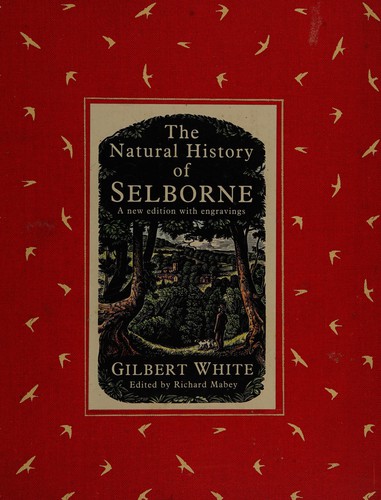
Review: The Natural History of Selborne by Gilbert White


 I was lucky to have purchased a beautiful edition of The Natural History of Selborne, the 1988 Century edition with good, heavy stock in the paper and plenty of illustrations and woodcuts. I read it in advance of the Dr Johnson Reading Circle’s read of Gilbert White’s biography, a man who I’d never heard of before his biography was on the reading list, so I read his book.


I hadn’t realised what a ‘thing’ this book was, how influential to nature writing in general, or how important to the development of the latter Victorian ideal of innocent rural life. That Virginia Woolf, Coleridge, Charles Darwin and Thomas Bewick (whose biography the book group read at the beginning of the year) were all hugely touched by the book. It’s even mentioned in a Roald Dahl story and cited by David Attenborough as something that lead him to attend the natural world. I hadn’t heard of it.


The book is structured as a series of letters between Gilbert White and two different correspondents, Thomas Pennant (author of the guidebook to Scotland that Samuel Johnson took with him) and Daines Barrington. Interestingly, the letters were heavily edited, with a number never sent, some split apart, merged and added to and many of the dates changed. To be honest, I’m not sure why White carried on the letter conceit, especially as he changes from one recipient to another. Why doesn’t he invent a fictional recipient to all the letters? However, as a result, the book starts off with a sweep around the parish of Selborne itself, charts the animal (especially bird) life that flows through it and then towards the end opens the parish out to how it is effected by global systems such as the weather - especially a non-summer after an Icelandic volcano erupts. 


I’m quite fond of nature and I enjoy watching birds (though am no birdwatcher) but I have always lived in large towns or cities of varying size, with much of my adult life being spent in London. I simply do not have much of a connection to a rural life, which meant that there were parts of the book (especially those about coppicing and rural common-land rights) that meant absolutely nothing to me. However, those bits that went over my head still managed to be soothing and pleasant to read, with the promise of some interesting anecdote to come.


White is very interested in birds, the hirundines especially. These are birds like the house martin, the swift and swallow. When I was a kid, our road had house martins and I also have a fondness for them. The big question of the day was, do they migrate or hibernate? Samuel Johnson followed Aristotle’s view that they buried themselves under mud and slept the winter away. Gilbert White was inclined to think the birds migrated but it was actually his observations, particularly of swifts that appeared for a sunny day, disappeared when the weather got nasty and then reappeared when the weather grew nice again that changed his mind. He ended up at the wrong conclusion but he reached it fairly.


If anything, its White’s sympathy with the natural world, together with his close observation that makes the book the classic it has become. He reminds other naturalists that animals are motivated by more than food, that they may act for love as well, for the protection of their children. He notes birds hovering to block the sun from their chicks and of swifts and swallows gambolling and playing in the sky for fun. He describes the movement of birds so well, that jumpy flight of sparrows, the sweep of swifts, the fluttery quality of magpies and pigeons and the hovering of kestrels. There’s a lovely bit where he goes out with a pitch pipe to record the note that owls hoot at.


His close observation also produces the first description of field mice as distinct from house mice and of a number of different warblers. He makes the various birds, bugs and rodents come alive in his writing, which is ironic because many animals were shot in the making of this book. It would seem that those who lived in the parish knew his interests and would shoot unusual species so he could dissect them, especially to examine their beaks to see what it was they ate. He may have been the first to mention field mice, but many field mouse nests were removed with their little babies shook inside it like a maraca to get the information.


There’s also a horrific story about a farmer catching a sparrow hawk that was attacking his hens, who he mutilated and then gave to the hens to peck apart, rather like the particicution scene in The Handmaid’s Tale. This is without mentioning the racist chapter about gypsies or the chapter about the ‘idiot boy’ with a fondness for bees, which ends with White wishing the boy had been a bit cleverer because he might have helped bee research. He also shames a tortoise for its lethargic lifestyle.


In some ways this book is a bit of a mystery, how could a book so parochial (literally) and idiosyncratic be so influential? It’s hard to pinpoint, but the book manages to be very charming and, in focusing on the eternal drama of animal life, be very timeless. I walk to school and watch the swifts perform the same acts of daring over the houses as he saw over his house and this book encourages new wonder and enjoyment at sights such as these.


(Did you know, a woodpecker lives in the garden of the garret I rent, and that sometimes it gets confused and pecks the tv arial above my room, making a most peculiar ‘boing’ sound?)


Wednesday, 22 June 2022

Review: Moonfleet by J. Meade Falkner


Moonfleet is a family adventure story about John Trenchard, a boy whose curiosity accidentally leads him into smuggling escapades and on a treasure hunt. It’s a hard book to talk about, not because it’s bad or empty of event but because it is so great, and so self-contained in its greatness.

Each chapter could serve as a decent short story in itself, with a central exciting moment or situation, yet the chapters follow on from each other with an inevitability that drives you forward, escalating the stakes each time. The first chapter sets up the village itself, the ‘Why Not?’ Inn and its crusty landlord Elzevir Block who is grieving his only son, killed by a nouveau-riche, interloping lord of the manor. It becomes a Gothic story for a bit, with tales of restless ghosts, coffins banging about in floodwater under the church and a tense scene where our protagonist hides in a coffin next to a corpse. A corpse whose beard he accidentally rips off. Then the story becomes a smuggler’s tale with dark, windswept beaches and hidden caves. Then a treasure hunt, a tale of unscrupulous diamond dealers, a prison tale and a shipwreck story. Each one is presented in its purist form, nothing can be taken away.


The tensest moments in the book include the auction by candle (a real historical practise), each second the flame burns the wax tightens the atmosphere. Then there’s the chapter where two characters climb a vertiginous goat track, one with a broken leg, while an armed posse pursues them. That’s not forgetting the chapter where a character descends a deep well in the hope of finding a flawless diamond while another waits up top with a third, possibly untrustworthy figure. (Incidentally, Blackbeard’s treasure is the perfect use of a McGuffin, an item everyone wants which powers the plot through its desirability rather than its actual contents).


That’s not forgetting the simple but effective portrayal of the characters. John Trenchard is admirably curious and rather naive, he can be weak in both body and mind, which leads him into some real trouble. There’s Elzevir Block, who is a tough person, a feared one in some quarters but who also manages to be the warmest, finest and most admirable father figures I’ve read in fiction. Leon Garfield must have loved this book, he loved a morally complex mentor. Maskew, in many ways the instigator of trouble for John and Elzevir is both easy to hate and oddly sympathetic at the end. His daughter, Grace gets a few moments of strength as his long-suffering daughter and distant love interest. Like the rest of the book, the characterisation is simple, possibly even a little basic, but they hold up rock-solid because of that.


The writing wobbles a few times, Falkner is a little too fond of the word ‘lief’ and describing a man as having ‘the finest forehead that I ever saw’ sounds very silly, what consists a ‘fine forehead’? However, when the tension needs to ramp up, it does and the book finds itself at a very moving sacrifice. 


I read the book because I just finished Alex Preston’s Winchelsea and found it lacking. If Winchelsea wanted to be a grown up Moonfleet, what would the not-grown up Moonfleet be like? Far more grown up then Winchelsea it turns out. Where the modern book had a baggy, rambling plot that seemed to circle round to itself, Moonfleet pursued its story beats along a simple chain of cause and effect with a dogged determination. Where Winchelsea wanted a cluster of complex characters with different motives, Moonfleet sketched clear and compelling people who were consistent with their own wishes and desires. Winchelsea falls apart like crumbly pastry but Moonfleet is as self-contained as a stone. I wanted to write more about Moonfleet but I can’t, it’s not a grand book or one that tries to say lots of important things but in its own way it’s peculiarly flawless, which makes it hard to talk about, there isn’t a crack to find a way in. Short, fun, easy to get hold of, if you haven’t read it before, I recommend you do.


Wednesday, 15 June 2022

Review: Winchelsea by Alex Preston

 I was excited to read Winchelsea, as the town has a fascinating history and I found the synopsis of a smuggling story very appealing and had read some very positive reviews. The first thing that struck me about the book is the cover. It’s very pretty but the pinks and purples, the gold-embossed title and the swirly font (especially the ‘W’) make it look like a Wonka Bar.


The book takes the form of a series of texts that have been compiled by Goody, the principal narrator of the book and presented as one piece. The first is a letter from her to the reader, the second a prologue narrated by no-one in particular, the main bulk comes from Goody telling her story to someone else who’s writing it down, the fourth a recount by another character, the fifth a recount by a different character and the last a final word to the reader by Goody. In some ways this reflects the found/curated textual frame used in books like Henry Mackenzie’s ‘The Man of Feeling’ but it all comes out as a bit of a mess.


The letter from Goody at the beginning says that her true narrative, through the different lenses of the text has turned into something of a novel. I found this destabilising to the text immediately as she talks about ‘the novel’ with the certainties of a modern writer, where the term was still a disputed and nebulous term in 1779 when she is writing. She also makes the point that most of the narrative was told by her to a man and so warns the reader that the book may sound like a man writing as a woman more than the real lived experience of a woman. This caveat seems to have no meaning or purpose within the world of the book but instead refers to the fact the (twenty-first century) novel is in fact written by a man and making excuses for the fact it sounds like a man writing a woman. This is still further complicated by the fact that Goody does in fact live as a man for a large section of the book which sort of makes her a pseudo-male narrator anyway.


This gets to the the heart of the book’s central problem, despite being set in, and (in the world of the book) written in, the eighteenth century, its assumptions, concerns and techniques are so rooted in the twenty-first that it scrunches itself up into a little ball. Eighteenth-Century novels, especially the sentimental and gothic, did use elaborate frame-stories to tell their narrative. They did this to enhance the verisimilitude in a text before the novel was comfortable enough to rely on the background narrator of a realist novel, or to create immediacy in a time before the development of stream-of-consciousness and other techniques. Here, the use of different narrators merely emphasise the distance and artificiality of the text, not bring us close to it. 


The attempts to create an eighteenth-century atmosphere in the novel feel false and a little ‘theme-parky’. Characters, when drinking beer, only drink porter, presumably because that’s a more ‘old-fashioned’ sounding beer; they wear, doff and remove tricorns with great regularity (not the hat’s name at the time when people actually wore them), they ‘go marketing’ rather than to the market. Strange word choices are frequently used as a way of making the book seem olde-timey, a number of characters ‘festivate’ in this book, a word that seems to have been used be nobody at no-time. Most egregious is the name of the main character, Goody. The word is short for ‘Goodwife’ and was used in Puritan areas particularly as interchangeable with the word ‘Mrs’. Even the most famous Goody, Goody Two-shoes, was really called Margery.


Another element of this eighteenth-century story which is twisted into weird shapes by its twenty-first century sensibilities is the trans narrative. There are a surprising amount of stories of gender crossing in eighteenth-century fiction and reality, from the female alter-egos of Molly House attendees to the stories of female husbands and people like Charlotte Charke living as a male but when Goody does this, it’s treated from a twenty-first century perspective. Goody lives for a while as a man called William and finds themself comfortable as a non-binary person at the end of the novel. All the other characters seem aware of the notions of sex and gender being separate and of gender performativity and the notion of a gender spectrum. When one character has met Goody as William, even when he finds out that William is not a born-man, keeps using male pronouns - a polite and social thing to do nowadays but not really within the scope of an eighteenth century understanding of sex and gender where they still believed a big jump could un-invert a women’s genitals and make them male. I’m not saying that eighteenth-century people would have been necessarily cruel or barbaric towards a male-presenting person but they simply would have not conceived it the way we do, and nor would the trans person themselves.


All these peculiarities and inconsistencies could have been more easily borne if the plot and characters themselves been stronger. The plot is really ropey. It starts off with a revenge narrative, that is solved about twenty pages after it has started. There’s an even stranger part where one of the characters Goody wants revenge upon turns up and is killed again within five pages.. and narrated as an aside. Then it becomes a smuggling story but the smugglers inevitably double-cross our protagonist, then it takes a jump to being a story about the ’45 Jacobite rebellion, then a Magnificent 7, save-the-village narrative. These chunks are pretty self contained and strung loosely along, not even maintaining the same protagonist all the time. The book also leaves no cliché unused, even the classic ‘bad guy is going to shot the narrator, a gun shot sounds and it is revealed to be someone behind the bad guy, shooting them’ cliché.


The novel started off with the suggestion of, ‘what if Moonfleet was written as an adult book?’ However, its relation to Moonfleet is like the first series of Torchwood to Doctor Who, it’s ‘adult’ in a rather adolescent and immature way. I think this is why some think it’s a YA book, it simply isn’t adult, certainly not as adult as Moonfleet, which succeeds far better in its ‘book for all the family’ intention. Winchelsea has done very well, there’s a sequel on the way and I hear there are talks with Netflix but I have to admit to being very disappointed with it.


Wednesday, 8 June 2022

Visit to Feminine Power: the Divine to the Demonic (and The Story of Swedenborg in 27 objects)


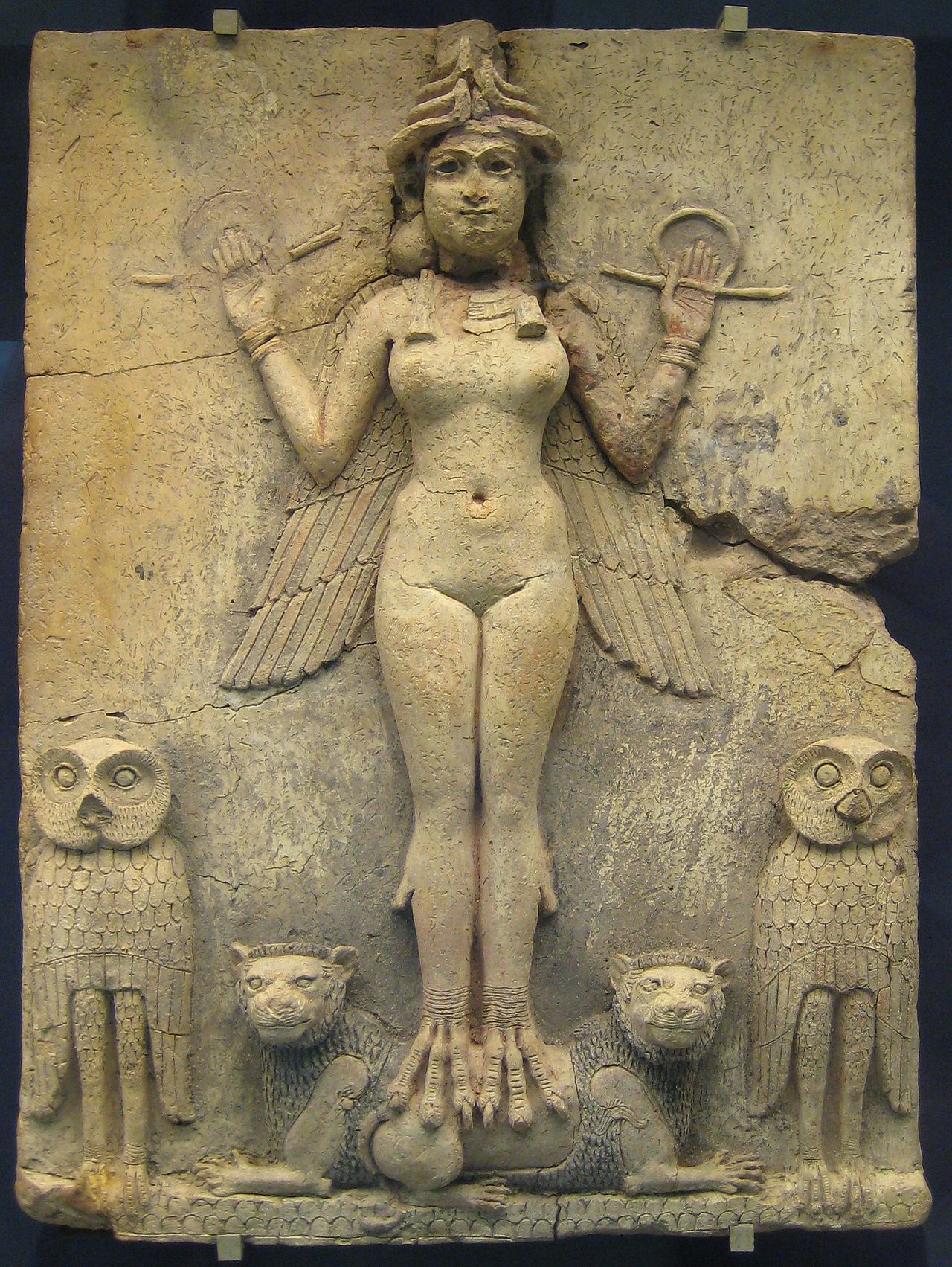
During the half-term I decided to visit the British Museum for their exhibition ‘Feminine Power: the Divine to the Demonic’. It’s the first big exhibition I’ve been to since covid and I was attracted to it to see the ‘Burney Relief’, also known as ‘The Queen of the Night’ relief which may (or may not) depict Inanna, one of my favourite mythological beings, who I’ve named the main character in the novel I’m currently writing.


The relief itself is usually exhibited at the British Museum for free, so there had to be some other interesting stuff to make it worth the £15 exhibition charge. There were. Arranged into loose themes, the room was stuffed with depictions of Goddesses and powerful mythological women from all over the world, principally in statues, although there were a number of pictures also. One of my favourite was the picture of Guan Yin, a Buddhist avatar of love and compassion where all the lines in the picture were made from minuscule calligraphy. It was also lovely that revered women in Islam were not left out with some beautiful calligraphy of their names and one which held the whole Maryam Surah in one frame.


The experience was a bit like meeting all the powerful beings, with an image or statue of them and a little write-up about who they are and what they represent. There was a female form from Iraq which was over 6,000 years old. Interestingly, these pre-historic forms represented women as bodies with thick thighs, large breasts and marked pubic triangles but no faces. It was as the beliefs and mythology developed that the Goddesses gained faces and personality.


And what personalities there were. There was Pele, Hawaii’s Goddess of Volcanoes with a surprisingly calm face, Kali with her necklace of severed heads, Sekhmet, standing calmly with her lion’s head. One of my favourites was Tlazolteolt of the Huaxtec who inspires lust and eats dirt, she has a literal shit-eating smile, however she purifies the dirt into life-giving fertiliser. 


Not all the figures were old, there was a modern portrayal of Lilith, in Jewish mythology Adam’s first wife who refused to obey his wishes. Here she’s an evil looking bog-monster, lurking on the wall but the write-up said that she is an inspiration to many modern practisers of witchcraft along with Hekate and Circe. There was also an early depiction of her on a bowl which looked like a crazed child’s drawing. 


The Inanna section not only had ‘The Queen of the Night’, which is absolutely captivating to see close up, but a tablet of a hymn to her in cuneiform, a depiction of two people in bed together and a Sumerian King figure making an offering to her.


What’s amazing about the exhibition is that many of the beings portrayed in it are still worshiped today. I saw people bowing to Kali and Guan Yin and others crossing themselves in front of Mary. It brought a special frisson that the characters we were meeting still have force in people’s lives.


I suppose the big picture of ‘Feminine Power: the Divine to the Demonic’ was to show how multi-faceted and powerful depictions of women can be but I was left more with the thought of how interesting and inventive the human race is as a whole. A very welcome decision on the part of the curators was to talk to groups of Wiccans, Muslims, Christians, Hindus &c and ask their interpretation. For example, the Goddess Kali, known to many from the hideous portrayal in Indiana Jones, is not simply a manifestation of violence and death. The heads around her neck aren’t the result of wanton slaughter but representations of the ignorance that we need to slay in ourselves to become better people.


If anything let my experience down, it was the talking heads. It started with a word-cloud of qualities that could be attributed to women (i.e every human quality) which Time Out magazine said “feels like being stuck in a meeting with a bunch of male ad execs trying to figure out how to flog tampons.” The there were videos of five famous women teasing what the visitor would shortly be seeing. Each of the women had a section in it and the elements where they were quoted added very little to the experience.


A depiction of Mami Wata, an African water spirit had a quote by Bonnie Greer saying that she has ‘real city girl energy’ about her. I looked at this statue of a woman with a snake around her neck who represents the life-giving but also dangerous power of fresh water and couldn’t get ‘city girl’ out of it. Confused, I asked the British Museum employee sat next to the statue what Bonnie Greer might have meant by that. She ummed, aahed and essentially told me that it didn’t really mean anything in particular. I think the use of these slightly naff talking head elements did distract from the engaging and fascinating range of powerful women that we were introduced to.


Wandering back from the museum I noticed a little bookshop that had an exhibition in it and popped in. This was ‘The Story of Swedenborg in 27 objects’ and was being shown by the Swedenborg Society. I can’t say I knew much about Emanuel Swedenborg, an eighteenth-century Swedish courtier and scientist who began to see visions and changed tack, writing extensively on esoteric and religious topics.


I was lucky enough, when I wandered in, to catch the chair of the society and he gave me a very interesting impromptu talk about the man, his habit of talking very close to people and playing with their buttons as he did, and his visions. The items themselves included his walking cane, his blotting paper and, strangest of all, one of his ear bones. Apparently his head went on a few adventures after he died as well. There was also a hand-translated copy of one of his books into Japanese and an English copy of the same book owned and signed by T.E Lawrence.


Best of all, the bookshop had a trunk where previously loved books can be picked up for a pound. While I doubt I’ll turn Swedenborgian anytime soon, this rationalist-mystic is certainly an interesting figure and I look forward to finding out a little more.


Wednesday, 1 June 2022

Under the Glass...Licking into shape


 I
t’s non stop partying here in Grub Street. Last Weekend I, as Maid of Honour took my sister on a razzmatazz hen-do down in Milton Keynes and next week will be at the wedding itself. In the meantime, I am off work and have tickets to the ‘Feminine power: the divine to the demonic’ exhibition at the British Museum where I will be meeting my gal Inanna. I also made one of my crappy arts.


One of the things I love but don’t mention very often on this site are mediaeval bestiaries. I like them for their goofiness, the weird pictures and peculiar legends but I also like them on a window of a different way of seeing, of understanding what knowledge is and the natural world around us. 


Among the beavers biting their own knackers off to escape hunters and unicorns laying on the laps of virgins are the bears. According to long understanding, bear cubs are born as shapeless putty with eyes and claws and the mother physically licks the bear cubs into bear shape, lick by lick. It’s where we get the phrase.


Writing a book is a similar process. Each draft is another batch of licks, slow and time consuming, licking this formless little lump into the proper shape. For this reason I painted a bear in the style of a mediaeval bestiary, licking a book into shape.


I was inspired by this..


and I created this…


I know it’s not good exactly, but I enjoyed doing it, it sits nicely with my other crappy arts and it reminds me to keep patient with my book and keep licking because it’ll reach its final shape eventually.


Wednesday, 25 May 2022

Leon Garfield: A Last Gasp of Garfield

 A Last Gasp of Garfield


It’s happened. I’ve reached the last six books by Leon Garfield. These include the books I found hardest to find and the ones I was putting off reading. From here on, every time I read a Leon Garfield book, it’ll be a re-read.


The Captain’s Watch


The second book in the Boy and Monkey series written for the ‘Long Ago Children Books’ for Heinemann. This series fascinates me with its aim to create good historical fiction and was clearly a success for a while,  reviewed in the Times and other national publications but now completely unknown. The first book was a fine little story, although probably too ambitiously written for smaller children but too short for older ones. Unable to find this book, I read the third one, which was unfortunately racist. 


The Captain’s Watch is fortunately not racist but like the first book, it’s a very slight story bolstered up by some great writing. I loved the description of the ship “taking in water like the Captain’s Wife took in lodgers” - with a hint that lodgers can also be read as lovers. I liked the cynical captain and his distaste of the hymn-singing Germans that make the boat “so blessed, they’d sail to heaven with a fair wind.”


The story itself deals with Tim and his monkey, Pistol who are being transported as indentured servants to America. Pistol can’t help his training and keeps stealing shiny objects, including the captain’s watch and Tim has to find creative ways to not be hanged from the yardarm.


It’s slight and funny and, unlike the sequel, there’s no use of the ’n’ word.


The God Beneath the Sea


This was a joint writing project between Leon Garfield and Edward Blishen, brought together by their childhood love of Greek Myths. The idea is to take the myths, tie them together into something of a through-narrative and tell them in a language that is gritty, modern and poetic. The book won the Carnegie Medal and Charles Keeping’s creepy illustrations were commended for the Greenaway Medal. 


That aim to be gritty and poetic threatens to overwhelm the book but thanks to a smart way with a simile or a dash of humour, it never is quite subsumed. There’s no clear indication of who wrote what, but comparing the crusting on a crab’s shell to mini travelling cities can only be a Garfield idea. I also enjoyed the way the book creates its own epithets for the Gods and Goddesses. 


The God beneath the sea is Hephaestus, son of Zeus and Hera, thrown to the sea for being ugly. The stories of the Earth’s creation and the Titanomachy are told to him by the sea nymphs who have taken him in. It’s interesting though, Hephaestus is not really the main character, if anything, it’s Prometheus.


I didn’t realise that in Greek creation myth, humans were created, not by an Olympian but the Titan, Prometheus. What’s more, the human soul are seeds born of the primordial chaos of the world. People in this book are so fragile and weak compared to the Gods and Prometheus sacrifices himself to fight in their corner. 


This is very much a God’s-eye view of the Greek myths, dabbling in ones that I knew less about. Not only the lesser told stories of Chronos and the war with the Titans but also the ancient Greek version on the universal flood myth. Also - I didn’t know the walls of Troy were built by Gods.


This is a very different book from Leon Garfield’s others (except the sequel) but it’s vivid and exciting, certainly better than the Stephen Fry retellings.


The Golden Shadow


Whilst I enjoyed Leon Garfield and Edward Blishen’s first jab at Greek Myths, The God Beneath the Sea, I actually felt this sequel was better.


It had the same intensity as the first book, the same skipping and playing with language but the stories were tied more closer together. First, the book tells the stories of heroes, particularly Hercules and secondly, that the point-of-view is lower than the previous book, dwelling with the people and particularly one storyteller.


The storyteller is elderly at the beginning of the book and starting to doubt his belief in the wondrous stories he’s been telling. By the end, he’s even older and even more cynical. He has so many narrow misses with the Gods, demigods and sprites he tells about, almost meting Thetis, almost seeing Prometheus chained in the mountains, coming close to meeting Hercules but not realising it, until one day he meets Hermes, the psychopomp sent to lead him to the Underworld. There’s an interesting through-line that his life actually has a great purpose unbeknown to him which he eventually fulfils. I really enjoyed the sense he had of living in a post-God world even as he lived in the time of legendary heroes.


One of the other things the book does really well is to contextualise the labours of Hercules, not as noble or heroic acts but as penance for a moment of murderous madness. It made him a more interesting person, a sunny person of super-human power tethered by guilt to serve people lesser than him - ending up as a court jester in drag before being stirred from his malaise.


In many ways this book is more of the same for people who enjoyed The God Beneath the Sea but it has a tighter format, is more grounded and I found it more engaging as a result.


The Baker’s Dozen


This is a collection of short stories that looks like is was commissioned at the same time as Leon Garfield’s adult compilation, The Book Lovers. It contains short pieces by a range of writers including one by Garfield.


His story, Strange Fish is (typically) set in the eighteenth century and is about a father and son who come across a strangely empty village. The story takes in vengeful ghosts and vicious smugglers, ending in a rather sharp and uncomfortable ending where the villagers who wrecked ships from the cliffs failed the test and weren’t redeemed. Typical of Garfield, it also has the most striking first line of them all.


Edward Blishen, the former schoolteacher who co-wrote the Greek myths books gives the rules of a rather weak Geography/rhyming game. Philippa Pierce (of Tom’s Midnight Garden fame) gives a half decent slice of being-a-kid-in-the-seventies life, Alan Garner writes a creepy story featuring ghouls and broken promises and Joan Aiken offers a creepy story about a woman that gets lost in some alleyways in a fictional part of London and ends up in a Jazz-themed version of hell.


Iona McGregor tells a fun story about an eighteenth century maid hoodwinked into stealing shirts for her lodger, Jill Paton-Walsh takes the reader on a viking journey full of omens and ghosts and Helen Cresswell paints a silly picture of a show-off who deserves a comeuppance. My favourite story may have been The Pergola by William Maine, a story of a crush that has a lot of personality and charm.


The stranger pieces were John Rowe-Townsend’s piece about the difficulty in being a journalist where Tom Hutchinson, a pop journalist who writes an imaginary interview with a poor performer who has been forced into his unnatural life.


I enjoyed all the stories in this collection to a certain extent but the real jewel of the piece is Leon Garfield’s introduction where he goes full tilt at children’s publishing, describing the majority of the books written for children as having ‘the stringency and bite of a wet nappy’. His argument is that once, books were just books and now they are being pigeonholed for ease of sale - I imagine he’d not have been very keen on the YA genre, even as he’d have been placed in it. It’s a good collection though and an interesting snapshot of writing for older children in 1971.


Scripts for Animated Shakespeare


I have a copy of Garfield’s scripts for the Animated Shakespeare series but didn’t read them as I recently watched them all. I found the scripts to be good abridgements of the play which either sung or were let down by their animation style.


Shakespeare Stories & Shakespeare Stories II


I shall review these together as they are essentially two parts of the same thing. The only real difference is that I have read/seen/performed in all the plays in the first set of Shakespeare Stories but some of the second set were new to me.


The difficulty I had with these stories, is that the plot is often the weakest part of a Shakespeare play. People don’t see Shakespeare for the stories but for the characterisation, the wordplay, the construction of individual scenes that give actors the opportunity to give their all. What Garfield does fantastically well is tell the story, whilst integrating the key lines from the play in an organic way - these are really good Shakespeare retellings but I can’t get all that much from a retelling


The thing I found most interesting was the way Garfield brought out the themes of a play and settled on an interpretation on the stickier elements of certain plays. I’m not sure if they were his own interpretations or the most neutral ones, I suspect the latter. 


So Twelfth Night emphasised the themes of madness and sanity, something which Shakespeare seemed very concerned about (that and poisons that feign death without being death, there’s a lot of those). King Lear had fun with the pre-Christian nature of the story and The Tempest revelled in the subversion that lies at the heart of the text, it’s a coming-together story more than a forgiveness one. The Merchant of Venice walks the tightrope of sympathy with Shylock whilst The Taming of the Shrew tries to construct a genuine love affair out of the horrific events of the tale, he also makes a valiant attempt to tie the Christopher Sly subplot into the rest of the play. 


Where the retellings worked best for me were the plays I didn’t already know - and the one I had seen but hadn’t followed, which was Measure for Measure. It was interesting to see what the play was actually supposed to be about. It was also interesting to see how little Cymbeline is in Cymbeline. How violent and slapstick Comedy of Errors is, and just how many times Shakespeare does the old ‘swap cloaks and be seen as someone else’ deal. 


In and of themselves, these are good retellings of the plays but I was only reading them for completions sake.


And there it is, all Leon Garfield’s works read and reviewed… where do I go next?