Wednesday, 1 January 2025

Top Ten Books I read in 2024 (10-6)

 I had a very hard time coming up with my top ten books. It’s not necessarily that I haven’t read lots of good stuff this year, it’s more that very little of what I read jumped out as really great and memorable.  As a result, the choices may be a little peculiar. 


As usual, I’ve made a list-challenge of the books I’ve read this year. 


Number Ten

The Book of Embraces - Eduardo Galeano


I think I’ve got to accept that I will never be able to describe The Book of Embraces or the multifaceted effect it had on me. I have memories of being blown away by it but it hasn’t quite lingered.


A collection of small stories, (perhaps even fragments or Incidences), The Book of Embraces starts with fables but grows more tethered to reality and history as it goes on. It’s truly strange that a book that feels this positive and joyful can be so full of murder, exile, torture, imprisonment, colonialism and despair.  Some of it is truly terrifying, the account of the professional torturer, the firing squads and prison wardens, yet there are joyful stories like the flirting bus driver, or freeing ones like the person who learns to fly.


These stories are arranged very well, mixed up enough to not make the book seem grim nor superficial but clustering together themes or reflected images so they come in waves, reinforcing what’s come before. 


The comic moment of the small child calling the ‘little birdy’ in the story ‘a shit’ made me laugh out loud. So did the comment that barbers humiliate him by charging half price. Darker are the comments that ‘it have become unnecessary for the police to ban books, the price does that for them’, that ‘numbers live better than people’ and that ‘the electric cattle prod turns anyone into a prolific storyteller.’


In amongst this all is true playfulness and true camaraderie. He brings up the notion of ‘key-friends’, those who will lend you the key to their place to hide out in times of trouble. There’s also a brilliant description of ‘compatriots in time’ that really resonates with me.


In the end, what makes this a wonderful collection of odds and ends is the spirit behind them. I can always get behind someone who says they don’t want to die because they want to ‘play forever’.


Number Nine

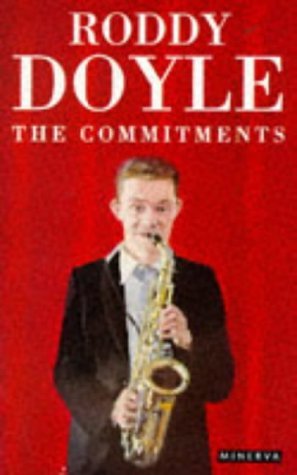
The Commitments - Roddy Doyle


A last minute addition to the list. The Commitments made it in because it made me laugh out loud on multiple occasions and that’s more than any book has made me laugh in years.


It’s a short book and I read it in a morning. It tells the story of a bunch of Dublin scrubs in the late 90s who decide to create a soul band and bring soul to Ireland (before realising that Ireland isn’t yet ready for soul.) 


It’s a very musical book. Not only is it about music, with the songs often transcribed (down to the instruments going “CHUNK CHUNK… THUM -  THUMTHUM”.) but it’s a book that revels in the sound of voices. There’s very little visual description or scene setting, just lots of dialogue and music, often weaving and overlapping in lively and funny ways.


It’s a cliché that the Irish use of language is musical, but there’s some truth in that cliché. It was some Dubliners who taught me how much more musical it is to refer to an arsehole as merely a hole, and this book taught me how all holes can be serviced by such a phrase. This book also taught me such musical phrases as, describing Gene Clark’s ‘manly whinge’ or complimenting some girls that people will “be eating chips out of your knickers.”


The characters are simple but effectively drawn. Jimmy is the musical Svengali, having got into Frankie goes to Hollywood before everyone else, and against them first as well. There’s the drummer, whose main influence “yer man Animal”, and the bass player, a butcher who plays bass like a butcher, who isn’t impressed with his name ‘meatman’ until he learns it is also American for langerman’. I found Jimmy ‘the lips’ and his pseudo-religious diktats of what soul is to be very annoying, but his outrage at the ‘musical wanking’ that is jazz to be very true.


It’s a slight book, but a funny one and I enjoyed it very much. 


Number Eight

The Metamorphoses of Ovid - David R. Slavitt

I really loved David Slavitt’s free and easy approach to Orlando Furioso, so when I saw a translation of Ovid’s Metamorphosis. As such, I knew going into it, that it would probably be a loose but entertaining take on the work.


What a strange, baggy work Metamorphosis is. The introduction described how Ovid was trying to jump on the ‘epic’ bandwagon but had a far more intimate sensibility and this is how he mixed those two impulses. This means that the incidents in the book share a theme of change and transformation but this theme is rather loosely handled with and ‘and then’ quality to the structuring. There’s also a chronological element, with the first transformation being from chaos into the world, and the last being of Rome from loose band of ruffians to world superpower. All this also leads to a very striking message at the end.


I was interested in the Biblical overlap that took place in the first few sections. The creation of the world was not created by the logos in this telling, but by science. Essentially the atomic weight of the different elements caused them to separate and become what they are today, even if those elements are earth, wind, fire and air. 


There’s also a flood myth. It always surprises me when I reminded that the Greeks and Romans has a flood myth of their own. As portrayed by Slavitt, Ovid’s depiction of the flood is so evocative. The rains don’t simply happen, Jove squeezes the water droplets out of the clouds, the rivulets of water flowing down his hair and beard. The flooded world is an enchanted playground, dolphins romp in the woods, darting like huge birds. It’s also interesting to see what Deucalion (the tale’s Noah figure) does when he lands. He cries. Noah never seems to be all that moved by the destruction of almost everything he knew - though I suppose getting pissed and sleeping naked could be seen as a trauma response.


Whereas the Biblical flood was due in part to the evils of man, the Greek/Roman one was due in part to the terrible kingship of King Lycan - like many of the future transformations, his name is a hilarious hint at what he was to become - in this case a wolf. The change is one of the more viscerally described,

   “Imagine how foam flecks at his jaws, and his body hair.

    thickens and mats. His hands deform, and his arms are twisted

    into a wolf’s forelegs…”


I don’t know if it’s Slavitt, I don’t know if it’s Ovid - I suspect and hope it’s a combination of the two, but there are some really vivid sections. There’s a plague which is truly horrific, Perseus against the monster and the the fight agains the centaurs. People of the imagined heroic past really shouldn’t have had weddings, things always go wrong (just look at the one between Peleus and Thetis). It’s worse than Eastenders.


I think the worst thing to be in Classical mythology is a dryad, or a woman. Neither can escape from being constantly pursued, raped or being turned into plants. One poor woman is turned into a plant to escape Apollo, her pursuer, who then strokes the tree, which she can feel but not escape from. Other terrible fates included a man cursed to eat himself to death and some women who weep themselves into trees and are in agony when some well-intentioned family members try and tear their bark off. Their cousin, Cygnus also is transformed - you’ll never guess into what.


Then there are the interesting tales of gender non-conformity. The strange tale of Hermaphrodite - a combination of Hermes and Aphrodite (of course that’s how that word came to be but I’d never realised). Then there is Tiresius, who I’d only known as an old, blind mystic. How he became blinded and blessed with the gift of prophecy is wild. As a young man, he saw two snakes fighting and hit them, which turned him into a woman. After years living as a woman, he found the snakes and hit them again, turning him back into a man. Jupiter and Juno are having a debate about who enjoys sex most, men or women do they ask Tiresius, who’s had a go at both, who says that it’s women. Enraged at losing the argument, Juno blinds him, so Jove gave him the gift of visions to compensate. 


After a run through these myths, a sprint through the Illiad and the Aeniad, we get to a curious part about Pythagorus. He gives an impassioned speech about vegetarianism before explaining his belief in the migration of souls. This leads to the message of the book. That all change, even striking, sudden change is usual. 

  “The world is arbitrary, abrupt, astounding” and we sometimes forget this. “It is we who are dull and lacking in vision, for we have forgotten the wonder of things.” If anything, Metamorphosis is about the re-wondering of the world, the reminder that it’s a fascinating and wonder-full place.


Number Seven

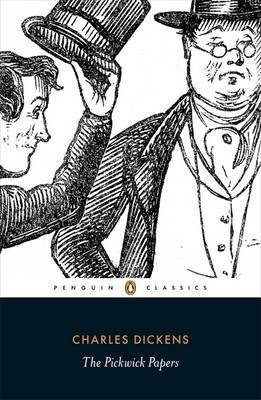
Pickwick Papers - Charles Dickens


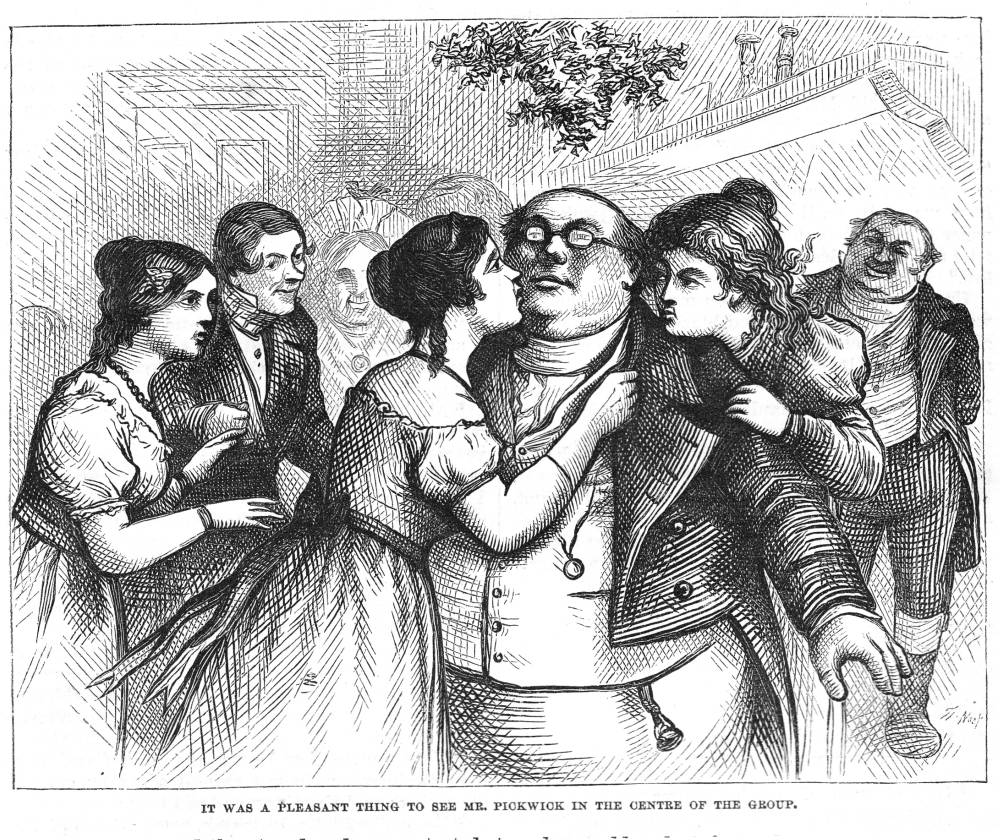
This may be Dickens’s happiest work, certainly the happiest I’ve read but it’s also a little flimsy. While I had a good time while I was reading it, it wasn’t until writing it up till I found how much I had enjoyed it and how much I’d fallen in love with Samuel Pickwick, Sam and Tony Weller and all the rest of the gang. 


Read the write-up here.


Number Six

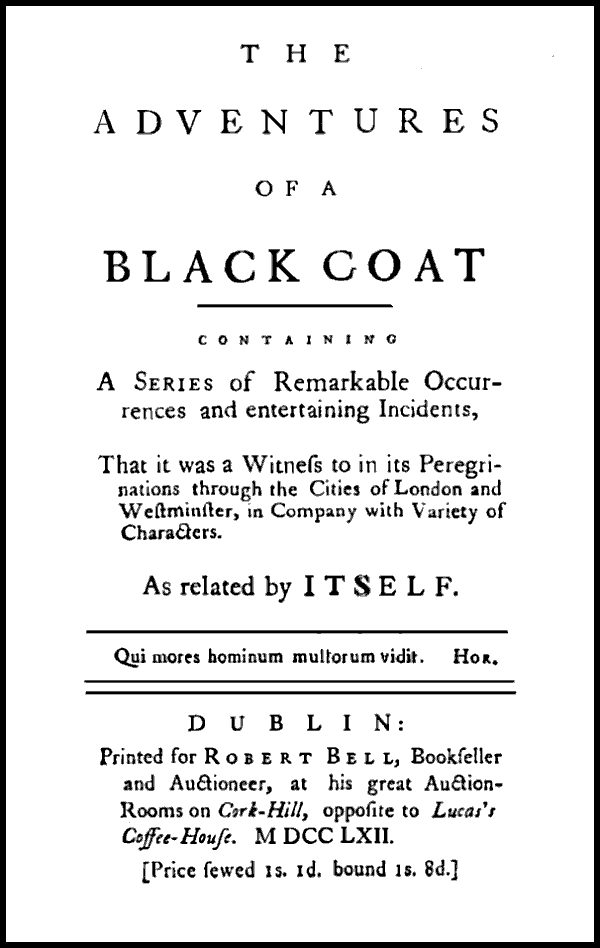
The Adventures of a Black Coat - Anonymous


A prime and proper piece of Grub Street fun, this book offers a window into the lives of chancers, grifters and others. 


I wrote about this here. 


Wednesday, 25 December 2024

Christmas Review: The Pickwick Papers by Charles Dickens

The Pickwick Papers became Dickens’s first novel, despite not beginning it’s life as one. It’s his cheeriest, cosiest and happiest books and it also owes a big debt to the eighteenth century novelists before him.

The original idea was that a man called Robert Seymour would create pictures of funny sporting mishaps surrounding a group of dim-witted Londoners who formed a club dedicated to country pursuits. In order for the punter to get their money’s worth, some young writer would cobble together a loose story from the pictures to bulk out the publication. However, that young writer was Boz, aka Charles Dickens, and he had other ideas. He decreed that the pictures should be driven by the writing and that the club should have a wider remit to allow for a greater variety of comic set-pieces. Robert Seymour presumably didn’t take it well, he killed himself (though he’d tried before).


Starting as it did, Pickwick Papers is naturally episodic but develops its themes and plot as it goes on. As such, it immediately has a more eighteenth century feeling, echoing Dickens’s own facourite authors like Smollett and Fielding. There’s also something Mr Spectator about Mr Pickwick and his Pickwickians, one of those loosely defined clubs, though nominally a scientific one. Mr Pickwick having published a very influential article on ‘tittlebats’ in the ponds of Hampstead Heath. It turns out tittlebats are sticklebats. There’s something a little Scribleran about the odd jabs at scientific societies. 


Samuel Pickwick, Tracy Tupman, Alexander Snodgrass and Nathaniel Winkle are elected as roving reporters, set to go out and explore the places they can get to through the coaching network, falling into various scrapes. In many ways, this book is a celebration of the coach/post system, with many of the events happening in ludicrously well-appointed inns and the characters able to nip across the country in mere days. The downsides of such travel are also featured, and I can’t say I’d have much liked having an outside ticket for several hours in the rain - though Bob Sawyer showed it could be fun if you had the right kind of booze.


As the book continues, the themes of innocence and experience, honest dealing and trickery begin to emerge. Mr Pickwick himself becomes a more rounded character, a mad approaching old age with a youthful energy and enthusiasm, who’ll get in all sorts of scrapes to support the course of true love and will face all sorts of privations to obstinately make a point. At one point he tries to ‘call up a sneer for the first time in his life’ and fails.. I like a character that can fail to sneer. His childishness does include a big dose of naivety, and that is set-off by Samuel Weller.


Weller was a later addition to the cast of characters which coincided with The Pickwick Papers really taking off. He’s a cockney bootblack with a ‘comical’ accent, a big heart and a greater dose of street smarts than Pickwick. I was prepared to find him rather annoying but I warmed. There’s a self confidence in him that creates very funny situations when everyone else is losing their cool. I especially liked his relationship with his own father, Tony.  


Tony is a coachman and my favourite character in the book. He has a skin the colour of ‘underdone roast beef’, and a dreaded fear of widows, after being ensnared by one. He did his best for his little boy Sam, turfing him out on the street to gain smarts and his mortified when Sam has been outwitted. The two have a casual, matey relationship that grows deeper as the book progresses. When Pickwick has a spot of bother in a prison, Tony suggests smuggling him up in a piano. Later, when Sam wants to be imprisoned to join Pickwick, he ‘borrows’ money from Tony and Tony ‘presses’ the charges. The scene where they all stride happily arm in arm into the Fleet brought a huge smile to my face.


There are many other memorable characters (it’s Dickens after all). These include the villainous Jingle and his servant Job Trotter. Jingle is another character with a particular way of speaking, it’s very truncated, described as ‘telegrammatic’ which works really well when he’s a conman with quick patter (his description of the woman accidentally knocking her head off had me laughing out loud), but less when he is trying on other masks. Job Trotter is defined by his supernatural ability to cry and his silent laugh, described as if he loves his joke to much to share any of it. 


There’s a subplot about Shepherd Stiggens, an evangelist, temperance vicar with a fondness for pineapple rum. He lurks around Tony Weller’s wife and drives him into rages he does a terrible job to suppress. I loved the meeting of ‘The Brick Lane Branch of the United Grand Junction Ebenezer Temperance Association’ - a very well observed name. There’s the odious lawyer, Fogg who is an “elderly, pimple-faced, vegetable-diet sort of man”. There’s the violent Wardle, the grasping Widow, the silly Bob Sawyer… oddly the characters with the least life are Pickwick’s compatriots, Tupman, Winkle and Snodgrass. 


I recently purchased a Toby Jug collection. It’s a small one. It consists of literary figures called Samuel. There are three Samuels and two jugs. The first is a Samuel Johnson jug, the second is one featuring Samuels Pickwick and Weller. It might not be a coincidence that Pickwick shares the same name as Johnson - as there is something Sam and Bozzy about Weller and Pickwick’s relationship (as well as Don Quixote and Sancho Panza). The quick temper and sense of righteousness also ties Pickwick and Johnson together, though I don’t see Johnson as a naive person. It’s also interesting that the closest out of the original group of Pickwickians is Nathaniel WInkle, who shares a name with Johnson’s little brother. 


Pickwick Papers is a book with a wonky timeline that features a number of seasons. The spirit of the book is largely sunny and joyful (even despite surprisingly large number of references to suicide) but there is a famous set of events that have Christmas at Dingley Dell. It’s almost like a dry-run for parts of A Christmas Carol, with feasting, festivity and Christian charity. There’s also a story told about a man who learns the ‘true’ meaning of Christmas with the aid of goblins presenting him with visions of the world. I write this as Christmas songs are playing, in a room festooned with decorations and my Mum cross-stitching on the other side of the table. Christmas is coming, and if you are reading this, it’s here and been,


A merry Christmas to everyone and a happy new year.  


Wednesday, 18 December 2024

Review: The Beau Monde by Hannah Greig


Back when I used Twitter, I enjoyed the tweets by Hannah Greig, so I was happy to come across The Beau Monde, her book about the British elites in the eighteenth century. It clearly started as a PHD thesis and that skews the tone away from a more popular, storytelling style of writing but it is clear and very readable.


The book exists to make a particular argument, the worlds of court and high society were not a shiny, vacuous bunch of spendthrifts, chortling ad scandalmongering while the real influence was being wielded by the emerging middle classes. They actual did stuff, had power and adapted to the new social world that was being built throughout the century.


A key concept was that of fashion. While it was important to follow fashion, the Beau Monde (or the Bon Ton) also created and regulated it. Unlike today, a fashionable item was not reliant on a brand, it wasn’t necessarily who made a thing that made it fashionable but who else had one. If new candlesticks were being made, they were being made to be like those in another fashionable house. In this way they weren’t merely consumers, but creators of the fashions - and that those fashions spoke of intricate networks of privilege, political persuasion and intimacy.  


One of the most fascinating chapters was about diamonds. These clear, glittering stones became the precious stone to wear and a person (male or female) could make their mark and stake their place in the fashionable world by the amount of diamonds and the craftsmanship of setting them. Yet this doesn’t mean that they simply had lots of diamonds, they pooled them. So if a family member had an important date, like a first presentation in court, the family would recall all the diamonds through their network, diamonds would be borrowed from friends, and all these diamonds would be reworked for that occasion before being called for and reworked for a different person and a different occasion. The chapter showed how the loaning, giving and reworking of diamonds strengthened family and even political relations.In fact, a new rich family simply buying new diamonds didn’t have the same advantage, as they missed out on the acts of social cohesion that the loaning of diamonds created. The chapter also showed how precarious being a jeweller was, as the work was mostly resetting, not selling new rocks.


A similar game was played with opera boxes. Keeping a box was expensive, so families would pool resources, not particularly out of a love of opera but because it was an arena for keeping connections and making statements. Two families sharing an opera box was often the signal of a new marriage, or the cementing of a political alliance.


There’s another great chapter about the pleasure gardens of Vauxhall and Ranelagh. Much has been said of how these were great social mixing places (like the Rotunda and the theatre) that the cheap-ish entry ticket meant servants could afford to dress up and go for a special treat. However, Greig argues that the Beau Monde did not use this places to mix, but to meet each other and perform their status to others. There were deep invisible lines that meant that those in the circle knew where to be and what to do, and those without could watch. They were all together but all distinct. 


What was the purpose of all this, other than maintaining the caste? Politics. Whitehall, which had been Europe’s biggest palace had largely burnt down but the commons still met in what was left. The sessions of parliament set ‘the season’ and various social events were delayed if the house sat long. More than this, there wasn’t a big enough court complex to have a Versailles-like secluded world, so the business of politics fanned out across London and happened at the opera, theatre, pleasure garden and ball. Systems of patronage still existed, political parties were formed on dance floors and declared in fashion choices. Every act of the Beau Monde was a part of an interconnected web of very carefully balanced relationships that maintained and held commercial, political and cultural power.


Was I convinced by these arguments? Sort of. Certainly, it gave me a look at the world of the rich that presented them as more than tittering fops. It’s also very well argued and features many fascinating anecdotes, often told in their own words from letters and diaries. I’m always going to be wedded to my Grub St, my booksellers, my Johnson and Lunar Society as the true influencers on the eighteenth century and beyond, but I’m less dismissive of the Chesterfield and Walpoles. It was a good book that taught me and showed me a different view. I won’t be convinced that today’s aristocracy are a waste of time that needs abolishing though.


Wednesday, 11 December 2024

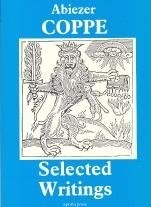
Review: Selected Writings by Abiezer Coppe


 Having loved Abiezer Coppe’s ‘Fiery Flying Rolls’ in The Mad Crew, I was keen to read more and so purchased his Selected Writings.

It starts with an interesting introduction, featuring as full a biography of Coppe as is possible, much of it coming from the work of Anthony Wood (who appeared as a narrator in the fiction, An Instance of the Fingerpost). A riotous student in Oxford, he became sucked into the more anarchistic side of new religious movements and eventually became one of the key figures in the very loosely organised ‘ranter’ group. He preached around the Midlands, often drunk, preached wildly on the south side of the Thames and then was accused of entering Coventry with two women sharing his bed. There he was arrested before being sent to Newgate in London, which he was let out of on the condition that he retracted his previous views. On his release, he seems to have carried on his preaching in London, and then setting up a conventicle in Barnes under the name of Dr Higham, where he died.


The book then starts with the two ‘Fiery Flying Rolls’. Despite having read them a couple of days before in the other anthology, I read them again. There’s a power in the writing, drawn from deep passion, deep anger at the rich and the corrupt and a deep glee at seeing them ‘get it’ when Christ inevitably (and shortly) returns again. They are also great writing. Coppe’s use of rhythm, alliteration and repetition is amazing. From that beginning,”My dear one/all or none/ everyone under the sun/ mine own” to the “unity, universality, universality, unity”, the text just flows.


I love the savageness of it, his “plaguey, filthy, nasty holiness”, that threatens the uncaring rich with “being served in thine own sauce” and accuses them of being elbow deep in others blood that even soap won’t wash off. I love his insistence that the poor are the same flesh as the rich and deserve love. That real communion is not an act of ritual but one of sharing. As he says, “I am about my act. My strange act. And when you hear of it, your ears will tingle.” It’s thrilling stuff.


Then we get to his ‘Remonstrance’, the text where he has to officially retract the things he said and wrote. He starts off by claiming that his works can’t fall under the new blasphemy laws, because those laws were written in response to his work - that they couldn’t be against the law if the law was written afterwards.


He says that there have been lies told about him, like taking two women to Coventry, that he parroted blasphemies when he was under other people’s influence but not since he achieved his own spiritual maturity. He claims many people have cited them the father of their babies and that he has accepted them, not because he was, but because to spurn them would be to starve innocent children.


He makes a point that God has often changed his mind. That he is not into circumcision as he used to be, that he used to set challenges for favourites, like telling Hosea to marry a prostitute. He denies he ever said God was in people (though he certainly did say that) instead saying that God is one with everything.


He claims that he never swore until he was twenty-seven and that he is big enough to be “neither offended by my weak brother, which eateth herbs. Nor judge my strong brother, which eateth meat.” He also says that he never denied the existence of sin, but feels it a rank hypocrisy to go after the sin of drink and not the sin of ignoring the poor.


The whole piece is a retraction, but it then also pushes forward on the things he really cares about. When it does come across as grovelling, it comes across as arch and insincere and then strikes back in full vigour when he can attack the christians who care more for form than charity. I’m surprised and worked and he was released from prison. An imprisonment he typically defines as ‘tedious’.


There are two short pieces in there as well. One in a poem about a true Christian, which sounds pretty orthodox. The other is called ‘Divine Fireworks’ and is something of a mini return to form. Not only does it use fire imagery but it’s an apocalyptic vision. The repeated phrase in it is, “It’s a whipping time. The day burns like an oven.” Perhaps the authorities weren’t so worried about Coppe then, perhaps the meaning is suitably clothed in the allegory of the vision or perhaps it simply didn’t sell, but Coppe didn’t get in trouble for it.

The back cover features a warning from the ‘Rolls’, “Read it through, and laugh not at it; if thou dost I’ll destroy thee, and laugh at they destruction.” That said, Coppe can easily be read for entertainment. Obscure 400 year old religious pamphlets aren’t an obvious good read, but Abiezer Coppe’s are and more people should read them.


Wednesday, 4 December 2024

Review: The Mad Crew: A Ranter Anthology


The Mad Crew: A Ranter Anthology is a book edited by Kirk Watson and sold through Amazon’s self-publishing division. I’m not saying all books published this way are bad (I’ve got my own book, Death of a Dream-Pedlar on sale there at a very reasonable price) but for classics and non-fiction alike, it can often be a cynical cash-grab.

The Mad Crew is very nicely formatted collection of well chosen piece, with each piece conveying a different aspect of some of the loose collection of people who are now known as Ranters. These were the extreme edges of the many ideas swirling through the early days of The Commonwealth. The country had declared war on the King, fought him, beat him, put him on trial and executed him. As the King was the microcosm of God’s macrocosm – it was like all bets were off and all new futures possible. There were the Levellers who called for smaller wealth disparity, Diggers who held land in common… and the Ranters, something of the lunatic fringe.

One thing that ties the Ranters together is a belief that God is all and so nothing can happen outside of God. This means that even acts considered sins are done through God. What’s more, the Original Sin, eating the fruit of the Tree of Knowledge brought the concept of sin into the world and salvation lies in being as innocent of good and bad as Adam and Eve. What’s more, if God is one, then all people are one and wealth should be shared (and wives…possibly).

I’m not very sure if the first piece, ‘The Mad Crew’ is really a piece of Ranter writing, I think it’s more a case of attacking through parody. Not only are the Ranter arguments presented very weakly, quite absurdly, but there’s an almost moronic glee taken in the notion that who sins most is most holy. What’s more, the anonymous author of ‘The Mad Crew’ has a habit of expressing things in the most eye-catching but provocative way. The oneness of God is described as, “When people drink, they drink God. They lie with God in their beds.” There’s also the very striking, “God is the whore and the whoremaster.” A lot of the book is about whoring and drinking – he repeats many times how he enjoys it, that God loves him for it and he will continue doing it. The level of cartoonish glee is what makes the piece seem a possible parody.

Laurence Clarkson’s ‘A Single Eye’ is a far more mystical work, phrased as a dialogue, it tries to use classical logic and scholastic-type arguments to argue the case of Ranter ideas. He has some very interesting notion, that God saying “let there be light” is God creating himself, that all people have the light of God in them and they can bring it out more. It defines sin as a product of human imagination and almost sounds a little Alestair Crowley-esque, “If that within thee, do not condemn thee, thou shalt not be condemned.” It’s a pretty cogent piece of explanation but it lacks the energy and glee of the first.

Poor old ‘A Single Eye’ also pales in comparison to Abiezer Coppe’s wonderful ‘A Fiery Flying Roll’ (and its sequel ‘A Second Fiery Flying Roll’). This is an energetic, brilliantly rhythmic, passionate piece of prose. It grabs at the beginning with its call to, 

    “My Dear One

All or None

Everyone under the Sunne

Mine Own


Though he does talk about, “sin and transgression is finished and ended’, he’s not really talking about those aspects. His big thing is simple. God is coming back and the rich ought to be donning their brown trousers in preparation. He calls God the ‘might Leveller’, though says he wasn’t involved in the Civil War himself. God’s not just coming like a thief in the night, he’s coming like a highwayman, thundering and demanding money. He will break the rich with his little finger and they are to “bow or howl.” The rich that look away from the poor with have their eyes ripped out and those whose hands are stained in blood will have it up to their elbows till soap won’t wash it off.

He talks about his visions, of being forcefed the word of God till he shat it out into the form you are reading it. He talks of his, “secret mysteries and mysterious secrets”. He talks about how he stares at posh carriages and gnashes his teeth, but how he hugs beggars, even noseless ones. What’s more;

“I am about my act. My strange act and when you hear of it both your ears will tingle.” I’m not sure about ears, but the hairs on the back of my neck tingle a number of times whilst reading this book.

The last piece, “The Light and dark Sides of God’ by Jacob Bauthumley is a huge shift. This takes a very reasonable tone, seemingly neither trying to argue or preach, only meditate out loud. It argues that God is unknowable because he is so inextricably linked with what there is to experie
nce and how we can experience it. God merelys says, “I AM” and that’s all that can be said about him. He’s in all things, which makes organised religion a bit pointless. He’s “one, intire, perfect and immutable being”, there is no bad in God – it can’t even be understood. There are, “no distinctions in God.”

I really enjoyed Bauthumley’s description of the Trinity. The first is God’s love for us, the second is our love for God and the third is our love for each other. Communion is the act of coming together and sharing. Heaven is a state of peace and not a place in the sky. Sin is taking the self away from God – many of them notions that have some currency today.  For this thoughtful, non-violent and peaceful book, he had a hole drilled through his tongue. 

While Abiezer Coppe and his fiery, flying rolls were the easy highlight of the book, the more thoughtful pieces gave greater nuance to the ranter notions, whilst ‘The Mad Crew’ made it cartoonish. The Mad Crew as a collection, however, is extremely well put together and interesting.