Wednesday, 14 June 2023

A Trip to the Royal Pavilion (and Brighton in general).

 Brighton is a place that’s pretty dear to me. I was born there but lived in a town further down the railway, visiting often to visit the beach and the pier (and once to the Dolphinarium before it became a Sea Life Centre.)


Despite my history and fondness for the place, I’d never actually visited it by myself and wandered about in my own inimitable style. I also has a fancy to visit The Royal Pavilion, having visited when I was 8 or so, but having a lot more knowledge of the 18th century and regency periods than I did then.


I hopped on the train at London Bridge and had a very easy ride to Brighton. There’s a magical moment on that route when the train goes into a tunnel through one of the South Downs and bursts out the other side. Very often, if it’s a little muggy and cloudy in London, the Downs shelter the sea side and you find yourself in brilliant sunshine, with Brighton being recorded as one of the sunniest Cities in the country.


Once off the train, rather than trammelling straight to the sea, I wandered around the houses and came upon the Church of St Nicholas of Myra, its original parish church. In the graveyard I came across the grave if Martha Gunn, one of the ‘dippers’ who would carry women out of bathing machines and dunk them in the sea. She lived till she was 88. There was also the grave of Phoebe Hessel, a woman who enlisted with her lover into the 5th Regiment of Foot, where she had a distinguished service and was bayonetted in the Battle of Fontenoy in 1745. She retired to Brighton, where she gave evidence against a robber and died at the age of 108. The sea air did both ladies some good.


After a little more wandering, I went to the Pavilion. It’s a little pricey at £18, though the ticket lasts all year (for whatever good that is). There are a number of options available to experience it; to buy a detailed (but also pricey) guidebook, to buy an audio-guide, to download it on a phone for free or to just wander and talk to the guides in the rooms. I recommend the guides. I highly recommend them. Each one I talked to had a fantastic range of knowledge but also clearly into certain aspects and that element of personality really raised the experience and made it worth it.


The Royal Pavilion is ridiculous - ‘Indian’ on the outside and ‘Chinese’ inside, and clearly all imagined by Brits. Oliver Goldsmith, in The Citizen of the World has his Chinese narrator laugh at the horrendous taste of English Chinoiserie with all the ‘sprawling dragons, squatting pagods and clumsy manderines’, something he wrote forty years before the Pavilion was begun. It’s a daft, tasteless and garish place which piles on so much excess that it kind of works.


Originally a simple farmhouse, Prince George had it done up into the Marine Pavilion in a French style. Later he had John Nash turn the outside into a Taj-Mahal-esque wonderland. Rather than rebuild exactly, Nash created steel frames to go around the original house and then build on. Some of this worked very well but a lot of it was short-sighted, being murder to upkeep. At one point, missing minarets were replaced with fibreglass versions but now renovations and maintenance is a constant work, using the same materials Nash used. In some ways, this already artificial building is more artificial. When Queen Victoria decided to abandon the palace, finding it too exposed and cramped, she stripped it of the original fixtures and fittings. Many of them have been put back by the Royal Family, but many are replicas. The music room in particular has been restored after an arson attack, something which took eleven years to restore before the Great Storm of 1989 blew on of the minarets through the roof.


Yet that adds to the pleasure of the experience. The striking rooms are truly striking. The Banqueting Room features a huge chandelier held up by a dragon. Apparently. the dragon was originally made for a chandelier commissioned by the actual Emperor of China but sent back because it has wings. The Music Room also has amazing chandeliers, and a roof covered in scales. The other grand room is the Saloon Room, with a huge, bright sunflower carpet in the middler. Oddly, the corridors linking these rooms, with their muted colours and thick-pile carpets look a little like an unfashionable hotel and the building does seem peculiarly dingy when not in one of the grand spaces.


Even the kitchen is themed, with the pillars shaped like palm trees. The kitchen was fitted up with all the latest technologies at the time, with a jack that turns by its own steam rather than clockwork or a poor dog. This impressive kitchen was largely created to tempt Marie-Antoine CarĂªme, ‘the king of chef and the chef of kings’ to cook there. This worked for a while but his practices irritated the other staff. One thing he did which upset the usual order, was insist that all the food created under his aegis belonged to him and all left-overs were his prerogative. The kitchen staff were used to using left-overs for themselves, and to make extra by selling left-overs to local hotels. The local poor were also invited to take left-overs (like the old lady in The Belly of Paris) and one of these was Martha Gunn, who was once caught trying to smuggle butter in her dress.


The other rooms include George’s private apartments, the ones he had when he was King and his gout wouldn’t let him climb stairs, and the private apartment of Queen Victoria, who had many mattresses. She made a very good point about the Pavilion, for a royal palace created near the sea, there are hardly any rooms that is can be viewed from. Indeed, there’s almost nothing nautical about Prince George’s seaside retreat.


I left the Royal Pavilion with my republican and leveller sentiments re-entrenched, but also a peculiar gratitude that George had at least done something fun and ridiculous with his absurd income.


The rest of the day was devoted to indulgence. I wandered the seafront, drank local bitter at the marina and enjoyed a fish mixed-grill with chips and mushy peas opposite the skeletal West Pier - that’s another thing that’s changed, when I was a kid it still looked like a building.


Eventually, I went back to the station and back home to London, a little pinkier, a mite poorer but a great deal happier.



Wednesday, 7 June 2023

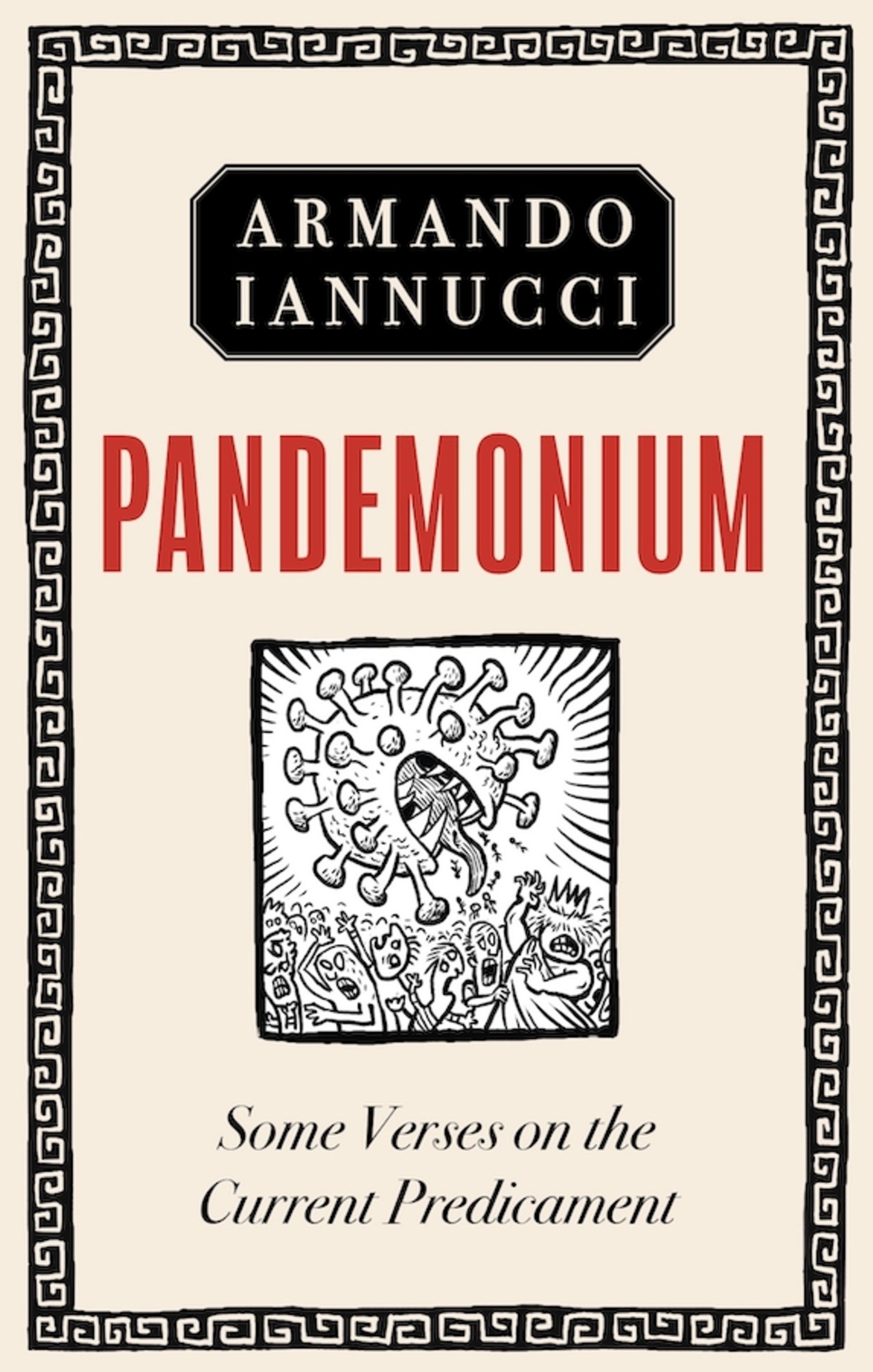
Review: Pandemonium by Armando Iannucci

In the late 90s, early 2000s I was in my mid-teens. Too old to play with toys, too young to go out (and too poor for the emerging internet), I watched a lot of comedy on television. One of the programmes I enjoyed most was The Armando Iannucci Shows. Less overtly political than many of his other works, they have a comic-pessimism founded on the expectation of a better world that I really connected with. As a result, I’ve always kept half an eye on what he’s produced and really loved The Thick of It and his Personal History of David Copperfield in particular.

When I heard he was releasing a mock-heroic poem about the experience of the pandemic in Britain, I was really intrigued. Mock heroic is one of the key registers of eighteenth-century writing and I have a particular fondness for it. I also think it’s a tone that really suits the world we are living in, where online bubbles allow people to be monarchs of their own realm and our politicians mix lofty rhetoric with venal actions. 

On picking Pandemonium up, I was a little disappointed that it didn’t rhyme. My experience of mock-heroic poetry comes from texts such as The Dunciad, The Hilliad and The Smartiad (and various other poems ending in -iad) so I was expecting heroic couplets. Instead, Iannucci was more inspired by Milton and Paradise Lost, as well as some of the monstery passages of Dante. He’s a big Milton fan, having spent four years on an uncompleted PHD on Paradise Lost, which he claims to have abandoned when he realised the first lines of the poem could be sung to the theme tune of The Flintstones. 

It tells the ‘epic’ tale of Orbis Rex, King of the Globe, who descends onto Earth with the first name rearranged into the more manageable, Boris (who as a child, said his ambition was to be the World King). When the beast Pandemic comes into the kingdom, Orbis lulls it into a false sense of security by doing nothing. He gives a rousing-esque speech to the people, flanked by the angels Sweetness and Light before shaking hands with the beast and succumbing to it. There he descends to the underground and meets the blind seer, Dom’nic, condemned to ride a carriage round and round a pillar to test his eyesight. The blind seer then shows Orbis the state of the nation, all the people dying, hiding and generally living in fear - Orbis chooses to disbelieve it. Then there’s a battle with nurses firing needles and Orbis declares the pandemic over and makes a speech how a problem is best solved by ignoring it and making up stories.

There are some really fun elements with how the epic and real mix. I liked how Chris Whitty and co were represented as angels, the references to Dominic Cumming’s Barnard Castle jaunt, the talk of vaccine-deniers and conspiracy theorists. I also loved how the speeches of Orbis genuinely sound like Boris Johnson, with his fractured sentences, trailing metaphors and ‘what-ho’ style British cosplay. 

The best part of Pandemonium is a subplot where Matt Hancock is represented as a Sir Galahad style hero tasked with arming the nation against the pandemic beast. He goes to this swirling vortex of body parts, the friends, donors (and pub landlords) of the Tory party. It’s a disgusting pile of parts, that speaks from a mouth formed by ‘fifteen twats and ani’. This blob of body parts then constitutes a horse-like creature called Dido, which Matt uses as his noble steed. This part works best because it’s truly disgusting and visceral and because it successfully evokes the disgust I feel towards the government’s ineffectual, wasteful, costly and ultimately murderous response to the pandemic. The trouble with the main part is, even as a mock heroic character, Orbis is too heroic. Even referring to Johnson in a mocking way as a hero, is to describe him in a way too close to the way he sees himself. As pathetic and empty the character Orbis is, he’s not empty or pathetic enough.

One clear omission in the poem is any reference to Partygate, as it was written before those stories had hit the press. He says he’s writing a second edition where he plans to add those elements in, maybe that will be a variorum edition - the original Dunciad was a slight work before the revisions and additions. This edition does have some brilliant illustrations by Andy Riley which add to the enjoyment.

The fact is, this poem was written ‘for the drawer’ and wouldn’t have been published if he hadn’t already had a famous name, an agent and a publisher. It’s no great work of literature, though it does have some striking passages.


Wednesday, 31 May 2023

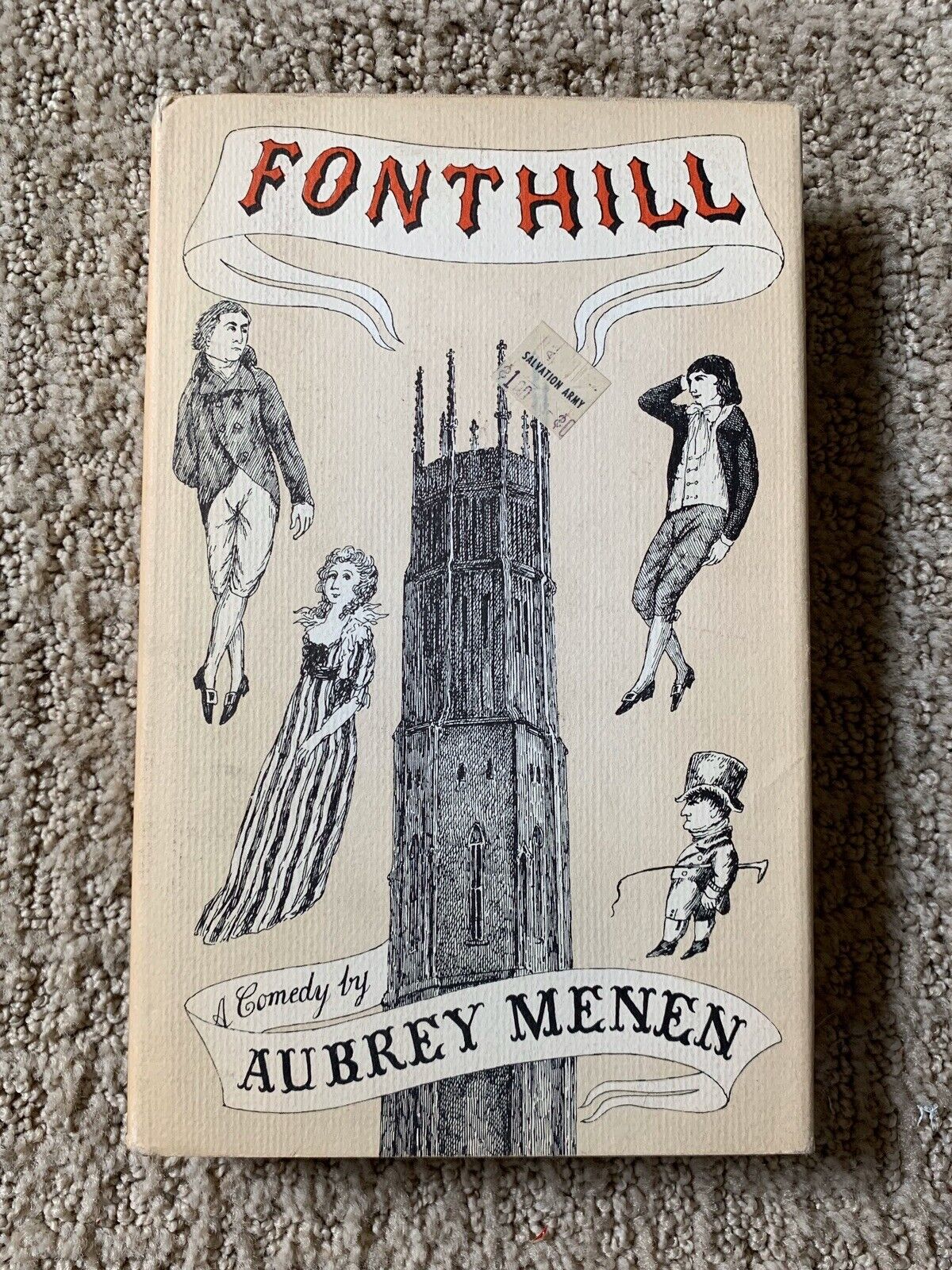
Review: Fonthill: A Comedy by Aubrey Menen


 Fonthill seems to set itself quite a challenge – to get the reader to like and root for a character who inherits obscene wealth, owns hundreds of slaves and a has a more than academic interest in pederasty. William Beckford, author of Vathek and creator of the impossible Fonthill Abbey was also driven out the country for his reported intrigue with titled schoolboy, William Courtenay. 

Beckford is first introduced through his vaulting folly (and title of the book) Fonthill Abbey. A huge, impressive building of astonishing scale and whimsy, a gaudy but flimsy building whose central tower collapsed several times in building and finally in 1825, bringing down a large chunk of the building. In imagination and artificiality, there’s something very Disneyland about the place. The reader joins a group touring the building, ostensibly with an eye to buying it at an auction by Christie, though most of the party are just there to be nosy at a famous den of iniquity and vice.

There’s one surprising visitor, the scruffy and dirty Farquhar, an eccentric millionaire who Beckford visits. He listens to Farquhar’s story, of being a young man in India and they discover they share an interest in pubescent boys and activities they can enjoy with them either naked or in flimsy trousers. Beckford wants to sell Fonthill Abbey to Farquhar without the bother of the Christie auction because he recognises “the only man I’ve met as original as myself.”

Fonthill is a fascinating novel in how it makes its central theme of pederasty both a constant source of conversation whilst also dancing around it. Beckford’s current young lover is now approaching fifty, both his and Farquhar’s paramours are in the past. What’s more, it’s depicted as larky and victimless. Beckford’s own initiation as a teenage boy, under the tutelage of Alexander Cosins are held as treasured memories that belong to halcyon days. The bodies of young men/old boys are reduced to body parts and the sexual exploitation of them a pleasantly bloodless and aesthetic enjoyment.

What’s more, not only does pederasty in the book not harm any of the boys, it’s only of minor inconvenience to Beckford’s wife, Margie. She is introduced as an innonent, being schooled in the ways of men (and boy-loving men especially) by the Prince Regent’s mistress, Harriet. She is a wonderful character, wise in the ways of both world and court, with a frankness to be explicit. She encourages Margie to pity Beckford, declaring that men who love twelve-year-old boys do so because they themselves never grow beyond twelve. She instructs Margie on how to be a good beard and how to put up with being sexual second (or third, fourth, fifth) fiddle. Oddly, Margie is very successful at this and the two have a relationship that is surprisingly supportive and loving in everywhere but the bedroom.

Harriet’s appearance also allows for Prinny himself to make a few entrances in the story, both as Regent and as King. He’s depicted as rather stupid but proud of his cannyness, with Harriet’s main attraction to his spouting nonsense. Prinny says he’s excited about the plans for the Brighton Pavilion because the domes remind him of huge breasts - Beckford’s fondness for ludicrously large towers speaks for itself. 

In fact, the only people that seem to be truly harmed by pederasty in this book are the poor, innocent pederasts themselves. A Chancellor with a spanking fetish  known as Full Bottom finds himself removed from office, while Beckford has to run off to the continent (where he hung around with William Hamilton’s first wife, Catherine). It isn’t his sexual practises that prove his real undoing though, the abolition of slavery and the excesses of Fonthill do that - and then not the the extent that Beckford still owns two houses in Bath and builds another tower. The book also elides pederasty and homosexuality, with the case of the Vere Street Molly House and the gruesome end of some of its patrons.

Beckford himself is depicted to be rather charming, at least to those who aren’t his staff. He lives in a a partial ‘eastern’ fantasy where he is Vathek, Sultan of all. While Fonthill was gothic, a style that Beckford felt fit into the landscape better, his instincts are to imagine in baroque, orientalist fantasies. As such, the character in the book is always a twelve-year-old-boy inside, winning in his whimsy and eager to share his fantasies with those around him. The book also claims a deep innocence, which is winning in the fictional character but hard to reconcile with the real man. 

The book contains a number of claims which seem libellous but having not read a biography of Beckford, it became a game of guessing which claims were likely true and which were not. Were there really rumours that his first child was the result of his wife and underage boy-lover having their own relationship - or that the second was a result in a three-in-a-bed romp? It then ends bathetically with the Fonthill tower falling down and Beckford erecting another. 

The book is titled Fonthill: A Comedy by Aubrey Menen, but it’s hard to decide whether the book is really a comedy or not. It’s certainly not laugh-out-loud funny yet neither does the book adopt a tragic tone. I suppose it’s intended in the more abstract notion of a human comedy, a squint-eyed look at the terrible scrapes us humans get in through the strange curlicues of our own brains and desires.


Wednesday, 24 May 2023

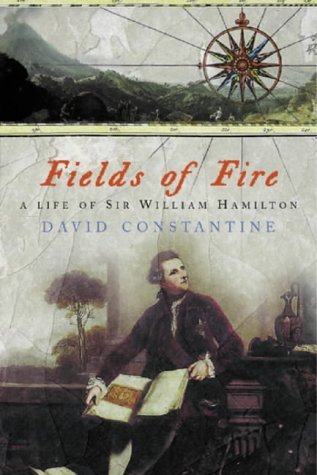
Fields of Fire by David Constantine at the Dr Johnson Reading Circle

 The Dr Johnson Book Circle met to discuss David Constantine’s book, Fields of Fire, an autobiography of William Hamilton. 

William Hamilton was the youngest son of a noble family who had to make his own way in the world and went into the army. There he didn’t show any particular flair or commitment. Then he became an MP, where he showed absolutely no commitment before become an Emissary to the Court of Naples. It was a small job in an unimportant little kingdom but Hamilton discovered the two great passions of his life; volcanoes and vases.

Presumably like most readers, the members of the Reading Circle largely know Hamilton for being the redundant leg of the relationship featuring Nelson and Emma, so Constantine took a lot of time to flesh Hamilton out before he got to that part. Some members thought this caused pacing issues, as there was a lot to read before the famous relationship entanglements. 

Most of us were surprised that Hamilton had a first wife. If the later Emma was a volcano, Catherine was a vase, or at least, she was at first viewing. Suffering throughout her life from a respiratory illness that was also linked to problems with her nerves, including periods or depression, she seems to be a fragile person. It seems clear she thought of herself like that. However, after leaving England near death’s door, she lived for another twenty years and made several arduous trips between Naples and England. 

During this time, Hamilton turned his collecting instincts to the ‘Etruscan’ vases pouring out of tombs being unearthed around Herculaneum, Pompeii and beyond. Not only did he collect them, he had them recorded, engravings made and lush books created. He helped establish the fact they were Greek vases, not Etruscan, and purposely sent the pictures (and samples) to people like Wedgewood to inspire British craftsmen to adopt the same clean lines. Meanwhile, he was also spent many hours clambering up Vesuvius and making observations which he sent to the Royal Society in London (unlike one associate, he did this fully dressed). In this way he established himself as an authority in both his two passions. Constantine spends a little too long trying to establish this, invested as he is in portraying Hamilton as more than a famous cuckold. 

Despite being a relatively unimportant outpost, Hamilton was successful in integrating in Neapolitan life, becoming firm friends with King Ferdinand and a confidante of his Queen. The town, which Nelson would later describe as ‘a country of fiddlers and poets, thieves and whores’ was certainly a louche place and indifferently run. Ferdinand had been raised to take no interest in politics his principal interest was hunting, which consisted of killing thousands of creatures at a time – he also was fond of a practical joke, like putting marmalade on people’s hats.

Naples only became important when it was on Napoleon’s shopping list. In response, the British Navy sent a fleet headed up by Nelson. By this time Catherine had died and Hamilton had married his second wife, his nephew’s former mistress, Emma. Of astonishing beauty, Hamilton seemed to have appreciated her in the same way as his vases, principally by looking. The two developed her ‘attitudes’ a performance where Emma adopted the poses and emotions depicted in ancient art and theatre and artists flocked to paint her. Eventually, the two had settled into a routine, developing a relationship that was physical but, above all, domestic. Until Nelson.

Both were smitten with the hero of the Nile, or what was left of him. As Emma and Nelson’s relationship grew physical (and obvious, Emma was pregnant), Hamilton became a figure of laughter or pity. Hamilton was recalled to England and the three, rejoicing in the motto of the Order of the Bath ‘tri juncta in uno’ went home the long way, Emma and Nelson revelling in the fame. There’s a town in Germany that still celebrates the visit with the model of an erupting volcano.

Hamilton seemed perfectly fine in his unusual relationship, praising Emma and admiring Nelson to his end. In many ways it encapsulates the difficulties in writing a biography about him, he was a man who was private and rather detached. He observed rather than participated and collected rather than created. He seems to have been very happy letting life wash over him and taking in the things that interested him. It’s probably a nice way to live but it makes for an elusive subject. While the death of Catherine did affect him greatly for a while, it wasn’t long till he was negotiating to have Emma round. When a ship called The Colossus sunk off the British coast with a large portion of his vase collection, he was upset but seems to have shrugged it off easily enough. Perhaps Hamilton was a true stoic, after reading and discussing Fields of Fire, we still weren’t sure.

Fonthill seems to set itself quite a challenge – to get the reader to like and root for a character who inherits obscene wealth, owns hundreds of slaves and a has a more than academic interest in pederasty. William Beckford, author of Vathek and creator of the impossible Fonthill Abbey was also driven out the country for his reported intrigue with titled schoolboy, William Courtenay. 


Wednesday, 17 May 2023

Review: Quality Street - Richmond Theatre, London


This review originally written for The Reviews Hub, I've included it here because the story is some Regency nostalgia - and I need to fill a gap before my Dr Johnson Reading Circle next week. 

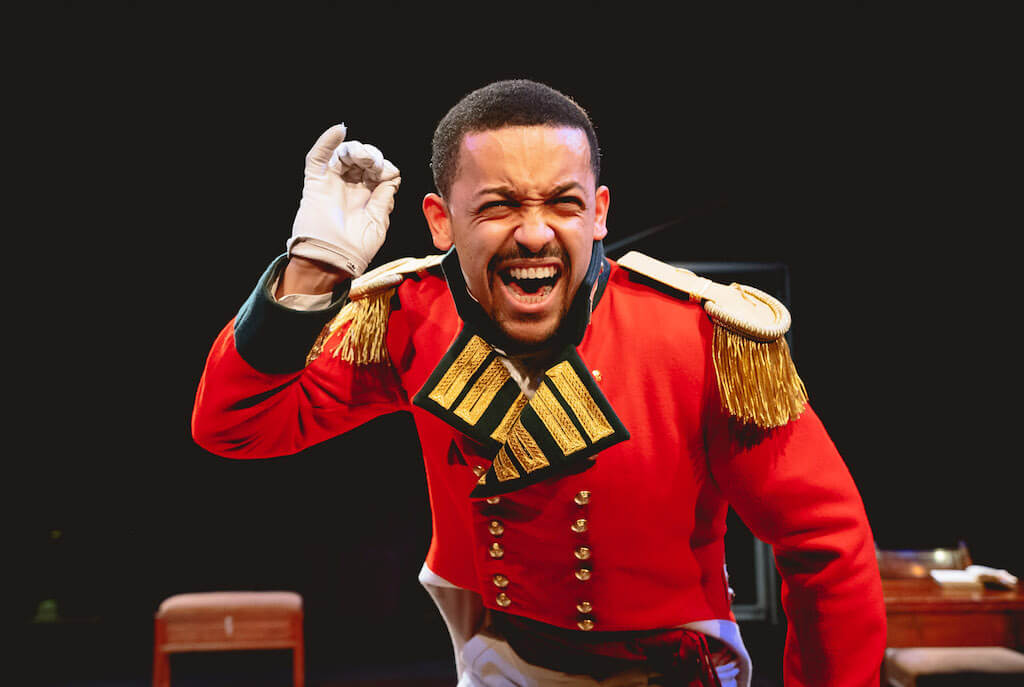
Quality Street is a romantic farce set in the Regency period written by Peter Pan writer, J.M Barrie. It has been revived by the Northern Broadsides who have included a running commentary taken from reactions by genuine workers of the Quality Street chocolate factory, the sweets having been named after the play.

It tells the story of Phoebe Throssel who gives up hoping for marriage and becomes a spinster like her older sister Susan when her amor Valentine Brown leaves to join the Napoleonic Wars. Following Waterloo, Valentine returns but finds Phoebe tired and dull after ten years as a schoolmistress so she creates the persona of her spritely niece, Livvy to win him back. Farce ensues.

One of the most interesting elements of the play is how Barrie’s original script evokes a turn-of-the-century nostalgia for the Regency period, a nostalgia that the creator of the chocolate assortment, Mackintosh’s, used to sell sweets. This nostalgia is then wrapped in another layer of nostalgia for the 1970s and ‘80s, provided by the memories and comments originally given by the Mackintosh’s factory workers but played by the cast.

The play begins with these factory workers introducing themselves to the audience, talking about working at the chocolate factory before segueing into Barrie’s play. There’s never a very clear connection established between the two elements, beyond sharing a name and although the reminiscences are fairly charming, they slow down the progression of the play itself. The audience learns that the factory was known as a bit of a “knocking shop”, an interesting titbit, but not very relevant to the main plot. When they do talk about the play itself, their commentary on the action never strays very far from the inane.

This attempt to blend the Regency-set comedy and factory remembrance (it sells itself as a mix between “Bridgerton meets Inside the Factory”) is reflected in the set design. It consists of a house shape created from metal girders and back rooms screened off by industrial PVC strip curtains, which do invoke a factory but never look right as the Throssels’ cosy blue and white parlour. Though the little detail of knitted booties for the furniture legs is a cute one.

The most successful melding of Quality Street (play) and Quality Street (chocolate assortment) comes in the ball scene at the beginning of the second half, where the cast wear ballgowns with the distinctive colours of the famous sweets in a range of shiny fabrics. This is let down by some intentionally silly modern dance moves performed to a light tea-dance number with an inexplicably heavy ‘doof-doof’ beat. This song also plays distractingly in the background during a climactic talking scene.

There are some highlights in this production, however. The community of Quality Street has a warm, Cranford vibe, where the women are the true rulers of their community and the gossipy Willoughby sisters are feared by all. Paula Lane and Louisa-May Parker make a delightful pair of bickering but loveable sisters and Aron Julius is equal parts dashing and goofy as Valentine. A scene where he matter-of-factly solves the main farcical situation while Parker watches on in amazement is very funny. There are also some very comical and jaw-droppingly creepy puppets who portray the pupils in the Throssel sisters’ school and the scenes where the sisters cluelessly try to teach algebra and maintain their stern unflappable teacher-faces are very enjoyable.

At the end, when all the complications are cleared up, the factory workers are asked if the play says anything about love today. Their answer is, “Probably not.” There’s nothing wrong with this, a little escapism is always welcome but trying to meld the play with the history of the chocolate factory and connect it with the modern world, slows the play down and obscures its original brightness.


Wednesday, 10 May 2023

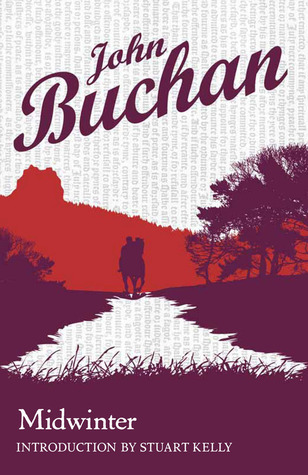
Review: Midwinter by John Buchan


My last book of my mini-look at books with Jacobites in it is Midwinter by John Buchan, a book I was particularly interested to read as a young(ish) Samuel Johnson turns up as one of the key supporting characters.

Initially presented as some lost Boswell papers, Midwinter is the tale of Jacobite agent, Alastair Maclean and his sojourn into England during the ’45 to gain support from the English. There he gets embroiled in the search for a run-away daughter and discovers traitors in the Jacobite ranks whose interference may damn the whole endeavour. 


The pretence at being Boswell’s papers only really exists in the first and last chapters and the novel is told very much as a twentieth century novel, with no attempt to make it sound like a report or even an artefact from its time. This is fine as the novel is essentially a spy behind enemy lines story and extra layers of artifice would have sapped the tension. Impressively, the book does build up considerable tension, despite the fact that it’s a forgone conclusion that Maclean will fail in his mission. This is partly because the audience becomes invested in the fate of Maclean and partly because the characters themselves have no knowledge of how history will pan out and their urgency is infectious.


Maclean is aided by a character called Midwinter and his Naked Men. He is the king of the secret Old England, a shadowland of charcoal burners, woodsman, servants and other forgotten people. At times he seems Puckish, at others a bit like Merlin. He reminded me of Cock Lorrel, the mythical king of the beggars that Chaunting Nick Swain enlisted to aid the Jacobites in The Virtue of this Jest - one of my favourite books. He’s a manifestation of the (dubious) unbroken pagan tradition in England. 


The book’s introduction made a lot of the fact that in this book, the Highlander Maclean goes into England and finds it a strange, wild and barbaric place where people speak in incomprehensible dialect. Usually, it’s the tips of Scotland portrayed as savage and unchristian, but here it’s the snug middle of the country. This alien England shares the same land as the smug, comfortable England which Maclean is trying to prod out of inactivity.


The spy plot of double-crossings, betrayal, capture - and nearly being fed into a huge hole in the ground by a crazy man is a very interesting one and Maclean’s story, of a dedicated soldier and idealist who loses it all, was moving. I was, however, only paying attention to one character.


I was led to believe this was a book that portrays Samuel Johnson as heading up north to join the Jacobite Rebellion. Although he did have some sympathy with the Stuart cause, and was decidedly anti-whig, it would have been very against character to have him march up to join an armed uprising - his main political desire was stability, he’d never have joined in an action to upset it. Johnson in this book has left London (and Tetty, who gets a namecheck) and become a private tutor. His charge, who nicknames him ‘Puffin’, runs away with an a man who is unsuitable for her and he sets out to get her back. He is fiercely loyal to the woman (who everyone seems to fall in love with, for no discernible reason) and her shacking up with a Jacobite supporter is what brings him into Maclean’s company.


The notion of a pre-dictionary, pre-fame Johnson is a wonderful one. We look at Johnson now as this established and semi-revered figure, a source of wisdom and wit. It’s easy to overlook what an unprepossessing figure he cut, and how at odds his first impressions were. Hogarth thought Johnson was ‘an idiot’ when he first saw Johnson. Much is made of his contradictory ‘shabbiness and self possession’, his lanky ungainliness with a surprising athleticism. Johnson in this can hold his own in a fight, can offer wise advice, will cling on tenaciously to help a friend in need and is also uncouth, awkward and something of a joke. The fact that he’s always twitching, tapping his fingers or ‘rolling his head like a marionette’ is never ignored, but nor is his ultimate decency and intelligence. It’s a really nice portrayal (though the quotes from future Johnson lines can be heavy-handed).


The front of the book boasts Midwinter is one of the finest historical novels ever written. It’s not quite that but it is a thrilling spy story set in a very realised historical setting with a cameo from one of my favourite figures from history - so not too shabby.


Wednesday, 3 May 2023

Review: The Bull Calves by Naomi Mitchison

 My journey into novels featuring Jacobites continued with The Bull Calves, a book which also continues my look into the novels of Naomi Mitchison.

It takes place over two days in 1747, when the Haldane family meet in the family home of Gleneagles, a place on the border between the highlands and lowlands. The family themselves are a whiggish one but two of the people who’ve married into it joined in the ’15 Jacobite rebellion. Things are complicated by a man on the run after the ’45 (who joined because he was offered the chance to design the new currency), a Highlander called Lachlan who means the family ill-will and the unexpected arrival of Forbes, Scotland’s first minister. 


The book is essentially about reconciliation, how the family come together, air their grievances and look to a new future for Scotland. Of course, that new future looks different from all the many perspectives of the characters, and that’s where the book shines. There are family members who are highly tied to the British Empire, working in the navy, the army and the East India Company. There’s the improving landlord, adopting new scientific (and English) techniques such as planting trees and using turnips to put nutrients back into the soil. It’s funny how trees and turnips have been key indicators of whiggish tendency in these Jacobite books and adds a lot to Johnson’s discussion of trees in his own travelogue. There’s the Jacobite Highlander, who simply wants to settle down and try the new farming methods for himself. There’s also a sharp divide between the older characters, the weight of history that lies on them and an wisdom born of pain and experience with the younger generation who look to the future in hope. Each character in the book has a strong point of view which informs their actions and a history which explains that point of view - they feel really real.


This old/new, traditional/enlightened, highland/lowland dynamic also includes modes of worship and spirituality. The highlanders having a more formalised, Catholic(ish) Episcopalian belief and the lowlanders with their stricter, free-form prayers, long sermon form of Presbyterianism. There’s also the lingering superstitions of faeries, witches, boggarts and The Sight. 


The Bull Calves spends most time exploring the past of Kirstie and William, a couple deep in love who found each other after painful lives. Kirstie grew up with a deep spiritual sense which led her to marrying a Presbyterian minister who abused her as he preached damnation and hellfire from the pulpit. His job also forced her to move to different communities, a mining one, where the miners were serfs and a weaving one. Her position as preacher’s wife meant that she could never join those communities completely and she grew so bitter with her husband that she joined a coven of witches and believes she murdered him through witchcraft. Her lowest point is when she gives herself up to the devil, who she (amusingly to me) calls The Horny. Instead of The Father of Lies, the man coming into her house is William, who has long held a torch for her. William fled after the ’15 to America, where he failed in running a town for former clan members and instead married a native. This was a charmed life in a society that seemed not so different from the Highland way of life until he saw the torture and consumption of captives. How the two put those painful pasts behind them and create a new future together (as highlander and lowlander) is a microcosm of the ideal Scottish future. 


The book feels utterly authentic, portraying the rapid change of life and the kind of discussions and debates a well-to-do family of that time and place would have. What’s more, everyone seems authentic in the way they think, the conceptions, prejudices and assumptions they would have. There are no twentieth century characters ahead of their time in this book. Each character feels like a genuine result of their upbringing and culture. The range of characters also means that the past presented in the book doesn’t feel narrow or prescriptive. There are strong women and those against slavery, but they are in context - not modern airdrops. It’s probably the realest-feeling historical novel I’ve ever read, where the past has the variety and depth of the present.


The book also contains notes by the author, which are another treat. They aren’t academic notes but thoughts of Naomi Mitchison as related to the writing and conception of The Bull Calves. A descendent of the Haldanes, Mitchison spent WWII in Scotland where she wrote this, as well as working with the community as the wife of a Labour MP. There’s a lot of discussion of Scotland and the Scottish national character, as she sees it. There’s a lot about socialism, her frustration in the lack of a proper class consciousness and her hopes for the future. There’s also a lot about Jung, who she read during this time, which informed her characterisations. It’s like having a book group with the author and having her explain her intentions and processes, which I found really interesting.


Before this, I’ve read four other Naomi Mitchison books and they were all good but this is the first one that’s really great. There may be more fun historical novels out there, but I haven’t yet one that felt this authentic or as deeply and layered in its characterisation and the questions it poses. The Haldanes in the book wondered how they and their country would reconcile and move into the future after Bonny Prince Charlie’s landing, Naomi Mitchison was wondering how people would reconcile and find a new future after WWII. That question of reconciling difference and moving on is still as relevant today as it was then.